

Developer tools, as the name suggests, include both development tools for modifying, testing or viewing code, and multiple tools for industry information and entrepreneurial learning. For developers, development tools are "code companions" and trusted allies. Development tools also support the developer's journey, such as reducing unnecessary tasks of setting up servers during the development process. Development tools can replace the tedious task of updating dependencies, helping developers shift their focus entirely to important aspects of the business.
Application service provider Appsdart released a survey data, in which the top four factors that bring positive effects to software developers in the developer life cycle include: expansion flexibility, development speed, resource cost, and deployment speed. All of these can be achieved through adaptive development tools.
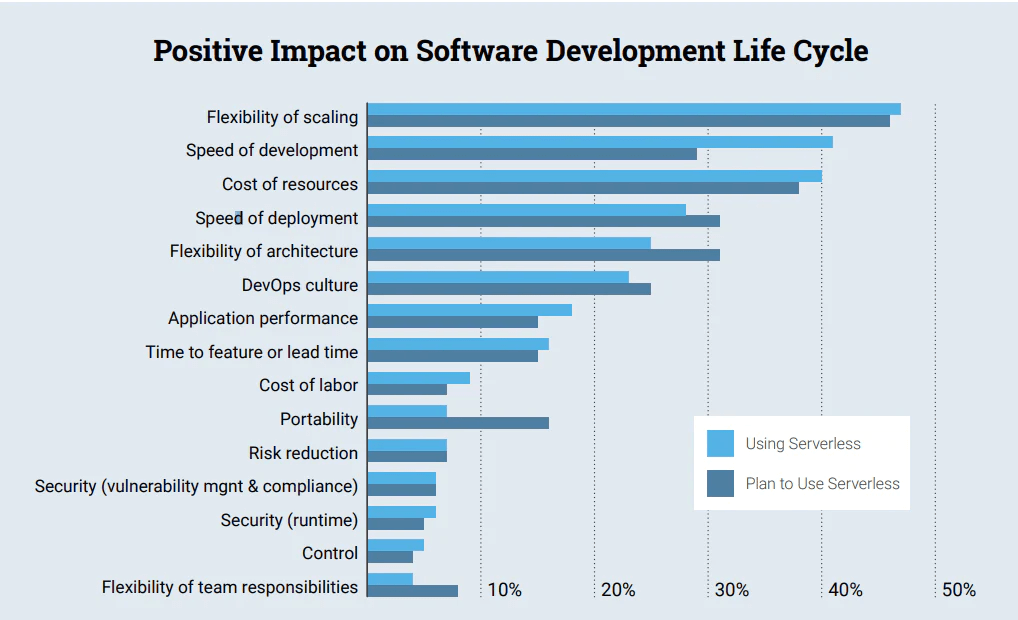
A common example is that development tools have automation tools integrated into the development pipeline, which can help developers quickly create and deliver state-of-the-art software products without considering quality or security. Developers can get product features and other collection data with just a single API call open to them. This increases developer development and deployment while emphasizing flexibility and ensuring security.
Today, developers are faced with delivering the next great software product in increasingly shorter release cycles, so they deserve tools that support them and help them focus on the task at hand, which is to build great software products quickly while ensuring they are secure and high quality.
For Web3 developers, especially novice developers, achieving high-quality delivery in a short period of time will also be the norm. To enter the Web3 industry, you need to seize the trend of the track and quickly implement your ideas into reality; to participate in a hackathon, you need to complete the deployment within the specified coding period...TinTinLand has seen the importance of development tools and the rigid demand of novice developers for Web3 development tools, so this article was launched to summarize the effective tools in the development process and even in the process of entering Web3 entrepreneurship.

Development, deployment & testing tools
NFTLaunchKit: With NFTLaunchKit, you can create smart contracts in the website's dashboard without any code. At the same time, NFTLaunchKit also provides templates to create NFT Mint websites and manage all content from the dashboard.
Hardhat: Hardhat is an Ethereum development environment. Developers can compile contracts in Hardhat and run them on the open network, and also have functions such as obtaining Solidity stack traces, consoles, etc.
Foundry: Foundry is an extremely fast, portable, and modular toolkit for Ethereum application development written in Rust.
Brownie: Brownie is a Python-based development and testing framework for smart contracts targeting the Ethereum Virtual Machine.
dapp.tools: dapp.tools is a set of Ethereum-centric CLI tools that follows the Unix design philosophy, facilitating composability, configurability, and extensibility.
Ganache: Helps you quickly spin up your own Ethereum blockchain. You can use it to run tests, execute commands, and check status while controlling how the chain runs.
Waffle: An effective testing tool for smart contracts.
Front-end tools
wagmi: wagmi is a collection of React Hooks that contains everything you need to get started with Ethereum. wagmi makes it easy to connect wallets, display ENS and balance information, sign messages, interact with contracts, and more - all with caching, request deduplication, and persistence.
Solana-Web3.js: The Solana-Web3.js library aims to provide complete coverage of Solana. The library is built on top of the Solana JSON RPC API.
Ethers.js: The Ethers.js library aims to be a complete and compact library for interacting with the Ethereum blockchain and its ecosystem.
Web3.js: Web3.js is a collection of libraries that allow developers to interact with local or remote Ethereum nodes using HTTP, IPC, or WebSocket.
Web3Auth: Web3Auth is a simple, non-custodial authentication infrastructure that enables Web3 wallets and applications to provide seamless user onboarding for mainstream and native Web3 users.
Web3Modal: Web3Modal is an easy-to-use library that helps developers add support for multiple providers in their applications through simple customizable configurations.
NFTs2Me: NFTs2Me is similar to NFTLaunchKit in the deployment tool, which can create, mint and sell NFTs using a code-free platform. NFTLaunchKit is also a very convenient front-end tool, which will not be described here.

Storage tools
NFT.Storage: Free decentralized storage and bandwidth for NFTs on IPFS and Filecoin. NFT.Storage is a long-term storage service designed for off-chain NFT data (such as metadata, images, and other assets) with a size of up to 31GiB per upload.
Web3.Storage: The easiest way to store data on the decentralized web. Store your data with our simple API. It's fast, open, and free.
OrbitDB: OrbitDB is a serverless, distributed, peer-to-peer database. OrbitDB uses IPFS as its data store and IPFS Pubsub to automatically synchronize the database with peers. It is an eventually consistent database that uses CRDTs for conflict-free database merges, making OrbitDB a great choice for decentralization
ThreadDB: ThreadDB is a multi-party database built on IPFS and Libp2p that provides an alternative architecture for data on the web.
Spheron: Decentralized web hosting that supports storage on Arweave, Skynet, IPFS, and Filecoin.
Security Analysis
Mythril: is a security analysis tool for EVM bytecode. It detects security vulnerabilities in smart contracts built for Ethereum, Hedera, Quorum, Vechain, Roostock, Tron, and other EVM-compatible blockchains.
Slither: Slither is a static analysis framework for Solidity written in Python 3. It runs a suite of vulnerability detectors, prints visual information about contract details, and provides an API to easily write custom analysis. Slither enables developers to find vulnerabilities and enhance their code comprehension.
MythX™: MythX™ from ConsenSys Software Inc™ is the premier security analysis service for Ethereum smart contracts. Our mission is to ensure development teams avoid costly mistakes and make Ethereum a more secure and trustworthy platform.
Manticore: is a symbolic execution tool for analyzing smart contracts and binaries.
Securify 2.0: Securify 2.0 is a security scanner for Ethereum smart contracts supported by the Ethereum Foundation and ChainSecurity.
Monitoring Tools
Blocktorch: Blocktorch is the observability platform for the decentralized stack. Understand the state of decentralized components at a glance. Quickly browse logs with ample context. Set service level targets to see anomalies and get notified.
Tenderly: A comprehensive Ethereum developer platform for real-time monitoring, alerting, debugging, and simulation of smart contracts.
Block Explorer
Block explorers provide an online interface for searching blockchains and enable developers and users to retrieve data about transactions, addresses, blocks, fees, and more. Each block explorer provides data about a specific blockchain, and the type of information included will vary depending on the blockchain architecture it serves. For example, Etherscan is a block explorer and analysis platform for Ethereum, Solana Explorer allows developers to find transactions and accounts on the Solana chain, and there are also Fantom Explorer, BscScan, etc. You can find their explorers by searching for the corresponding development network's Block Explore.

Web3 Community/DAO
UpStreamApp: Attend crypto and Web3-focused online events around the world, join DAOs, and meet new people.
Crypto Nomads Club: Crypto Nomads Club is for digital nomads and frequent travelers who meet at various crypto events around the world.
Eventbrite: Eventbrite can match you with Web3 events, or you can create your own.
TinTinLand: Web3 developer community. Compared with the previous communities, TinTinLand provides Web3 technical resources and professional courses in addition to activities and social functions.
Web3 Marketing Tools
Web3's marketing tools can help developers better launch products during the product marketing stage.
Mobula.fi: Decentralized data aggregator (tokens, NFTs).
WaitlistPanda: The easiest way to collect leads and build an audience. Create viral waitlists, social recommendations, and more.
Lemlist: Personalize emails, automate follow-ups, and engage with leads across all channels. Lemlist is your sales automation and email software in one.
Make: Create code-free marketing automations.

Conclusion
TinTinLand hopes to gather, cultivate, and transport developers to various open networks, continuously summarize Web3 development tools, resources, job search and other necessary information, and provide a comprehensive developer guide to help new developers on their Web3 journey. This article summarizes the development tools that help Web3 developers better develop and deploy projects, create and launch products. We hope that through comprehensive guides and community support, we can help all novice developers smoothly enter Web3, get through the rookie period, and grow into the backbone of the industry.