
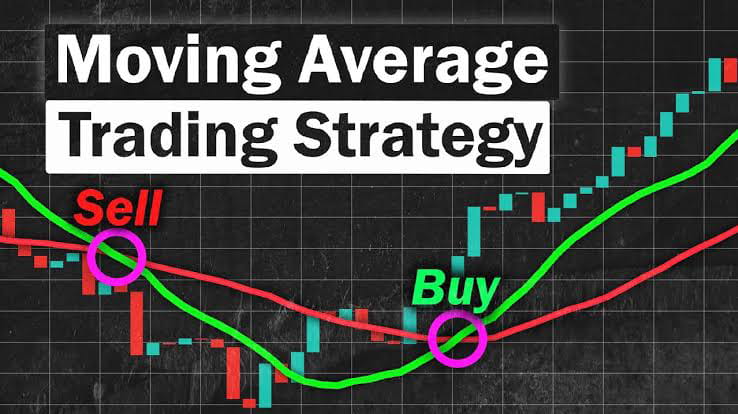
In my last post on the feed. I made a list of top 10 trading indicators with MA being top on the list.
I promised to do a detailed explanation on how each of the indicators are used. Hence, the need to delve into Moving Average.
In the world of cryptocurrency trading, technical analysis plays a crucial role in making informed decisions. Traders and investors rely on various indicators to identify trends, patterns, and potential entry or exit points. One such widely used indicator is the moving average.
The moving average (MA) is a versatile tool that helps traders smoothen out price fluctuations and identify the overall trend direction. It calculates the average price of an asset over a specified period, constantly updating as new data points are added.
Here's how it works:
Calculation: The moving average is calculated by summing up a specific number of closing prices and dividing the sum by the number of periods considered. For example, a 20-day moving average would add up the closing prices of the last 20 days and divide the sum by 20.
Smoothing Price Data: By considering a longer time frame, moving averages smooth out short-term price fluctuations, making it easier to identify the underlying trend. This helps traders filter out noise and focus on the overall direction of the market.
Moving averages can be classified into two main types:
Simple Moving Average (SMA): The SMA calculates the average price over a specified period and assigns equal weight to each data point. It is straightforward to calculate and widely used by traders.
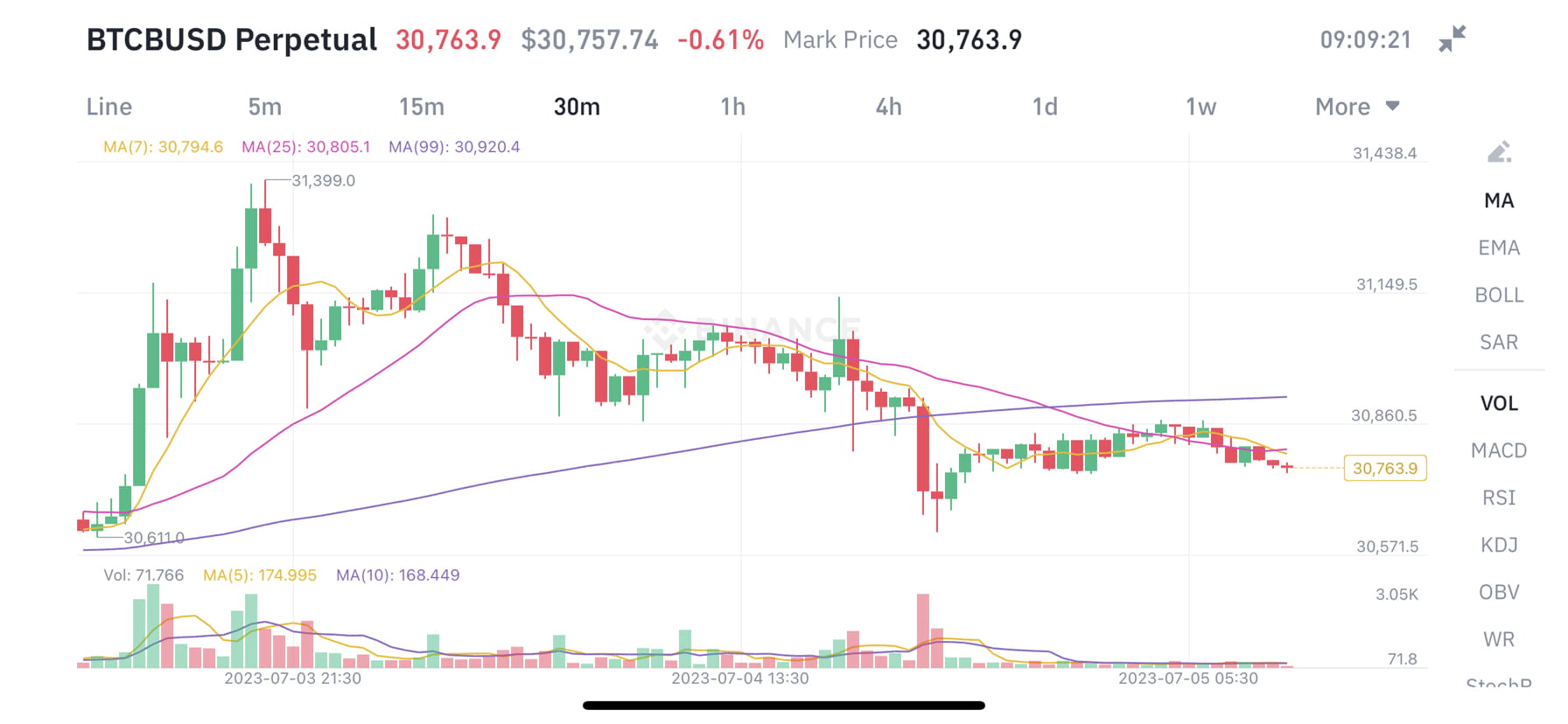
Exponential Moving Average (EMA): The EMA gives more weight to recent price data, making it more responsive to recent price changes. It applies a weighting multiplier to the previous period's average, giving greater significance to the most recent prices.
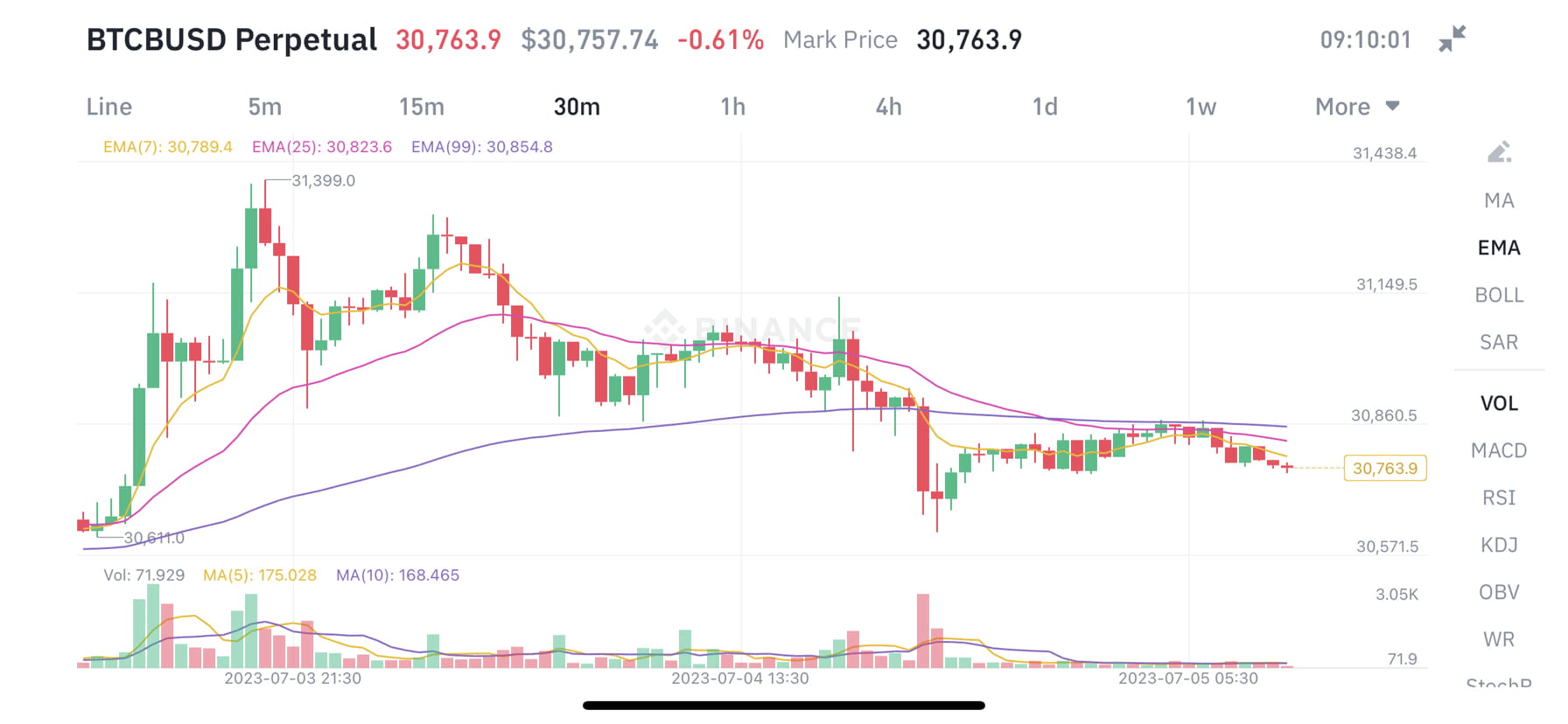
The main difference between the simple and exponential is how responsive the moving average is to the current price.
For example, a simple moving average is a simple average of the prices for a certain period of time. However, the simple moving average can be slow to respond to quick changes in the market. Therefore, the exponential moving average was developed to respond quickly to abrupt price movements by weighting the recent prices more heavily.
Each type of moving average will include a “look back” input period. This alerts the formula for how many data points to incorporate into the calculation. Two common input periods are 50 and 200, but any whole number can be used in the calculation.
Using moving averages in cryptocurrency trading:
Trend Identification: Moving averages are primarily used to identify trends. When the price is consistently above the moving average, it suggests an uptrend, while prices below the moving average indicate a downtrend. Traders often use multiple moving averages, such as the 50-day and 200-day moving averages, to confirm trend direction.
Support and Resistance Levels: Moving averages can act as support or resistance levels. During an uptrend, the moving average may act as a support level, where prices tend to bounce off. In a downtrend, the moving average may act as a resistance level, preventing prices from rising significantly.
Crossovers: Moving average crossovers occur when two different moving averages intersect. The most common crossover is the "golden cross" and "death cross." A golden cross happens when a short-term moving average (e.g., 50-day) crosses above a long-term moving average (e.g., 200-day), indicating a bullish signal. Conversely, a death cross occurs when the short-term moving average crosses below the long-term moving average, suggesting a bearish signal.
Using MA Indicator with Other Trading Strategies
The moving average indicator is extremely useful and can be used as a stand-alone strategy. However, the crypto market is notorious for wild and volatile price swings which can wreck the nerves of traders and their account balance. Therefore, when learning to trade crypto, traders will apply other indicators to help make the trends and signals clearer.
If you are new and want to learn crypto trading, consider these strategies to help you get started.
It's important to note that moving averages are lagging indicators, meaning they reflect past price data. Therefore, they may not always accurately predict future price movements. Traders often combine moving averages with other technical indicators and analysis techniques to enhance their trading strategies.
In conclusion, moving averages are valuable tools for cryptocurrency traders to identify trends, determine support and resistance levels, and spot potential trading opportunities. By incorporating moving averages into their analysis, traders can gain valuable insights and make more informed decisions in the dynamic and volatile world of cryptocurrency trading.
In the next post we would be explaining the advantages of RSI.
Thank you as you follow and learn