
Recently, Binance has launched two Launch projects: PENDLE and MAV, both of which are projects in the LSD sector, which proves that the projects in this sector are currently receiving mainstream attention. Next, the club will take two people to understand what "Liquid Staking" and "LSDfi", and what the current status is.

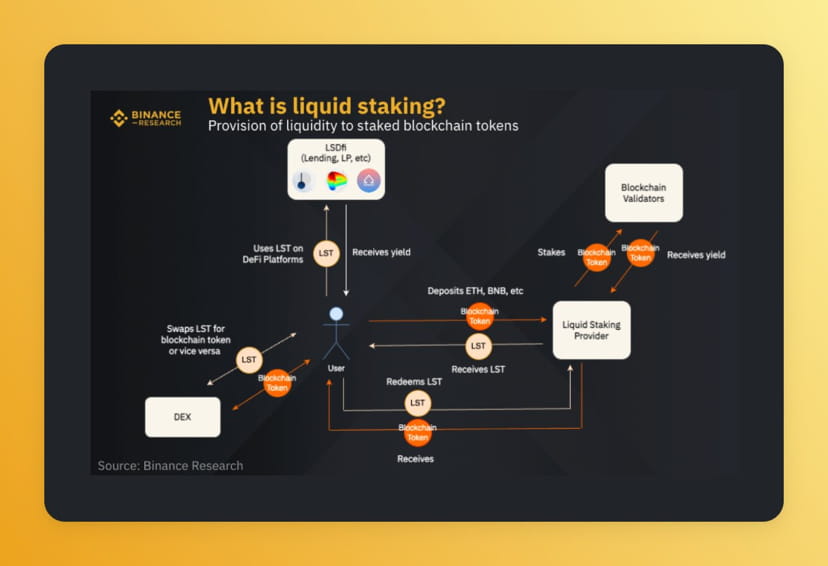
Before we dive in, let me provide you with a brief explanation of Liquidity Staking and its derivatives.
• PoS chains use staking as their consensus mechanism.
• To enhance security, these chains encourage more coins to be staked by providing staking incentives.
• However, staking rewards alone may not be enough. To address this issue, liquidity staking was introduced to improve the capital efficiency of staking.
• When you stake XYZ, you get stakedZYX which can be used as a regular token in various protocols.
Congratulations! Now that you've got the basics down, let's go a little deeper.
Why are Liquid Staking and LSDFi so popular?
With Ethereum’s Shapella upgrade, users gain confidence in staking as they can now withdraw their funds, which also opens up new opportunities for earnings.
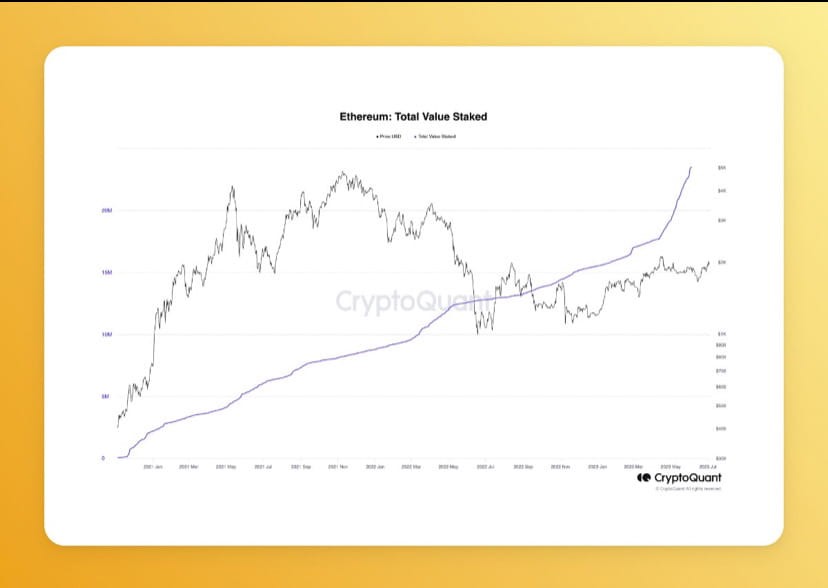
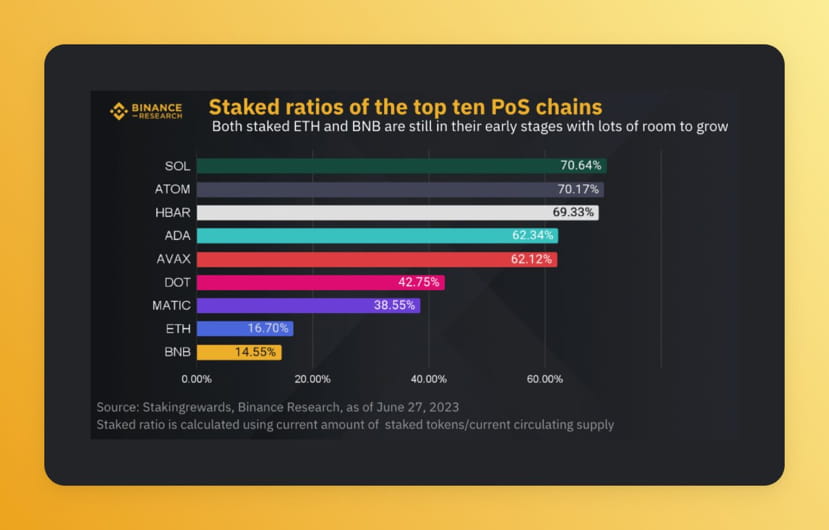
Interestingly, looking at the ratio of staked ETH tokens to its circulating supply, the ratio stands at 16.70%.
This shows that Ethereum still has a lot of opportunities to scale further. In comparison, the average staking ratio of the other top ten PoS chains is 49.67%.
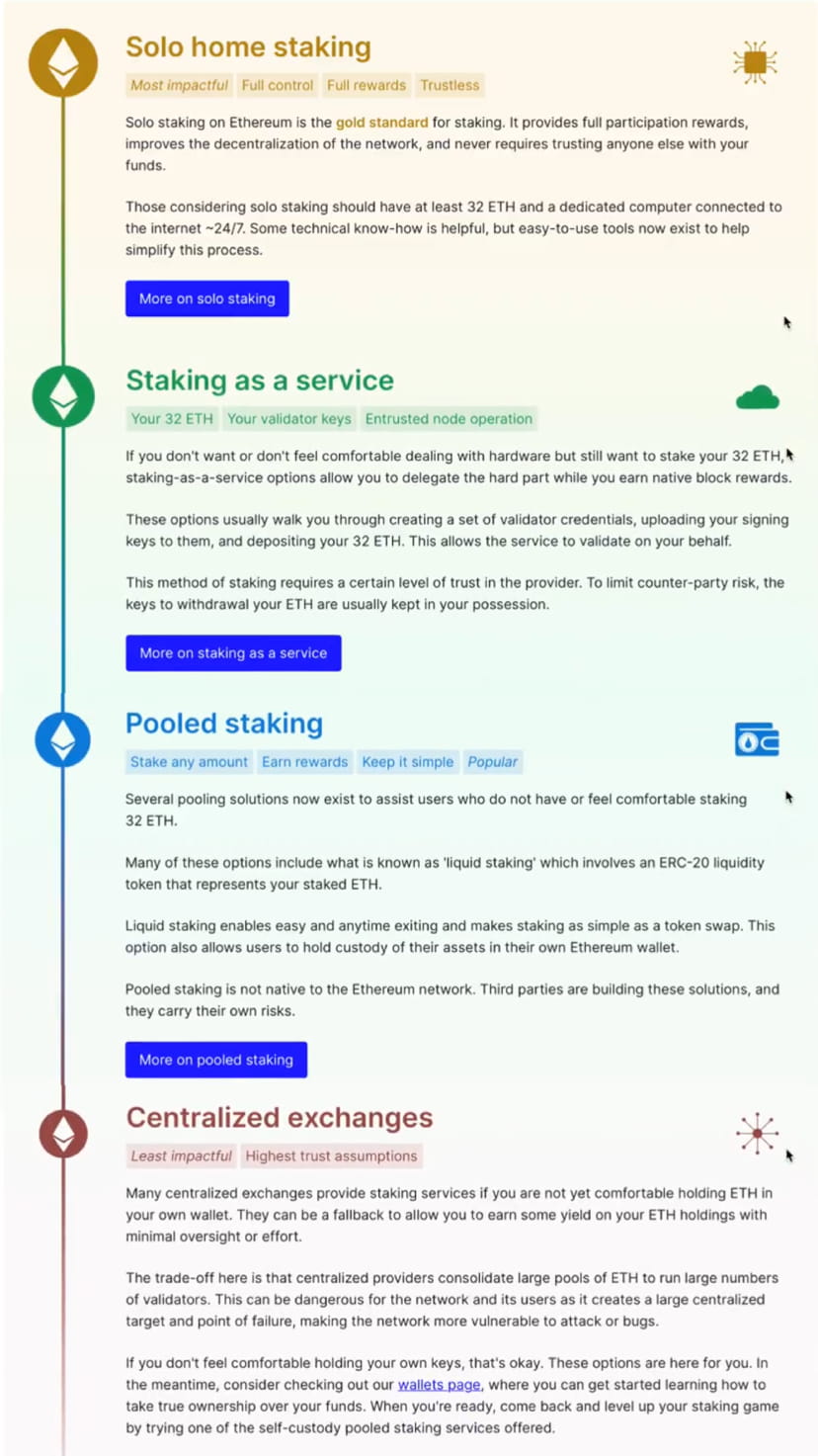
There are four ways to stake Ethereum:
• Aggregate staking (Lido, Rocket Pool, Frax, etc.)
• Staking on centralized exchanges (Coinbase, Binance, etc.)
• Staking as a service (minimum 32 ETH)
• Independent staking (minimum 32 ETH)
Lido currently leads the liquid staking space, capturing approximately 32% of the market.
However, Lido's dominant position carries significant risks.
If it exceeds key consensus thresholds of 1/3, 1/2, and 2/3, Ethereum could become vulnerable to manipulation or attack.
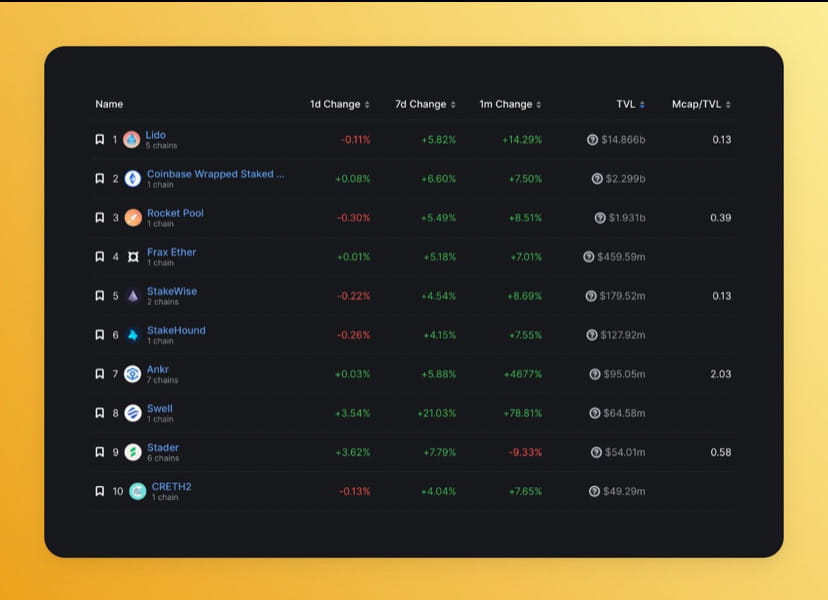
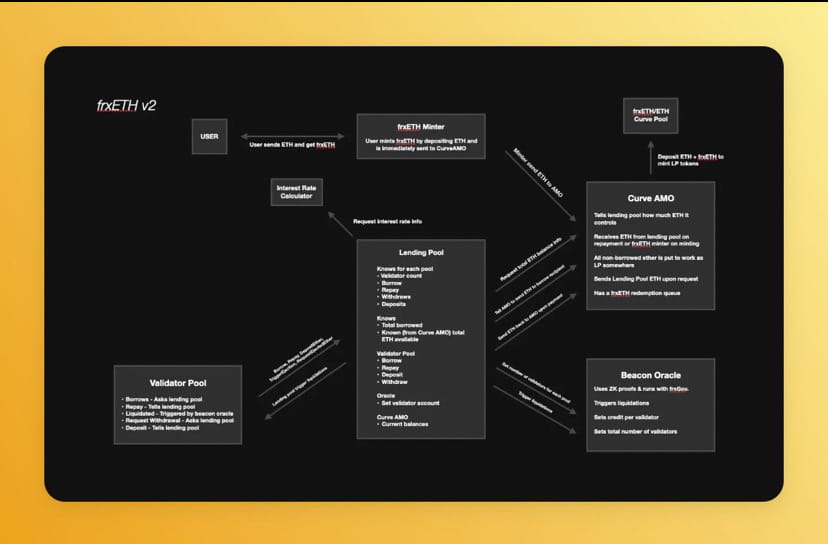
Of the top five shared staking protocols, @fraxfinance appears to be making the most progress towards decentralization.
This can be seen with the introduction of frxETH V2, which will serve as a decentralized and permissionless ETH lending market for node validators.
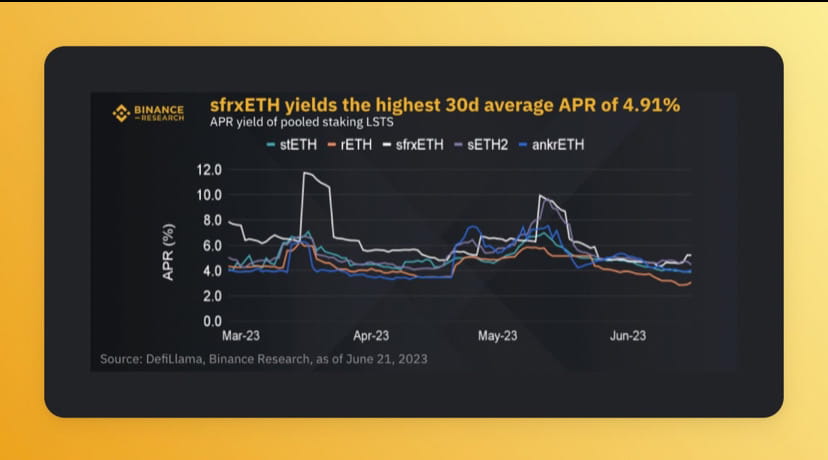
In terms of staking pool returns, @fraxfinance leads with a 30-day average annualized return of 4.91%.
Now, let's explore the landscape of LSDfi.
In short, LSDfi (sometimes also called LSTfi) refers to any mechanism that enables you to earn additional yield on your collateral assets (such as sfrxETH, stETH, etc.).
EigenLayer, Pendle, Curve are all examples of LSDfi protocol.
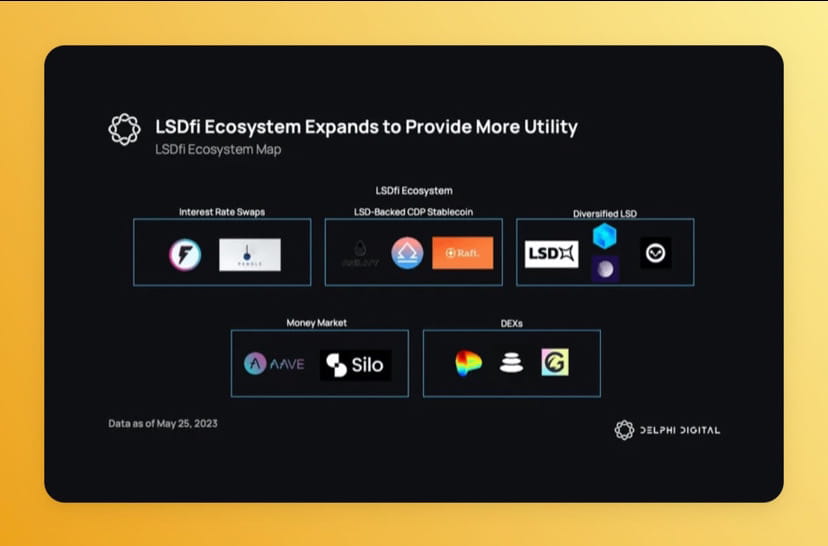
We can identify some fast growing LSDfi projects in the past few months:
• @LybraFinanceLSD
• @raft_fi
• @asymetrix_eth
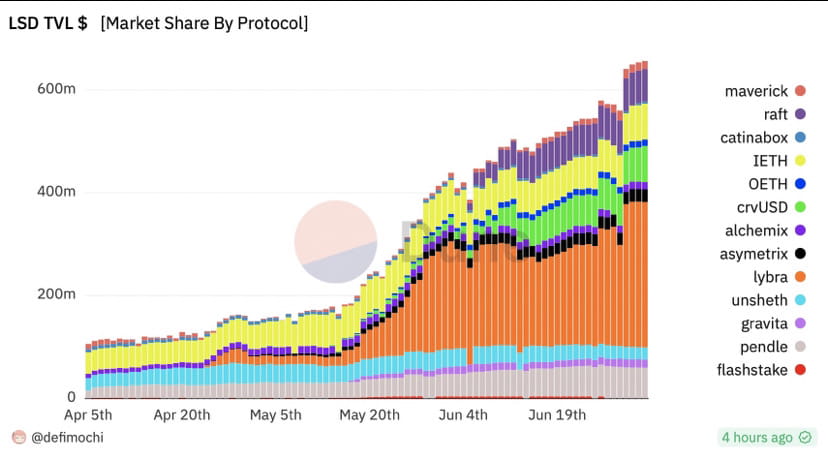
In terms of categories, the LSDfi market includes:
Lending: @AaveAave, @catinaboxfi, @SiloFinance
· CDP:@MakerDAO,@CurveFinance,@gravitaprotocol
Decentralized Exchange (DEX): @CurveFinance, @mavprotocol
· Income strategy: @pendle_fi, @Instadapp
Index LSTs: @indexcoop, etc.
In conclusion:
This is the current status of “Liquid Staking” and “LSDfi”. If you have any good insights, please discuss them together!