

1. Current status of Pendle
Pendle Finance is a yield strategy protocol deployed on Ethereum and Arbitrum. It will launch v2 and change the economic model at the end of 2022, and then support LST assets and launch Arbitrum. For more fundamental information, you can view the LD Pendle historical report.
Figure: Pendle TVL
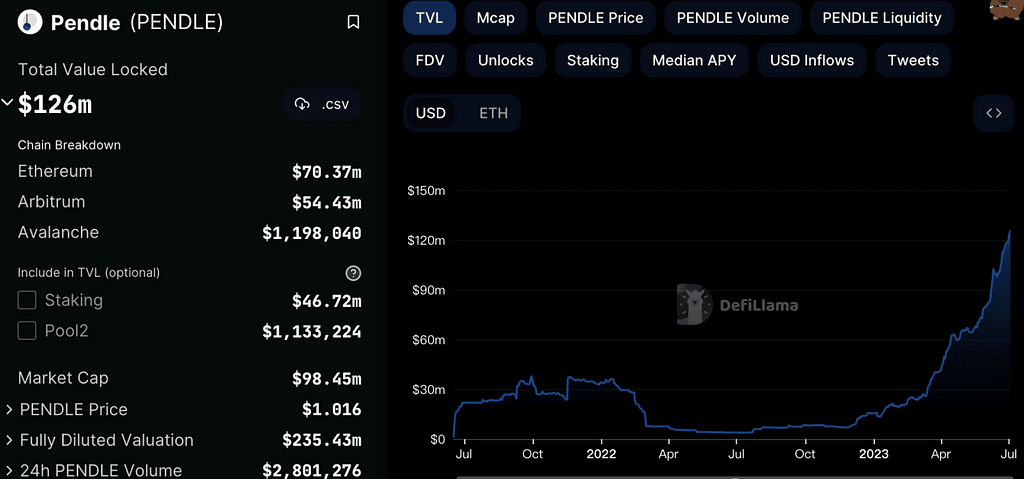
Its TVL has continued to grow since the end of 2022, and its current TVL has exceeded US$126 million.
Figure: Liquidity Distribution (Million)
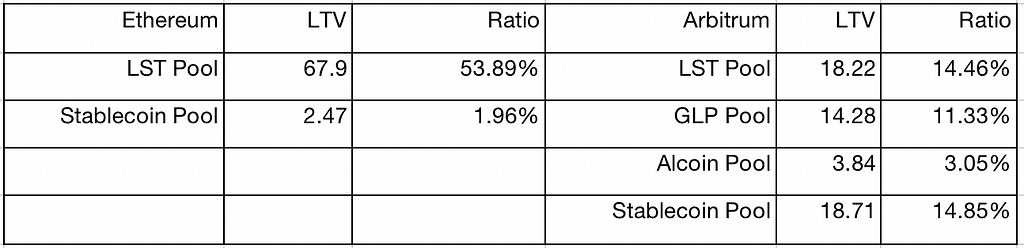
The liquidity in the Pendle protocol mainly comes from LST assets, and GLP, stablecoins and other tokens only account for about 30% of its TVL. GLP's income mainly comes from 70% of trader profits and losses and protocol fees. Trader profits and losses and protocol fees change every day, and the yield has a higher gaming space and tradability.
The initial income of LST assets comes from ETH PoS, and there are differences in the changes in the amount of pledge, the operating mechanism of the LSD protocol and the platform fees. Therefore, there is a gap in the yield of each LSD platform, but the gap is not large. The yield is usually maintained at around 4%. The small elasticity of the yield also determines that the yield of LST assets is poorly tradable. The Pendle protocol adopts the veToken and Gauge voting mode for liquidity mining, so the Pendle LST pool yield can reach 10%-30%.
Figure: Pendle protocol transaction volume
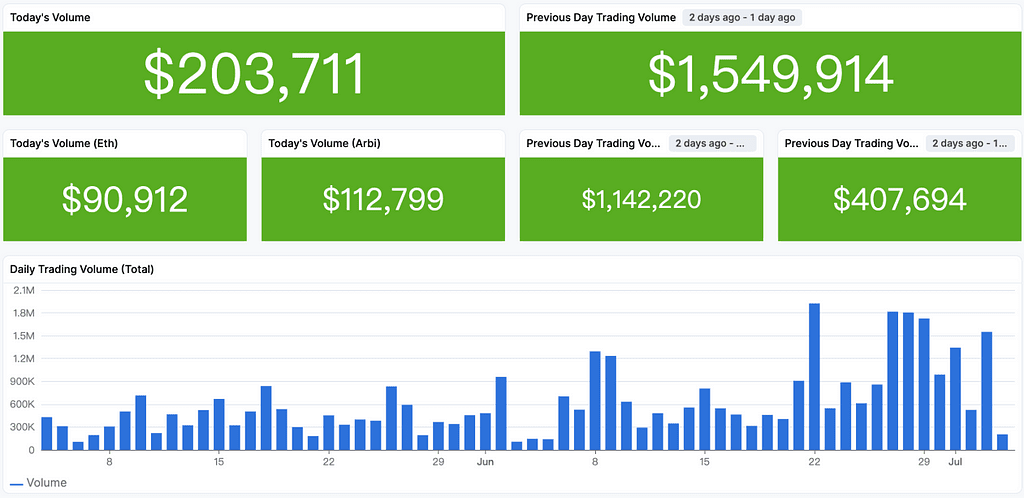
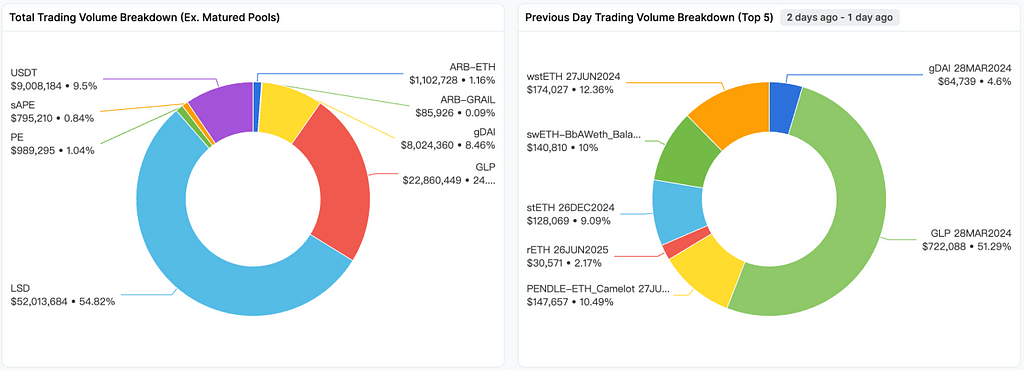
According to historical transaction volume data, the daily transaction volume of the Pendle protocol is basically less than 1 million US dollars. LSD asset transaction volume accounts for 54.82% of the total transaction volume, and GLP historical transaction volume accounts for 24.09% of the total transaction volume. GLP transactions usually occur when the market is relatively active, so GLP accounted for 51.29% of the transactions in the past day. Combined with the LTV proportion of various assets in the protocol, there is more room for speculation in the GLP yield rate.
2. Pendle Economic Model
Token Allocation
Figure: Token distribution
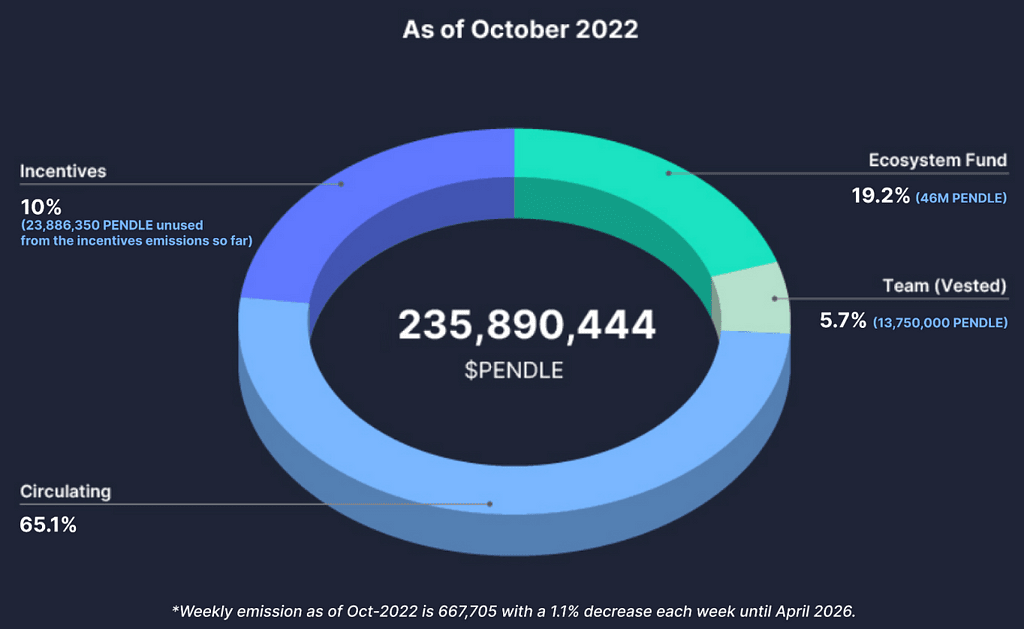
Currently, the team, consultants and investors have all been unlocked.
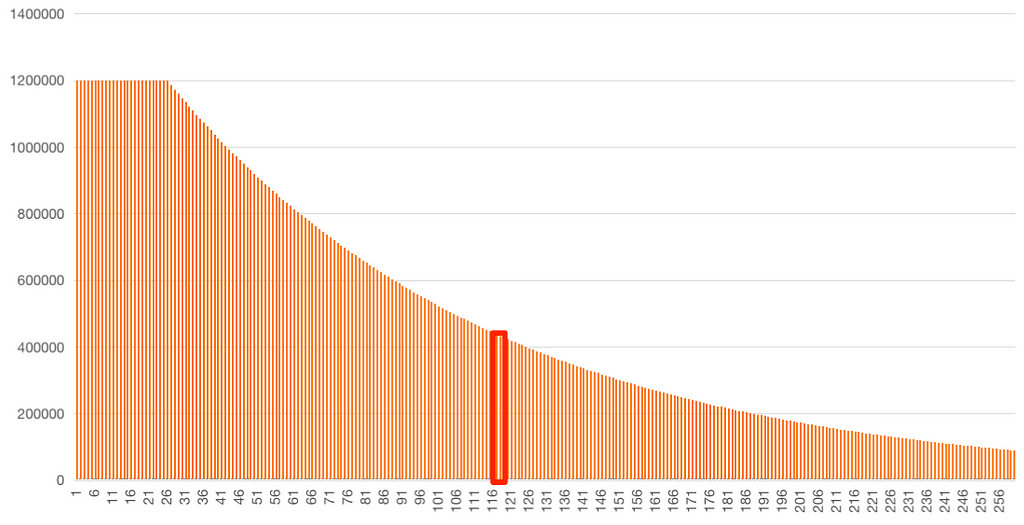
In the liquidity incentive part, 1.2 million will be distributed per week in the first 26 weeks, and then it will decrease by 1.1% per week until the 260th week. After the 260th week, the final annual inflation rate will be 2% based on the circulating token supply, and the weekly liquidity release will remain at a relatively stable level. According to the team description, the weekly release in October 2022 is 667,705 (the release in the 79th week), and it is currently between 113-117 weeks, with a weekly release of about 450,000. PENDLE will continue to be released for a long time.
Figure: PENDLE weekly release
Pendle introduced the veToken model in November 2022, with the primary purpose of improving the liquidity of the protocol. Pendle's lockup period ranges from 1 week to 2 years. vePENDLE holders direct the reward flow to different pools through voting, incentivizing liquidity in the voting pool. A snapshot of all votes will be taken at the beginning of each cycle at 00:00 UTC on Thursday, and the incentive rate of each pool will be adjusted accordingly.
vePENDLE Key Features:
1) LST asset issuers have little motivation to bribe vePendle. As a leading DEX, asset issuers usually provide their own token mining rewards and bribe veCRV to vote to increase CRV liquidity mining incentives in order to increase the liquidity of assets in this protocol in Curve. The demand for vePENDLE mainly comes from LPs participating in mining, and lacks strong demand from asset issuers.
2) vePENDLE lockers can only participate in the allocation of transaction fees for the voting pool.
3) vePENDLE holders can share 3% of the fees generated by Yield Token (YT).
4) vePENDLE holders can share 80% of the transaction fees of the voted AMM pool.
Figure: PENDLE pledge status
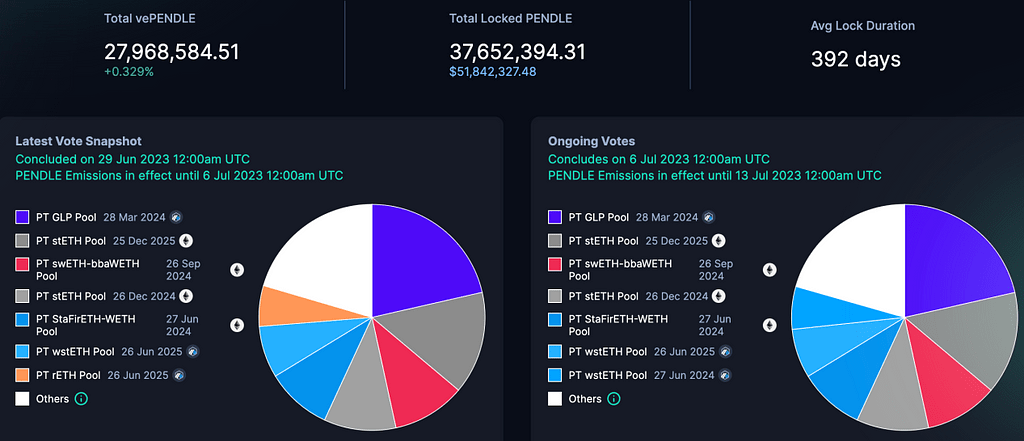
As of July 3, the locked amount of PENDLE was 37 million, with an average lock-up time of 392 days.
3、Penpie/Equilibria
Penpie and Equilibria are both auxiliary protocols that improve LP income based on the Pendle veToken economic model. LPs do not need to pledge Pendle to obtain Pendle mining boost income. There is not much difference between the business models of the two.
Penpie
The protocol currently supports Ethereum mainnet and Arbitrum.
Users can convert PENDLE to mPENDLE through Penpie, and the protocol collects PENDLE and pledges it as vePENDLE to boost mining for LP. Boost income will be distributed 83% to LP, 12% to mPENDLE holder, and 5% to vlPNP. The team plans to distribute 17% of the YT rewards in vePENDLE equity to the Bribe market, but it is not yet online.
Table: Income Distribution
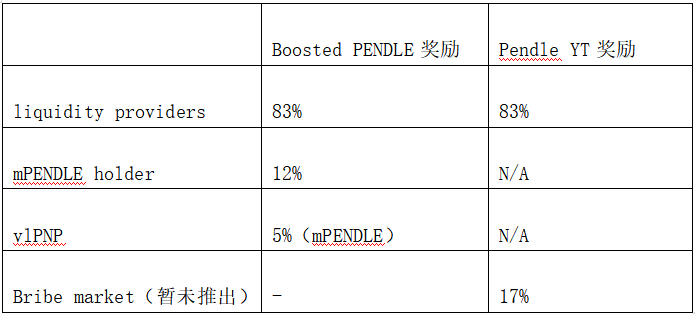
PNP is Penpie's governance token. Users can obtain vlPNP at a 1:1 ratio by locking PNP tokens. Holding vlPNP can earn protocol distribution income and participate in governance. Once a user locks their PNP tokens into vlPNP, they will enter the default lock state, and the lock-up period is unlimited. Users must "start unlocking" to enter the 60-day cool-down period. During the cool-down period, vlPNP holders can continue to earn passive income but cannot participate in voting. After the 60-day period, users can fully unlock their vlPNP into PNP. The penalty cost on the first day of the cool-down period is 80% of the total amount of PNP tokens locked by the user, and will decrease nonlinearly over time.
Equilibria
Equilibria's business model is basically the same as Penpie, which is also to help Pendle LP achieve mining boost without staking PENDLE. Pendle staking is irreversible after ePendle. Users need to lock EQB/xEQB into vlEQB to obtain protocol fees and voting rights. xEQB can be converted to vlEQB, and the team plans to integrate xEQB into other protocols, but there are not many use cases at present.
Figure: Equilibria Architecture
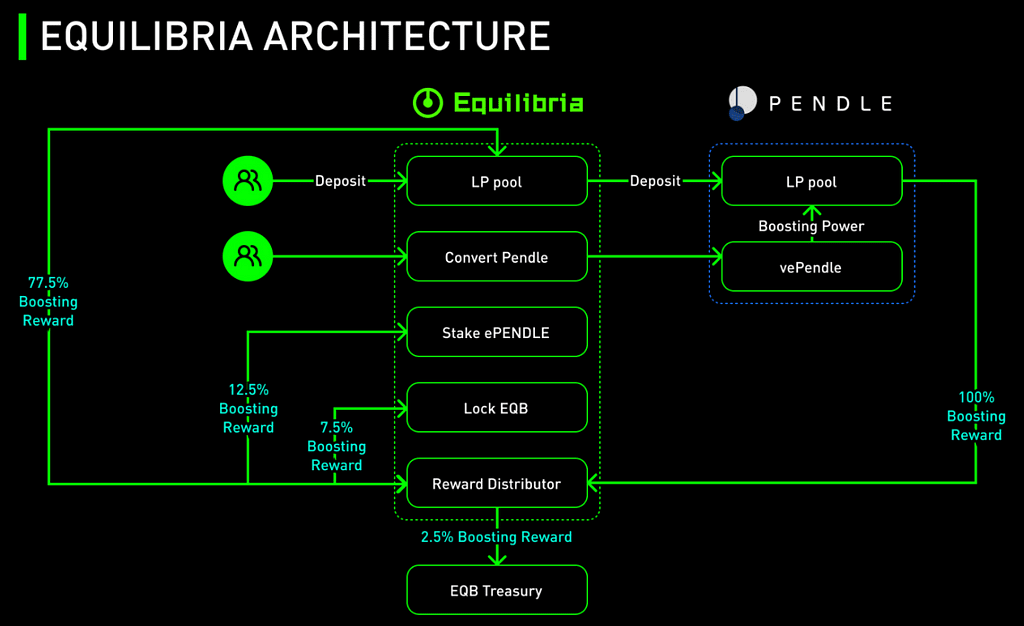
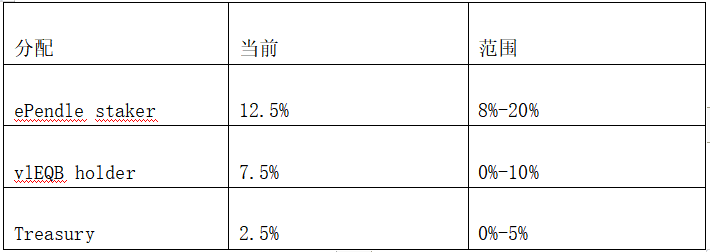
After mining boost is achieved through Equilibria, 77.5% is allocated to LP, 12.5% to ePendle holders, 7.5% to vlEQB holders, and 2.5% to the Treasury. The income ratio allocated to each role has a set range.
Table: Income Distribution
Protocol Data
Figure: PENDLE locks data
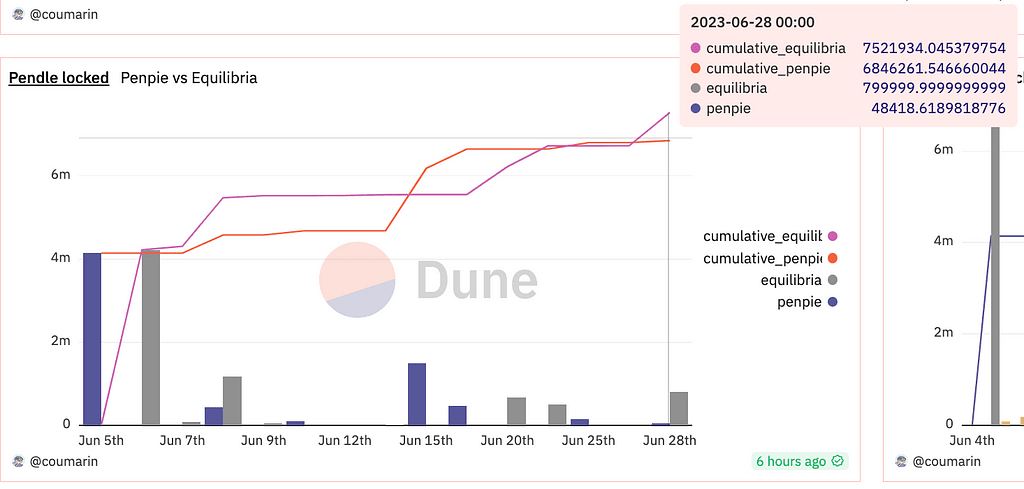
*Dune data is for reference only (stopped on June 28), and there are discrepancies between the current data on the protocol’s official website.
According to official website data, as of July 4, the locked amount of Penpie PENDLE is 7.45M, and the locked amount of Equilibria is 7.54M. Although ePENDLE, mPENDLE and PENDLE are all exchanged at a 1:1 ratio, Equilibria announced on June 19 that it would suspend the liquidity pool of ePENDLE/PENDLE. The original plan stated that it would be postponed for 2 weeks or more. Judging from the community dynamics, the team has not yet given a definite time. mPendle has launched Wombat, but the exchange ratio is about 1:0.72, which is seriously worn out.
表:Penpie vs Equilibria
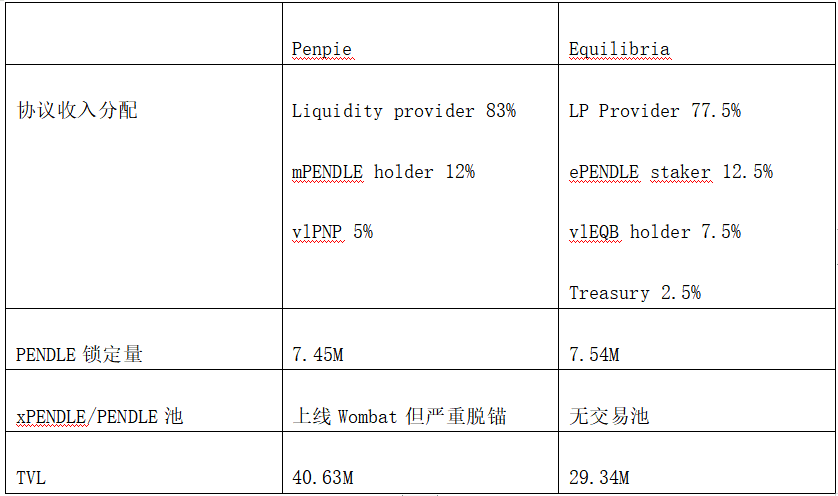
Compared with Equilibria, Penpie allocates a larger portion of boost income to LPs, is more friendly to LPs, and retains more income for LPs. Under the same conditions, LPs will be more willing to choose Penpie.
From the data point of view, the TVL of the Pendle protocol has been growing steadily, and the fundamentals have been gradually consolidated. The risk point is that the PENDLE tokens are continuously being emitted. Neither the PENDLE protocol nor Penpie and Equilibria can maintain a high APR for a long time, so it is difficult to continue to attract users to stake PENDLE. In addition, there are currently a large number of ePENDLE and mPENDLE that cannot be sold due to the lack of pools or depegging, which are all implicit selling pressure.