


The latest U.S. non-farm employment outbreak (referred to as non-agricultural data) will be announced at 8:30 pm this Friday.
This is the economic and technical data that many traders pay attention to. So what exactly is the non-agricultural data and how much impact does it have on the market?
Changes in non-farm payrolls (Changes in non-farm payrolls) is an item in the employment report. This item mainly counts changes in jobs other than agricultural production. This data is released together with the unemployment rate. Changes in the number of non-agricultural employment reflect the development and growth of the manufacturing and service industries. A decrease in the number means that companies are reducing employees and the U.S. economic situation is deteriorating. In the absence of hyperinflation, a significant increase in the number indicates that the U.S. economy is moving toward good.
I have compiled statistics on the six non-farm data releases in the first half of this year, as well as market fluctuations. Let's see if there are any patterns.
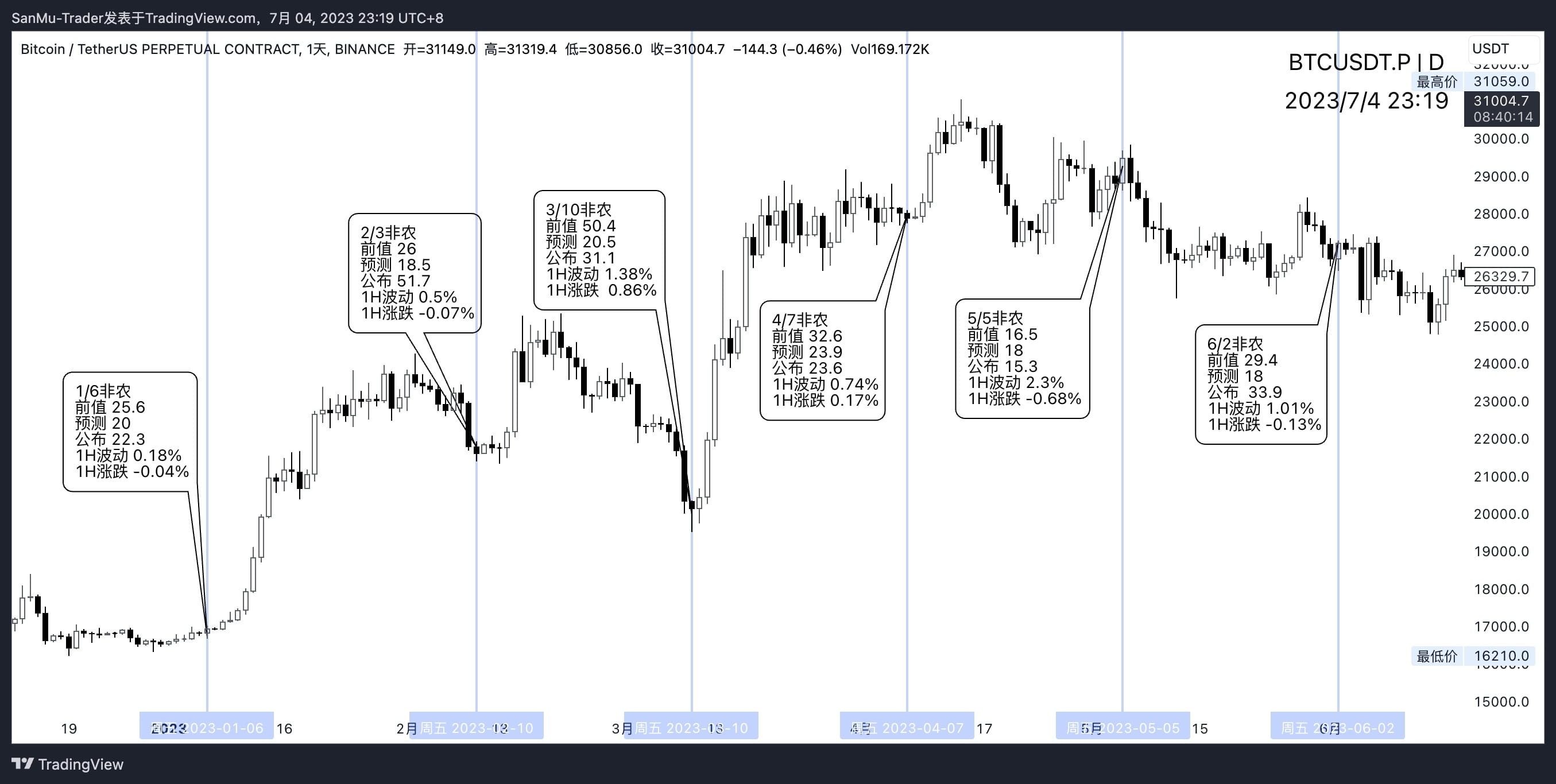
I summarized the fluctuations in the data release for nearly an hour. In fact, we can see that the fluctuations are not as large as everyone imagines or expects. The overall fluctuations are basically within 2%, and there was only a 0.18% fluctuation in January. The rise and fall are not large.
First of all, we need to know how non-agricultural data affects the market.
The reason why non-agricultural data can bring fluctuations to the market is that the data it releases represents the economic environment of the United States. The good or bad economic situation of the United States affects the decision of the Federal Reserve to raise interest rates. The level of interest rates determines the liquidity of the market (when the interest rate is high, people will deposit their money in the bank to earn high interest rates. When the interest rate is low, the bank's interest rate becomes less, and people will take out their funds for investment.)
Therefore, it is a multi-correlated data. If the back-end interest rate has been basically determined, then as long as the non-agricultural data does not have particularly large abnormal changes, the impact on the market will be basically small.
In the first half of this year, the interest rate hike decisions were basically in line with expectations, and the market's expectations for interest rates were not very different, so the non-farm data did not have a big impact on the market in the first half of this year. It can be seen that except for May, which was lower than the expected value and fluctuated by 2.3% within 1 hour, in other months, whether the data released was close to the expected value or far exceeded the expected value, the fluctuation of the market had little impact.
Of course, it is not just the non-farm payrolls, CPI, and interest rate decisions that have a smaller impact on market fluctuations. The last interest rate meeting said that there will be two more interest rate hikes this year, 50 basis points each. There is no way around it. There will be an interest rate hike on the 27th of this month.
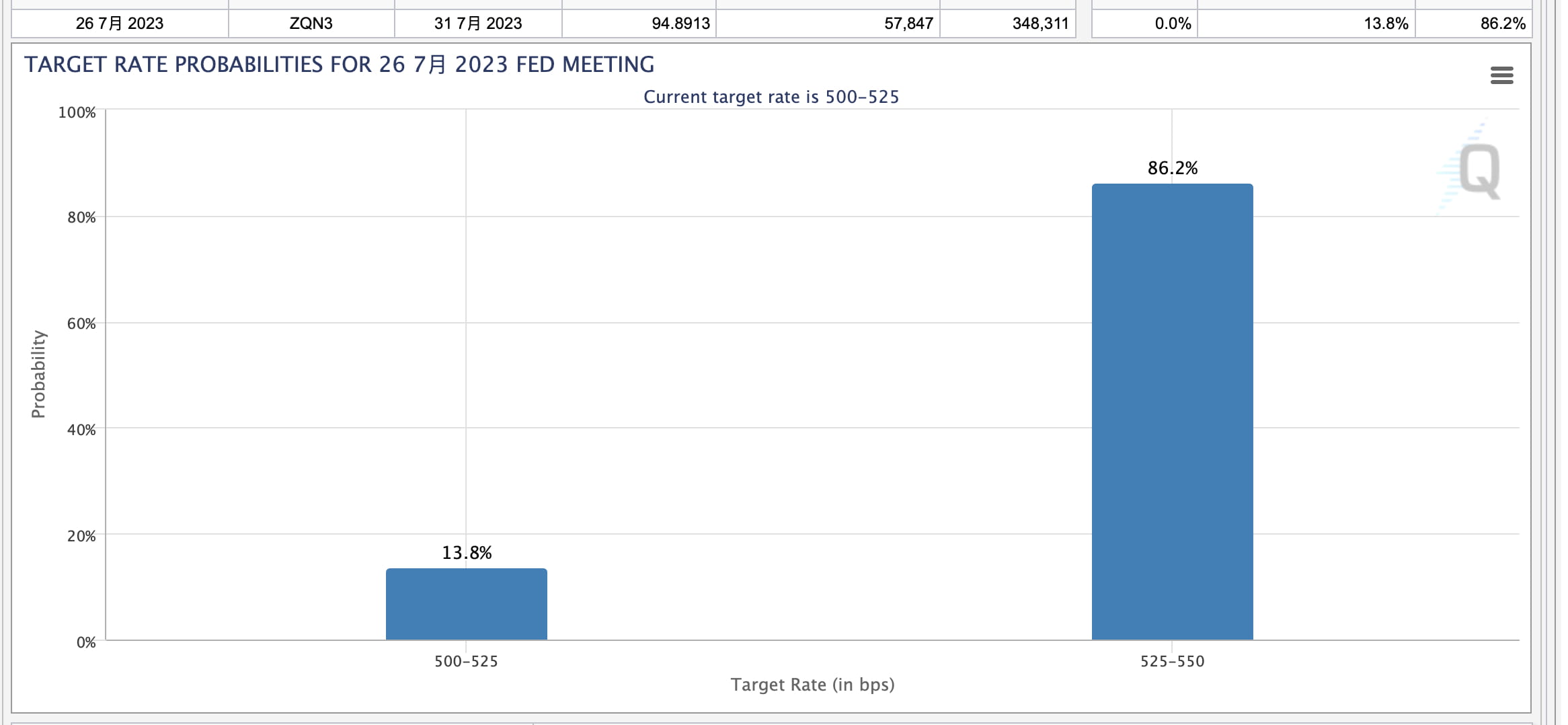
It can be seen that the market's expectation for a 25 basis point rate hike is 86.2%, and the expectation for no rate hike is 13.8%.
So I think as long as the non-agricultural performance data is not too lower than expectations, the impact on the market will not be too great.
Because if the non-farm payrolls continue to exceed or meet expectations, it will be in the same direction as the market's decision to continue raising interest rates in the future. At this time, there will usually not be too much disagreement in the market.
However, when we do secondary transactions, we still need to remain cautious. The market trend is unpredictable. We should set stop losses and ensure the safety of funds first.
This is all the content of this article. If you have different opinions, you can communicate in the comment area. If you find it helpful, remember to like and follow!