

Main topics of the post:
Ticker symbols are used to identify projects and are the unique letter combinations you see in all your cryptocurrency trading apps.
Traders should be careful to avoid scams or ultra-low cap projects using tickers that are identical or similar to those of legitimate projects.
Checking the contract address and any project information for the assets you want to trade, deposit or withdraw is crucial.
First introduced in the 19th century to speed up the trading process, ticker symbols are the unique letter combinations you see in all your cryptocurrency trading apps. Familiar examples include: BTC (Bitcoin), ETH (Ethereum), and BNB (Binance Coin). These abbreviations play a crucial role in helping traders identify and differentiate assets.
Unlike traditional markets, multiple projects claiming the same ticker is a common occurrence in cryptocurrencies. This situation may arise due to coincidence or, in some cases, malicious intent. Traders — particularly users of decentralized exchanges (DEX) — should be careful to avoid scams or ultra-low-cap projects using tickers that are identical or similar to those of legitimate projects.
In this guide, we will cover how to accurately identify cryptocurrency ticker symbols before making trades, deposits, or withdrawals.
Always do your own research
Regardless of the type of broker you use, it is crucial to verify the contract address and all project information of the assets you wish to trade. The importance of doing your own research (DYOR) cannot be ignored. It serves as a vital protection against falling victim to possible scams or projects with deceptive ticker symbols.
Let's explore some tips you should keep in mind.
1. Token contract address
The contract address is a unique identifier that refers to the location of a token's smart contract, a piece of code stored on the blockchain that performs functions, such as deposits or withdrawals, when predetermined conditions are met.
Here's what the BNB (ERC-20) token contract address looks like:
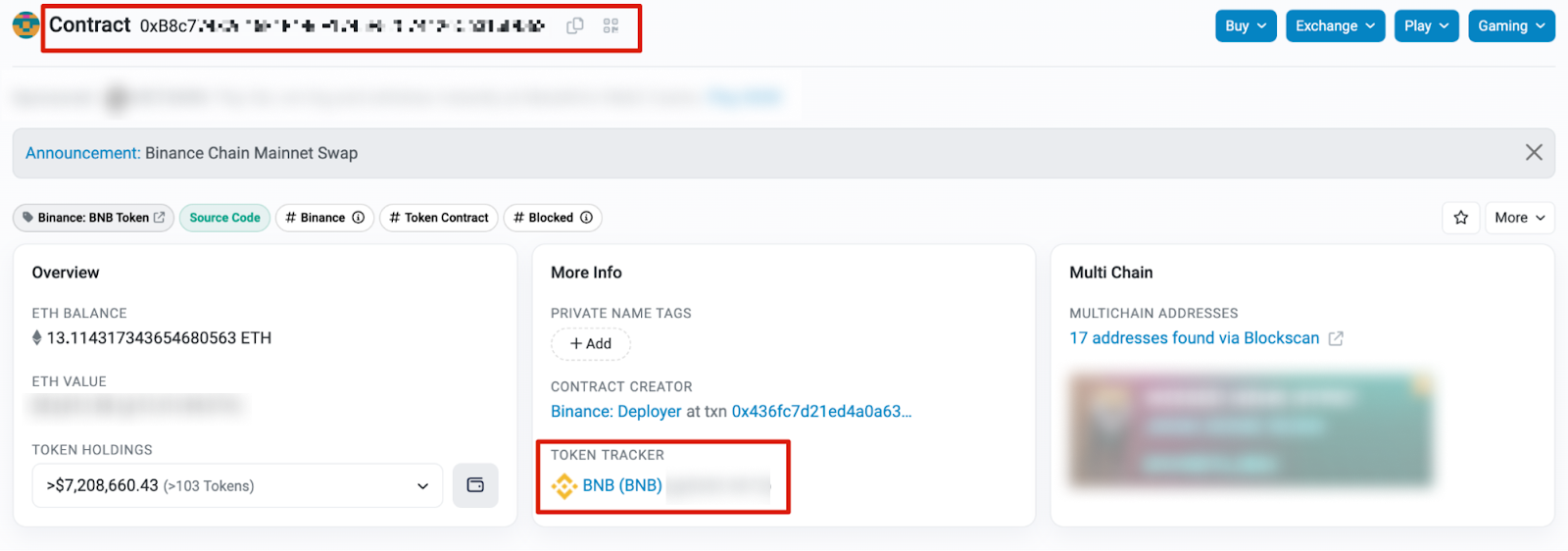
This information can be found on community forums, your deposit page, or trusted block explorer websites.
2. Native Tokens
Note that some tokens are built directly on a blockchain. We call these tokens “native tokens”. Let's use BNB as an example.
Suppose you deposit BNB via BNB Smart Chain (BSC). There will be no contract address here because everything the token needs to function is programmed into its underlying network (BSC) rather than a separate smart contract.
On the other hand, depositing BNB through a different network like Ethereum typically requires a smart contract and token contract address.
3. Background Check
Take the time to familiarize yourself with the project website, whitepaper, tokenomics, and social media channels. These resources offer valuable information about project goals, team members, roadmap, and legitimacy. Remember to validate the information against several reliable sources. Here are some warning signs you should watch out for:
Most tokens are held in a few wallets
Unclear or ambiguous whitepaper
Anonymous team with no previous history
Bad reputation on social media (accusations of fraud)
Hidden source code
Before making a deposit or withdrawal
To ensure a smooth and secure transaction, take precautions such as sending a test transaction, verifying the contract address, and checking blockchain compatibility. If you encounter issues such as incorrect deposit or lack of funds, please consult our Frequently Asked Questions (FAQ) guides:
How to recover deposit that was not credited with Self-Service Recovery
How to recover cryptocurrency deposits with the wrong or missing Tag/Memo
Why was my deposit not credited
1. Submit a test transaction
Cryptocurrency transfer has a more complicated user experience than traditional banking or payment systems. It is advisable to send a small amount – one that you are comfortable losing – to confirm the destination address before initiating a deposit or withdrawal.
2. Check the token contract address
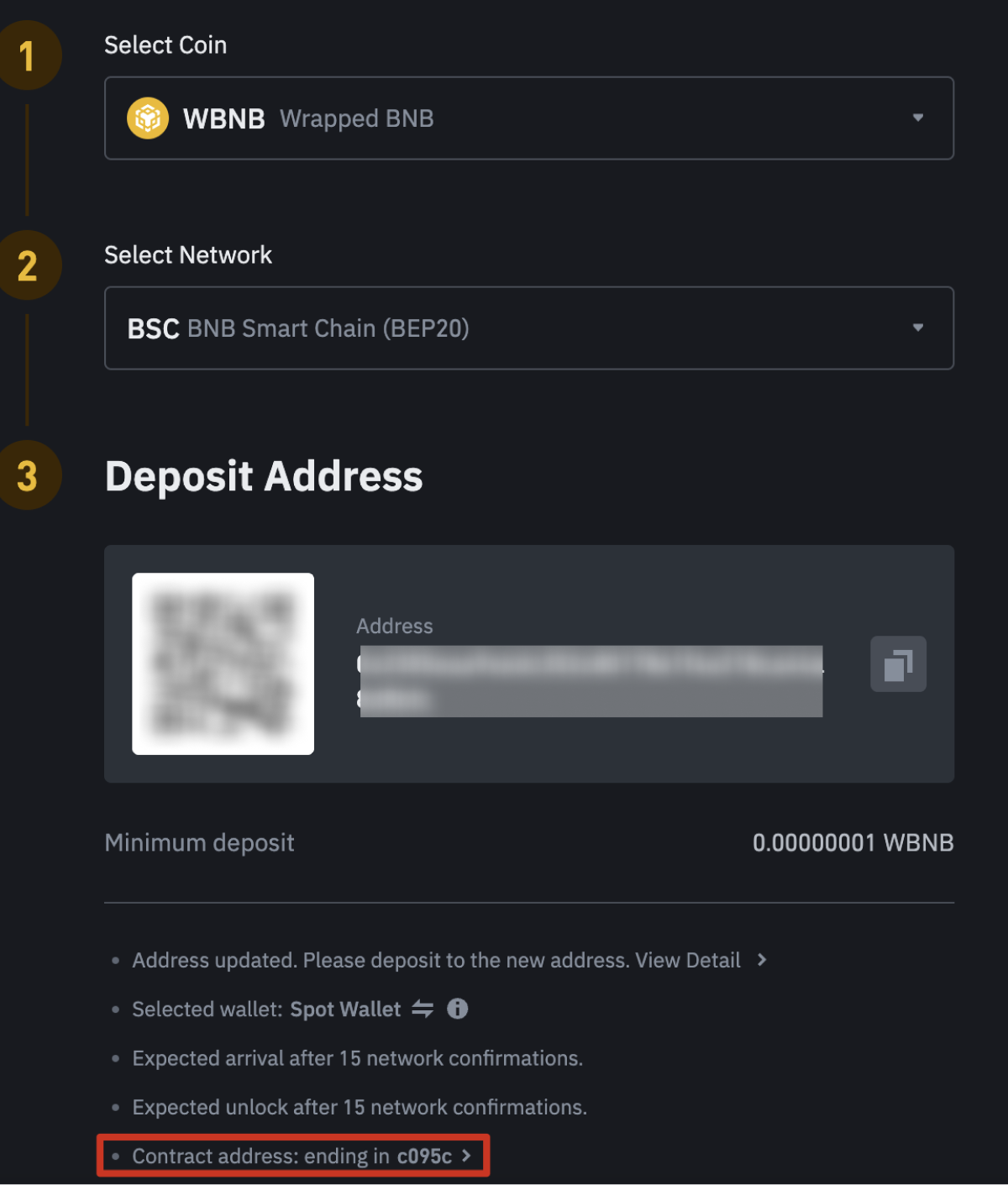
Similar to trading, you should also check the token contract address supported by the respective platforms involved before initiating a deposit or withdrawal. On Binance, you can find this information in the contract information section on your deposit page. Confirming the correct token contract address helps avoid mishaps such as sending funds to the wrong destination.
Contract information on the Binance app

Contract information on Binance desktop version
3. Check the supporting blockchain network
The same token with identical tickers and blockchain addresses can exist on multiple networks. For example, BNB exists on both the BSC and the Ethereum network. However, both versions are separate entities despite sharing the same name.
To illustrate this, suppose you send BNB via BSC to a wallet that does not support BRC-20 transfers. The receiving platform may not credit your deposit and the funds may even require a retrieval service.
To ensure a successful transaction, ensure that the receiving platform supports the blockchain network associated with the token you intend to deposit or withdraw. Failure to consider blockchain network compatibility may result in tokens being sent to the wrong address or technical difficulties during the transaction process.
Tip: Binance users can visit our official Deposit and Withdrawal Status page to view the real-time status of all supported coins and networks on the Binance platform.
4. Keep an eye out for token bridges
If you are using a token bridge to facilitate a transfer, please note that some centralized exchanges do not support token bridge transfers. Pay more attention to the token contract address and check whether it is compatible with the target platform before proceeding.
Keep in mind that sending smart contract tokens from a bridge can be interpreted as a smart contract deposit. In this case, there is a possibility that our system (Binance) will not credit the deposit to your account and you will have to file a manual appeal.
Tip: Transfer bridge tokens to your personal wallet before sending them as a standard blockchain transaction to the destination wallet on Binance. And remember: always send a test transaction first.
How to identify the correct token using a Block Explorer
As of May 2023, there are around 24,073 cryptocurrencies on CoinMarketCap. New projects — real, deceptive or outright scams — are launched every week. To help you navigate the cryptocurrency space, we provide a real-world example of two projects (one is legitimate and the other is a copycat) and explain how you can tell them apart beyond the logo and name.
How to check if you found the wrong “USDT”
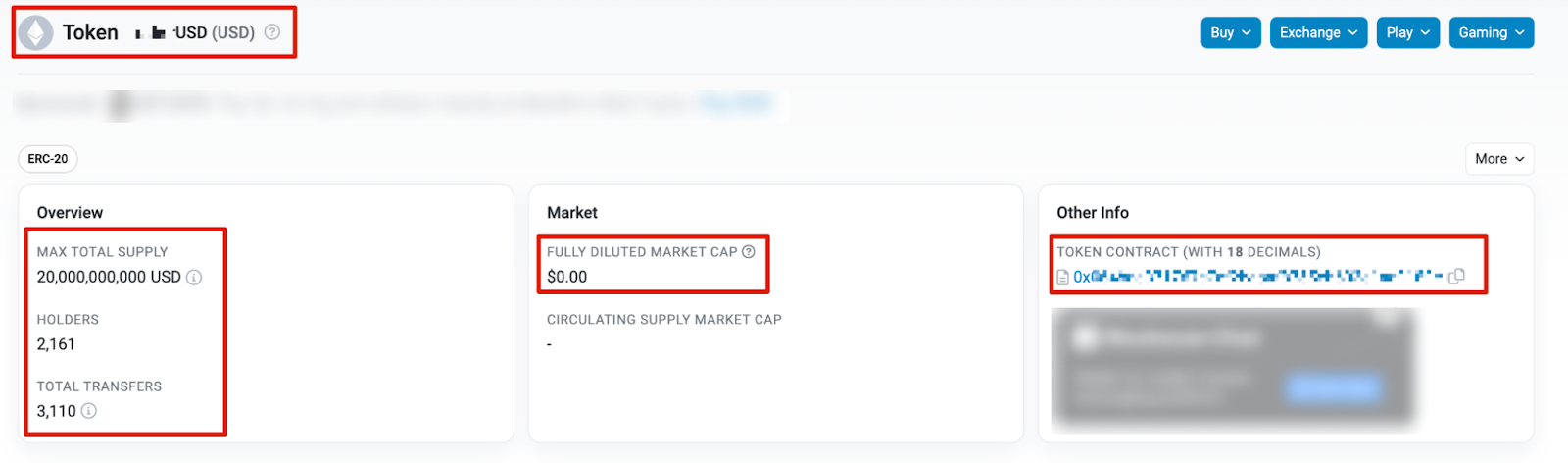
This listing, at first glance, appears to be USDT. Look at the “Overview” and “Market” sections. The numbers don't add up: total supply of US$20 billion, 2,161 holders, market value of US$0 and no information about supply in circulation.
How to check if you found the right USDT
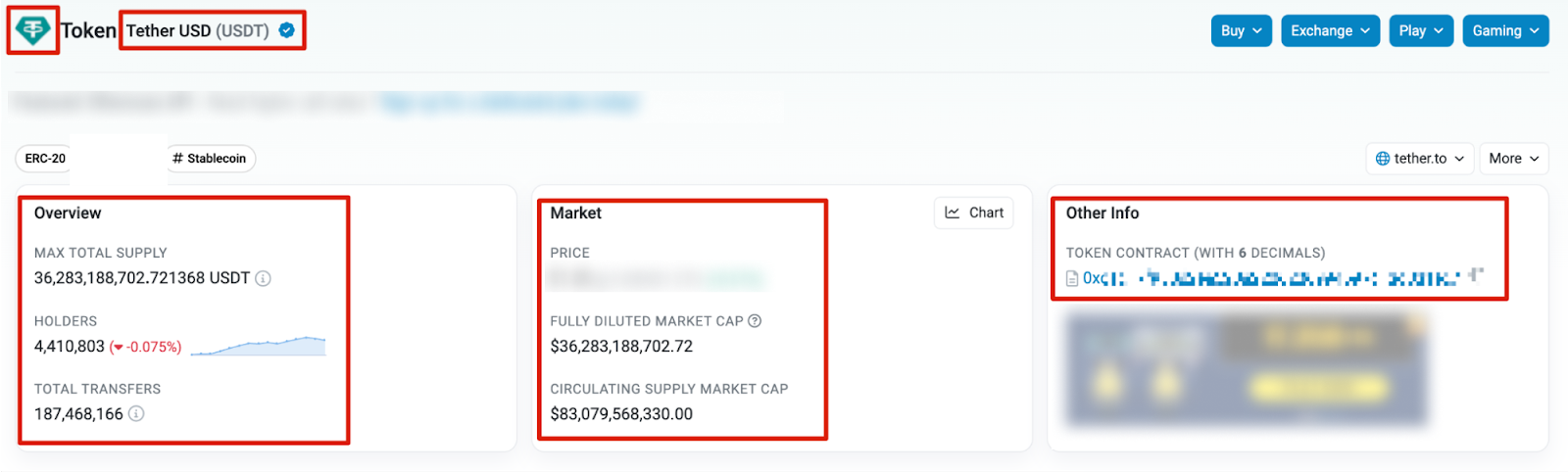
Here is the block explorer page for USDT listed on Binance. Taking a closer look at the numbers, we can see that there are over 4 million holders, 185 million transfers and $36 billion in total supply.
Compared to the previous examples, these numbers make sense considering that USDT is the largest stablecoin by market cap. Furthermore, there is clear information in the “Market” section regarding market capitalization and circulating supply.
To be accurate, you should also take the extra step to conduct additional research and verify all of the above information with other reputable blockchain explorers.
A note on BSC and DeFi
Keep in mind that Binance has no control over projects created on open source (decentralized) networks like BSC. Projects in BSC are community-driven, which means that all governance-related decisions are made by their respective communities.
Our listing team is only responsible for verifying tokens listed on the official Binance exchange. We do not moderate projects listed on BSC-based DEXs. The benefits that come with DeFi allow anyone to deploy not only legitimate projects but also illicit tokens designed to scam investors.
Centralized or decentralized, each comes with its own pros and cons. As a general rule, you should first arm yourself with the necessary cryptocurrency knowledge before you start exploring DeFi.
Safe trading
Next time you're unsure about a token, be sure to follow this guide and perform due diligence before making a trade, deposit, or withdrawal. By following these steps, you can make informed decisions and avoid common pitfalls that can negatively impact your cryptocurrency funds.
Further reading
Blockchain and Crypto Concepts: Beginner’s Guide
How Binance helps traders with essential information
Stay Safe: Detecting Account Takeover Attacks
Risk Warning and Disclaimer: This content is presented to you “as is” for informational and educational purposes only, without warranty of any kind. The content should not be construed as financial advice and is not intended to recommend the purchase of any specific product or service. Digital asset prices can be volatile. The value of your investment may go down as well as up and you may not get back the amount invested. You are solely responsible for your investment decisions. Binance is not responsible for any of your possible losses. This material should not be construed as financial advice. For more information, see our Terms of Use and Risk Alert.