

In the current era, smart contracts have become an indispensable part of most projects, from decentralized exchange platforms (DEX), lending and borrowing (Lending/Borrowing) to decentralized markets. centralized (NFT, Marketplace)... But what is a smart contract? What outstanding features do they have?
What is Smart Contract?
Smart Contract is a unique concept that marks the combination of blockchain technology and contractual agreements. Through the use of programming code, Smart Contract automatically executes the terms and conditions in the contract reliably and without the need for third-party intervention.
The special thing about Smart Contract is that it is transparent and cannot be modified. All transactions are recorded on the blockchain, making auditing and verification easy and irrefutable. This completely eliminates the need for intermediaries and minimizes risk for all parties involved.6
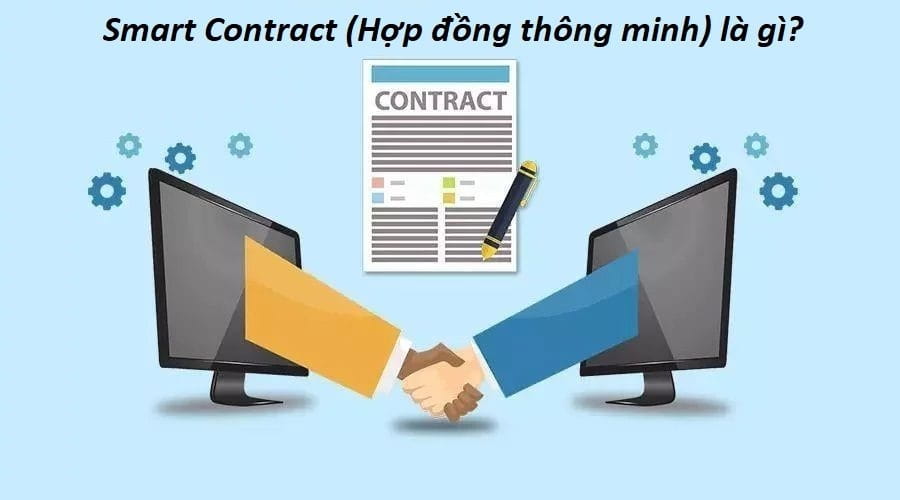
What is Smart Contract? How it works, Applications, What are its benefits?
With Smart Contract, parties can carry out transactions without having to trust each other or rely on the intervention of a third party. This opens up a new world of direct, secure and efficient trading possibilities without restrictions by geography or time.
Nick Szabo proposed the concept of Smart Contract back in 1993 and since then, it has become one of the important milestones in promoting the advancement of blockchain and decentralized financial technology.
When Nick Szabo came up with the idea of Smart Contract, the world was still waiting for the right technology and environment to turn that idea into reality. When Blockchain technology appeared and developed, everything changed.
Bitcoin has opened the door to establishing smart contracts on the Blockchain, also known as “Smart Contract Blockchain”. Although it has been an important step forward, Bitcoin still does not meet all the requirements for smart contracts.
The emergence of Ethereum and Smart Contracts Ethereum has completely changed the way we think about Smart Contracts. It has become a powerful tool, providing a new and more flexible way to create contracts, and bringing this idea closer to everyone.
How does Smart Contract work?
Picture Smart Contract as a working vending machine that you encounter on a street corner. Their operating mechanism is similar to a vending machine that automatically serves customers: only performing previously programmed actions when the conditions are met.
First, the terms of the contract are written in programming language, then encrypted and stored on Blockchain. Each time a contract is created, it is distributed and stored across multiple nodes on the blockchain network.
When a contract is deployed, it automatically executes its predetermined terms. Smart Contract also automatically checks and verifies the implementation of terms in accordance with the provisions of the contract.
To understand better, let's look at an example:
Let's say you want to rent an apartment from me and pay with cryptocurrency through Blockchain. The smart contract will contain terms, including transferring the apartment passcode to you on the rental date. If the password is not sent on time, the contract will automatically refund the money. If the crypto is sent before maturity, the contract will hold the funds and crypto until the end of the term. The system operates based on the "If - Then" principle and is supervised by many people, ensuring the implementation of contracts in a transparent and non-interfering manner.
What are the benefits of smart contracts?
Smart Contract takes advantage of the full potential of Blockchain technology, and from there, it brings many significant benefits. Here are its main benefits:
Automation: The contract execution process is completely automated. You set up and manage the contract yourself without relying on any other third parties. This not only reduces risks from depending on brokers but also increases transparency and trust.
Zero loss: Your documents are encrypted and stored on a shared ledger, meaning they cannot be lost. With each copy of the blockchain, everyone can access and inspect your documents.
Security: Blockchain provides a high level of security for your documents. Its encryption and decentralization mechanism make it difficult to penetrate by hackers.
Speed: Smart Contract uses programming code to automate clauses, saving time and effort compared to performing similar tasks manually.
Savings: By eliminating intermediaries, Smart Contract helps you save a significant amount of money. No longer needing to pay for intermediary services, you can save a large amount of money.
Accuracy: Automated smart contracts are not only fast and cost-effective, but also minimize common errors found in traditional paperwork.
Advantages and disadvantages of Smart Contract
Advantages of Smart Contract:
Diverse applications: Smart Contract can be applied in many different fields in the future. Currently, several fields have deployed smart contracts including cryptocurrency, logistics, banking, real estate and even elections.
Freedom: Not bound by any regulatory authority, Smart Contract gives users freedom during transactions.
Safe and transparent: Transactions through Smart Contracts are recorded on the blockchain, creating a transparent and secure system that cannot be modified or tampered with.
Disadvantages of Smart Contract:
Legality: There is still a lack of clarity on the legal aspects of Smart Contracts across countries. The lack of policies and legal regulations can create risks for users when disputes arise.
Deployment costs: Deploying Smart Contract requires investment in infrastructure systems, computers, and skilled programmers to deploy. This could create a high threshold for using Smart Contracts.
Risks from the internet: Although Smart Contract is inherently secure, if sensitive information is exposed or attacked by hackers, users may encounter risks and security issues.
To create a Smart Contract, you need to prepare the following elements:
Contract Entity: This is the entity that has access to the products or services listed in the contract. This entity needs to be able to automatically perform actions such as locking or unlocking a product/service.
Electronic signature: All parties involved in the Smart Contract need to agree and confirm the agreement by signing the contract with their electronic signature. This ensures the accuracy and irrefutability of the commitments.
Contract terms: Smart Contract is built on the basis of pre-programmed terms. This clause is usually a series of actions and conditions that need to be fulfilled in order for the contract to be activated. All parties to the contract need to accept and sign this clause.
Decentralized platform: Once completed, the Smart Contract will be uploaded to the Blockchain of the corresponding decentralized platform. It will then be distributed to nodes on that platform's network. This ensures decentralization and transparency of the contract, and every change is recorded and confirmed on the Blockchain.
Diverse applications of smart contracts
Jerry Cuomo, Vice President of Blockchain Technology at IBM, believes that Smart Contracts can be applied in many different fields, from finance, health care to insurance. Here are some illustrative examples of its applications:
Using smart contracts in elections
Transparency and freedom from manipulation are important factors in every election. In a traditional environment, checking and verifying election results can be difficult. However, with the application of smart contracts, this becomes simpler and more reliable than ever.
In smart contracts, votes are encrypted and stored on the blockchain, creating an unmodifiable ledger. To manipulate the results, crooks will need strong enough access to reach and change data in the blockchain. However, the transparency and decentralized nature of blockchain make this impossible. This ensures that elections take place in a fair and credible manner, without interference from any third party.
Use smart contracts for business management
Blockchain not only provides a reliable bookkeeping system but also minimizes risks through an automated, transparent and accurate system. In the business world, things do not always go smoothly, and having to wait for consensus or resolve external and internal problems is often encountered. Blockchain bookkeeping systems can solve these challenges effectively.
For example, in 2015, the Trust & Clearing Corporation (DTCC) used a Blockchain ledger system to store information on securities assets worth 1,500 trillion USD, equivalent to 345 million transactions. This demonstrates Blockchain's ability to manage and record business transactions effectively and securely.
Application of Smart Contract in Logistics (Supply Chain)
The supply chain is an important part of every business's operations, a complex system consisting of many different parts. Each department has specific tasks and must operate in order. This requires detailed recording and tracking to determine the cause of any incidents.
This process is often time-consuming and inefficient, but with Smart Contract, each step in the supply chain can be tracked and recorded automatically. Smart Contract ensures transparency in contract terms and prevents fraud.
In addition, when integrated with the Internet of Things (IoT), Smart Contract also provides the ability to monitor the supply process. Through the internet of things, it can collect and access data from devices and sensors, providing accurate and detailed information about every stage of the supply chain. This helps improve management and increase efficiency in logistics operations.
Improve medical services with Smart Contract
Smart Contract brings great benefits to the medical industry. By encrypting and storing medical records on the Blockchain with a private key, only authorized people can access that information. This helps protect patient privacy and security as much as possible. In addition, surgical invoices are also stored on Blockchain and automatically transferred to the insurance company, minimizing procedures and risks of errors.
Blockchain ledgers are also applied in medical care management, from monitoring medications to recording test results and managing medical supplies. This enhances the patient's ability to effectively monitor and adjust their healthcare.
Besides, Smart Contract also has many other applications in management, banking services, insurance, real estate and many other fields. This testifies to the potential and versatility of this technology in improving and optimizing various areas of life and business.
Conclude
That's an overview of Smart Contracts - from concept to how they work and applications, as well as the benefits they bring. Hopefully this article has helped you better understand this technology and how it could change the way we conduct transactions and manage contracts in the future.
If you have any questions or want to share information about Smart Contract, don't hesitate to leave a comment below. We will try to answer your questions and share our knowledge with you.
https://brokerboss.net/smart-contract-la-gi-loi-ich-ung-dung-cua-hop-dong-thong-minh/