
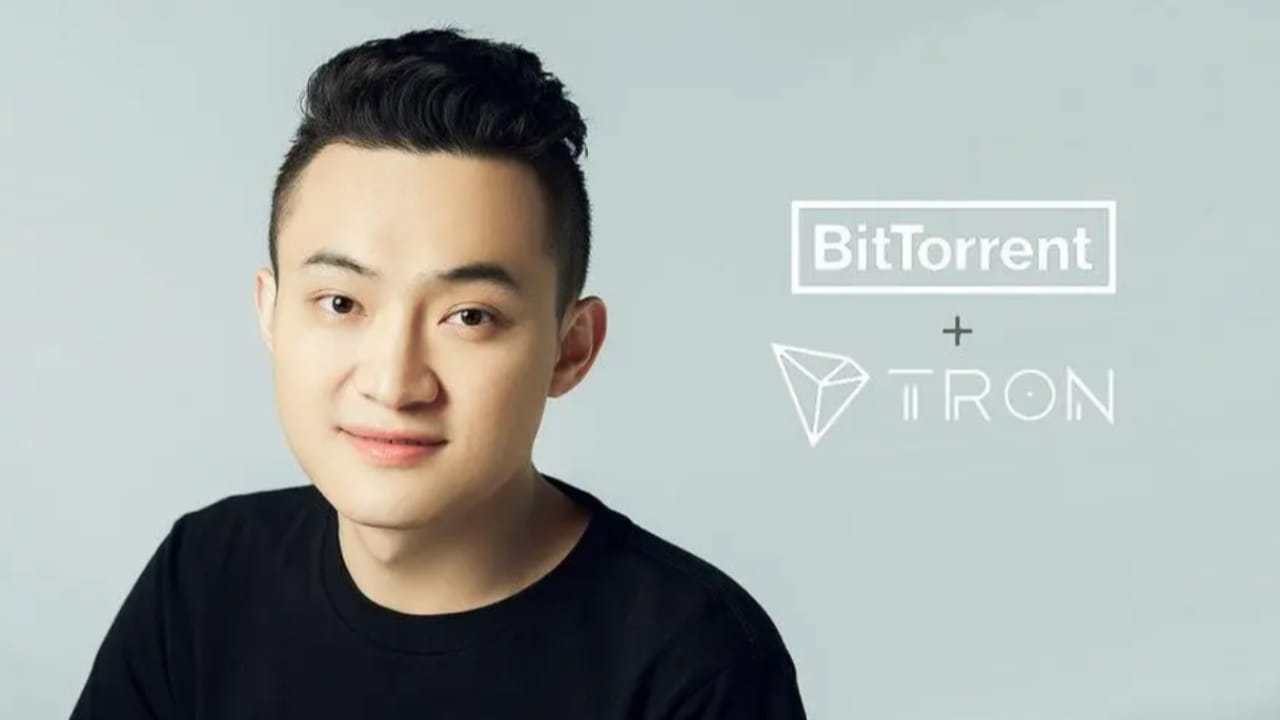
Hello everyone, I am Hunter. There are endless stories in the cryptocurrency circle. Today, someone gets rich and is listed on Forbes, and tomorrow someone gets liquidated and is on the roof of a high-rise building. Today we will talk about a 90s cryptocurrency person who was listed on Forbes in half a year, kicked Wang Xiaochuan of Sogou, punched Wang Sicong of Wanda, was called the son of heaven by the losers, and issued a sheet call Sun Yuchen's counterattack.
Sun Yuchen is a controversial figure in the circle. He has many titles, such as Jia Yueting, a top student of Peking University and a leader in the cryptocurrency circle, a leader of post-90s entrepreneurs, and a disciple of Jack Ma. In his eyes, the world is either success or failure, with no middle ground. This paranoid man born in 1990 once boasted that the standard I use to measure people is how much money you make. During school, he challenged the exam-oriented education through practical actions. He only wrote essays in the Chinese exam and answered questions in Chinese in the English exam. When filling in the blanks in the history exam, the villains were all filled in with the name of the head teacher, and the heroes were filled in with their own names. After entering high school, he especially liked to read novels. Throughout his high school career, Sun Yuchen skipped all the classes he could skip, and spent most of his time in the library reading novels, so his grades plummeted and ranked at the bottom of the class. By the fall of 2007, Sun Yuchen, a young man from Huizhou, who wanted to escape from the rural-urban fringe class, made the leap from a third-tier university to Peking University with 20 extra points for the first prize of the New Concept Essay and crazy cramming in the third year of high school. He was admitted to the Chinese Department of Peking University. At the end of 2010, Sun Yuchen applied to graduate from Peking University one year early and enrolled in the East Asian Studies major at the University of Pennsylvania in the fall of 2011. After arriving in the United States, he claimed that he read the works of female writer Ayn Rand in the United States and underwent a cleansing of values, believing that entrepreneurs are the driving force for social progress. In order to enter the business world, Sun Yuchen began to take courses at the Wharton School of Business and joined the Investment Association of the University of Pennsylvania. On April 11, 2013, Sun Yuchen first learned about Bitcoin from an article in the New York Times. The Wick brothers in this article are well-known petitioners in the United States. Because they pestered Zuckerberg, Zuckerberg was forced to pay them a large sum of money. The first thing they did with the money was to buy a lot of Bitcoin. At that time, the price of Bitcoin experienced a round of increase. Although it was insignificant compared to now, it still attracted the attention of many people.

Except for some geeks in the Bitcoin community who are discussing academic issues about Bitcoin, most people still think it is a money-making thing, like a Ponzi scheme or the tulip bubble. So although Justin Sun participated in the American Bitcoin community, he was still doing something very lonely and unreliable in the eyes of people around him. Because if you tell him that you are engaged in Bitcoin, he will feel like, "Have you heard of Amway?" At that time, he faced two choices: one, bet on Bitcoin and do something related to the Bitcoin community.
Choice 2: Continue studying at his alma mater, the University of Pennsylvania. Faced with these two choices, Justin Sun was very conflicted, because it was not a good experience for the older generation to be a case salesman, but in the end he chose Bitcoin. Justin Sun said that Bitcoin was the first time that financial clearing did not require a central node, which might be very abstract, but he was very surprised when he came into contact with this concept at the time, because humans have always had no way to get rid of centralized nodes in the field of currency clearing. In our daily life, transfers between each other are accounted for by a center, and the money sent between people is accounted for by commercial banks, and the People's Bank of China's clearing center accounts for them between commercial banks. Our long-term habitual thinking is that the reason why any currency is valuable is because there is a sovereign state behind it to endorse it. The reason why any currency can be cleared is because it has a trusted institution there to clear it.
When Justin Sun first came into contact with Bitcoin, it was about 50 or 60 US dollars. Sometimes it would rise to 70 or 80 US dollars, which would make him very happy. The overall market value of Bitcoin was between 500 million and 1 billion US dollars. At that time, he simply calculated that the annual valuation of the dark Internet in the world was about 2 trillion US dollars. The anonymity of Bitcoin solved the financial settlement problem for it very well. He also thought that the market value of Bitcoin was entirely possible, so it could easily increase by 100 times, so he used all the money for college to buy Bitcoin. Not long after that, Bitcoin grew wildly, which he had not expected at the beginning. Bitcoin made him have his first 10 million. In 2013, he joined Ripple, an Internet financial company in Silicon Valley. He repeatedly described Ripple to the media. In his eyes, Bitcoin was even more magical. It was a decentralized payment system supported by a value network that allowed different currencies to be freely exchanged without delay.
More than a month later, Justin Sun returned to China as the chief representative of Ripple in Greater China. He received a 10 million yuan investment from IDG, one of the shareholders of Ripple, and established Ripple Technology, where he served as founder and CEO. After being frustrated in seeking investment from a venture capital fund, he quickly found the famous IDG Capital and established Ripple Technology. He believed that the reason why he was able to get IDG was that IDG was one of the shareholders of Ripple, so it was natural to invest in him. Second, IDG was the first to promote the concept of post-90s entrepreneurs in the investment circle at that time. After receiving the investment, he was pulled into IDG's post-90s entrepreneurs WeChat group. At first, there were only three or four people, and later it quickly increased to thirty or forty people. This made him realize that a post-90s entrepreneurial fever was about to blow, and he should stand at the forefront of the wave. To this end, he hired an executive of a well-known financial media as the market president to handle public relations for him. Playing the card of post-90s entrepreneurial leaders, visiting major business media, and looking for forum speaking opportunities became his top priority at the time.
Soon after, IDG announced the establishment of IDG Post-90s, with a capital investment of US$100 million. Faced with the media's doubts that it was just hype, IDG Capital Founding Partner Xiong Xiaoge said that the era of post-90s entrepreneurs has arrived, and investing and supporting them is to seize the industry's first opportunity and commanding heights. With the strong push of IDG, the concept of post-90s entrepreneurship quickly conquered major newspapers and magazines, and Sun Yuchen was one of the most dazzling stars among them. Sun Yuchen's public relations ability is simply too strong. He made a high-profile speech on the spot, saying that post-90s are the natives of mobile Internet, post-90s will definitely subvert the world, we do not compete with our opponents on the same dimension, and defeating you has nothing to do with you.

A post-90s entrepreneur described Sun Yuchen's self-promotion as a snowball. IDG's investment media's constant coverage actually played a role in endorsing it. The more such endorsements, the more people are willing to pay attention to him and believe in him, and he can get more and more resources. He is most proud of being selected for the entrepreneur training camp founded by Jack Ma, and Lakeside University is the only post-90s in it. As soon as he was selected, Jack Ma's youngest disciple appeared in his Baidu Encyclopedia entry. In a video interview, he claimed that he and Jack Ma met too late. When I talked with Jack Ma, I felt that there were many common topics, and we felt very close. In the second half of 2017, Sun Yuchen created the second project TRON, which claimed to use blockchain technology to build a global decentralized free content entertainment system. The business model is to issue coins, commonly known as ICO. Well-known investors Li Feng and Xue Manzi are investors in this project. Sun Yuchen also invited a bunch of well-known people to endorse him. The value brought by this endorsement is that people can believe in him.
As of now, Ripple, with a market value of more than 24.7 billion, ranks sixth. Its market value once reached 90 billion yuan. On August 22, 2017, Binance, the world's largest digital currency trading platform, launched a snap-up event for 500 million TRON coins, and all shares were randomly snapped up within 53 seconds. In order to achieve this goal, the pre-ICO publicity of TRON mentioned many times that TRON was founded by Sun Yuchen, the former chief representative of Ripple in Greater China and a student of Jack Ma's first phase of Lakeside University. Its investors include Wu Jihan, CEO of Bitmain, Wang Chaoyong, chairman of Zhongli Capital, and Dai Wei, founder of Ofo.
As the chaos of ICOs continued to be exposed, the regulatory authorities continued to exert pressure. The Tron ICO originally scheduled for September 9 was urgently announced to be held one week earlier on September 2. On September 3, Justin Sun announced on his personal Weibo that Tron had officially completed its ICO. Sure enough, on the second day after Tron completed its ICO, the regulator issued an announcement on preventing the risks of token issuance and financing, halting all types of ICO activities and requiring the return of coins. However, Justin Sun had already raised about 400 million yuan through ICO. For safety reasons, Justin Sun returned all the coins raised through ICO.
As the saying goes, there are countermeasures from above and policies from below. Sun Yuchen, who had just returned the coins in China, went to the United States without stopping to continue his promotional activities for TRON in the United States. In October of the same year, TRON landed on overseas exchanges and began to be publicly traded. At the beginning, the market price of a TRON coin was only 1 cent. But from the end of November, as the price of Bitcoin continued to rise, the market began to gradually warm up. By December, the price of TRON had been raised to two yuan. As the TRON wall continued to rise, relevant people found that at least more than 50% of TRON coins were stored in the same wallet, and the proportion of retail investors circulating in the market was only 9%, with a circulating market value of less than 45 million, which was completely inconsistent with the TRON white paper allocation plan.
In other words, Tron was highly controlled by one or several dealers, and Sun Yuchen had already set up his posture to cut retail investors. In addition, Sun Yuchen's wallet transaction records show that his wallet sent 200 million Tron coins to Binance every day, and waited for the exchange to exchange them for Ethereum. This behavior lasted for 19 days. In other words, Sun Yuchen exchanged about 6 billion Tron coins. According to the market price at the time, Sun Yuchen cashed out 12 billion yuan.
Once, a person from an investment institution described him as a successful entrepreneurial actor. For example, he was originally 100 points and carefully packaged it to look like 1000 points. As long as the bubble of 1000 points is not punctured, he can find the corresponding capital and industry status of 1000 points in the market. He keeps playing like this, and when the bubble is blown big enough and enough money is raised, he will go to the market to acquire a truly reliable company. This capital game is considered to be played successfully, which is exactly the same as Jia Yueting's way of making cars.
He was engaged in public relations in a high profile, but his company's operations lacked progress. Some Internet finance professionals said that Justin Sun never concealed his pursuit of fame and fortune, and frequently accepted media interviews. It can be said that his fame was far better than that of his company at that time. It is undeniable that Justin Sun, born in the 1990s, played capital routines as well as top investors. From a poor student to a favored child of Peking University, he decisively dropped out of school and bet on Bitcoin. As the chief representative of Ripple in Greater China, he was actually just a commander without troops at the time. He won tens of millions of investments from IDG and used the TRON blockchain project to plunder hundreds of billions. Justin Sun's path to financial freedom seems to be completely different from the success of most wealthy people. He took a different approach and was questioned, but he had the same idea as most people. Money may be the only thing that can bring a sense of security. Finally, what do you think of Justin Sun? See you in the comment section below!