
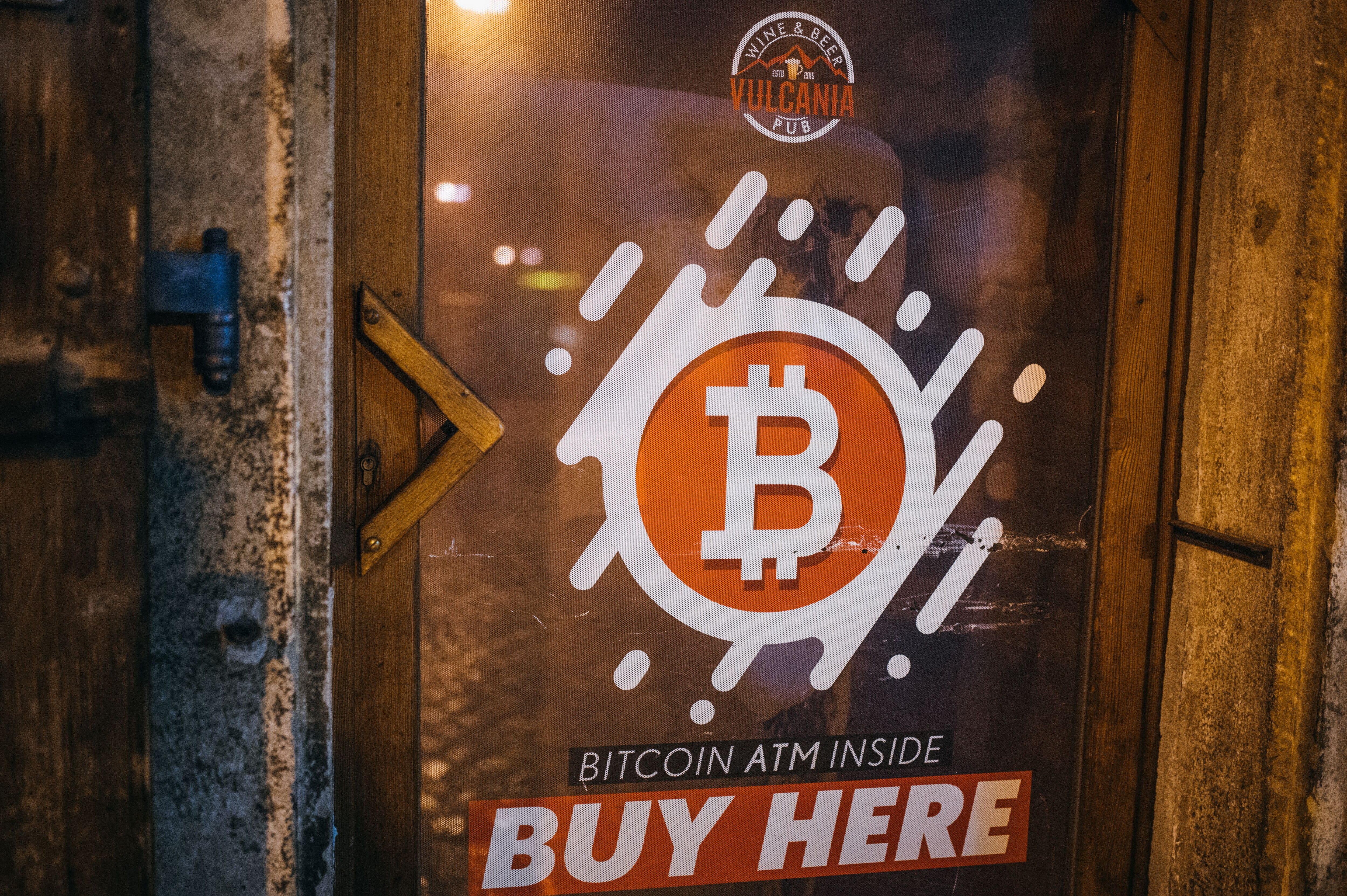


Guides on buying bitcoin (BTC) usually start with the advice to first create a cryptocurrency exchange account and download or purchase a wallet to store them. But there is another, more convenient way to buy bitcoin that does not involve the use of a computer, much less a cryptocurrency exchange.
Read this article in English.
By using a bitcoin ATM, people have the opportunity to purchase BTC by inserting cash or their debit card and following a series of basic steps. But while bitcoin ATMs become an increasingly important part of the sector, the idea of using one still seems counterintuitive to many.
How can something like bitcoin, which is a purely digital currency, be delivered by an ATM that normally dispenses physical currency?
Follow CoinDesk in Spanish.
It's a very good question, and this is what you need to know.
What are bitcoin ATMs?
Bitcoin ATMs allow you to purchase bitcoin, and sometimes other cryptocurrencies, using cash or debit cards. However, the term automatic teller machine or ATM is misleading.
Bitcoin ATMs are not like bank ATMs that allow customers to manage funds in their accounts. Bitcoin ATMs are simply tools through which purchases, and sometimes sales, can be made with bitcoin and do not require users to create any type of account to do so.
Unlike cryptocurrency exchanges, bitcoin ATMs give users the option to custody their own purchased bitcoin by transferring the coins directly to a digital wallet of their choice. However, if you use centralized exchanges such as Binance or Coinbase (COIN), you can also choose to have the coins sent to the “deposit address” provided by them and let the platform custody the assets for the user.
Creating a wallet is often a key part of the process of purchasing bitcoin through ATMs, and this is the part that scammers often target (as we'll see later).
The first bitcoin ATM appeared in 2013 in a cafe in the Canadian city of Vancouver. At that time, it was common among bitcoiners to spend their coins in cafes or hand over 10,000 for two pizzas.
Since then, bitcoin ATMs have popped up all over the world. To date, there are 36,610 bitcoin ATMs in 77 countries, according to data from Coin ATM Radar. Genesis Coin is the largest bitcoin ATM manufacturer with 15,140 machines, followed by General Bytes with 7,965 and BitAccess with 5,549.
The top bitcoin ATM operators are Bitcoin Depot (19.1% market share), CoinCloud (14.1%), and CoinFlip (9.7%).
How to buy bitcoin at an ATM?
When you approach a bitcoin ATM, you often see that it has a QR code that asks you to download a specific cryptocurrency wallet that the ATM supports.
A popular option is Coinbase, but you can also choose from a long list of wallets.
You'll first need to download the wallet, if you haven't already, and follow the setup instructions that appear.
Your newly created wallet will generate a unique bitcoin address to which the ATM will send the purchased coins once the transaction is confirmed and completed.
Bitcoin ATMs are intended to be an intuitive experience for anyone who has used an ATM before, so all you have to do is follow the on-screen instructions.
ATMs vary by country and location, and some may require you to complete Know Your Customer (KYC) steps before enabling the purchase. Minimum and maximum purchase amounts may also vary.
After setting up the wallet and locating the address for incoming transactions, you will need to enter the amount you want to purchase and enter your cryptocurrency wallet address. This is usually done automatically by scanning the QR code on your phone screen rather than typing it manually, which can lead to errors and cause your funds to be lost forever.
The transaction usually takes about 10 minutes, although it can also take up to an hour.
Advantages and disadvantages of bitcoin ATMs
For users who are not tech-savvy, bitcoin ATMs are a great gateway to the world of cryptocurrencies. Fortunately, they do not pose a security risk, since most ATMs do not store user information, banking details or private keys.
But there are some obvious disadvantages. Bitcoin ATMs charge exorbitant fees, ranging from 7% to 20% in some cases, and there are also stricter limits on purchases compared to a cryptocurrency exchange. Also, in case something goes wrong, there is little to no customer service.
Bitcoin ATM Scams
There are two scams that involve the use of bitcoin ATMs.
Scammers often list items for sale on sites such as eBay, Craigslist or Gumtree (UK) with prices that are often much lower than the usual market prices, which attracts potential buyers.
Scammers tell victims that they must make purchases with cryptocurrency if they want to ensure that the price will not change, and typically ask them to deposit funds into a bitcoin ATM and send the cryptocurrency to the scammers' wallet address. Once the transaction is complete, the scammers disappear.
This is a very popular method among scammers due to the irreversible and largely unregulated nature of blockchain-based payments. Once the transaction is completed, it is practically impossible to reverse it.
But there are also types of bitcoin ATM scams that are more complicated and sinister.
Scammers often target job seekers and offer them a trial job. This test involves scammers sending money to a person's bank account and then telling them to withdraw it and convert the funds into bitcoin at a bitcoin ATM, then transfer the cryptocurrency to the scammers' address.
However, a few days later, the money sent to the victim's account is voided because it came from a stolen account, leaving the victim's account with a negative balance. Here we leave you the story of a Reddit user who was scammed in this way.
In short, if you want to buy a reasonable amount of bitcoin relatively privately and are not worried about paying high fees, an ATM can be a good option, if you have machines in your area, of course. Otherwise, using a cryptocurrency exchange or buying bitcoin through apps you probably already have on your cell phone are also good options.
This article was translated by Natalia Paulovsky.