


Disclaimer: Binance Futures products are restricted to certain countries and users. This content is not intended for restricted users/countries.
The main point
Traders experience liquidation when they are unable to meet margin requirements for leveraged positions.
A trading plan can reduce the chances of being forced to make impulsive decisions when your funds are at stake.
Trading simulations, risk management strategies, and stop-loss are some of the strategies to minimize the risk of liquidation in the futures market.

Cryptocurrency derivatives allow traders to take advantage of volatility in the market to maximize profits in a short period of time. However, this type of trading is a double-edged sword as it can also result in losses quickly. Unlike spot trading, derivatives do not involve the asset directly and are instead based on speculation on the future value of the underlying asset.
Liquidation occurs when a trader is unable to maintain a leveraged position due to insufficient funds. Thus, traders experience liquidation when they are unable to meet the margin requirements required for leveraged positions. In other words, they do not have enough funds to keep their trades open. This is why having a strategy is so important, especially when trading using leverage in futures.
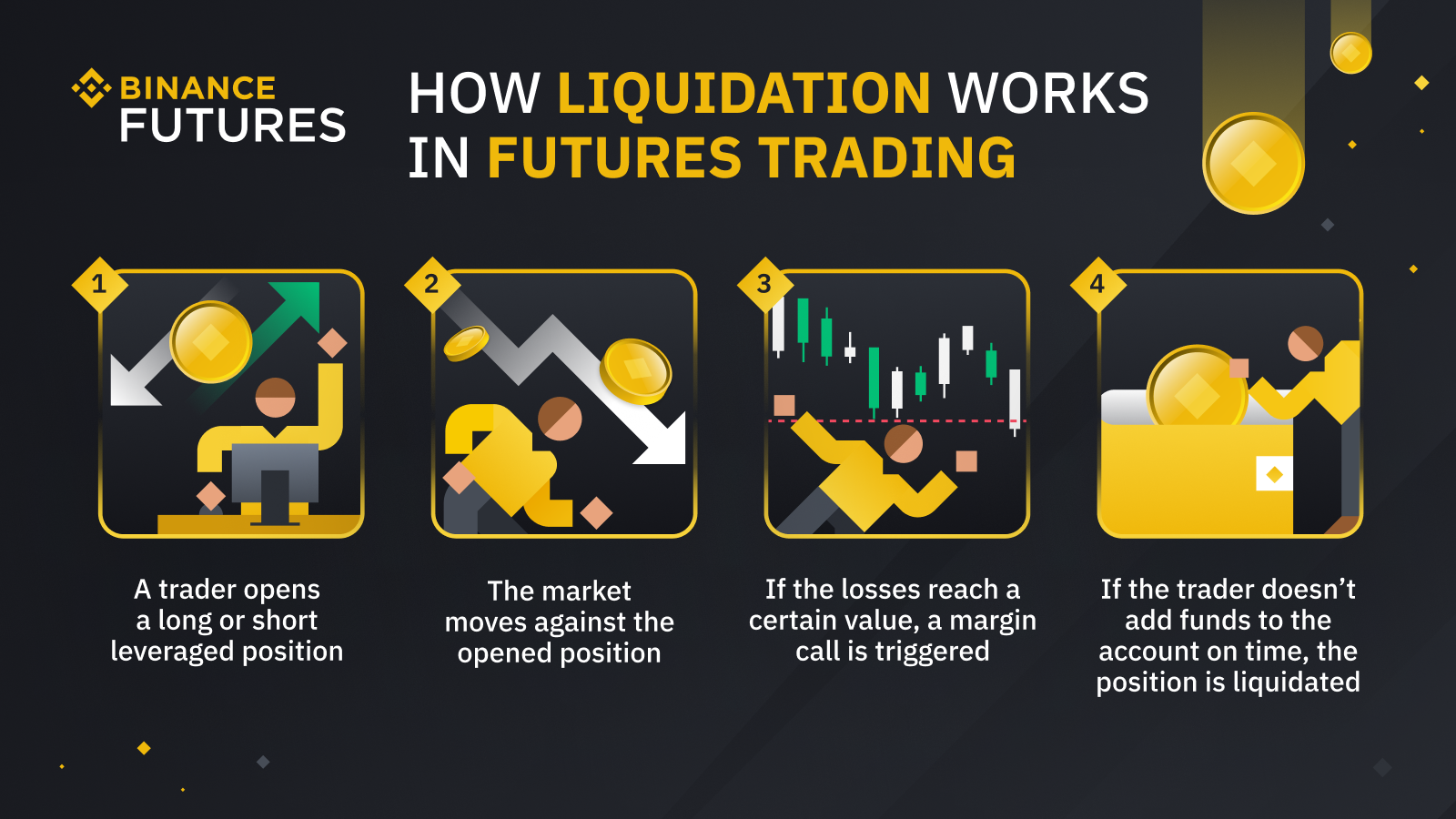
In this article, we review various tools and strategies that can be used to minimize liquidation risk in futures trading.
Strategy to Minimize Liquidation Risk
Due to the volatile nature of cryptocurrencies, slight price changes can even lead to liquidation and loss of funds. Therefore, you need to implement smart strategies and minimize the risk of liquidation.
Develop a trading plan
Planning trades in advance can be the most effective approach to reducing the possibility of liquidation. Apart from planning profits, this also includes having an exit strategy in case the trade does not go as expected. Developing a trading plan and taking a measured approach will reduce the likelihood of losses due to liquidation.
Having a plan reduces the chances of making impulsive decisions when your funds are at stake in the markets. A strategy can help prevent emotions, such as greed or fear, by guiding your actions by removing the temptation to hold a losing position too long or exit a profitable position too quickly.
The Calculator tool in Binance Futures allows you to visualize trade potential by experimenting with various parameters, including leverage, entry price, exit price, and more. Using this tool, traders can calculate expected profits or potential losses in advance allowing them to follow a more planned approach rather than being driven by market movements.
Secure your trading positions
Despite taking necessary precautions, markets often move in undesirable directions. In such cases, you need to have an exit strategy that prevents your position from being liquidated if the market moves against your trade.
Often times, traders pay attention to the ranges or levels they will exit a trade from, but this is very easy to ignore. To make your exit plan more effective and reduce potential losses, it is often recommended to use a stop-loss order.
A stop-loss order sets a specific price at which the trade will exit automatically if the asset price reaches a predetermined level. While stop-losses can be helpful, it is important to understand that stop-losses are not guaranteed protection against liquidation. Fluctuations in liquidation prices may occur, and stop-loss orders may fail to prevent liquidation.
Pay attention to the margin ratio
The margin ratio is an important factor that can influence liquidation in futures trading. The margin ratio is the maintenance margin divided by the margin balance. Maintenance margin is the minimum amount required in an account to keep a trade open, while margin balance is the amount of funds available in the account.
Therefore, the maintenance margin divided by the margin balance determines the margin ratio. If the margin balance falls below the maintenance margin level, the exchange will automatically close the trader's position to prevent further losses. Therefore, traders need to monitor their margin ratios closely to avoid liquidation.
In the event of a price drop, you must maintain sufficient margin balance in the account to keep the margin ratio above the maintenance margin level. The higher the margin balance, the lower the liquidation price.
Practice your trading
If you are new to futures trading, you should take it slowly and steadily. One way to do this is to start with a demo account to practice trading futures on Binance Futures. The Testnet environment provides a simulated trading platform that allows traders to practice on real-time cryptocurrency futures markets without risking their capital.
Services like these allow you to familiarize yourself with the platform and test trading strategies without risking real money. Active crypto traders can also use Trading Simulations to test new trading strategies and tools to gain more experience.
Use risk management strategies
Effective risk management is essential in futures trading, especially when dealing with volatile assets such as cryptocurrencies. One of the main principles of risk management is to limit your exposure on any given trade. You are advised not to risk more than 1-2% of your trading account balance on a single trade.
For example, if you have a trading account with a balance of $10,000 and plan to trade futures, you should only risk between $100 to $200 per trade. If this trade goes wrong, you will only lose a small portion of your account balance.
Take your time once you start trading with real funds. When just starting out, it's best to use 2x to 5x leverage and avoid trading multiple contracts at once.
Occasional losses are inevitable, so you should avoid making large positions when just one or two bad trades could cost you financially. Instead, start slowly and develop a trading methodology without the added pressure of managing larger positions.
Avoid multiple losses
When trading futures, you should avoid increasing your position in a losing trade. If you have already invested in a contract and its value decreases, you should not invest more in the same contract.
Adding to a losing position will lower the liquidation price and increase the probability of being liquidated. Traders should focus on risk management and reducing their losses by closing losing positions rather than trying to reduce them by averaging or adding more contracts. You should create a trading plan and stick to it to avoid impulsive decisions that can lead to significant losses.
Closing
Liquidation is an important aspect of crypto futures trading, and traders must understand what it entails and how to avoid it. Although futures trading can be very profitable due to the leverage provided by it, traders need to know how it works and how to minimize the associated risks. Binance Futures recommends practicing responsible trading by implementing a proper trading plan and using take-profit and stop-loss orders to protect investment capital and reduce stress.
Further Reading
(Blog) How a Liquidation Order is Executed: Liquidation Price vs. Price The Price of Bankruptcy
(Blog) What is a Stop Order on Binance Futures?
(FAQ) How to Access Trading Simulations on Binance Futures
Risk Warning: Digital asset prices can be volatile. The value of your investment may fall or rise. You may not get back the amount invested. You are fully responsible for your investment decisions. Binance is not responsible for any losses you may experience. Futures trading, in particular, is affected by market risk and high price volatility. All your margin balances may be liquidated in the event of extreme price movements. Past performance is not a reliable determinant of future performance. Before placing a trade, you should make an independent assessment of the appropriateness of the transaction taking into account your own objectives and circumstances, including the risks and potential rewards. Consult your own advisors, if necessary. This information should not be construed as financial or investment advice. To learn more about how to protect yourself, visit our Responsible Trading page. For more information, read our Terms of Use and Risk Warning.
Cryptocurrency derivative products may be restricted in certain jurisdictions or regions or to certain users in accordance with applicable legal and regulatory requirements. This content is intended only for users permitted to access and receive the products and services mentioned and is not intended for users subject to restrictions. You are responsible for informing yourself of, and complying with any restrictions and/or requirements imposed in connection with, access to and use of any products and services offered by or available through Binance in any country or territory from which you access them or upon your own name. Binance reserves the right to change, modify or impose additional restrictions regarding access to and use of any products and/or services offered from time to time in its sole discretion at any time without notice.