
Dollar-cost averaging (DCA) is an investment strategy that aims to reduce the impact of volatility when purchasing assets. This strategy involves purchasing an equal amount of an asset at regular intervals.
The premise of this strategy is that entering the market in this way reduces the level of volatility of the asset compared to a one-time payment. Why is that? Buying at regular intervals helps smooth out the average price. In the long run, this strategy reduces the negative impact on your investment. Let's take a closer look at how DCA works and why you might seriously consider using this strategy.
What is it used for?
The main benefit of DCA is that it reduces the risk of a late bid. Determining the best time in the market is one of the most difficult decisions when it comes to trading or investing. Often, even with the right choice of trading direction, but with incorrect timing, the transaction may not bring the expected result. Dollar-cost averaging helps mitigate the impact of this category of risk.
If you split your investment into smaller payments, you'll likely get a better return than investing the entire amount in one payment. It is very easy to make a trade at the wrong time, and this usually leads to negative results. Moreover, you may make mistakes while making a decision. Once you move to DCA, the strategy will make the decisions for you.
It is important to consider that DCA does not completely mitigate the risk, but only allows you to smooth out the moment of entering the market, minimizing the risks of unsuccessful timing. The DCA strategy does not guarantee the success of your investment as there are always other factors to consider.
As mentioned above, timing in markets is extremely important and has a certain complexity. Even the biggest trading veterans struggle from time to time to accurately read the market. Having an average dollar value at the time of entering a position, you will also need to think through an exit plan, that is, a trading strategy that determines the conditions for closing your positions.
Now, if you have determined a target price (or price range), this can be quite simple. You again divide your investment into equal parts and start selling it as soon as the market approaches your target. This way you can reduce the risk of not going out at the right time. However, this all depends entirely on your individual trading system.
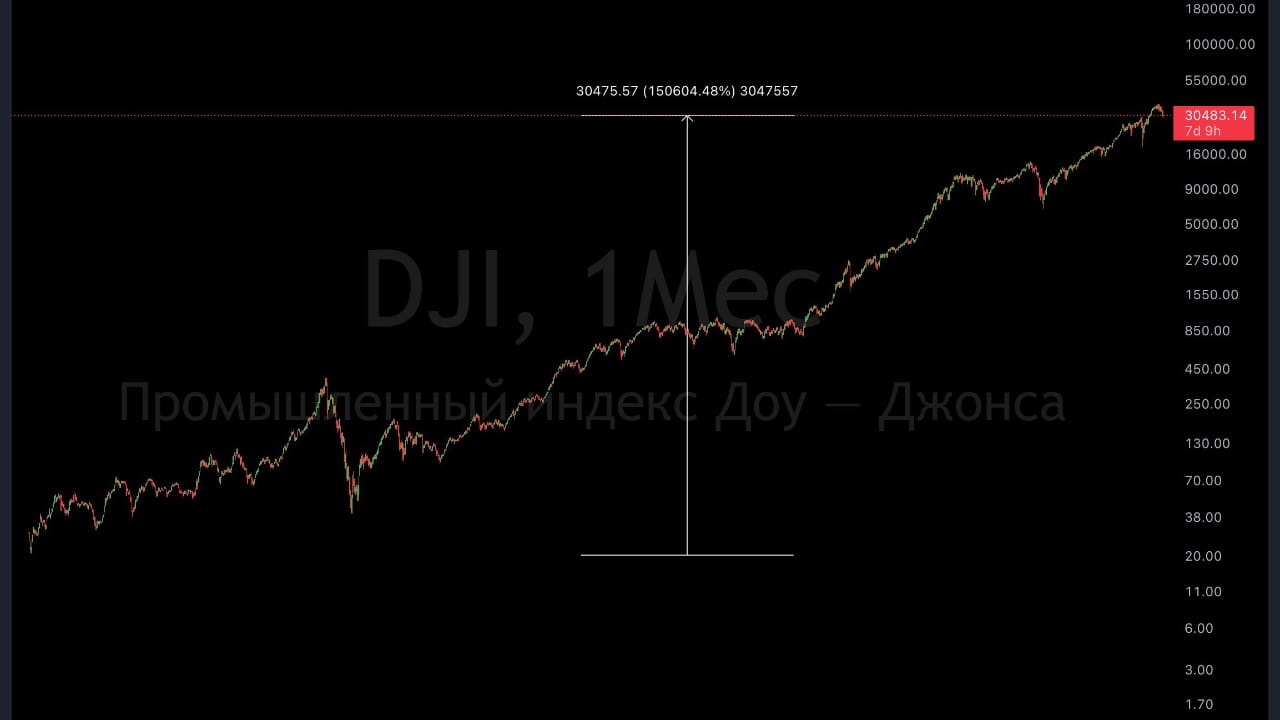
Some people follow a “buy and hold” strategy, where the goal is to never sell acquired assets because they are expected to continue to grow. Consider the performance of the Dow Jones Industrial Average over the past century.
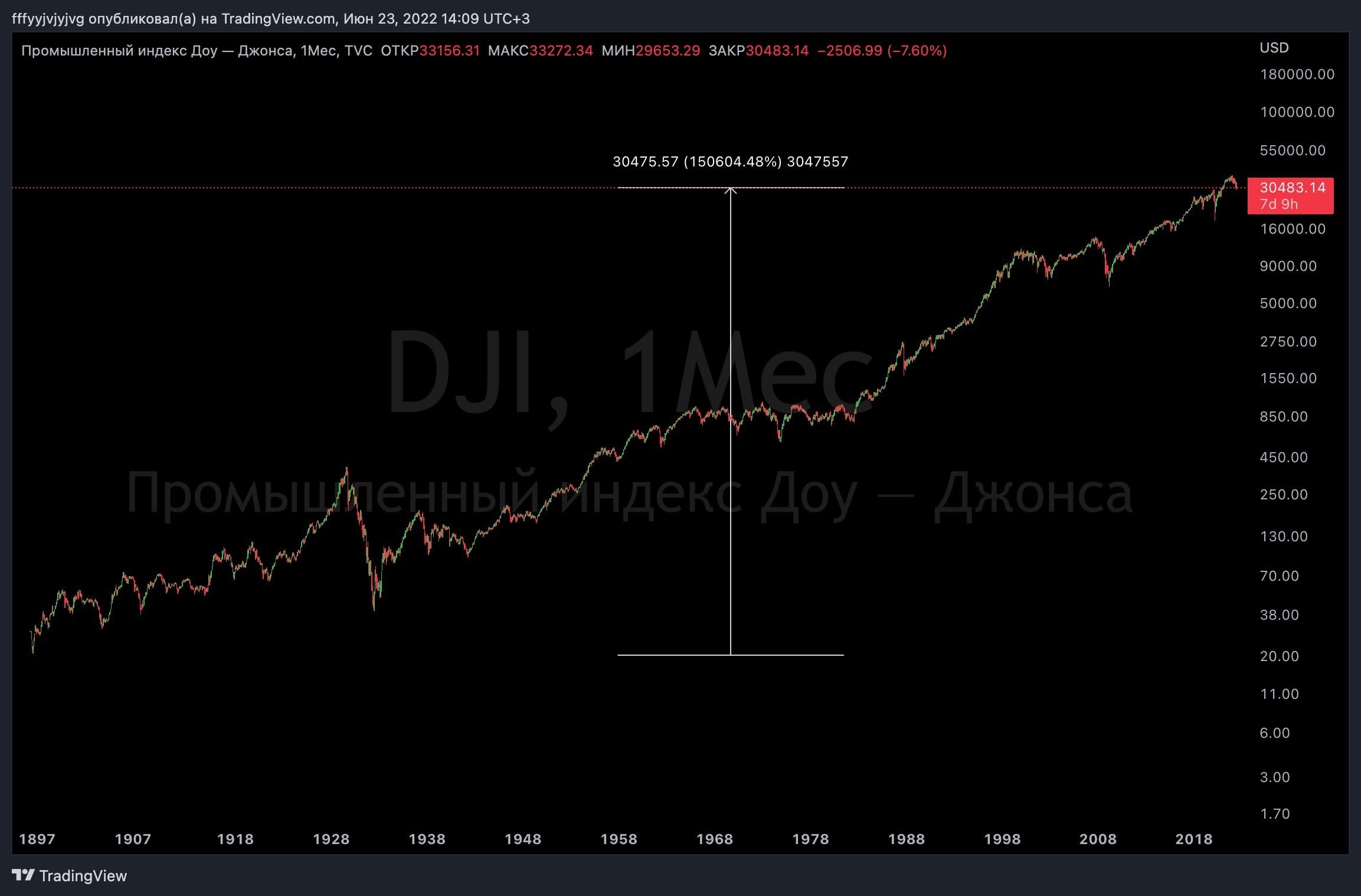
Despite short periods of recession, the Dow Jones Industrial Average has been in a continuous upward trend. The goal of the buy and hold strategy is to enter the market and stay in the position long enough that timing does not matter.
However, it is worth remembering that this strategy is primarily focused on the stock market and as such, was not intended to be used in the cryptocurrency markets. Keep in mind that the Dow Jones Industrial Average is tied to the actual performance of the economy, while other asset classes follow very different patterns
Conclusion
DCA is a#strategythat allows you to enter the market while minimizing the impact of volatility. DCA involves dividing investments into equal parts and purchasing assets at regular intervals.
The main advantage of using such a strategy is this: choosing the right time to invest is quite a complex process, and those who do not want to actively follow trends can invest this way.