

Author: Russian DeFi. Compiled by: Cointime.com QDD
Monolithic blockchains have persisted for some time and are finally experiencing the blockchain trilemma as they try to accomplish all tasks (consensus, data availability, settlement, and execution) in each node.
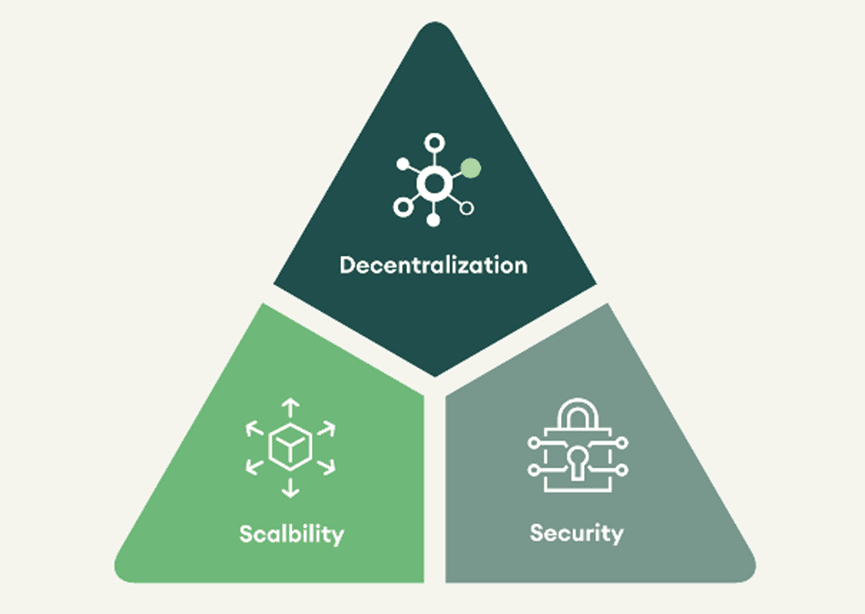
To avoid this problem, modular chains are used to divide the many roles of a blockchain into different layers. As a result, the chain can be expanded in a way that minimizes trade-offs.
Ethereum and Cosmos are leading in this modularity race. The future of blockchain is modular.
Since the launch of Ethereum, it has implemented smart contract functionality by introducing the Ethereum Virtual Machine. This has enabled the development of a variety of decentralized applications (DApps) in decentralized finance (DeFi), non-fungible tokens (NFTs), games, and other fields.
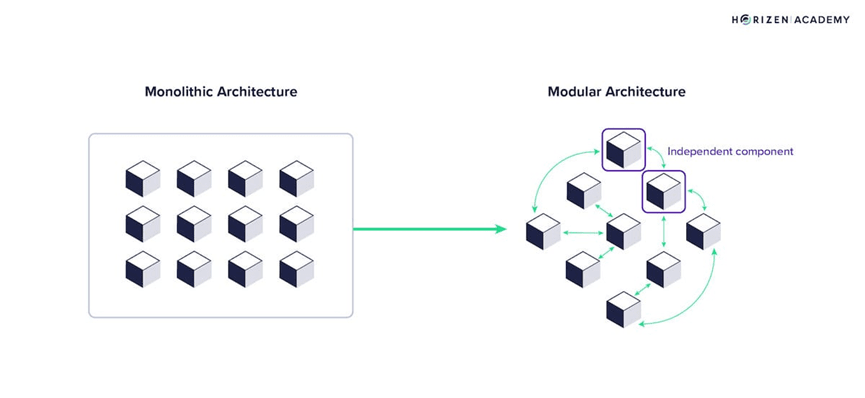
Ethereum is a general-purpose public chain that can support a variety of DApps that compete for network resources. In times of congestion, transaction fees skyrocket, resulting in a poor user experience in terms of cost and latency.
Another problem with Ethereum and other first-layer chains is their "two-tier" governance system. This means that in addition to following their own rules, DApps must also follow the rules of the protocol. Changing the protocol every time a DApp needs new functionality will be impossible.
Cosmos proposes that instead of having individual DApps compete for resources on a single chain, it is better to have each DApp run on its own independent, parallel, application-optimized chain. Because they are independent, each chain can be upgraded or modified independently. Cosmos chains can communicate with each other, and even under certain conditions can communicate with chains that use a different consensus mechanism (PoS/PoW) than the Cosmos chain.
What is Cosmos?
Cosmos has been called the "Internet of Blockchains" because it is a network that allows different blockchains to coexist and interoperate. Typically, blockchains are independent of each other, and although recent technology has made it possible for two blockchains to communicate and transfer data via a bridge, Cosmos aims to go beyond this. Cosmos improves interoperability by allowing developers to create blockchains that initially interoperate.
These blockchains communicate via the Inter-Blockchain Communication protocol (IBC), of which the Cosmos Hub and its ATOM token is one.
History of Cosmos
Cosmos first appeared in 2014 and was created by Jae Kwon under the Tendermint consensus protocol. Kwon was unable to build a fully interoperable system, so he teamed up with Zarko Milosevic and Ethan Buchman. In 2020, Kwon finally resigned from his position in the Cosmos project.
Here is a brief timeline of Cosmos, highlighting the various milestones:
The Cosmos token sale took place in April 2017 and raised a staggering $7 million in just 29 minutes, demonstrating its capabilities.
In December 2018, the Cosmos network was tested for the first time with the release of the “Game of Stakes”.
The Cosmos Hub was successfully launched on March 13, 2019.
Kava Labs became the first project to use the Cosmos SDK to launch its mainnet in November 2019.
Cosmos experienced a split in February 2020, with its main founder Jae Kwon stepping down as CEO.
In September 2020, Cosmos first partnered with Nym to introduce anonymous credentials to the Cosmos ecosystem.
Cosmos’ most ambitious project, “Stargate”, was released in February 2021. Stargate is the first public release to use the Inter-Blockchain Communication protocol (IBC). This announcement solidified Cosmos’ position in the blockchain market.
Blockchain courses are offered online to gain a deeper understanding of Cosmos’ history and its activities in the global cryptocurrency market.
The Interchain Foundation, a Switzerland-based nonprofit, manages the development of Cosmos. Similar to the Ethereum Foundation, the ICF is a coordination body that bridges the coding process between software development teams.
Cosmos Vision
Unlike monolithic first-layer chains, Cosmos builds a platform for decentralized exchange, storage, and protection of value that encourages collaboration, innovation, and competition.
Therefore, Cosmos chose to build it using a modular software stack (Cosmos SDK) and an interconnected blockchain network. This enables the core chains and zones of the Cosmos ecosystem to create new blockchains with custom execution environments and utilize IBC for cross-chain communication.
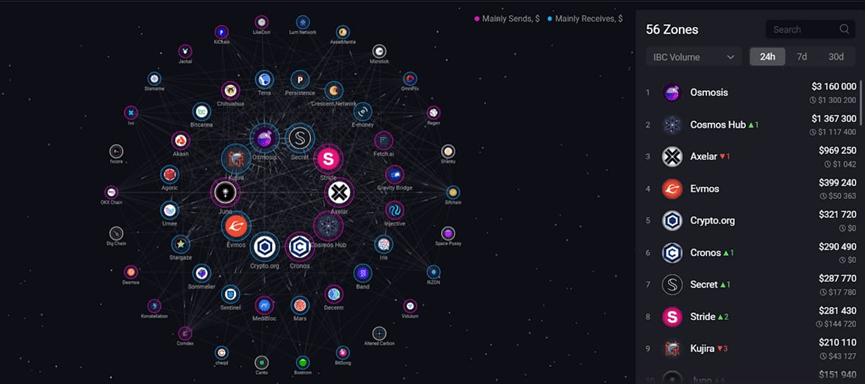
This vision of modular and autonomous growth has led to a rapid increase in the number of zones in Cosmos. As of now, 52 of the 56 zones are active.
What are regional and central chains?
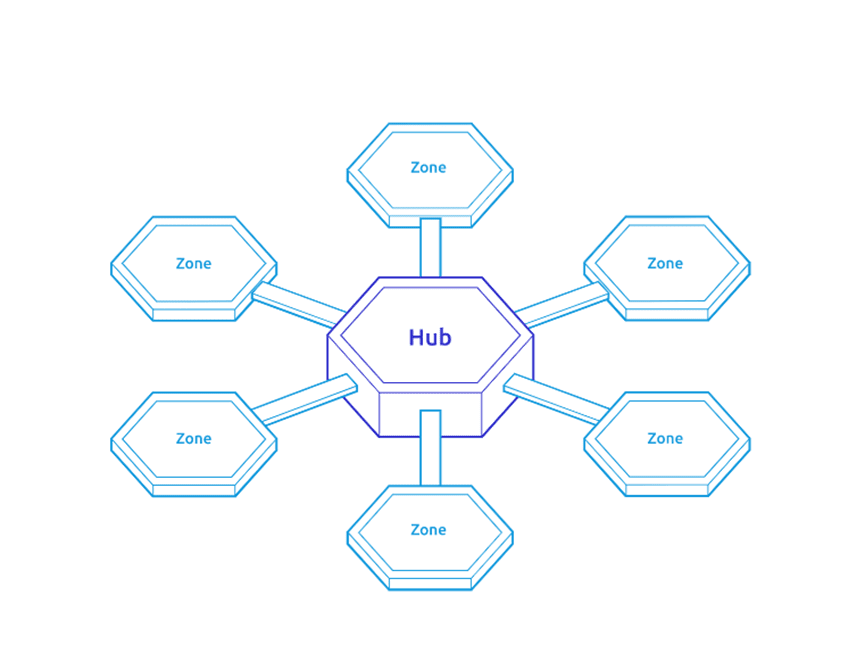
Zones are self-contained blockchain applications created in the Cosmos network, and Hubchains are the blockchains that connect these zones. Hubchains can also connect to each other.
The Cosmos Hub is the first central chain (blockchain) of the Cosmos network. The Cosmos Hub is a Proof-of-Stake (PoS) blockchain that facilitates communication and interoperability between other zones. The Cosmos Hub monitors the zones connected to it, which are created using the Cosmos SDK.
Blockchains (zones) built on the Cosmos Network include Binance Chain (now Beacon Chain), Cronos, Osmosis, Neutron, Juno, Celestia, Sei Network, Terra, Injective Protocol, Secret Network, Evmos, Regen Network, Kava, Kujira, ThorChain, BandChain, Archway, and others.
In addition to blockchains, the Cosmos SDK can also be used to build projects such as marketplaces, decentralized exchanges (DEX), wallets, private networks, DApps, DeFi platforms, and other infrastructure.
What is unique about Cosmos?
Cosmos considers itself the third generation of blockchain technology (after Bitcoin and Ethereum). It enables developers to create blockchains suitable for specific purposes, i.e. application-specific blockchains, which can be connected to each other to exchange data.
The goal of Cosmos is to encourage Web3 developers to create decentralized projects without relying on Ethereum's smart contract design. Cosmos has designed a modular architecture that allows developers to create independent blockchains instead of building DApps on the base blockchain.
Cosmos developers do not need to rely on the consensus or network layer of first-layer blockchains like Ethereum. When cryptocurrency enthusiasts build on Cosmos, they can create a blockchain that meets their design requirements. Cosmos provides Web3 developers with complete freedom to develop blockchains while benefiting from the security of its Tendermint algorithm.
In contrast, Cosmos is not only focused on helping Web3 developers create independent blockchains.
Many cryptocurrency enthusiasts associate Cosmos with “interoperability,” which refers to communication between blockchains.
Connecting different blockchains has always been difficult due to their unique consensus mechanisms and coding specifications. Although cross-chain bridges can transfer value between blockchain networks, they are vulnerable to hacker attacks.
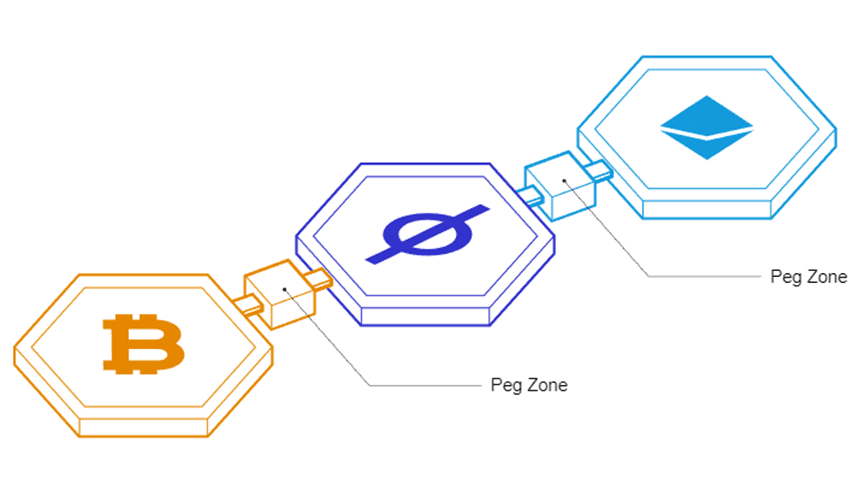
Cosmos created the Inter-Blockchain Communication protocol (IBC) that allows different blockchains to communicate with each other. In addition, the Cosmos team is developing "pegg-zones" blockchains that can connect to projects outside the Cosmos ecosystem. For example, Cosmos can deploy a peg blockchain between Bitcoin and Ethereum.
In addition to these benefits, Cosmos can process 10,000 transactions per second, has low fees, and has a low environmental impact due to its PoS design.
The Hierarchical Structure of the Cosmos Network
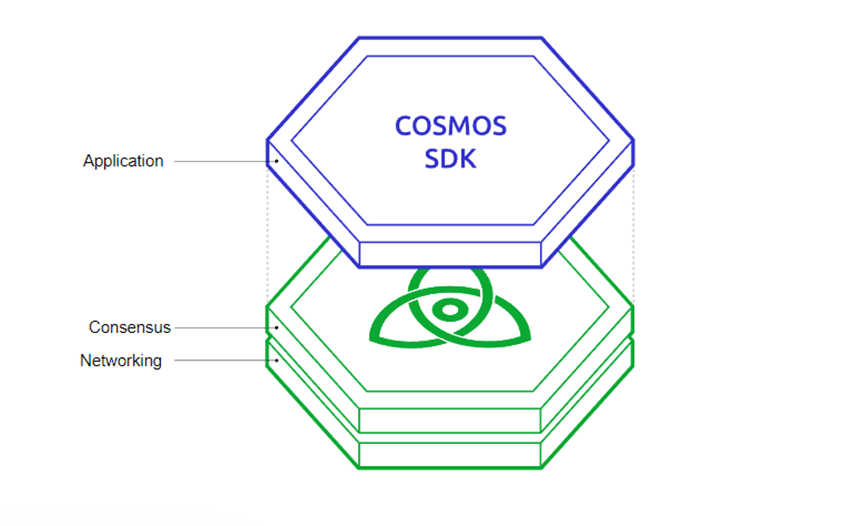
The blockchain is divided into three conceptual layers from an architectural perspective:
Application layer: updates the state of the blockchain based on the execution of transactions.
Network layer: responsible for ensuring the propagation of transactions and consensus-related messages.
Consensus layer: allows nodes to agree on the current state of the system.
Cosmos Technology
Cosmos technology is based on the following:
Tendermint: A consensus protocol that allows developers to create fast, scalable, and secure proof-of-stake blockchains.
Cosmos SDK: Allows developers to build applications on Tendermint-based blockchains.
Inter-Blockchain Communication (IBC): A system that allows different blockchains to connect and communicate.
1. Tendermint Byzantine Fault Tolerance and ABCI
Until recently, building a blockchain required handling all three layers (network, consensus, and applications) from scratch. Ethereum makes decentralized application development easier by providing a virtual machine blockchain on which anyone can deploy smart contracts with custom logic.
However, it did not make blockchain development easier. Go-Ethereum, like Bitcoin, is a monolithic technology stack that is difficult to fork and customize. This is why Jae Kwon created Tendermint in 2014.
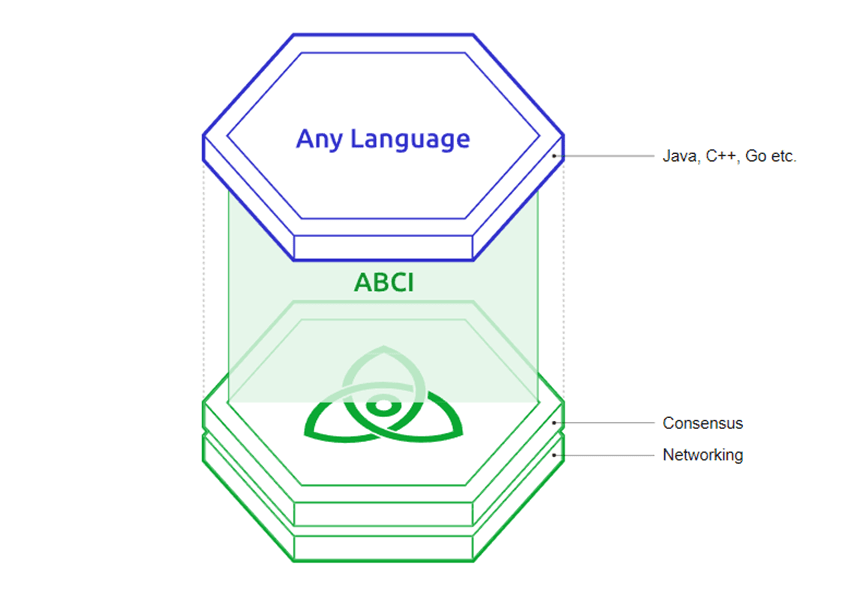
Tendermint BFT is a solution that merges the networking and consensus layers of a blockchain into a common engine.
It allows developers to focus on application development rather than complex underlying protocols.
Therefore, Tendermint saves a lot of development time. Tendermint is also the name of the Byzantine Fault Tolerant (BFT) consensus algorithm used by the Tendermint BFT engine.
The Application Blockchain Interface (ABCI) socket protocol connects the Tendermint BFT engine to the application. The protocol can be wrapped in any programming language, allowing developers to choose the language that best suits their needs.
The following are the characteristics of Tendermint BFT as an advanced blockchain engine:
Applicable to public or private blockchains:
Tendermint BFT only handles the networking and consensus of the blockchain, meaning it helps nodes propagate transactions and helps validators agree on a set of transactions to be appended to the blockchain.
The application layer is responsible for defining how the validator set is constructed. Therefore, developers can build public and private blockchains on top of the Tendermint BFT engine.
If the application specifies that validators are selected based on stake share, the blockchain is classified as PoS.
However, if the application determines that only a limited set of pre-authorized entities can act as validators, then the blockchain can be classified as permissioned or private. Developers have full control over the rules that dictate how the validator set of their blockchain can change.
High performance: Tendermint BFT can achieve block times on the order of 1 second and can handle thousands of transactions per second.
Instant Finality: The Tendermint consensus algorithm has the property of instant finality. This means that if more than one-third of the validators are honest (Byzantine), there will be no forks. Once a block is created, users can be sure that their transactions will be completed (this is not the case in PoW blockchains such as Bitcoin and Ethereum).
Security: Tendermint consensus is not only tolerant to flaws, but also accountable. If the blockchain forks, there is a way to determine responsibility.
Cosmos is one of several platforms based on the Tendermint consensus engine, the others are:
Ethermint: is a scalable and interoperable hybrid blockchain built using the Cosmos SDK and Tendermint.
Terra: is a delegated proof-of-stake platform used as a stablecoin for blockchain payment solutions.
Regen Network: is a decentralized marketplace for environmental assets, data, and climate protocols.
2. Cosmos SDK and other application layer frameworks
Tendermint BFT reduces blockchain development time from years to weeks, but creating a secure ABCI application from scratch is still challenging. That’s where the Cosmos SDK comes in.
Cosmos SDK is a general-purpose framework based on Tendermint BFT for building secure blockchain applications on top of it.
It is based on two basic principles:
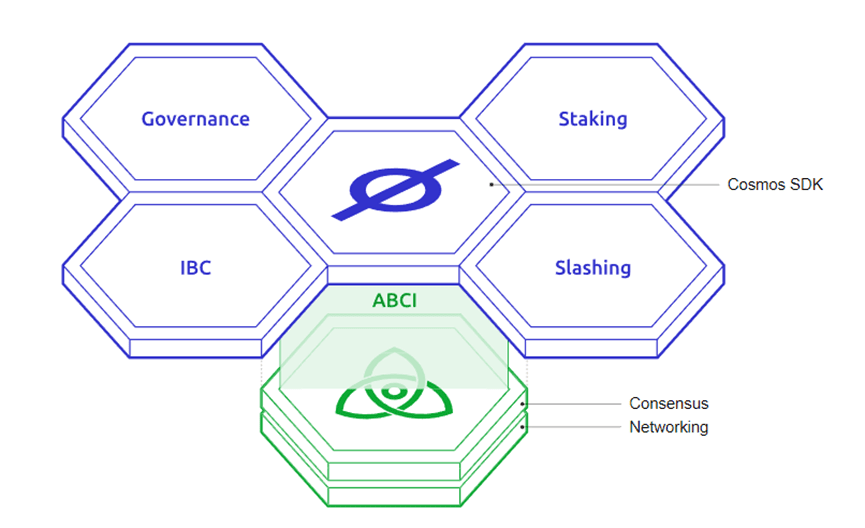
Modularity: The goal of the Cosmos SDK is to build a module ecosystem that allows developers to quickly create application-specific blockchains without having to write every function from scratch. Anyone can create a Cosmos SDK module, and importing a ready-made module into your own application is as easy as importing a library.
For example, the Tendermint team is developing a set of basic modules required for the Cosmos Hub. Any developer can use these modules to create their own applications. Developers can also create new modules to further customize their applications. As the Cosmos network grows, the ecosystem of SDK modules will also grow, making it easier to develop complex blockchain applications.
Capability-based security: By limiting the security boundaries between modules, capabilities limit the scope of malicious or unexpected interactions. This enables developers to better understand the composability of modules and limit the scope of malicious or unexpected interactions.
The Cosmos SDK also includes a set of useful developer tools for creating command-line interfaces (CLIs), REST servers, and other commonly used utility libraries.
Like all Cosmos tools, the Cosmos SDK is modular. Developers can build on top of Tendermint BFT today. However, it can also be used with any other consensus engine that supports ABCI. Cosmos anticipates that multiple SDKs will emerge over time, each adopting a different architectural model and compatible with different consensus engines - all within a single ecosystem: the Cosmos Network.
Ethermint
The modular nature of the Cosmos SDK allows developers to port almost any existing blockchain codebase written in Golang to it. For example, Ethermint is a project that converts the Ethereum Virtual Machine into an SDK module.
Ethermint is exactly the same as Ethereum, but also has all the advantages of Tendermint BFT. All Ethereum tools (Truffle, Metamask, etc.) are compatible with Ethermint and you can easily migrate your smart contracts.
CometBFT
CometBFT is a fork and successor to Tendermint Core, released in February this year, and will become the official replication engine of the Interchain Stack. The long-term goal of CometBFT is to become the primary replication engine for reliable, secure, large-scale, application-specific blockchains.
The long-term goal of CometBFT is to play a key role in supporting the growth of interconnected chains.
Specifically, the goals of CometBFT are:
Emphasize user focus, clarify product strategy, and prioritize user needs. This is a strategic decision to ensure CometBFT remains relevant and valuable.
Improve quality assurance and correctness guarantees by using advanced techniques such as model-based testing to rigorously specify and test our implementations.
Focusing on modularity and the right level of abstraction allows the system to be split as needed and supports gradual integration in projects that depend on it. Cosmos hopes to support an expanding set of use cases by adding new interfaces, encouraging the use of CometBFT as a library, and reducing forking and fragmentation.
Enable faster feature releases without sacrificing quality through improved coordination of projects across the Interchain Stack.
3. IBC - Interconnection of Blockchains
A protocol called the Inter-Blockchain Communication protocol (IBC) is used to connect blockchains. IBC leverages the instant finality property of Tendermint consensus (although it can work with any “fast finality” blockchain engine) to enable the transfer of value (i.e. tokens) or data between heterogeneous chains.
Basically, this comes down to two things:
Different hierarchical structures: Heterogeneous chains have different hierarchical structures, which means that they may differ in the implementation of network, consensus, and application components. To be compatible with IBC, a blockchain only needs to meet a few requirements, the most important of which is that the consensus layer must have fast finality. Blockchains with probabilistic finality (such as Bitcoin and Ethereum) are not included.
Sovereignty: Each blockchain is maintained by a set of validators whose job is to agree on the next block to be submitted to the blockchain. In proof-of-work blockchains, these validators are called miners. Sovereign blockchains have their own set of validators. In many cases, a blockchain must be sovereign because validators are ultimately responsible for changing the state. In Ethereum, all applications are run by the same set of validators. Therefore, each application has only limited sovereignty.
IBC enables heterogeneous blockchains to exchange tokens and data, meaning that blockchains with different applications and validator groups can communicate. For example, it enables public and private chains to exchange tokens. Currently, no other blockchain framework supports this level of interoperability.
How IBC works
IBC operates on simple and straightforward principles.
For example, suppose an account on chain A wishes to send ten tokens to chain B:
Tracking - Both chains track each other’s validators
Bonding - When initiating an IBC transfer, ATOMs are locked (bonded) on Chain A.
Proof Relay - Bonded proofs are sent from chain A to chain B.
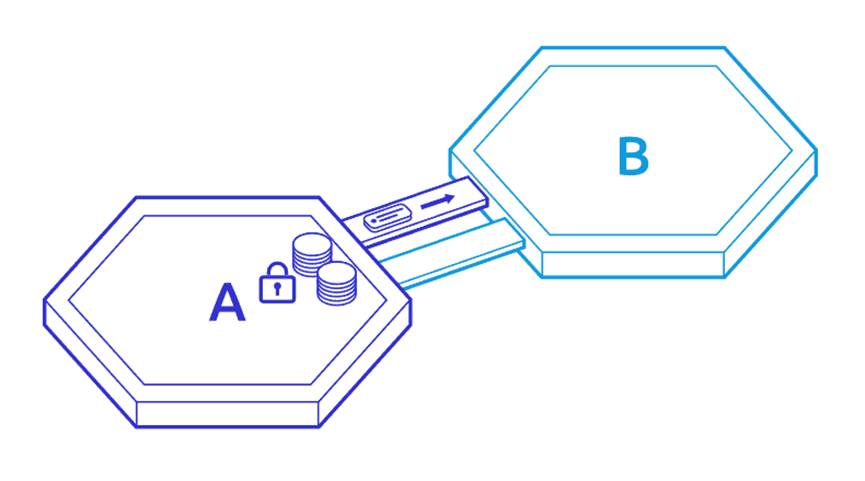
Verify - The proof is verified on Chain B against the header of Chain A; if valid, an ATOM certificate is created on Chain B.
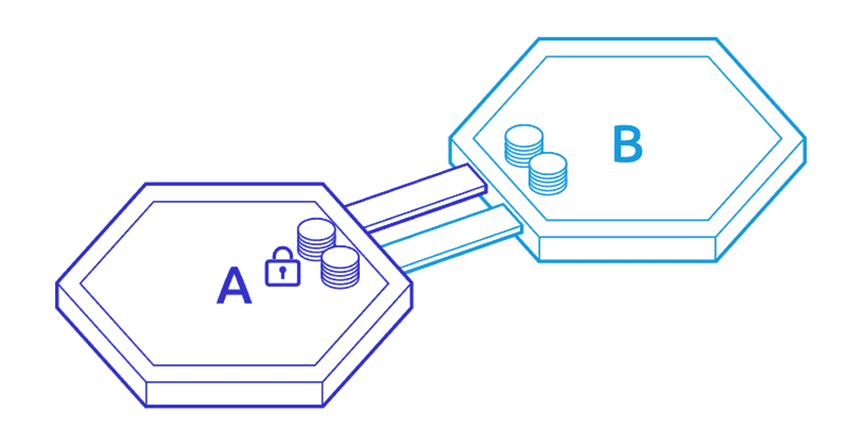
It is worth noting that the ATOMs created on chain B are not real ATOMs, as the ATOMs only exist on chain A. They represent the ATOMs from chain A to chain B and prove that these ATOMs are frozen on chain A. When the ATOMs are returned to the original chain, a similar mechanism will unlock them.
The main drawback of this approach is that the number of network connections grows quadratically with the number of blockchains. If the network contains 100 blockchains, each of which must maintain an IBC connection with every other blockchain, this will result in 4950 connections. This quickly becomes unmanageable.
To solve this problem, Cosmos proposes a modular architecture with two types of blockchains (Hub and Zone), as mentioned earlier.
Connecting non-Tendermint chains
Cosmos is not limited to Tendermint chains. Any type of blockchain can be connected to Cosmos.
There are two cases: chains with fast finality and chains with probabilistic finality.
Chains with fast finality
By modifying IBC, any blockchain with a fast finality consensus algorithm can be connected to Cosmos. For example, if Ethereum switches to CasperFriendly Finality Gadget, it can establish a direct connection with the Cosmos ecosystem by adapting IBC to Casper.
Chains with probabilistic finality
For blockchains without fast finality (like proof-of-work chains), things become more difficult. For these chains, Cosmos uses a proxy chain called a Peg-Zone.
A Peg-Zone blockchain monitors the state of another blockchain. Peg-Zone itself has fast finality and is therefore compatible with IBC. Its role is to provide finality to the blockchain it is connected to.
What problem does Cosmos solve?
1) Sovereignty
Cosmos' free SDK allows developers to build blockchain applications with independent sovereignty without ongoing costs. These blockchains can be easily interconnected without relying on smart contracts to exist on different blockchains, thus avoiding high transaction fees due to network congestion and developing better expansion capabilities.
This will facilitate innovative features in decentralized finance (DeFi), non-fungible tokens (NFTs), games, DAOs, social networks, marketplaces, and internet-dependent economies, especially ownership economies where everyone has a stake.
2) Scalability
Cosmos leverages two types of scalability:
Vertical scalability: Vertical scalability refers to the blockchain's expansion method. By abandoning proof of work and optimizing its components, Tendermint BFT can reach a transaction processing capacity of thousands of times per second.
The bottleneck is in the application itself. For example, a virtual machine will impose lower limits on transaction throughput than an application that directly embeds transaction types and state transition functions (e.g., a standard Cosmos SDK application). This is one of the reasons why application-specific blockchains make sense.
Horizontal scalability: Even if the consensus engine and applications are highly optimized, the transaction throughput of a single chain will eventually reach insurmountable limits. Vertical scaling has been exhausted. Multi-chain architecture will be used as a solution in the future. The idea is to have multiple parallel chains running the same application and operated by a standard set of validators, making the blockchain theoretically infinitely scalable.
3) Sustainability
The sustainability of the network is ensured through the PoS consensus algorithm. Compared with the PoW consensus algorithm, PoS reduces the carbon footprint by 99%.
What is the ATOM Token?
The ATOM cryptocurrency is a key token in the Cosmos ecosystem. The token is best known for being used as collateral to secure the PoS consensus mechanism. Cryptocurrency investors must stake the same number of ATOM tokens as the current top 150 Cosmos validators to validate transactions. However, ATOM holders can delegate their tokens to a staking pool to receive a portion of the cryptocurrency rewards.
ATOM can be used in three ways: as a spam prevention system, as a collateral token, and as a governance voting method.
As a method of preventing spam, ATOM is used to pay fees. Similar to Ethereum's gas, fees can be proportional to the computation required for the transaction. Fees are charged to prevent malicious actors from abusing the blockchain.
ATOM can be staked to receive tokens as rewards. The amount of staked ATOM determines the economic security of the Cosmos Hub. The greater the amount of staked ATOM, the higher the economic security.
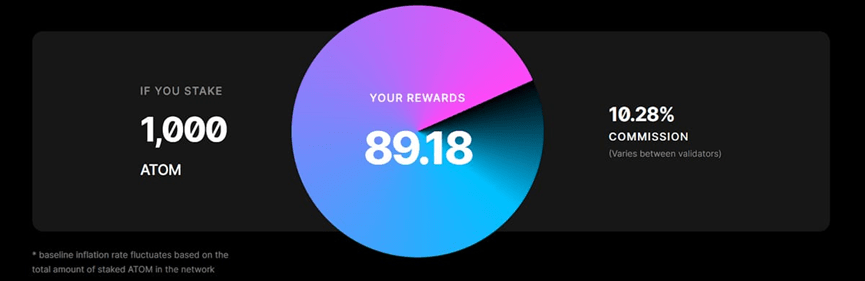
Governance: ATOM holders can also vote on the governance of the Cosmos Hub by using staked ATOM.
Blockchain on Cosmos
Cosmos’ flexible architecture has attracted many Web3 developers. The most notable Cosmos projects include:
Osmosis: Founded in 2021, Osmosis is currently the largest decentralized exchange (DEX) in the Cosmos ecosystem.
Cronos Chain: Funded by the centralized crypto exchange Crypto.com, Cronos Chain is an Ethereum-compatible blockchain built on Cosmos. Cronos uses a PoS algorithm with Crypto.com’s CRO token as the primary cryptocurrency.
Binance Chain: Centralized crypto exchange Binance also built Binance Chain using Cosmos’ toolkit. Similar to Cronos Chain, Binance’s blockchain features a number of DEXs, crypto lending platforms, and NFT marketplaces.
Thorchain: Thorchain is a DEX on Cosmos that is committed to the goal of cross-chain exchange, which means that it aims to enable the possibility of securely exchanging native tokens and coins on any blockchain, including Bitcoin, Dogecoin, and Ethereum. Thorchain uses the PoS algorithm and uses its native RUNE token to guarantee network security.
Cosmos Ecosystem
The Cosmos Network manages over $62 billion in digital assets and has 274 applications and services.
Cosmos has a diverse and rapidly expanding ecosystem. Here are some of the most important Cosmos projects:
Osmosis
Osmosis is one of the blockchains connected to the Cosmos Hub. It uses a secure proof-of-stake system and provides many of the same professional proof-of-stake services as the Cosmos chain. OSMO is the name of its native cryptocurrency.
OSMO token holders can delegate their tokens to these professional stakers to protect the network from malicious and dangerous behavior. Osmosis is a peer-to-peer decentralized blockchain that cryptocurrency holders can use to generate liquidity and trade IBC-enabled tokens.
Secret Network
Secret Network is a smart contract platform that focuses on privacy and allows programmable privacy. Secret Network will provide a privacy hub for the ecosystem, perfect for privacy advocates.
Regen Network
Regen Network is building a "Healthy Planet Proof" network with carbon fixation as the main support. We can use the power of blockchain to make the world a better place. Regen is working with Chorus One to develop the first green validator business model.
G-Bridge
G-Bridge is a cross-chain bridge that enables users to transfer assets between blockchains. G-Bridge is a highly experimental and innovative system governed by a network of users.
Akash Network
Akash Network is another project running on the Cosmos blockchain. The main goal of Akash is to help Web3 developers deploy various dApps with minimal configuration, setup, and server management.
The project, known as the "Airbnb of cloud computing," provides developers with the first decentralized open source cloud platform, providing developers with permissionless cloud computing resources for building dApps.
When discussing Akash Network, it’s also worth noting that it offers some very competitive pricing for its dApp deployment solutions.
Persistence XPRT
Persistence XPRT is a network of crypto-native DeFi and NFT assets. The project is technically well organized and provides infrastructure for connecting DeFi and traditional finance in various fields.
Regen Network
The Regen Network is a proof-of-stake blockchain built on the Cosmos ecosystem. It is used to verify claims, agreements, and data about environmental conditions.
Regen Ledger allows multiple users to interact and trade with each other, thus forming a public ecological accounting system. It is a global market and platform mainly for assets, services and data of the earth's ecosystem.
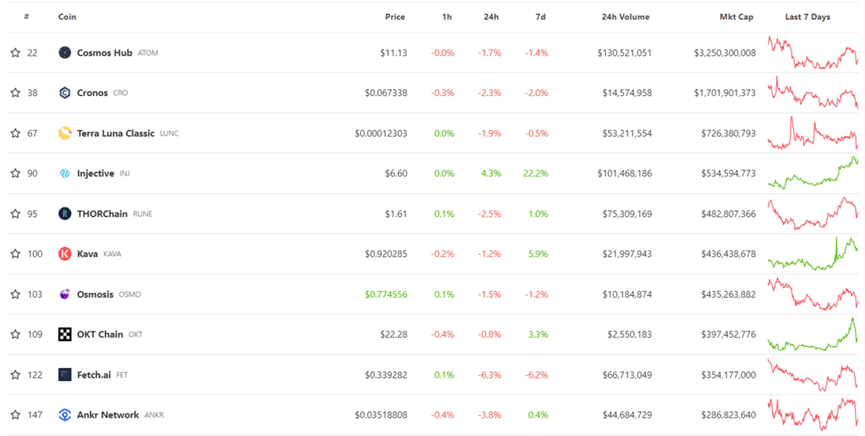
The Cosmos ecosystem tokens with the highest market capitalization are:
Cosmos discovers major system weakness
As reported last year, 42 blockchains have enabled IBC. These include Cosmos Hub, Osmosis, Cronos, and Evmos.
OKX Chain, Luna Classic and Thorchain are important blockchains that have previously integrated IBC. For them, this feature has been deactivated or not fully enabled from the beginning.
The co-founder of Cosmos said that the issue has been resolved through a patch and will be applied to all blockchains that currently have the vulnerability.
Polymer solves this problem by bringing IBC outside of Cosmos
IBC has proven successful as a messaging protocol within the Cosmos ecosystem. However, its usage outside of Cosmos remains limited.
Polymer is a new protocol that brings IBC beyond Cosmos, acting as a message router, allowing any chain or Rollup to send messages to each other using IBC, gaining functionality that was previously limited to Cosmos.
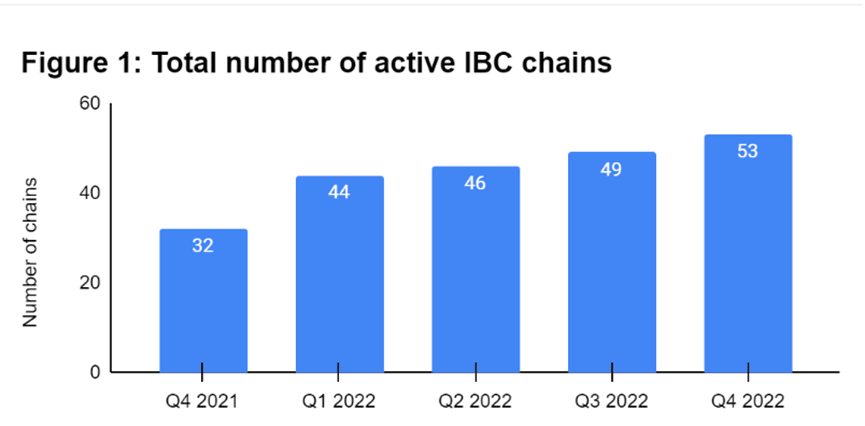
IBC beyond Cosmos
IBC has proven its value in the Cosmos ecosystem by securing 57 chains and transferring over $160 million in value. Its success has not yet been extended to other systems due to strict compatibility requirements with instant-finality consensus systems like Tendermint. Probabilistic finality systems like Ethereum’s proof-of-work would violate IBC’s security promise.
Teams working on bringing IBC to Ethereum include:
Electron Labs is working on bringing IBC to Ethereum, but connecting the Tendermint chain and the EVM chain requires a lot of work. Cosmos requires ed25519 signatures for light client verification, and verifying this signature on the EVM consumes a lot of gas.
To solve this problem, Electron Labs will use proof of ZK signature validity and verify this proof on Ethereum to reduce costs. One disadvantage of this approach is the reliance on the resulting smart contract, which is controlled by a single team. This does not extend the minimum trust of IBC.
zkBridge is also working on connecting Cosmos and Ethereum. Similar to Electron Labs, zkBridge uses a light client and runs an Ethereum smart contract. It uses a relay network where the relayer submits the block header to the target chain for verification.
This system allows for parallel proofs, resulting in cheaper and faster proof systems, and eliminates the need for a trust setup where a trusted party generates private keys. Although zkBridge relies on centralized smart contracts, it makes fewer assumptions about trust due to its proof system.
Polymer is a Cosmos application chain that acts as an IBC relay, allowing chains to communicate with each other. Polymer enables connected chains to choose their verification methods, while providing default ZK light client verification (similar to the implementation of Electron Labs and zkBridge) by standardizing IBC as a transport component. Chains connected to Polymer can also access the Cosmos SDK and Interchain Accounts.
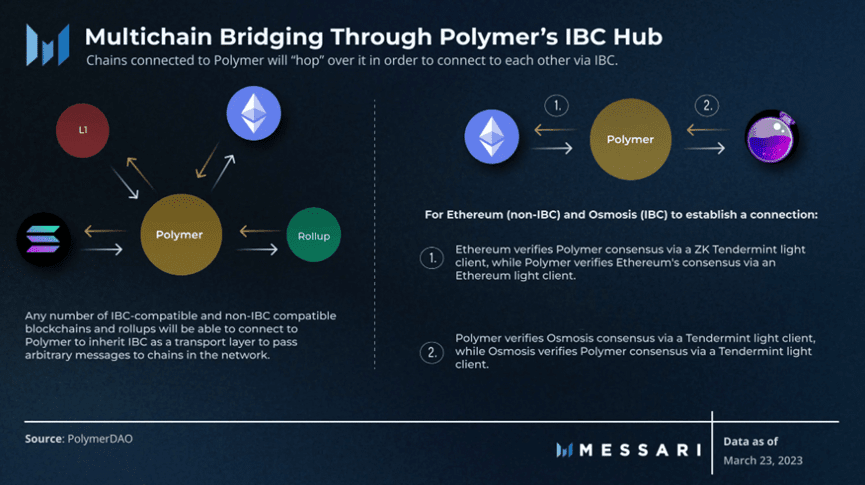
Polymer implements IBC in Solidity and uses the Plonky2 proof system for verification to enable Ethereum connectivity with IBC. Plonky2 is a recursive proof system that can generate a single proof from a series of proofs. This system further reduces the cost of proof generation and verification. Similar to other implementations, ZKP will be verified on-chain on the target chain.
For example, if Ethereum and Osmosis were to communicate via Polymer, the following would happen:
Ethereum verifies the Polymer consensus via the ZK Tendermint light client, while Polymer verifies the Osmosis consensus via the Ethereum light client.
Polymer verifies Osmosis consensus via a Tendermint light client (due to the Cosmos chain), and Osmosis verifies Polymer consensus via a Tendermint light client.
Cosmos connects and modularizes blockchains
Polymer not only standardizes bridges for non-IBC chains, it also improves the way the Cosmos chain works.
As an IBC relay for Cosmos and other chains, Polymer effectively eliminates redundant connections between chains. Chains are currently connecting to the Cosmos Hub, but with Polymer, they only need to connect to Polymer once and inherit connectivity to all other chains connected to Polymer. This is achieved through multi-hop upgrades.
Concerns
While IBC has proven to be impermeable within the Cosmos ecosystem, it has yet to handle large-scale capital flows. While it may be too early to definitively identify IBC as the leading model for interoperability, it is currently the most promising cross-chain bridging model. However, the assumption about a multi-chain future and trustless interconnected chains will result in a net positive outcome for the entire space.
Polymer plans to use Plonky2 as its validator, a new, unaudited system. Using ZKPs may be needed to help balance proof costs and latency.
in conclusion
Cosmos is undoubtedly one of the most compelling and unique projects in Web3.
By fully supporting a multi-chain future, Cosmos has established itself as a leader in a unique category.
The future of Web3 and Cosmos will ultimately be determined by what developers value most. As more and more businesses begin to integrate blockchain into their processes, a platform that allows blockchains to communicate with each other becomes essential.
As an interoperable blockchain platform, Cosmos has high growth potential thanks to an experienced team, a clear roadmap, potential use cases, and multiple ongoing alliances.
However, if developers decide that sovereign and application-based blockchains are the way of the future, Cosmos will be perfectly positioned to capitalize on that sentiment.