

LayerZero aims to provide a solution to one of the most pressing issues facing #blockchain technology today: interoperability. It is an interoperability protocol that uses a new technique to facilitate the interconnection of different blockchain networks.
One of the exciting things about blockchain technology is how well it can enable seamless communication between applications located on a public network. For example, two Ethereum applications can easily interact with each other thanks to the blockchain infrastructure provided by #Ethereum .
However, things are different when it comes to communication between different networks. It turns out that blockchain protocols aren't very good at talking to each other. This limited level of blockchain interoperability creates a silo effect where the blockchain and DLT environment consists of different, often self-contained networks. However, if blockchain technology hopes to become ubiquitous, there must be a way for all blockchain and DLT platforms to be interoperable, working in harmony to elevate the blockchain ecosystem as a whole.
Blockchain developers are working hard to solve this problem. One of the most common approaches is to create a bridge between two blockchains, allowing users to transfer tokens and other information from one network to another. However, this approach has limitations, such as the fact that they mainly serve specific use cases and do not provide general interoperability.
Now LayerZero joins this competitive environment aiming to go even further. Layerzero aims to create a true 'omnichain' solution that will serve as a core interoperability layer for the entire blockchain ecosystem.
Layerzero has raised approximately $300 Million from investment rounds including Binance Labs.
How does LayerZero work?
The method used by #LayerZero uses light nodes on the chain in a much more economical way. It leverages decentralized oracles to publish block headers on demand, so it doesn't need to keep all block headers in order.
LayerZero uses this method to transfer messages between endpoints on the chain running ultralight nodes. The exchange is facilitated by two entities - an Oracle and a Relayer. When sending a message from one chain to another, the endpoint of the source chain reports the message and the target chain to the specified Oracle and Relayer. Oracle then transmits the relevant block header to the endpoint of the target chain and the Relayer provides a proof of transaction. Once this proof is verified on the target chain, the message can be sent to the specified address.
The obvious advantages of this approach include the increased security provided by the use of an Oracle-Relayer pair. Not only does it enable the use of a built-in Oracle infrastructure, Relayer provides another level of security. For a malicious action to occur, both the Oracle and the relevant Relayer must be compromised.
Is there a Layerzero Token?
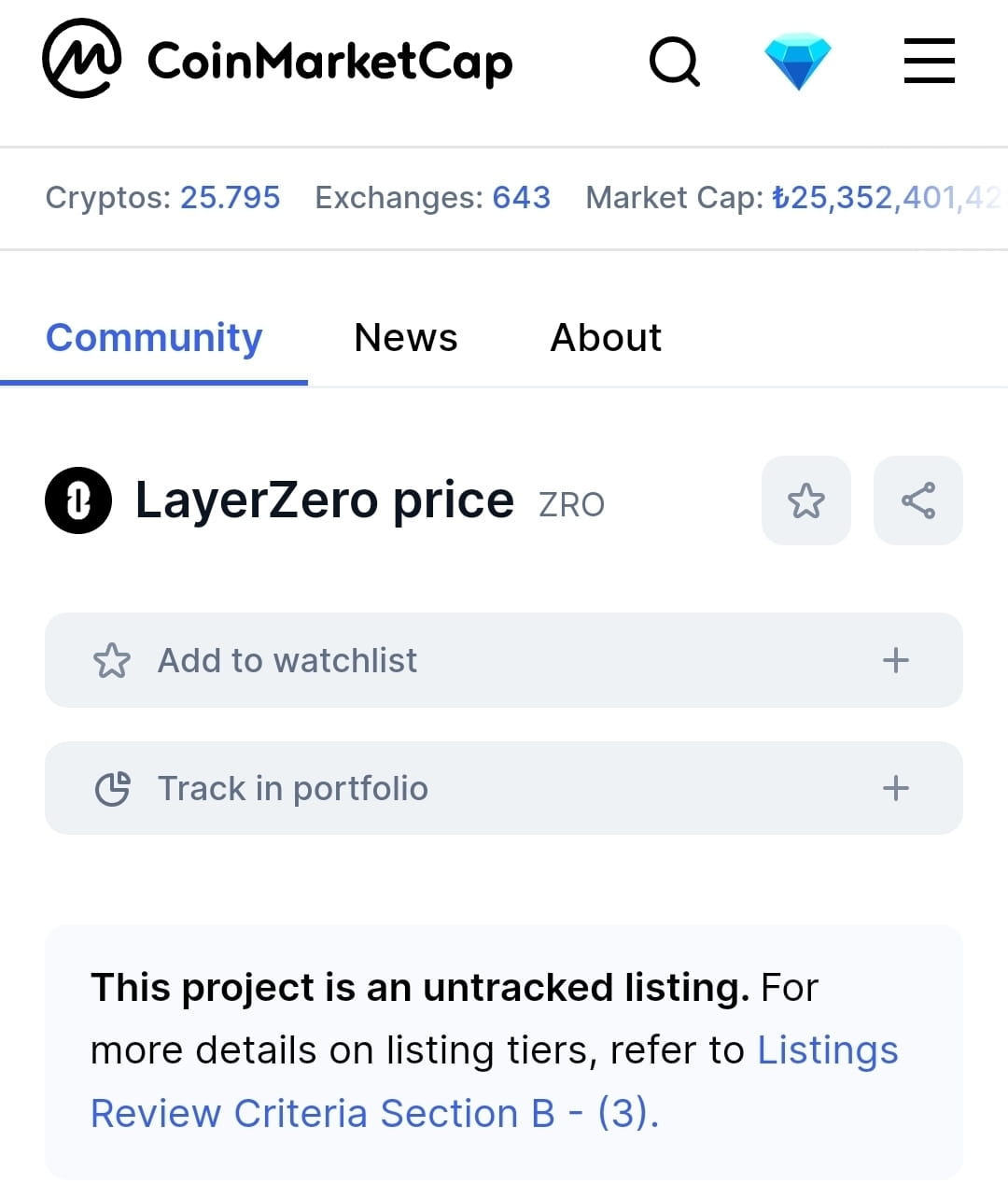
With the latest development, Layerzero has listed its native token, ZRO token, on Coinmarketcap. To explain this listing, we can say that Layerzero will launch the ZRO token in the next 1-3 months.
In addition to all this, Layerzero can make an Airdrop, although not as much as Arbitrum. You can also benefit from a possible Airdrop event by using the applications developed by Layerzero.
Note: The token has not been published on the official network yet. Therefore, pay attention to token drops and listings in the market and do not buy.