

Author: ARNDXT Compiler: CoinTime 237
Uniswap is a fascinating marketplace where you can trade various types of tokens without the need for a middleman. It is decentralized, meaning it does not rely on a central authority to complete your trades.
Its story began in November 2018 and has been gaining popularity in the decentralized exchange (DEX) space.
Before introducing the details of Uniswap V4, I would like to briefly outline how Uniswap has developed from V1 to V3 and then to V4.
Uniswap’s evolution from V1 to V3
The first version was Uniswap V1. It had a clever algorithm for calculating token pricing called the constant product formula (x * y = k), but it also had some limitations. If you wanted to trade large amounts, high slippage made those trades difficult.
Then in May 2020, Uniswap V2 was released, and it was a complete game changer. It addressed several shortcomings of V1 and introduced various new features, including:
1. ERC-20 to ERC-20 trades: This allows users to exchange any two ERC-20 tokens without first converting one of the tokens to ETH.
2. Wrapped ETH: This allows users to deposit ETH into Uniswap without paying gas fees.
3. Fee tiers: This gives users more flexibility and control over how they spend their fees.
Uniswap V3 was launched in May 2021 and mixed some amazing features into it:
1. Concentrated liquidity: This allows liquidity providers to provide liquidity for a specified price range rather than a complete price range. This allows liquidity providers to earn more fee income while taking less risk.
2. Range Orders: Enables consumers to submit orders that are only executed within a specific price range. Users now have more control over their trades.
3. Non-fungible liquidity: Users can provide liquidity for non-fungible tokens (NFTs).
Uniswap V3 is the most complex version of the protocol to date. It has several features that make it more powerful and versatile than its predecessors.
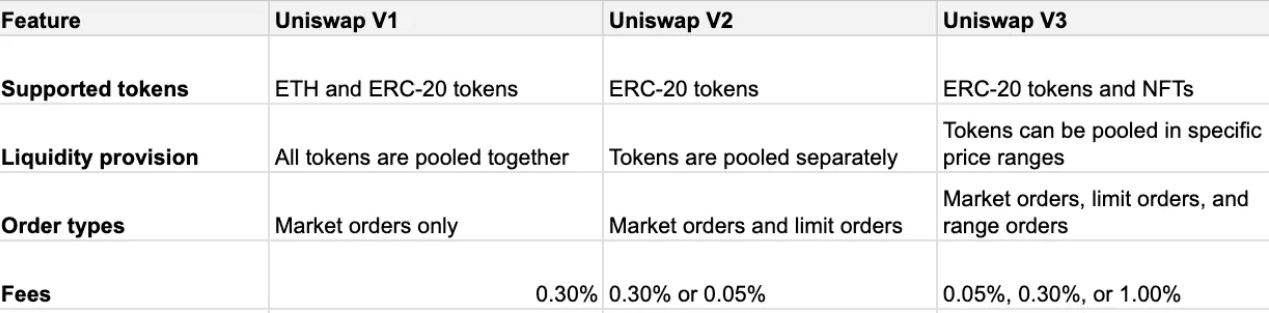
Here is a brief summary of V1, V2 and V3:
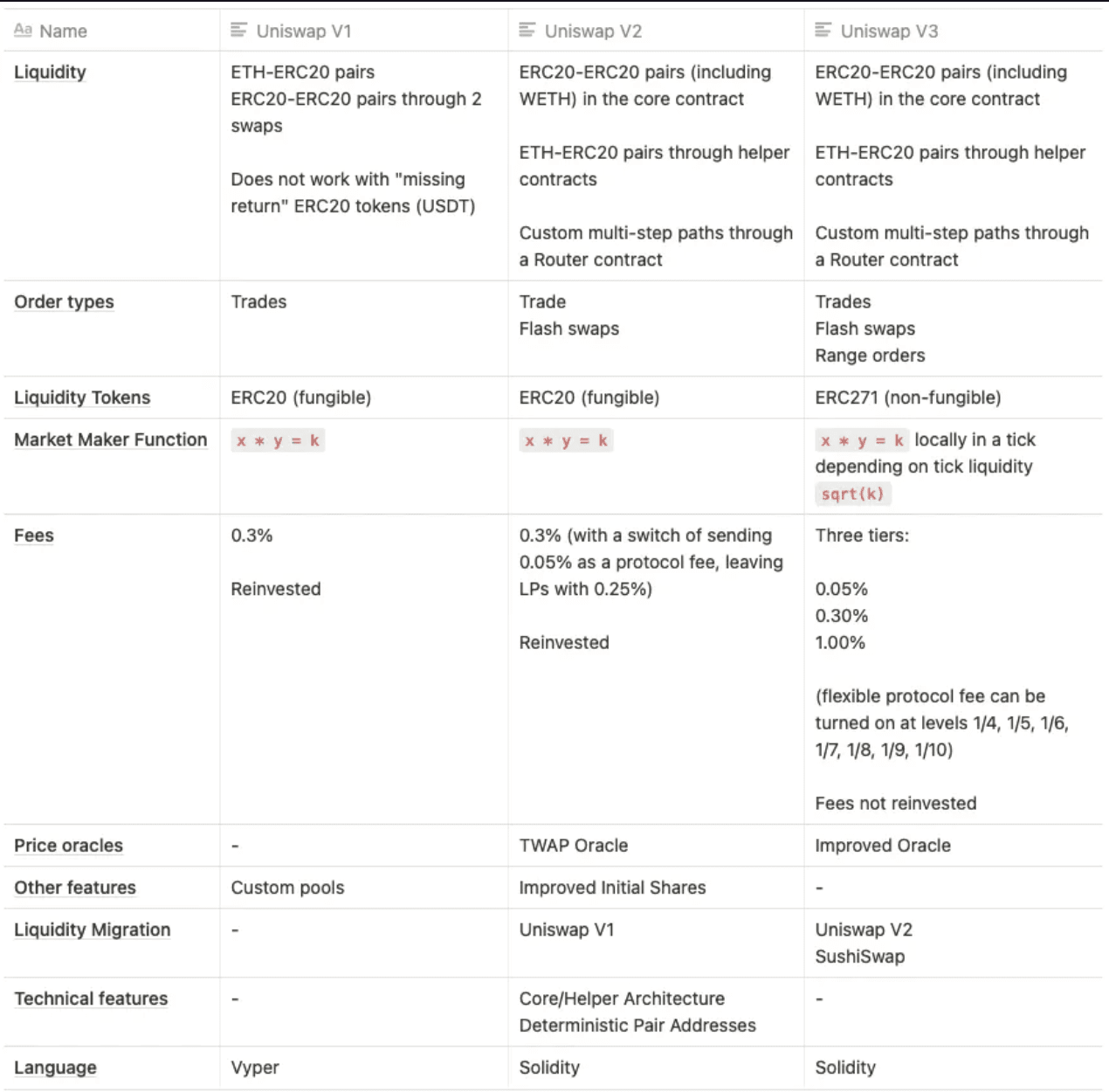
Here is a more detailed version:
I thought v3 would be the last version. But surprisingly, Uniswap has made itself better. As a continuously evolving decentralized exchange, it is always able to inspire innovation and provide users with a better trading experience.
So what can we expect in Uniswap V4?
What’s new in Uniswap V4?
Uniswap is five years old and has just released version 4!
They will release the draft code for the upcoming V4 version. This means that the development of V4 will be done in a transparent and collaborative way. The community provides feedback and contributes to code changes. This process will continue for several months to build the best version of Uniswap.
Here’s what you need to know about the new features (I’ve tried to keep it simple):
1、Hooks
Hooks are a powerful feature that allow developers to customize how pools, swaps, fees, and liquidity providers interact in the Uniswap protocol.
This means that V4 can support:
1) Flexibly adjust fees for each pool based on market conditions to achieve dynamic fees.
2) On-chain limit orders, which enable users to place specific buy or sell orders at a predetermined price.
3) The Total Weighted Average Market Maker (TWAMM) mechanism, which helps distribute large orders over time, promotes liquidity and reduces market impact.
4) Automatic reinvestment of liquidity provider fees. Fees generated by trading activities will be automatically reinvested into its liquidity provider position.
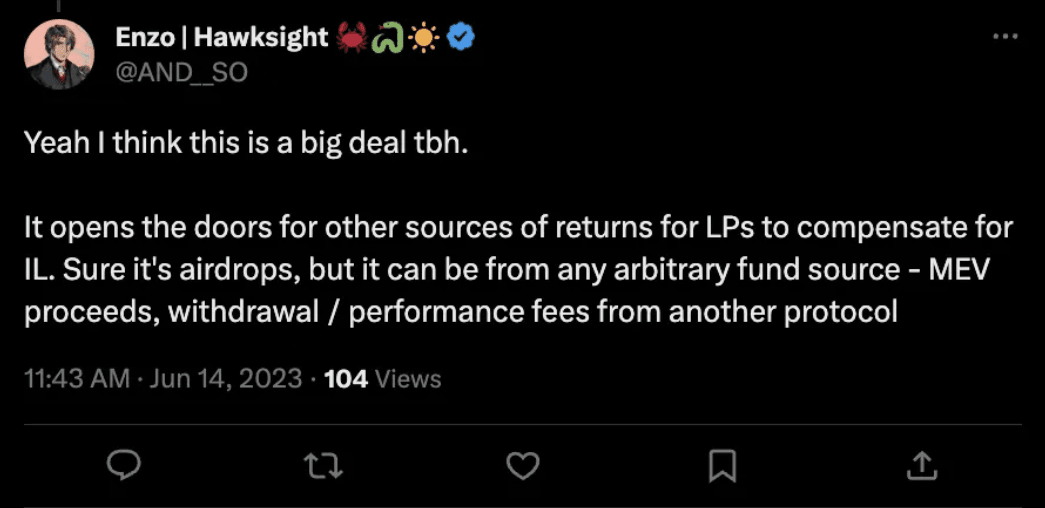
5) Internal MEV (miner extractable value) profits will be distributed to liquidity providers, allowing them to benefit from the added value generated by efficient transaction execution.
6) Out-of-range liquidity, liquidity providers can now deposit tokens into lending protocols outside of a predefined price range, thereby exploring opportunities to generate additional yield.
7) Customized on-chain oracles provide more accurate and personalized price data, enhance the accuracy of trading decisions, and optimize strategies based on specific market conditions.
Uniswap V4 Hooks bring endless possibilities.
2. Singleton Contract
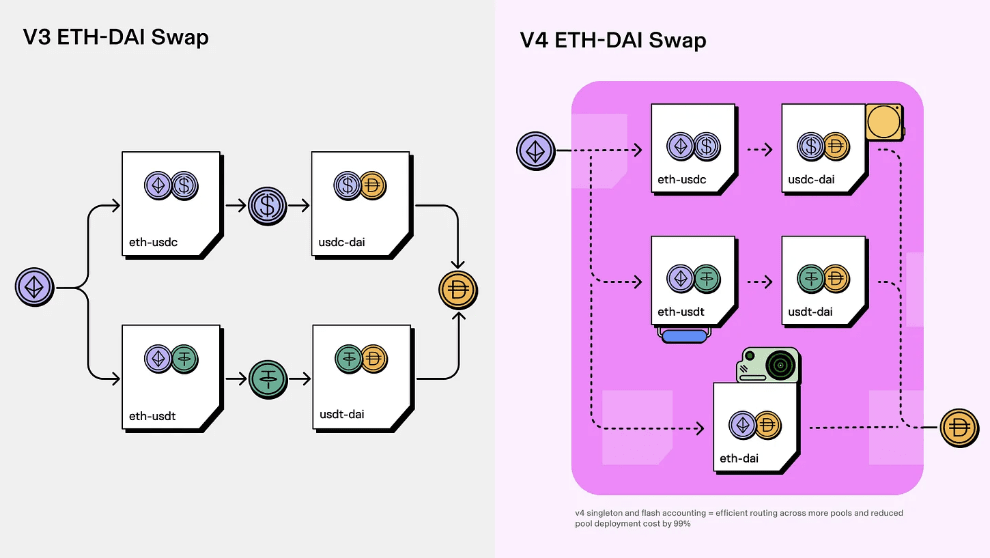
Uniswap v4 introduced the Singleton contract architecture, and all transaction pools are now stored in a central contract, thus significantly reducing Gas consumption and making transactions more efficient.
These improvements make fee tiers more flexible and customizable, while restoring support for native ETH. Users will see further gas savings.
3、Flash Accounting
This feature complements the Singleton contract. Flash Accounting eliminates the need to transfer assets between transaction pools after each transaction, providing a more efficient process and saving on Gas costs.
With this new system, asset transfers are now made based on net balances. Say goodbye to unnecessary transfers and enjoy the benefits of smarter bookkeeping.
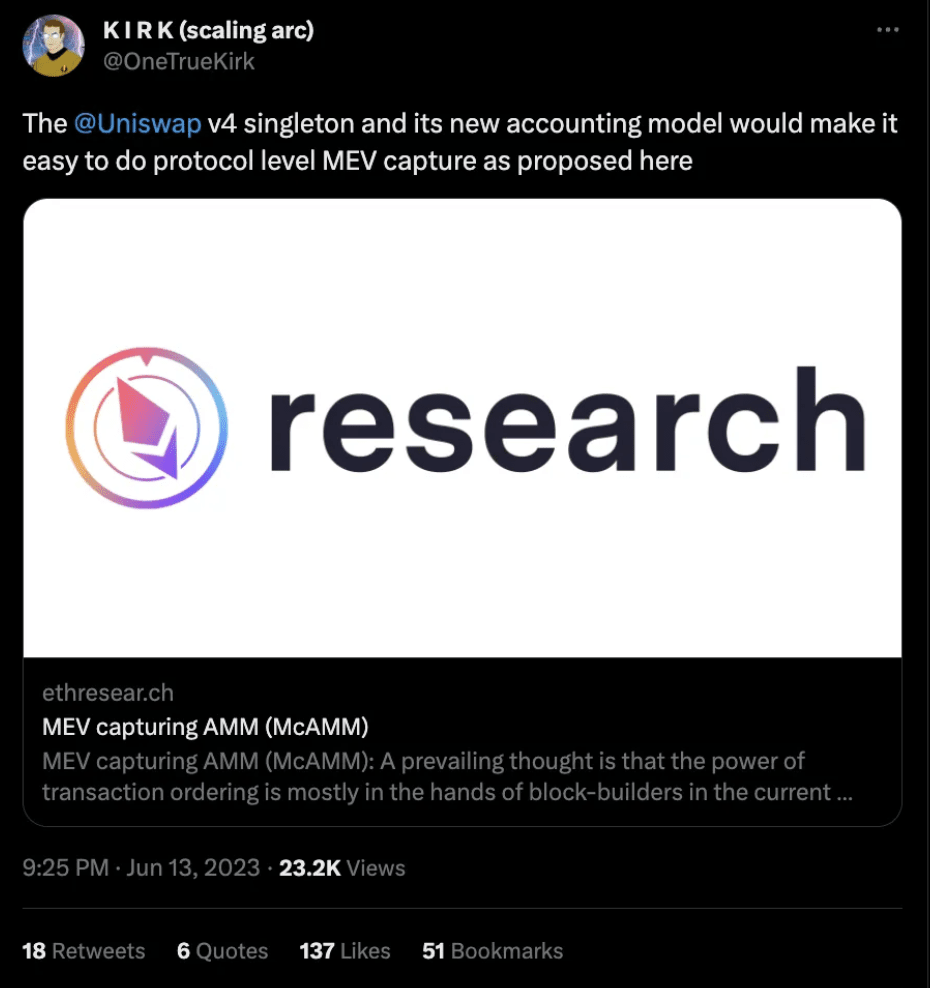
Singleton contracts are able to capture the benefits of MEV (Maximize Equity Value).
4、Business Source License
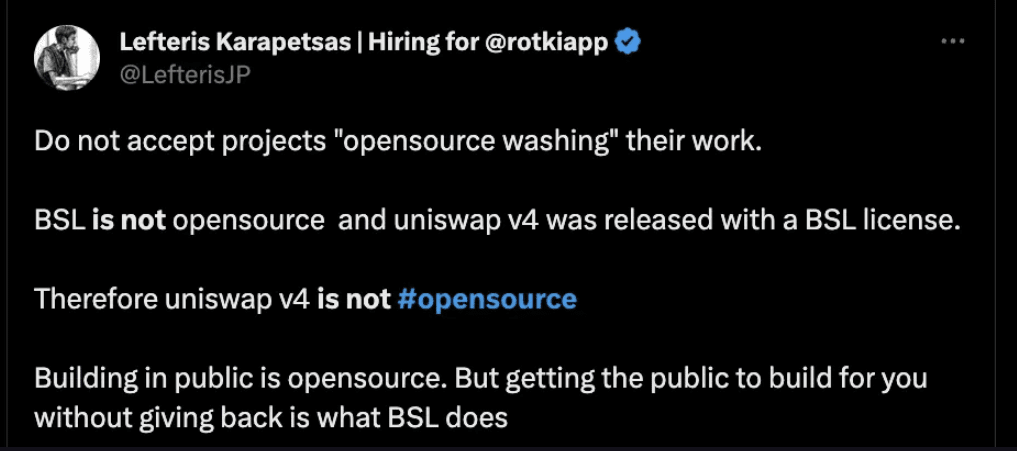
Similar to V3, Uniswap V4 will adopt the Business Source License 1.1, which limits the use of V4 source code in commercial or production environments to four years. Uniswap is governed by the community, and this can be changed under Uniswap Governance and Uniswap Labs.
Advantages of Uniswap V4
There is no doubt that V4 will bring benefits to Uniswap and its users and partners.
1. New storage strategies and partnerships
With TWAMM, limit orders, and dynamic fees, users and developers will rethink how to build new strategies with these upgrades. This opens up new opportunities for collaboration with new protocols looking to build on Uniswap, and new designs for V4 strategies.
2. Build viscous fluidity
Hooks allow liquidity providers to determine fees and potentially make better use of the funds provided to earn more fees for users. This in itself, along with withdrawal fees, creates a game theory effect that discourages users from withdrawing funds from LPs.
3. Reduce Gas Fees
Through Ethereum support and Flash Accounting, it can help users reduce gas costs. Overall, this increases transaction volume, transaction fees, and in turn brings more value to the protocol.
Criticisms of Uniswap V4
1. BSL exacerbates open source misunderstandings
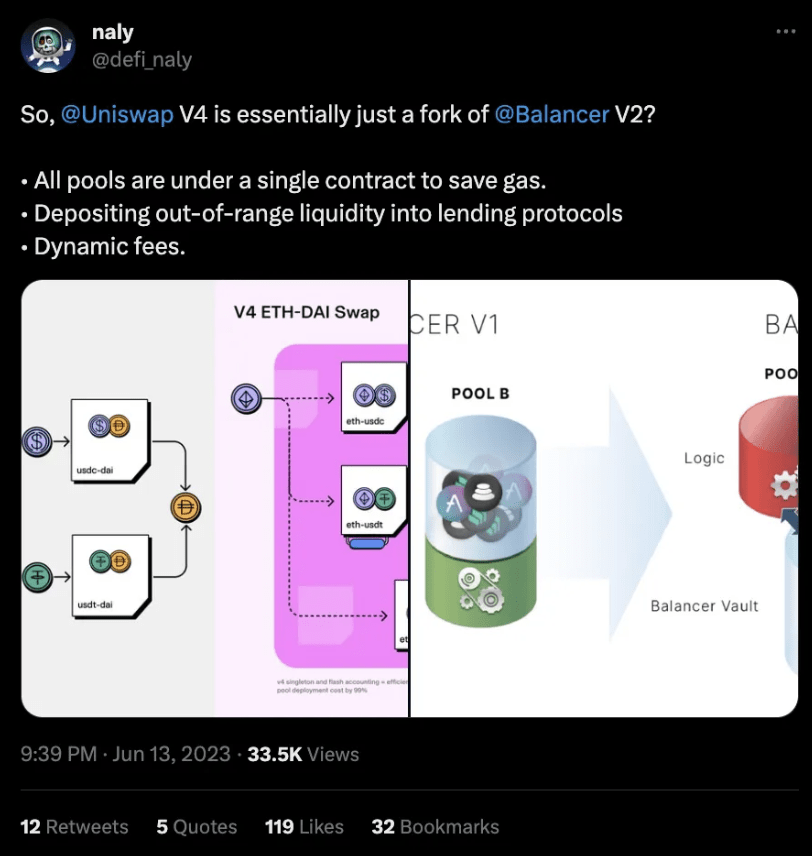
2. Uniswap V4 is a fork of Balancer V2.
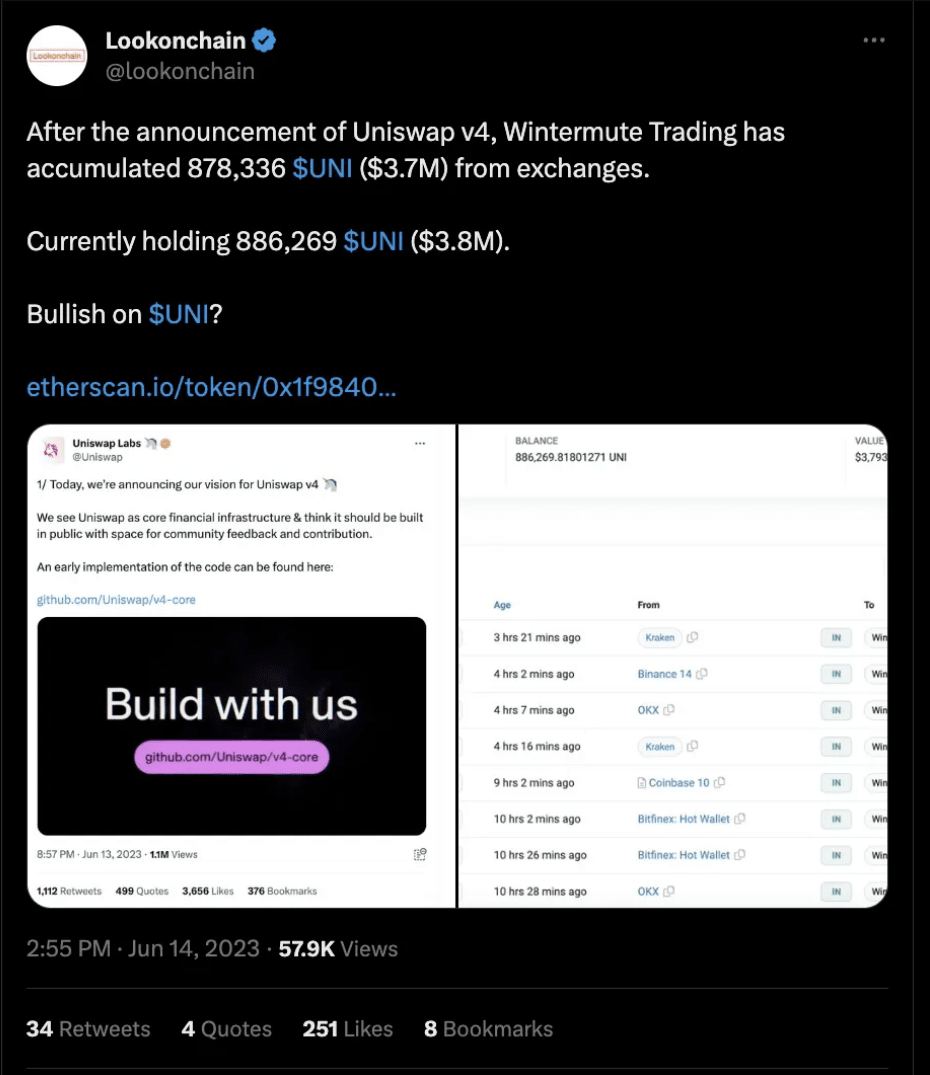
3. Large investors are bullish on UNI
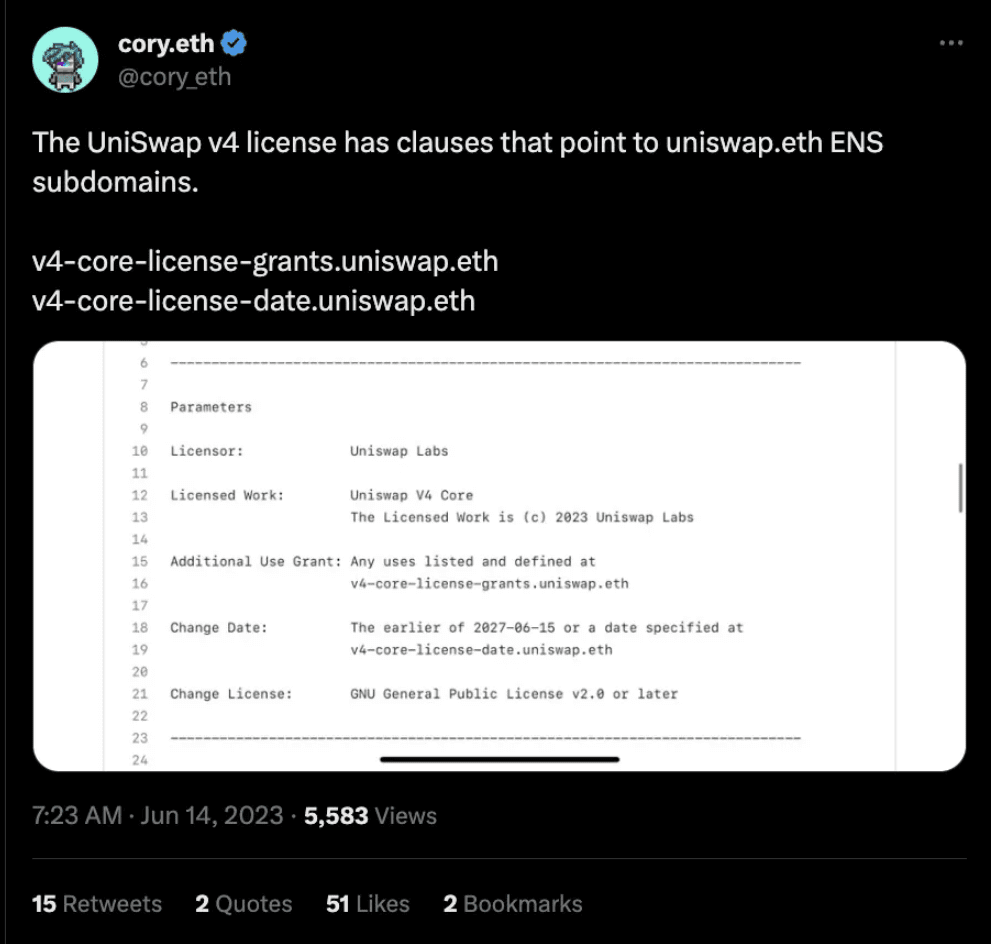
4. Uniswap has been preparing for this day and has already prepared the subdomain.
5. Even with V4, this will not help Uniswap catch up with its competitors that are ahead of it in terms of innovation.
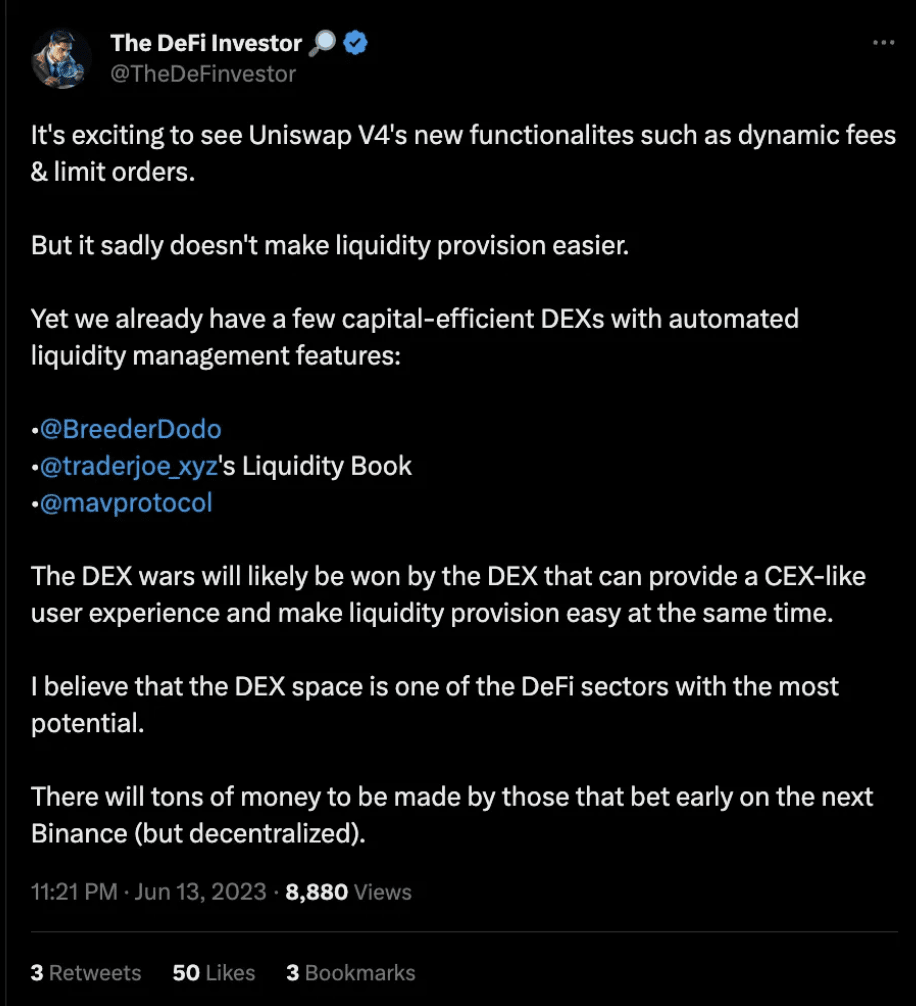
6. Uniswap is just a copy of many other protocols.
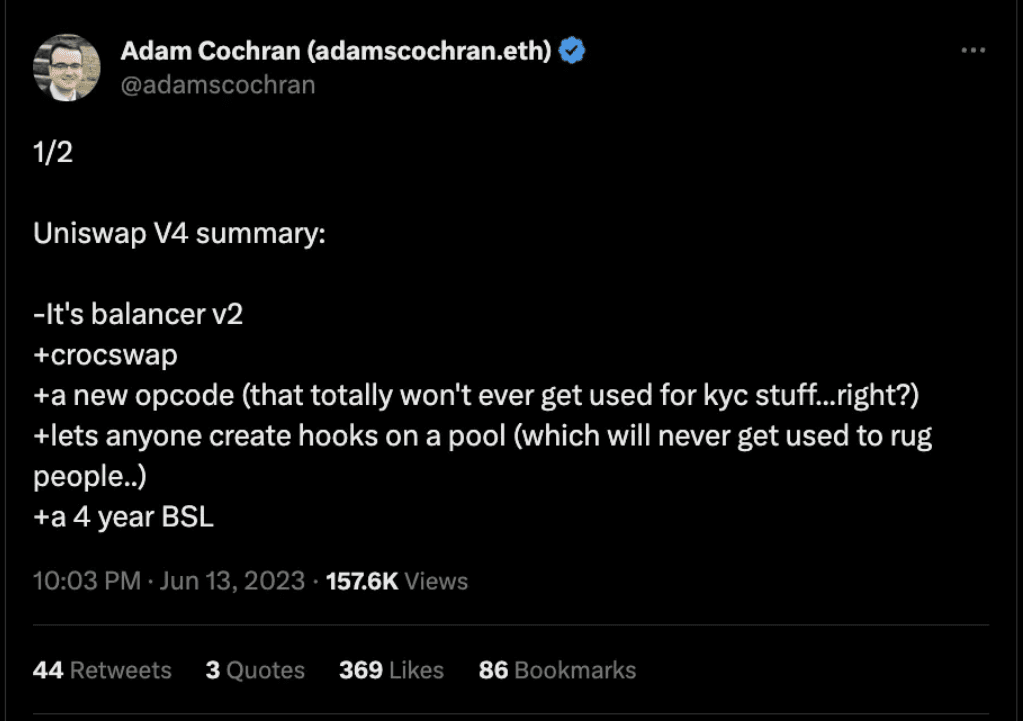
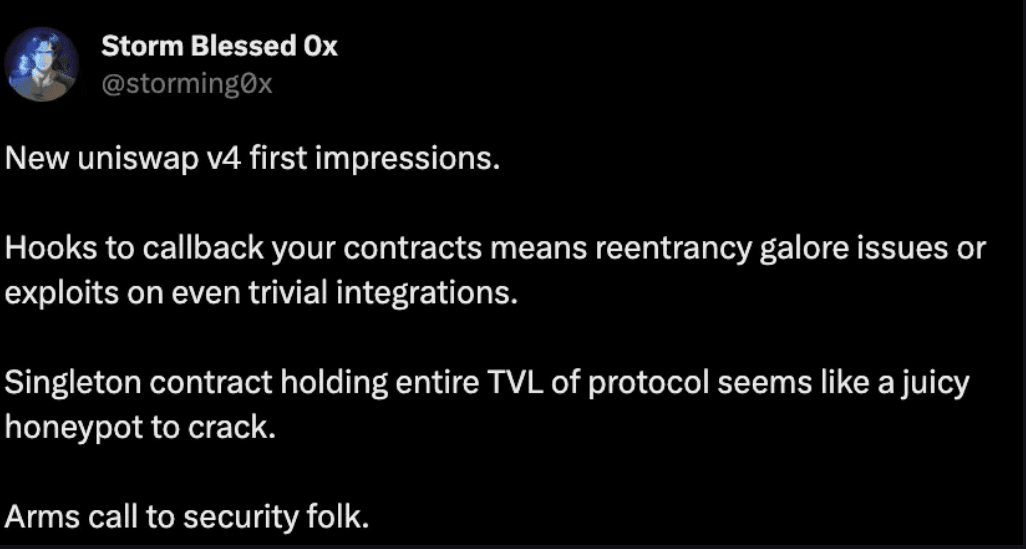
7. Potential vulnerabilities in Singleton contracts
 Summary
Uniswap v4 brings efficiency and cost benefits, but also adds complexity to the crypto world. I am particularly fascinated by the Hooks feature it brings, as I foresee this creating a new paradigm for new strategies and more layers that can be built on top of Uniswap.
What ideas do you have for the possibilities that could be built?
1. Centralized exchange experience
I believe that in the race to dominate the decentralized exchange (DEX) space, it will all come down to which DEX can provide a centralized exchange-like experience. Mass adoption is key, and the DEX that achieves this first will rise to the top, with competitors to follow.
2. Balance
Although Uniswap still has a long way to go to become the best DEX, the field is always striving to find a balance between technology, innovation, and user-friendliness. Borrowing features from other protocols is not a problem for me, this is how we learn from each other. What really matters is to merge all these features and make them understandable to users in the simplest way. Not all users have enough technical knowledge to compare the technical features of all DEXs, they rely on what they see, how easy it is to use, and whether it can provide the best exchange rate and returns. This will give it an edge over other competitors.
3. Education
Communicating technical information in the most understandable form is probably one of the things that Uniswap excels at, which gives it an edge over others. Uniswap is one of the oldest protocols out there, and many old players have been with it. They know how to best convey information, and their words carry a lot of influence. I think this is probably a challenge that a lot of protocols have faced for a long time. The ultimate goal is to simplify technical information and dApp interactions to achieve widespread adoption.