

Original author: GCR team
Original translation: Luffy, Foresight News
Overview:
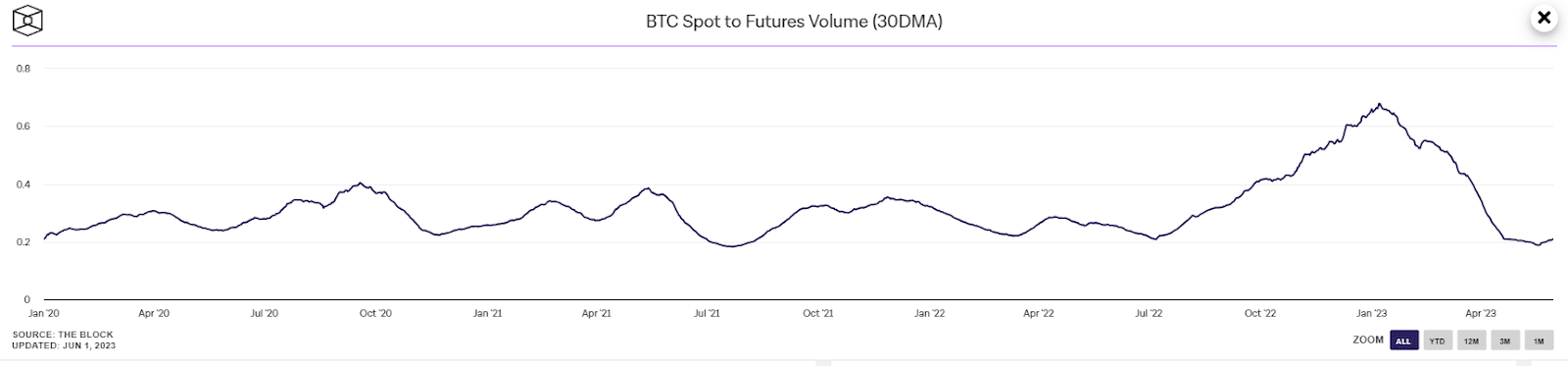
Futures (“perps”) trading dominates: At the time of writing, cryptocurrency futures trading dominates, accounting for more than 60% of total trading volume compared to spot trading. This phenomenon is not unique to cryptocurrencies, but also exists in traditional financial markets.
NFT 1.0 trading is dominated by spot trading: Initially, NFT trading was driven by spot trading, generating huge trading volume, with a total trading volume of more than US$20 billion. However, it created inefficiencies: only long positions were allowed, and small and medium-sized collectors had no or limited access to high-value collections.
NFT communities are culture-driven organizations: NFT collections successfully bring together users with similar interests, ideas, and values, creating a social structure shared by people around the world. These cultural elements are reinforced in virtual or real-world events around the world, just as other communities (such as anime) have done for decades.
NFT futures are expected to solve the current inefficiency of spot NFT trading: NFT perpetual futures ("NFT Perps") solve the inefficiency of NFT spot trading. They allow trades of almost any size, long and short positions, and leveraged trading.
Spot trading will remain significant, but in a shift: We expect spot trading and collecting to remain significant in their own right, especially for accessing the utility and community and digital identity layers associated with NFTs. Collectors seeking to gain utility and participate in communities with NFTs will likely purchase it on the spot market. Meanwhile, futures markets are available to other types of participants and collectors seeking to hedge or pursue different trading strategies.
Futures dominate the market
For a long time in the early history of cryptocurrencies, the market was only spot trading, where users exchanged fiat currencies, other cryptocurrencies, or stablecoins for any other token. This brought several inefficiencies:
Only long: For spot, users can only go long (profit only if the price goes up). This prevents market participants from hedging losses or profiting from falling prices.
Limited leverage: Relying solely on spot trading, investors have limited leverage. While it is possible to establish a short position by borrowing an asset and then selling it in the hope of acquiring it at a lower price, this is capital inefficient (requires collateral) and can be difficult or costly to do for illiquid tokens (higher borrowing rates).
However, the launch of the perpetual futures market (“Perps”) by BitMEX and the launch of the first BTC futures by the Chicago Mercantile Exchange (CME) in December 2017 changed everything: the perpetual futures market began to dominate. As of the time of writing, perpetual futures continue to dominate cryptocurrency trading activity. For BTC and ETH, spot trading volume accounts for only a small portion of the perpetual futures market: 20%-70% for BTC and 16%-44% for ETH.
Source: The Block
NFT Market: History Repeats Itself
2021 marked the beginning of the NFT bull run. During this period, NFT technology began to gain attention and adoption around the world. NFTs were not only used to generate art and photography use cases, but also as credentials to enter communities and became a key component of our digital identity in the form of profile pictures, it was also used in many other aspects.
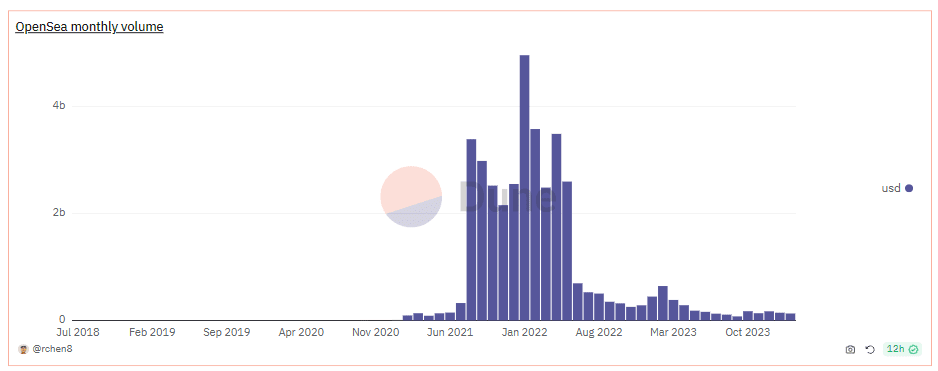
All of these use cases have helped to thrust the Web3 space into the spotlight: attracting a large number of users, builders, collectors, as well as speculators and traders. A large amount of capital has poured into the NFT ecosystem, with on-chain NFT transaction volume totaling over $21 billion in 2021 (20,000% annual growth) and $24.7 billion in 2022 (17% annual growth) according to Dune Analytics and DappRadar. This growth is driven by a variety of factors, including the launch of popular NFT projects such as Otherside, Metaverse, Azukis, and Moonbirds.
Source: Dune
Despite the massive influx of capital, the non-fungible nature of NFTs and the poor infrastructure at the time only allowed individuals to conduct spot trading of NFTs. This created friction and prevented collectors from easily entering or exiting a position. Collectors had to wait for someone to accept their listing price or match the current asking price. And, as the value of collectibles rose, it reduced the opportunity for small investors to acquire high-priced collectibles. Additionally, similar to the fungible crypto token market in 2017, it only allowed long positions.
During the 2022-2023 bear market, the NFT ecosystem saw a lot of innovation and new players, including Blur (with its incentive bidding pool and lending function Blend) and NFT AMMs such as Sudoswap. These platforms are working hard to create a seamless trading experience and improve liquidity. However, as we will see later, these models still cannot achieve seamless short positions and cannot solve the problem of capital efficiency.
It is important to note that this does not mean that NFT AMMs or lending do not have a strong value proposition. In our view, NFT AMMs are fully capable of helping collectors build and incentivize community-owned trading venues, which benefit the entire collector ecosystem by creating an economic cycle: transaction fees go back to collectors, creating value for holders and managing relationships with them.
History will not repeat itself, but it will always be strikingly similar: NFT 2.0
NFT Perp Futures (NFT Perps) are a new type of derivative that allows investors to trade NFTs with better liquidity. NFT Perp Futures are similar to traditional cryptocurrency perp futures, except that their prices track NFT collections. NFT Perp Futures offer several advantages over traditional NFT spot markets and will enhance the trading experience:
Quick Access: NFT futures allow investors to enter and exit positions instantly without having to purchase the underlying asset or list the NFT on an NFT marketplace, aggregator, or NFT automated market maker. This is advantageous because it reduces the effort of storing or transferring NFTs.
Hedging opportunities and long-short markets: Until now, NFT investors have only been able to “go long” on the NFT market. By using NFT perpetual futures, investors can establish a “market neutral” position by shorting perpetual contracts while still gaining the utility, community, and other benefits that NFTs bring. Additionally, it allows them to take advantage of negative catalysts for collectibles.
Leverage: Until now, NFT investors have only been able to use leverage by borrowing NFTs on NFT lending platforms such as Arcade or Paraspace. However, in addition to creating friction (users must deploy borrowed funds into other trading activities), NFT lending can lack capital efficiency in some cases because it requires full NFT assets already in inventory to obtain leverage.
Flexibility of scale: NFT perpetual futures allow users to obtain the NFT collections they want at any scale, as it does not require acquiring a specific NFT and paying its asking price. In this way, users can trade 100 ETH of BAYC or 0.1 ETH of BAYC. This allows small holders to gain positions in NFT collections that they would not be able to obtain if they were trading on the spot. In addition, it allows institutions and large collectors to trade at a larger scale without having to influence the price by sweeping the floor price.
Introducing new users: The small-scale availability mentioned above may attract more retail collectors and traders to the field, which can then be brought into the entire blockchain ecosystem.
As we mentioned before, the 2023 “bear market” brought innovation to the NFT space, and some may argue that other verticals and players can solve the above problems. Let’s dive in:
On-chain NFT options: They address hedging possibilities, directional NFT market risk, and can offer different contract sizes. However, options are a more complex product than perpetual contracts, which are widely known for their popularity on centralized venues. In addition, there may be a lack of liquidity for different strike prices or expiration dates, creating friction.
Fragmented NFTs: Fragmented NFTs lower the barrier to entry for high-priced collectibles and can be traded at any scale. However, fragmentation has the following pitfalls:
Inefficient funding: The fragmentation process requires users to purchase NFTs and then lock them in a contract to initiate the fragmentation process, which makes it inefficient.
Fungibility restrictions: The score of one NFT is not equal to the score of another NFT, even if they are from the same set.
Limited liquidity and scale: As mentioned earlier, it can be challenging to build a liquid trading pool interested in a specific NFT.
Governance and redemption issues: NFT redemptions can be subject to friction as they require consensus among holders.
NFT AMM: NFT automated market makers (AMMs) solve the liquidity incentive problem, create a more liquid market, and also support trading NFT collections at any scale. However, they still suffer from capital inefficiency because they require NFTs to be deposited in a pool. In addition, NFT AMMs do not allow short selling.
NFT Perpetual Agreement
nftperp: The pioneer
Year of Founding: 2022 | Stage: Private Alpha Stage | Funds Raised: US$4.7 million
nftperp is a pioneer in the NFT perpetual protocol vertical. The platform provides a seamless trading experience, integrated in a simple and well-thought-out user interface. At the time of writing, the protocol is currently rolling out v2, allowing users to trade collectibles such as Miladies and Pudgy Penguins, all by running DApps on Arbitrum to reduce gas fees.
According to nftperp’s Dune dashboard, the protocol has seen over $8.3 million in trading volume at the time of v1’s release, with over 800 traders (whitelisted users).
Source: Dune
Tribe 3: Gamification and social trading
Year founded: 2022 | Phase: v2 testnet | Funds raised: $2.1 million
Tribe 3 is an NFT futures DEX that incorporates social and gamification elements into the trading platform. In addition to NFT futures trading, users can also participate in battles with others (community to community trading) and earn in-game items based on trading behavior. The platform allows users to trade multiple NFT series with up to 5x leverage.
The platform completed its v1 public beta with $71 million in trading volume and over 840 active traders. At the time of writing, the platform is testing the updated protocol design on the v2 testnet.
Wasabi: A complete and popular NFT derivatives platform
Year of Founding: N/A | Stage: Public | Funds Raised: N/A
Wasabi has built a whole suite of derivative products for NFTs. The protocol is starting to offer put and call options on specific NFT series, allowing users to go long or short until a specific date without the risk of being liquidated.
To expand its product range, Wasabi has launched:
BNPL: Wasabi works with different NFT lending protocols to allow users to seamlessly purchase NFTs with a “buy now, pay later”
Perpetual Contracts: Recently, Wasabi partnered with Flooring Protocol to launch an index-based perpetual contract product that allows users to trade any whitelisted NFT collection with up to 5x leverage.
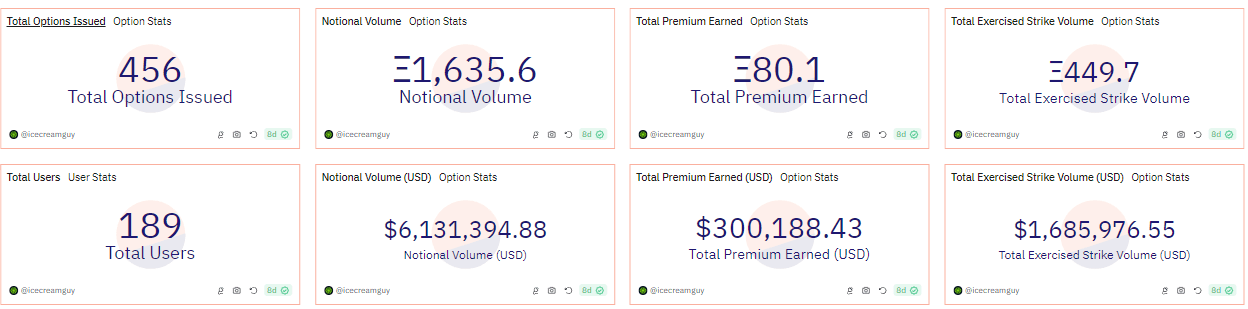
According to Wasabi’s Dune dashboard, the protocol’s options products have traded $6.1 million in notional value, with liquidity providers earning $300,000 in fees.
Source: Dune
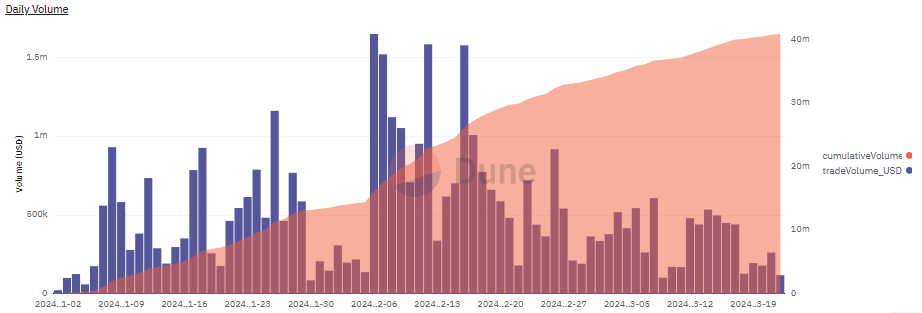
The trading volume of perpetual futures products has reached more than US$40 million, with approximately 470 active traders.
Source: Dune
in conclusion
NFT futures apply the concept of perpetual trading to NFTs, unlocking a more accessible and two-way trading experience that was previously unavailable in the NFT spot market. While it is too early to tell, the potential value proposition offered by NFT futures has strong growth potential in the NFT market.