

Author: ALEX DeFi Compiler: CoinTime 237
Bitcoin has long been the most secure and decentralized blockchain, and as such, the Ordinals protocol that makes BRC20 tokens possible has attracted widespread attention from the community.
At present, Bitcoin has surpassed the pure "currency layer" and become the ultimate "data layer", on which hundreds of millions of dollars worth of BRC20 tokens have been burned and settled.
But in reality, the BRC20 token is only about three months old and relies on a centralized indexer to maintain global balance status.
What is the BRC20 index?
The BRC20 Index is a database that tracks wallets and amounts of BRC20 tokens held. People who build and maintain this database are called Indexers. Although all BRC20 burns are on-chain, it is important to understand why the global balance status is not self-evident.
Bitcoin is not a "virtual machine" L1 like Ethereum. The scope of Bitcoin smart contracts is limited to "send" and "receive" transactions. Fully expressive smart contracts cannot be implemented on the Bitcoin Core protocol.
These restrictions also apply to BRC20 tokens, which are just simple JSON text files or 5 lines of JavaScript burned at one satoshi. Let's look at the first BRC20 burn, which was burned on March 8th of this year and posted on Twitter:
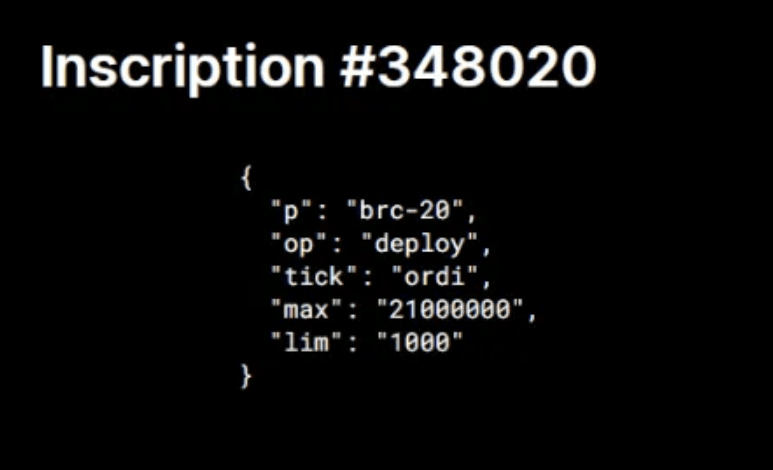
Burn deployment means confirming the existence of $ORDI tokens, which have a maximum supply of 21 million and a maximum of 1,000 tokens can be minted per burn.
It is important to note that creating $ORDI does not provide the creator with any $ORDI tokens. To hold $ORDI tokens, a burn is required that includes a "mint" rather than a "deployment", and each burn can provide up to 1,000 tokens until the maximum limit is reached.
Once minted, to transfer your BRC20 tokens, you need to burn a "transfer" transaction, and this burn is what is sent to another wallet address.
If this sounds a bit simplistic, it’s because BRC20 is a token standard without smart contract functionality. The Bitcoin protocol cannot “recognize” deployment, minting, or transfer transactions because it doesn’t read the data. There is only a transfer of satoshis from one wallet to another, no different than any other Bitcoin transaction.
No Indexer, No Market
At the time of publication, ORDI has a market cap of nearly $200 million. If a burn is just a text file, what is to stop a malicious user from trying to deploy and mint ORDI again?
This is why Indexers are so critical to the BRC20 infrastructure. If there is no code running on the chain that is able to create an “Error: ORDI already exists”, then it is up to the BRC20 market’s Indexers to determine if the ORDI is authentic or a counterfeit.
This requires a database that “reads” and records all BRC20 transaction data to check which burn “deployed” a new token name for the first time. Indexers must track which wallets minted the original token supply until the maximum limit was reached, and whether “transfers” of these tokens on secondary markets can be traced back to these wallets.
Therefore, without an indexer, there would be no way to build a BRC20 market, just a mess of nearly indistinguishable text files.
Indexing Challenges
While Bitcoin itself is immutable and decentralized, the BRC20 ecosystem relies on off-chain indexers, which is a significant weakness. Centralized entities are inherently weak, especially given the unstable state of indexers.
Burns that are not currently indexed or recognized are called "cursed" and are given negative numbers (some users intentionally create these "cursed" burns as a novelty). Another challenge is the recently introduced P2WSH burn.
In short, "P2WSH" means "Pay to Witness Script Hash" burn with Segwit (witness data), just like normal burn, but without Taproot (P2TR). Also, P2WSH uses ECDSA signatures instead of Schnorr signatures.
The result was that after burn 10366012, some BRC20 indexers could recognize burns using this new script, while others could not, leading to disagreements between BRC20 indexers.
These disagreements over technical details highlight the serious consequences that could result if a major indexer took malicious action, either intentionally or through a vulnerability.
Towards decentralization
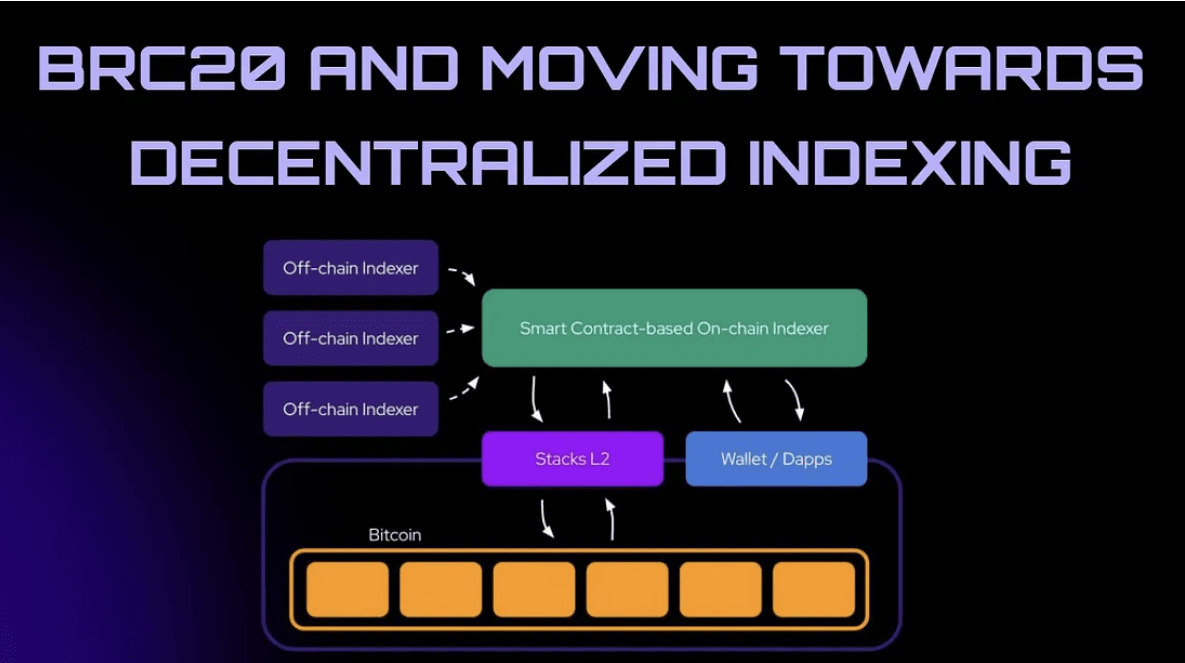
To ensure the long-term sustainability and growth of the BRC20 community, the focus is on building a decentralized indexer that is universally usable and immutable.
Such a decentralized on-chain Indexer can collaborate with off-chain Indexers to provide a single source of truth based on immutable claims and verifiable smart contract logic.
The ALEX team built B20, the first and fastest BRC20 order book decentralized exchange, by leveraging L2 scalability, enabling fast trade confirmations on Bitcoin with guaranteed security of final settlement.
The success of B20 demonstrates the potential of L2 solutions to supplement Bitcoin’s security and its lack of smart contract capabilities. L2 solutions can implement smart contracts on top of Bitcoin, providing a path for building decentralized on-chain indexers.
The Stacks smart contract layer is unique in that it shares consensus with Bitcoin and reads Bitcoin state directly. The ALEX team, along with leading thinkers at Stacks, are actively working to build a universal and immutable indexer.
The first version, due to be released in the next few months, will be able to leverage input from off-chain indexers, allowing a variety of different off-chain indexers to derive the same source of truth.
Through transparent smart contracts, we can begin to reduce the need to “trust” off-chain indexers, realizing its full potential as the BRC20 standard matures and evolves.
Bitcoin changed the world by providing a trustless financial transaction system without intermediaries. It is the values of Bitcoin that inspire us to work towards the goal of establishing a global balance state for BRC20, where the need for "trust" is eliminated.