


Written by: MIIX Capital
*This research report was completed in early March 2024 and revised in early April 2024
1. Key points of the research report
1.1 Investment Logic and Narrative
Cryptocurrency yield trading can be lucrative, but the actual returns realized by investors are uncertain. This is because future yields cannot be accurately predicted due to the volatility of the yield market caused by numerous factors in the crypto space.
Various yield protocols enable investors to profit from future yields, but many established protocols have flaws that can significantly reduce yields. Pendle takes an improved yield trading approach to optimize investor returns. Pendle's vision of becoming the "Uniswap for interest rate markets."
The investment highlights of the project include:
The market space is huge. As a derivatives market dominated by institutions, interest rate swaps account for 80% of the market share of derivatives, and interest rate swaps account for 80% of the market share. The transaction volume is extremely large, but this track has just been introduced by Pendle and is still in a very early stage.
Pendle's overall data performance is impressive, and its trading volume, TVL, and coin price have all reached new historical highs.
There is an inevitable demand for institutions to enter the staking track. Whether it is a bank, hedge fund, mutual fund, ETF issuer or ETF broker, they all have the need to hedge interest rate risks.
Pendle's v3 version will bring the traditional interest rate swap track onto the chain, which will target a trillion-dollar market. We look forward to Pendle's performance.
Pendle currently relies on the development of the LRT track, and the overall LRT track still has room for multiple-level growth. Although most of Pendle's obligations rely on LRT, it has the opportunity to gradually reduce the proportion of LRT in the future, because it is essentially an interest rate swap track for the entire market, which requires the entry of institutions to help diversify its assets.
1.2 Valuation Description
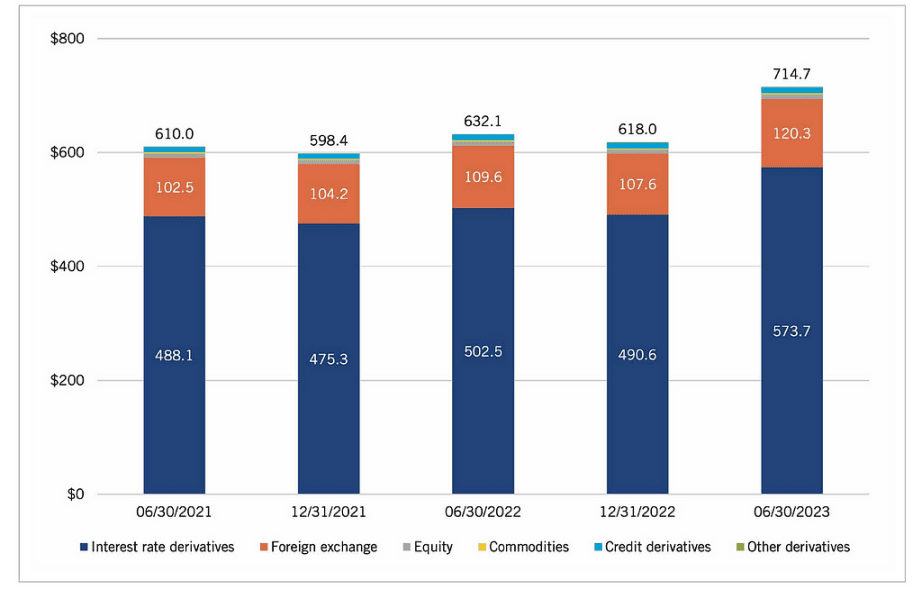
In TradeFi, interest rate derivatives are the positions that occupy most of the market in the derivatives market. Moreover, with the development of TradeFi, the overall scale of the derivatives market is also gradually increasing. As of June 2023, the overall derivatives market position has reached 714.7 trillion US dollars, of which the open interest of interest rate derivatives has reached 573.7 trillion US dollars, accounting for 80.2% of the share.
On-chain interest rates are still in the very early stages of derivatives. With the entry of staking into TradeFi, the demand for this part will explode.
At present, the price of Pendle has exceeded the previous high, and the growth space may no longer be restricted. Its main underlying supporting token is LRT. If the current overall LRT market value is 5.7 billion US dollars, the TVL flowing into Pendle is 2.37 billion US dollars, which includes two major tokens, EETH (ether.fi) and WETH.
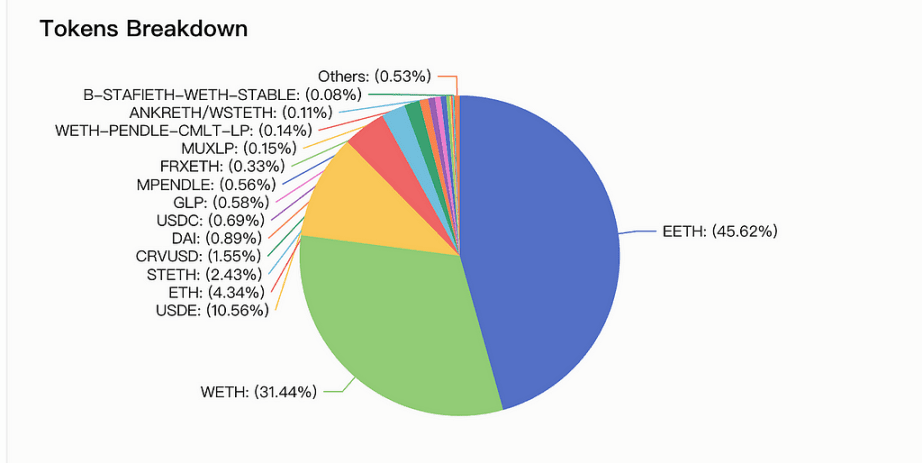
If the overall TVL of the LRT project increases fivefold, then Pendle's TVL will also have room to increase fivefold. With the introduction of the traditional interest rate market in 2024 and the entry of TradeFi, the demand for Pendle to smooth the yield curve and hedge risks will increase, so the project's room for growth will be even higher.
1.3 Main risks
The risk of smart contracts. Although Pendle has invited multiple auditing agencies to audit the code, there is still a possibility that loopholes may cause total loss of funds.
The failure of ETH spot ETF to pass will have a significant impact on the overall future tradefi market.
When Pendle faces extreme market conditions, some unknown risks may arise.
Pendle is currently very dependent on LRT and may face single risk exposure if it fails to effectively expand its business scope.
Due to the excessive number of token types, the liquidity of the protocol may be seriously insufficient for long-tail assets, causing liquidity aggregation problems. This will not be able to meet the rich arbitrage needs of some institutions, but this is a long-term problem.
2. Basic information of the project
2.1 Business Scope
Pendle is a blockchain project focused on yield tokenization, allowing users to lock in future yields on their crypto assets and receive yields in advance through its platform. This innovative approach not only provides a new source of income for cryptocurrency holders, but also introduces more liquidity and flexibility to the interest rate market. Pendle achieves this through smart contract technology, allowing users to participate in the market in a decentralized and secure way.
2.2 Founding Team
Pendle was founded in 2021, with team members based in Singapore and Vietnam, and currently has around 20 people registered on Linkedin.

TN Lee (X: @tn_pendle): Co-Founder, was a member of the founding team and business leader of Kyber Network, and then went to RockMiner, a mining company that operates about 5 mining farms. In 2019, he founded Dana Labs, which mainly produces FPGA customized semiconductors.
Vu Nguyen (X: @gabavineb): Co-Founder, formerly CTO of Digix DAO, specializes in RWA projects for tokenization of physical assets, and co-founded Pendle with TN Lee.

Long Vuong Hoang (X: @unclegrandpa925): Engineering Director, holds a Bachelor of Computer Science degree from the National University of Singapore. He joined the National University of Singapore as a teaching assistant in January 2020, joined Jump Trading as a software engineering intern in May 2021, joined Pendle as a smart contract engineer in January 2021, and was promoted to Engineering Director in December 2022.
Ken Chia (X: @imkenchia): Head of Institutional Relations. He holds a bachelor's degree from Monash University. He was an investment banking intern at CIMB, the second largest bank in Malaysia, and later worked as an asset planning expert in a private investment bank at JPMorgan. In 2018, he entered Web3 and worked as COO at an exchange. In April 2023, he joined Pendle as Head of Institutional Relations, responsible for the institutional market - proprietary trading firms, cryptocurrency funds, DAO/protocol treasuries, and family offices.
2.3 Investment Background
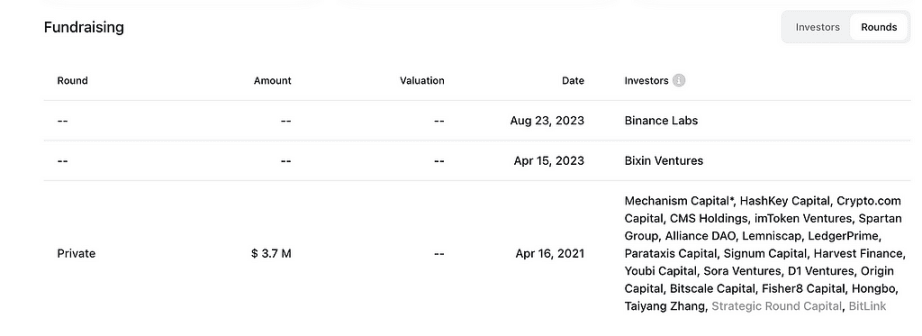
The main investors of this project include Mechanism capital, HashKey, Bixin Ventures, Binance Labs, etc.
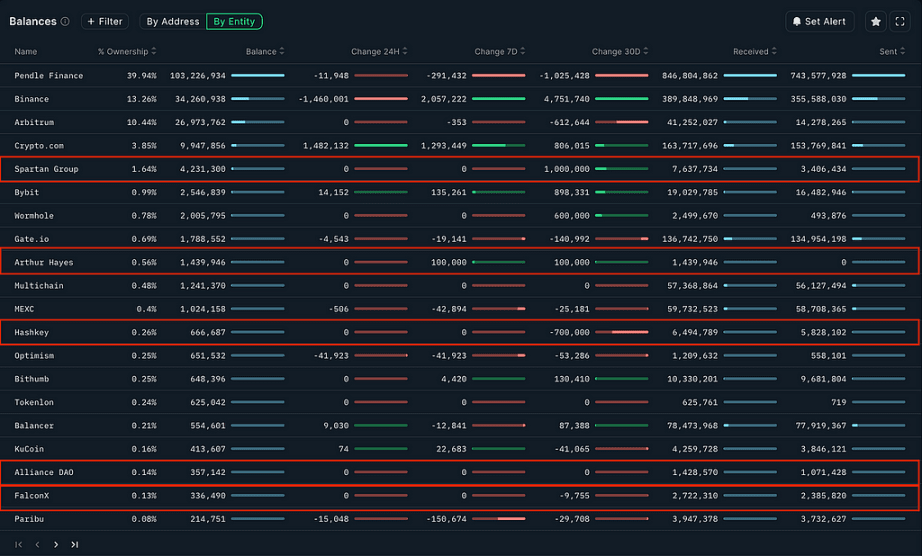
Currently, investors that can be found on the chain include Spartan, Arthur Hayes, Hashkey, Alliance DAO, FalconX, etc.
2.4 Project development route and history
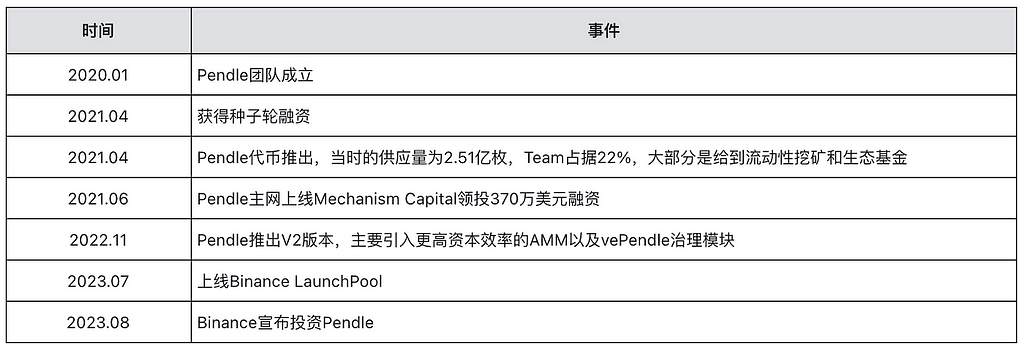
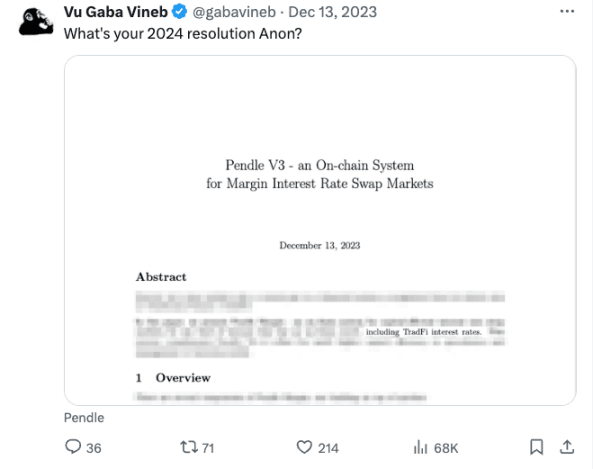
According to a tweet from co-founder Vu Nguyen, Pendle’s V3 version is scheduled to be launched in 2024, which includes interest rate derivatives from traditional finance, which will be of great interest to tradeFi. The specific implementation details are not yet known.
3. Product and business situation
3.1 Official website data (as of February 2024)
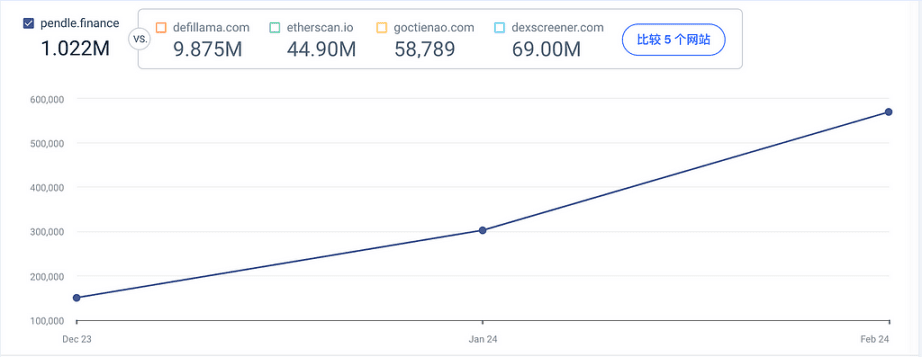
3.2 Social Media Data

3.3 Community Data

4. Project Analysis
4.1 Code
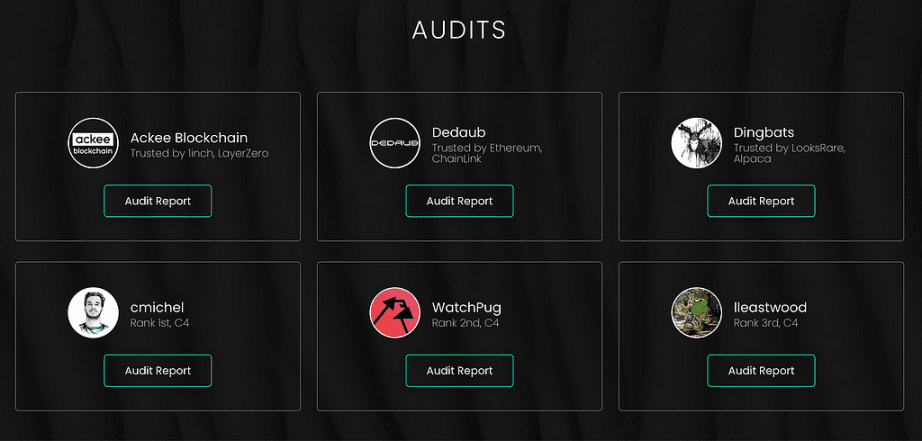
The product's code has been audited by multiple auditing agencies.
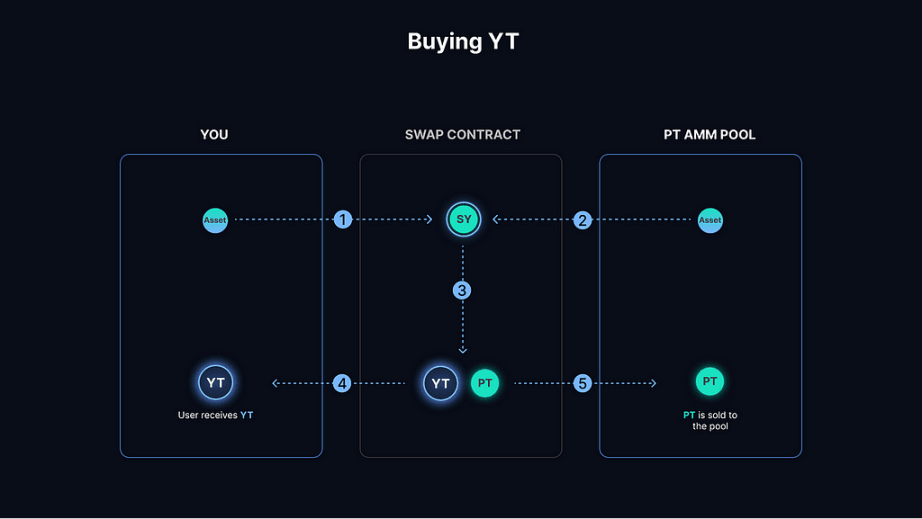
Its code development for the project remains at a normal level and the number of developers remains stable.
4.2 Products
Pendle is a permissionless yield trading protocol in which users can execute various yield management strategies. The working principle of Pendle is mainly divided into three parts: yield tokenization, Pendle AMM and VePendle, as follows:
Tokenization of revenue
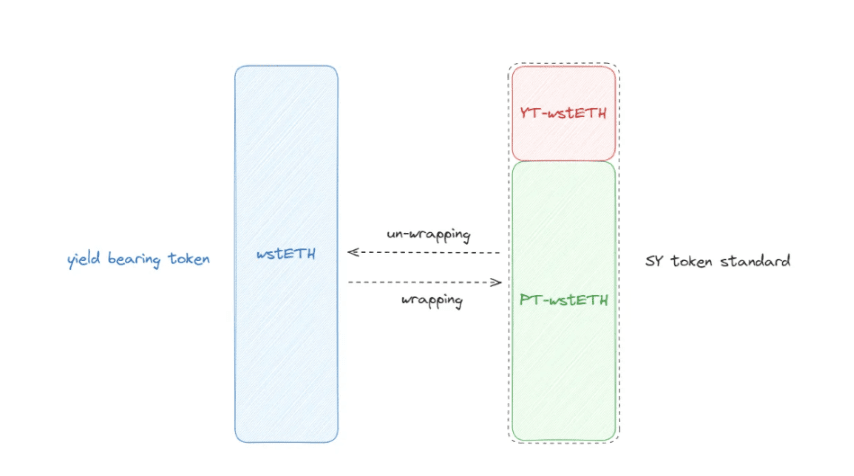
Pendle innovatively tokenizes income assets into SY tokens. It tokenizes according to the ERC-5115: SY Token standard, such as packaging stETH into SY-stETH. SY is then divided into its principal and income components, namely PT (Principal Token) and YT (Yield Token).
PT tokens do not earn any yield but can be redeemed for the underlying asset at a 1:1 ratio upon maturity.
PTs are similar to PO (Principal Only) securities or zero coupon bonds in TradFi.
Yield tokens represent the yield of an asset up to maturity.
YT is similar to IO (Interest Only) securities in TradFi.
Pendle AMM
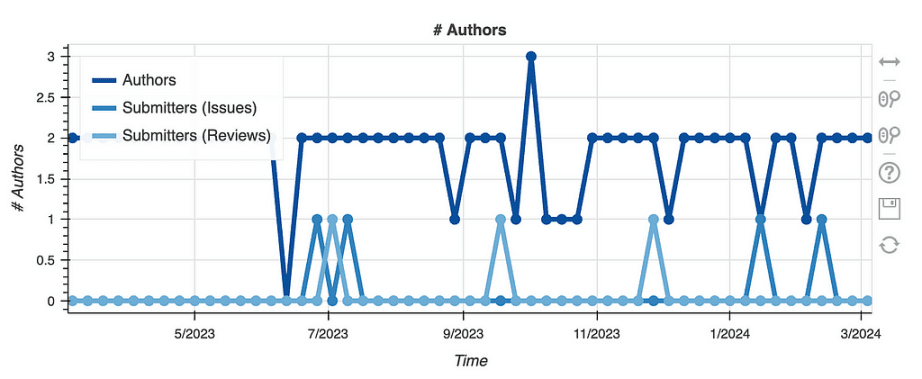
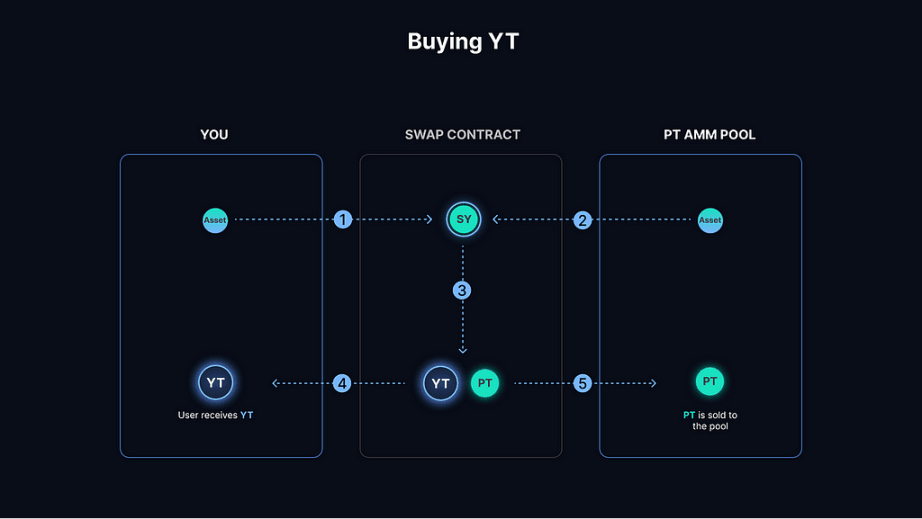
Both PT and YT can be traded through Pendle's AMM, which is Pendle's core engine. On Layer2, the oracle used by the project is Redstone. Pendle's AMM enables efficient DeFi yield trading: traders who want to earn fixed income buy PT, while traders who want to make long yields buy YT. For buying the yield token YT over a period of time, the process is as follows:
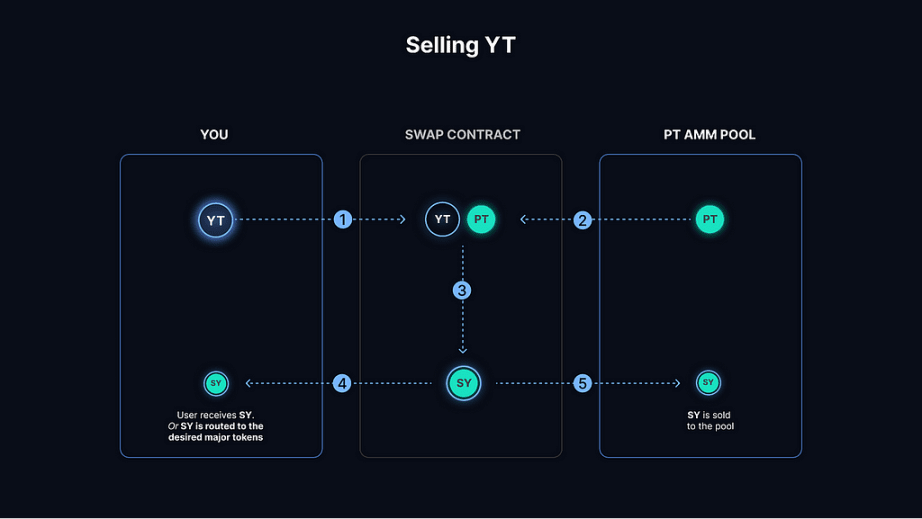
The process for those who want to sell YT tokens is as follows:
SY exists as an intermediary asset for SWAP pools, so LP providers need to provide YT-SY / PT-SY token pairs. SY represents a standardized yield token that can cover a wider range of asset classes. This standardization increases its appeal to investors because it provides more flexibility and the possibility of accessing more assets, which may attract more participants and provide higher liquidity, so this method of using SY as an intermediary asset to provide LP pools is chosen.
Liquidity providers can benefit from the following aspects:
Swap fees generated by mining pools
PENDLE Incentives
Protocol incentives from underlying assets (e.g. $COMP, $AAVE)
In Pendle, the separation of the yield portion (YT) and the principal portion (PT) of an asset allows investors to trade and manage these two components independently. This separation mechanism brings some unique pricing and value change methods:
Separation of future earnings: When you buy PT, you are actually giving up any earnings that might have been generated during the holding period, because these earnings have been tokenized through YT and may be purchased by others. Therefore, the price of PT will reflect this lack of earnings, usually purchased at a discount to the full value of the underlying asset. But we have agreed on a time, that is, YT can only reflect the earnings within a period of time.
Time value and risk considerations: Investors purchase discounted PTs based on the expectation that they are buying them now at a lower price, expecting that their value will rise and approach or be equal to the value of the underlying asset at some point in the future, especially at maturity. This expectation takes into account the impact of time value and the risk of holding PTs until redemption.
Assume a simplified example to illustrate that PT (principal token) will eventually rise back to the price of its corresponding underlying asset (ST).
Conditions: Underlying asset (ST): a bond with a current market value of $100, an annualized interest rate of 5%, and one year until maturity. PT initial price: Assume that the initial trading price of PT is $95 because of the separation of the future year's income (ie, the YT part).
Process: Separation of returns: On the Pendle platform, the holder of this bond decided to separate its returns and principal, creating PT and YT. Since YT represents the right to future returns, the price of PT will be lower than the full price of the original bond (ST), reflecting the missing value of future returns. Time Passage: As time passes, the bond approaches its maturity date. Because YT already represents all expected returns during the period, the value of PT actually represents the principal recovery that can be obtained from the bond at maturity. Value Recovery: As the maturity date approaches, the market value of PT will gradually rise, because market participants expect that at maturity, PT holders will be able to redeem PT at a value equivalent to the underlying asset (i.e., the principal of the bond). If the face value of the bond is $100, then in theory the price of PT should gradually rise back to $100.
Result: At maturity, the holder of PT can use PT to redeem the principal of the bond equivalent to $100. Therefore, although PT initially trades at a discount (for example, $95), its value will gradually increase over time and as the maturity date approaches, eventually returning to the full value of the underlying asset, which is $100. Among the counterparties, everyone is betting or hedging on future yields. Selling YT means smoothing the future yield curve, cashing in early, or being bearish on future yields, while buying YT means being bullish on future yields. Buying PT means buying at a certain discount and believing that the yield during this period is bearish.
VePendle
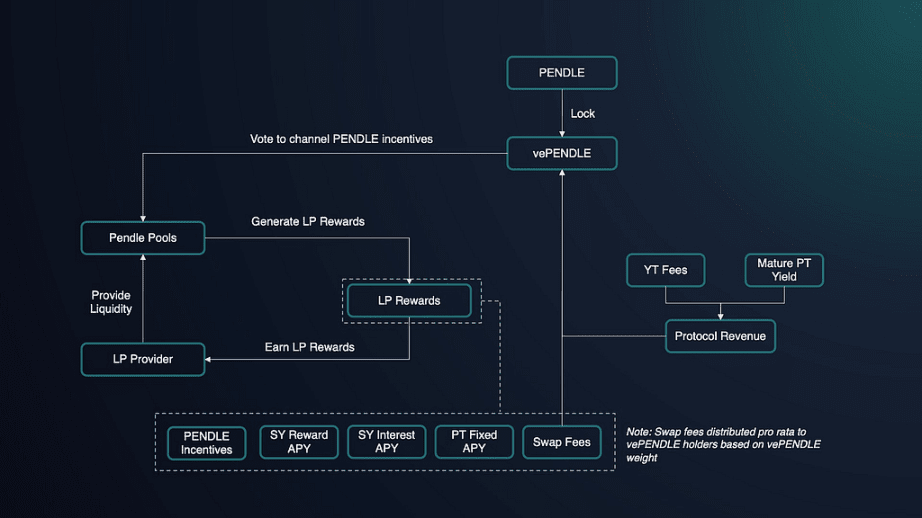
Bringing TradeFi’s interest rate derivatives market to the chain and making it available to everyone, VePendle is Pendle’s governance system:
The longer the PENDLE is locked, the larger the corresponding VePendle value will be.
VePendle values decay over time, but your lock duration can be extended to offset the decay.
The more VePendle you have, the greater your voting power. After voting for a mining pool, you are entitled to 80% of the swap fees collected by the mining pool.
VePendle holders also receive a portion of the protocol revenue, which comes from swap fees and YT fees.
4.3 Ecosystem Development and Data
At present, due to the existence of ST tokens, the project's ecosystem includes:
Penpie: Penpie is a DEFI platform launched by MagPie, which provides users of the Pendle platform with income and vePendle incentive services.
Equilibria: Convert idle PENDLE to ePENDLE and earn yield by staking in the ePENDLE vault.

The above chart tracks PNP and EQB locked in Penpie and Equilibria and their ownership of Pendle’s governance token (vePendle). This shows the level of control vlPNP and vlEQB holders have over the Pendle protocol. vlPNP and vlEQB holders direct the allocation of Pendle’s vePendle on governance proposals and weighted votes.
Penpie holds approximately 12 million vePendle shares of Pendle, while Equilibria holds approximately 7.7 million vePendle shares of Pendle. There are currently 32.7 million vePendle shares in total. Therefore, Penpie holds approximately 36.7% of Pendle's governance rights, and Equilibria holds approximately 23.5% of Pendle's governance rights (data as of March 2024).
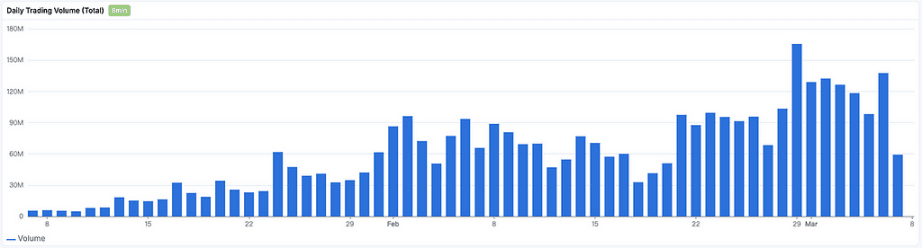
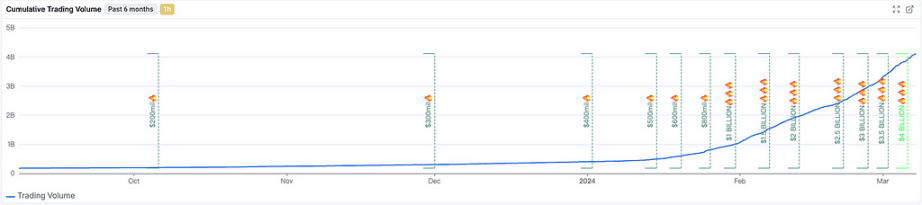
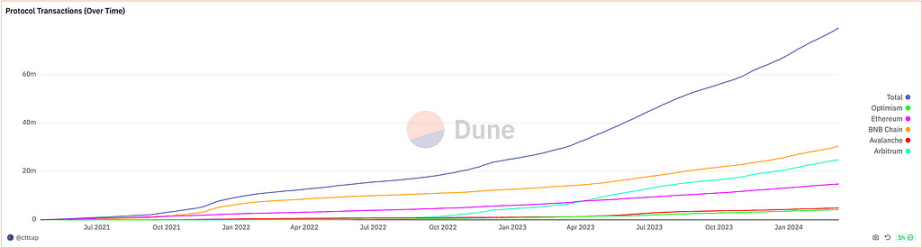
The number of transactions and trading volume on the Pendle protocol also showed a very positive and gradual increase, which means that with the development of DEFI projects such as LSD, LSDFI, LRT, and Restaking, the market demand for interest rate derivatives is gradually increasing. And as of March 7, 2024, its cumulative trading volume has exceeded US$4 billion, and its trend is gradually increasing.
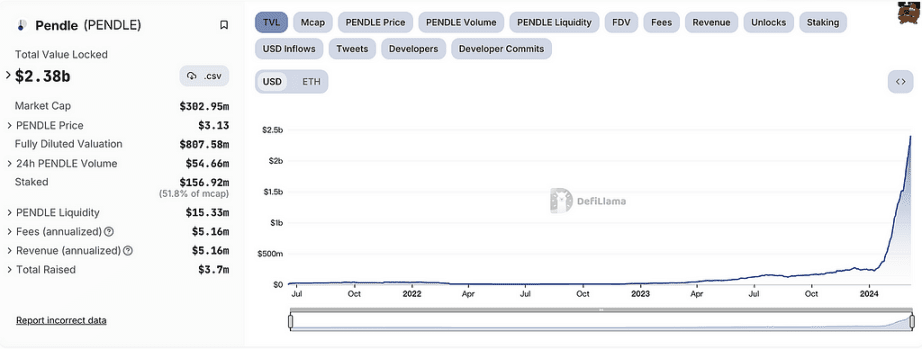
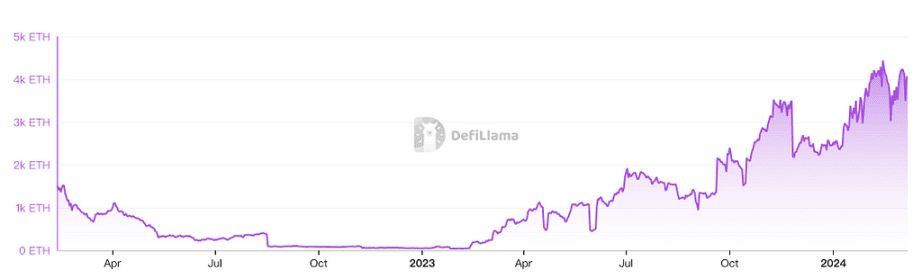
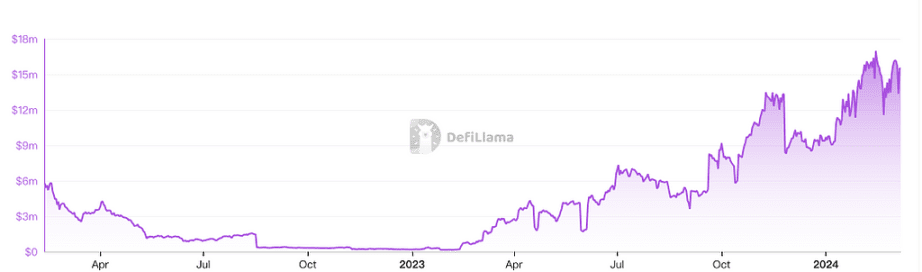
In terms of TVL, the project has its own AMM pool, which supports the exchange of various SY, PT, and YT tokens. Currently, it is gradually rising from the perspective of currency standard and U standard.

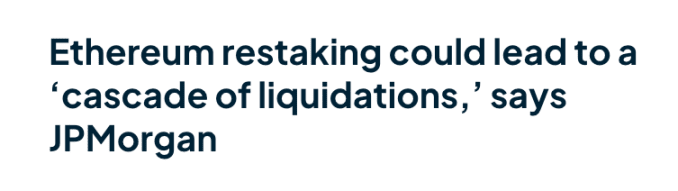
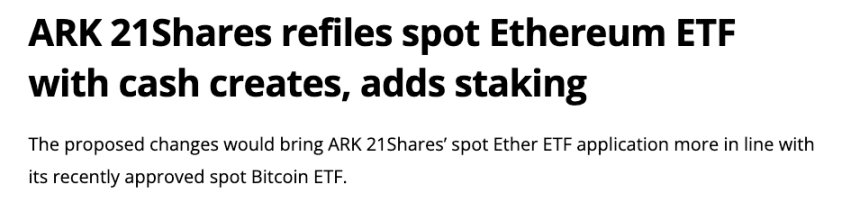
With the development of staking, people expect the demand for the project to gradually increase, especially the possibility of institutional entry. Many institutions have begun to mention the issue of the income of Ethereum staking. They generally believe that after the spot ETF is passed, TradeFi will be able to obtain active on-chain income by staking ETH while also charging depositors custody fees.
There will be a huge demand for interest rate swap products such as Pendle, and due to its leading position in the interest rate track, it will be a natural process to introduce traditional interest rates to the chain in the future. Institutions will then be able to operate interest rate derivatives on the chain, which will have a potential transaction volume of trillions of dollars.
Currently, the liquidity of Pendle's pool is also gradually increasing.
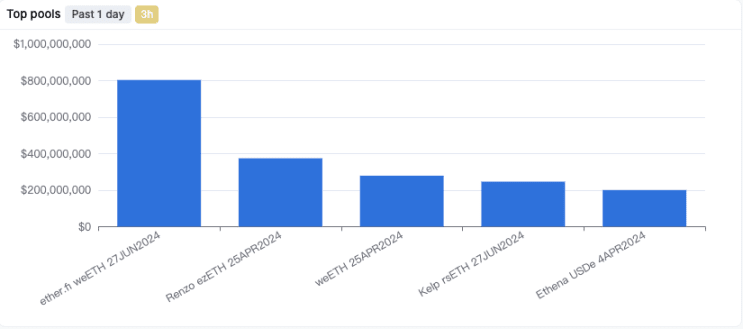
Among all the pools, the main ones are projects in the LRT track. With the issuance of coins by LRT track projects and the continued popularity of the Staking track in the future, this track will become a hot focus of the industry and its growth rate will be relatively high. The TVL of the main LRT track is currently in the growth stage, which has a very direct promoting effect on Pnedle, whose main pool is LRT.
4.4 Track size and potential
Interest rate derivatives (IDRs) are among the most traded derivatives. A derivative is a security whose price depends on or is derived from one or more underlying assets. Its value is determined by the volatility of the underlying assets. The most common underlying assets include stocks, bonds, commodities, currencies, interest rates, and market indices.
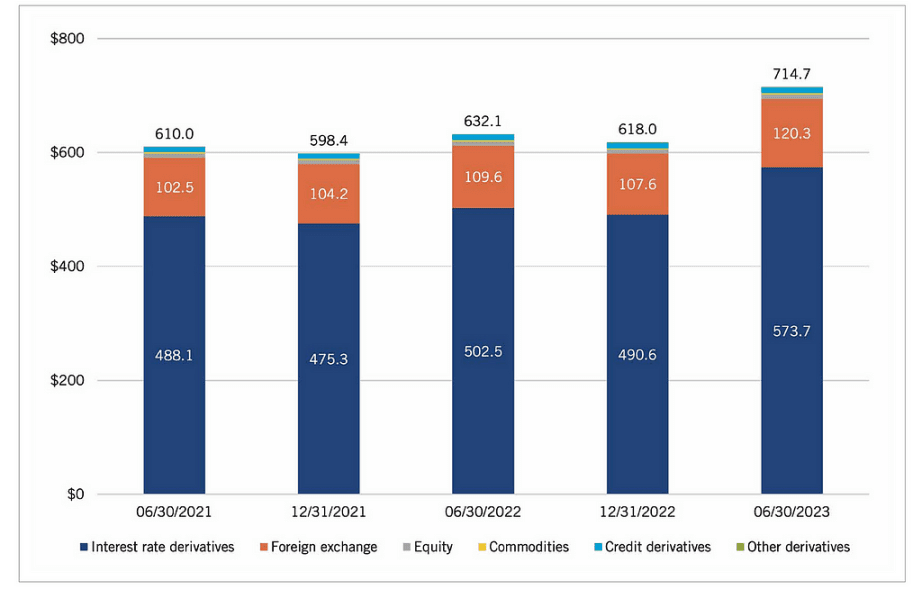
In TradeFi, interest rate derivatives are the positions that occupy most of the market in the derivatives market. Moreover, with the development of TradeFi, the overall scale of the derivatives market is also gradually increasing. As of June 2023, the overall derivatives market position has reached 714.7 trillion US dollars, of which the open interest position of interest rate derivatives has reached 573.7 trillion US dollars, accounting for 80.2% of the share.
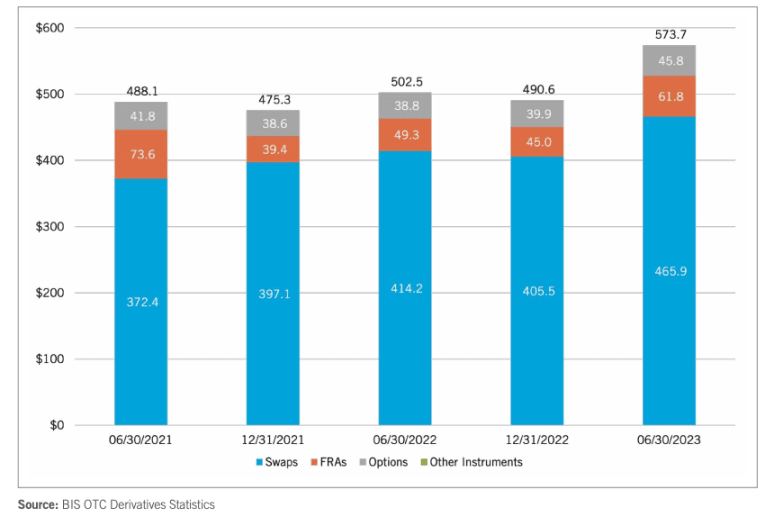
Interest rate-based derivatives are divided into three major categories, namely interest rate swaps (Swaps), FRAs (Forward Rate Agreements), Options, and other instruments. In traditional IDRs, interest rate SWAPS account for approximately 81.2% of the market share.
In TradeFi, interest rate swaps are mainly an institutional-dominated trading market with extremely large trading volumes. An interest rate swap is a financial derivative that allows two parties to exchange their respective interest payment obligations. This swap typically involves the exchange of a fixed rate and a floating rate. Interest rate swaps are widely used in the financial market, and the main participants include:
Banks and financial institutions: Banks use interest rate swaps to manage interest rate risk, adjust the interest rate structure of their balance sheets, and optimize capital efficiency. Financial institutions also use them for arbitrage and hedging risks.
Corporates: Corporates use interest rate swaps to hedge against changes in borrowing costs. For example, if a corporate expects interest rates to rise in the future, it might lock in its interest expense by entering into a swap contract that pays a fixed rate and receives a floating rate.
Investors and hedge funds: They use interest rate swaps as an investment tool or risk management strategy to seek profits by anticipating changes in interest rates or to hedge the interest rate risk of other investments.
Governments and public institutions: These entities may use interest rate swaps to manage the cost and risk of their debt portfolios. Through swaps, they are able to more effectively match funding needs and debt servicing costs while reducing the impact of interest rate changes.
Central Banks: Although not a routine operation, in certain circumstances central banks may participate in the interest rate swap market to influence short-term interest rates as part of their monetary policy.
In the traditional financial world, interest rate derivatives are the largest category of derivative transactions, and interest rate swaps account for 82% of the overall interest rate derivatives market share. However, in the blockchain world, interest rate swaps are still in the very early stages. Pendle, as a leading project, specializes in on-chain interest rate swaps on Ethereum.
With the entry of traditional financial institutions, especially Grayscale, JPMorgan Chase, and BlackRock’s attention to the Ethereum staking market, this can provide TradeFi with a wide range of arbitrage opportunities, which may be important for Pendle’s investment in the current context.
Currently supported currencies and market capitalization for revenue tokenization:
Ethereum liquid staking tokens (such as wstETH): Currently, about 26% of ETH is in a staked state, so all of these tokens can be tokenized. Currently, the overall TVL of LSD is US$59.7 billion.
Tokens representing lending protocol positions (such as Compound or Aave): For example, DAI staked in Compound is called cDAI, which also has its own annualized rate of return. This part of the stable market space that can be used for income is also very broad. The current TVL of the lending business is about US$34.3 billion.
LP tokens (such as GMX's GLP): Whether it is GMX or GLP, as long as it is pledged, it has its own interest rate. Almost most DEFI projects have LP token returns.
Liquidity Re-mortgage Tokens (LRT) and Restaking Tokens: As of now, this part includes EigenLayer and Renzo Finance, with a total TVL of US$17 billion.
Overall, the ceiling of this track is extremely high, and with the gradual entry of traditional institutions, the demand for Pendle will gradually increase.
Possible use cases for institutional use include:
Fixed income, such as earning fixed income on stETH;
Long yield, such as betting on stETH yields rising by buying more yield;
Earn more without additional risk, such as providing liquidity with your stETH;
For example, in the EigenLayer Restaking market, as the number of EigenLayer depositors gradually increases, the future yield is likely to be downward. In the case of a high yield, you can choose to sell YT and cash in your yield in advance when the APY is high. In the eyes of institutions, they can also lock in the staking income of stETH to hedge against the problem of a decline in yields caused by a decline in on-chain activity in the future.
5. Tokens
5.1 Total Amount and Circulation Amount
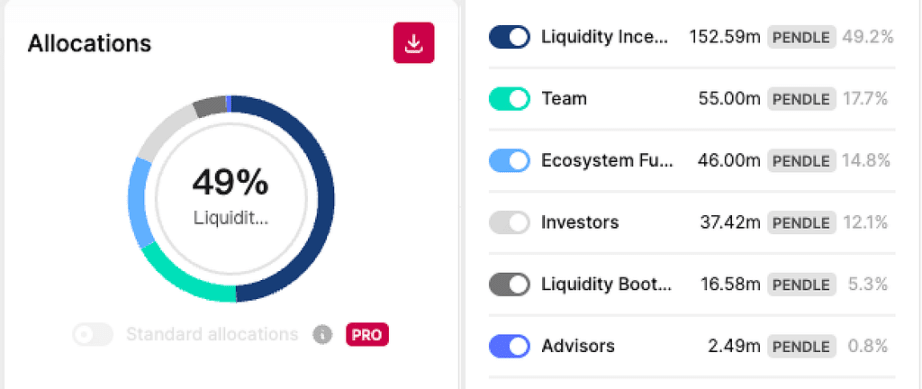
As of March 7, 2024, according to Coingecko statistics, the total number of tokens is 258,446,028, and the number of tokens in circulation is 96,950,723. The current market value is US$298 million and the FDV is US$790 million. Liquidity incentives account for 49.3% of the total tokens, the team currently accounts for 17.7%, and investors account for 12.1%.
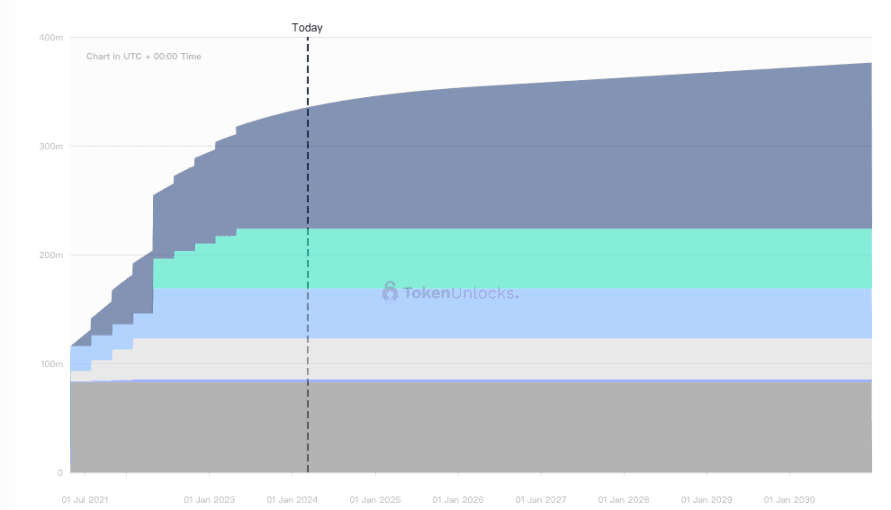
Liquidity incentives are expected to last until the end of 2030, with an official assumption of an annual inflation rate of 2%, falling by 1.1% per week until April 2026. The token release chart is shown above. We expect that by the end of May 1, 2025, there will be approximately 270 million tokens in circulation, which is not much of an increase overall and has little impact on the token price in the bull market.
5.2 Token Economics
Pendle's token is mainly used for governance custody, which is called vePendle. By utilizing vePENDLE, PENDLE holders can obtain a series of functions that can improve the practicality of the token.
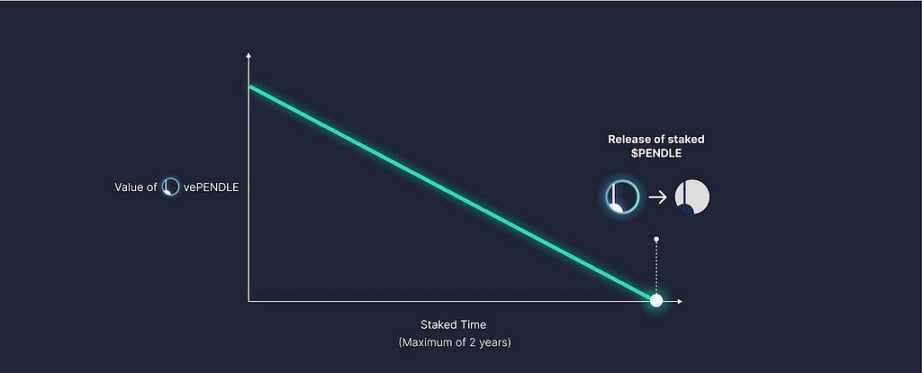
The value of VePendle is proportional to the amount and duration of Pendle staked. The value of vePENDLE will decay over time. vePENDLE holders vote and direct the reward flow to different pools, effectively incentivizing liquidity in the pools they voted for.
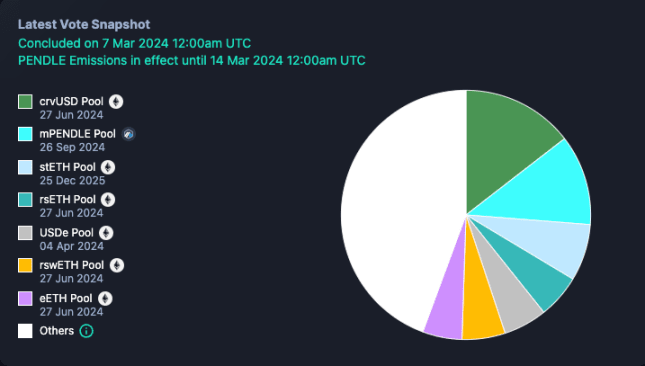

Pendle charges a 3% fee on all earnings generated by YT. Currently, 100% of this fee is distributed to vePENDLE holders, and the protocol does not charge any income. In addition, vePENDLE voters are also entitled to 80% of the interest rate swap fees from the voting pool, which constitutes the voter's APY. The above picture shows the latest voting situation. The crvUSD pool occupies approximately 44% of the voting rights concentrated in this pool. As of March 7, 2024, there are currently 49.52 million locked in Pendle. As a virtual token of voting rights and rights, vePendle has a total of 32.76 million, which is locked for an average of 421 days.
5.3 Market performance and window period forecast
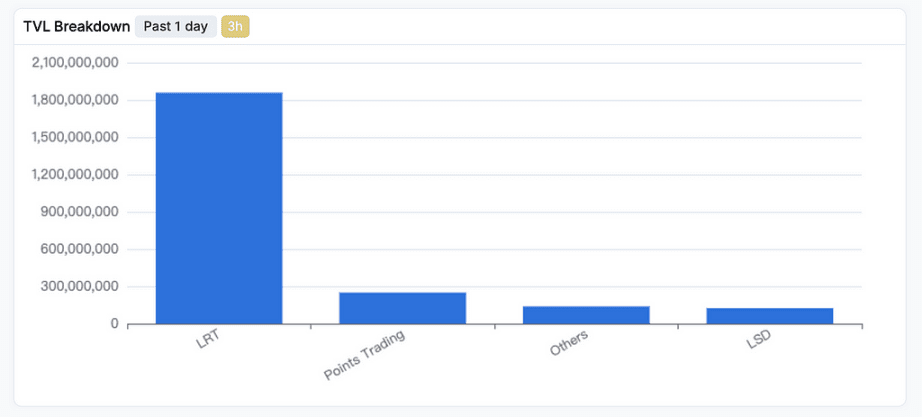
Pendle’s current main liquidity pool is LRT, and the analysis is mainly based on the LRT project.
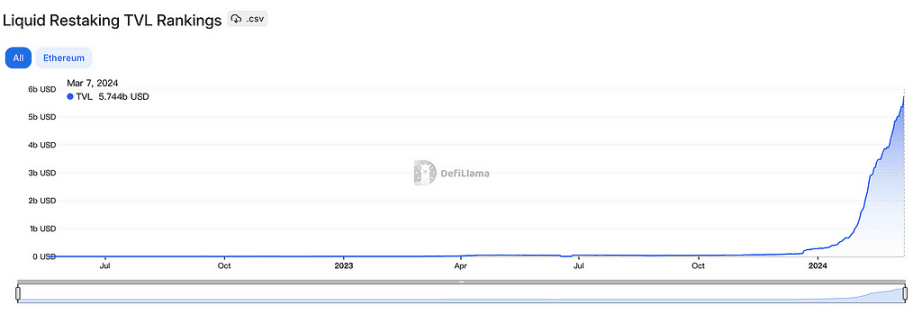
The above are LRT tokens. LRT relies on Restaking and LSD tokens. The market space for Restaking is currently 11 billion US dollars, and for LSD it is 55.1 billion US dollars. With the development of ETH price and LSD track, staking is gradually moving towards mainstream financial institutions, and the market space has become wider.
So under the current circumstances, the LRT token has a market space of 66 billion US dollars. Pendle has such a large market growth space in LRT. In addition, it also accepts tokens such as Compound that can generate yield income, as well as off-chain interest rate swap products to be introduced in the future, that is, Pendle v3, which will be launched this year.
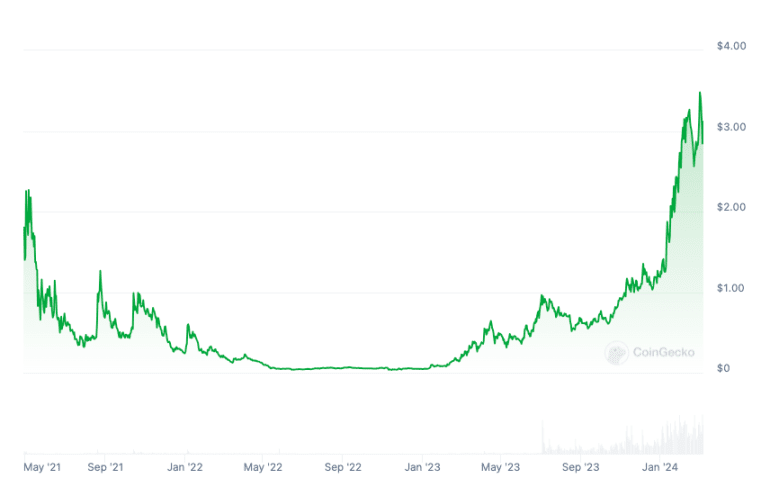
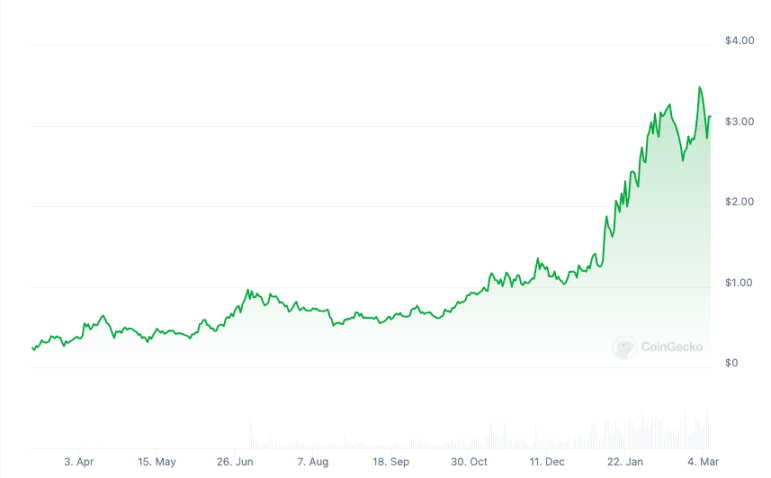
Judging from the current price increase, its price growth is also in line with the development status of the staking track. The current price has reached a record high, but its market value is only $300 million (price 3.11), and the total circulation is about $800 million. In May 2025, due to the release mechanism, FDV can actually only be counted as $300 million, so we believe that the token may have great room for growth.
5.4 Profitability Expectation Assessment
The price of Pendle has broken through the previous high, and the growth space may no longer be limited. At present, its main underlying supporting token is LRT. If the current overall LRT market value is 5.7 billion US dollars, the TVL flowing into Pendle is 2.37 billion US dollars, which includes two major tokens, EETH (ether.fi) and WETH.
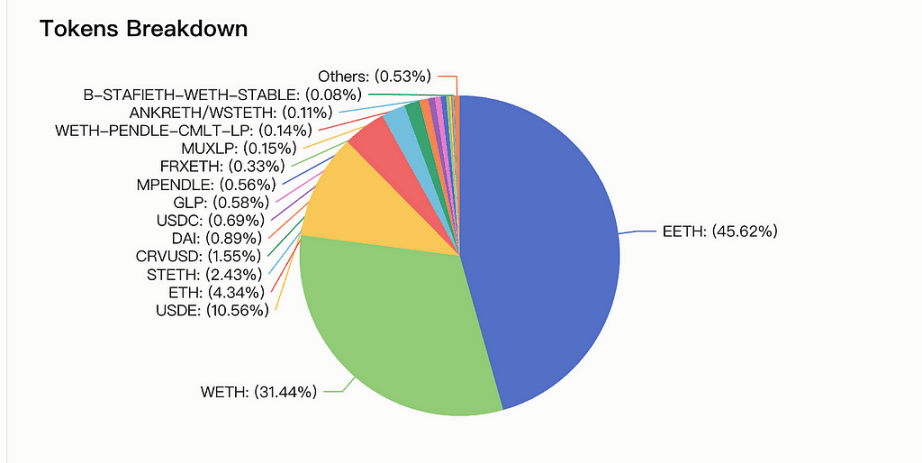
If the overall TVL of the LRT project increases fivefold, then Pendle's TVL will also have room to increase fivefold. With the introduction of the traditional interest rate market in 2024 and the entry of TradeFi, the demand for Pendle to smooth the yield curve and hedge risks will increase, so the project's room for growth will be even higher.
6. Value Assessment
The project is in its mature stage, but the team is still improving its economic model and enhancing liquidity, exploring the possibility of introducing interest rate swaps from traditional finance. We believe that it has the potential to become the Uniswap of the interest rate derivatives track. The space of this market will be much larger than the spot market because most of the participants are institutions and their trading volume is very large.
Its competitive advantage lies in that it is the leader in the on-chain interest rate derivatives track and has its own ecosystem. It currently has an absolute monopoly position in this track, and the overall track is also in a very early stage.
In the medium and long term, not only will the on-chain spot market flourish, but the staking and re-staking tracks will also develop rapidly. With the attention of institutions to TradeFi, the on-chain derivatives market will also develop rapidly, and Pendle is currently the only choice.
7. Summary
Pendle is a blockchain project focused on yield tokenization, which allows users to lock in future yields on their crypto assets and receive yields in advance. This innovative approach not only provides a new source of income for cryptocurrency holders, but also introduces more liquidity and flexibility to the interest rate market. Pendle achieves this through smart contract technology, allowing users to participate in the market in a decentralized and secure way.
Pendle's investment highlights include:
The market space is huge. Interest rate swaps are the main derivatives market for institutions. Interest rate derivatives account for 80% of the market share of derivatives, and interest rate swaps account for 80% of the market share. The trading volume is extremely large, but this on-chain track has just been introduced by Pendle and is still in a very early stage.
Pendle's overall data performance is impressive, and its trading volume, TVL, and coin price have all reached new historical highs.
The trend of traditional institutions entering into staking, whether banks, hedge funds, mutual funds, ETF issuers or ETF brokers, all have the need to hedge interest rate risks.
The V3 version will introduce the traditional interest rate swap track onto the chain, which will target a trillion-dollar market. We look forward to Pendle’s performance in this regard.
Although Pendle currently relies on the development of the LRT track, the LRT track alone still has the potential to grow at multiple levels. In addition, Pendle has the opportunity to gradually reduce the proportion of LRT in the future, because it is essentially an interest rate swap track for the entire market, which requires the entry of institutions to help diversify its assets. This also means that there is a strong mutual dependence between Pendle and institutions, which is a very valuable investment target. Investors are advised to pay close attention.