
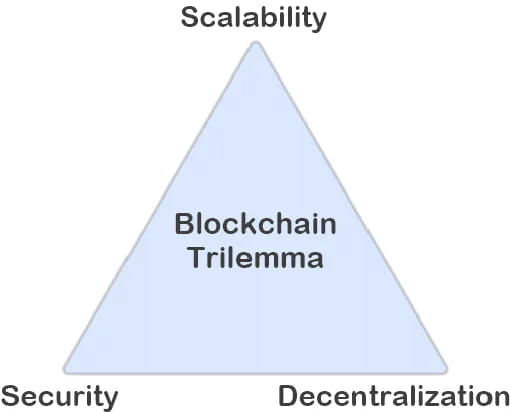
Since we have been talking lately about blockchain technology and all the current innovative developments, I think it is time to talk about the main problem with these developments. “The blockchain trilemma”
The blockchain trilemma consists of 3 guidelines; Security, Scalability and decentralization. It is a trilemma because technically, if you optimize the functionality of one of these elements, another will be affected. This has been the case forever, in fact, do you know of any blockchain with all of these functionalities at 100%? It does not exist.. But the developers have been studying many quite promising options.
In this article, we will break down each concept of this trilemma and the proposed solutions.
Decentralization
Let's start with the icon of blockchain, decentralization. Did you know that many of today's blockchains (if not all) are barely decentralized?
Decentralization can have different concepts, in blockchain, we can have Bitcoin as a main example. #Bitcoin does not have an organization or entity behind it that can move, replace or change data without other users noticing — Compared to traditional banks that move users' money and information however they want , thus it can be considered a “decentralized” blockchain
However, one thing to consider is that due to how these distributed systems work and must have a wide variety of participants to agree on the validity of any data, transaction times can be slow due to the way it is shared. and processes the information. For this reason, blockchains need to scale.
Security
A good blockchain network must be resistant to attacks by malicious entities. In centralized systems it is easier to guarantee security because an entity owns the data and can move it at will, but, if I want a decentralized system, how do I guarantee security? Now you are understanding the trilemma...
We can take Bitcoin again as an example, in this case, Bitcoin uses the PoW (Proof Of Work) consensus where through mining users can verify and guarantee that each transaction is true and thus guarantee immutable security. Until now, Bitcoin It's perfect, right?
Scalability
According to Bloomberg in 2022: “As of September this year, Bitcoin could not handle more than seven transactions per second and Ethereum, the second most popular network, was limited to about 15 per second; a lifetime compared to conventional exchanges.”
If we compare this to Visa, Visa can handle 24,000 transactions per second. Now we see what Bitcoin lacks, yes, scalability…
Let's compare Visa with one of the fastest blockchains on the market, Solana, Solana can handle 29,000 transactions per second, but we know that Solana risked decentralization and security to achieve this.
Scalability in cryptocurrencies refers to the ability of blockchains to adapt to increases in demand, carrying out more transactions per second and without this affecting their performance.

Is there a solution to the blockchain trilemma?
There is no definitive solution for this, however there are developments with very interesting results. These are some of the most important developments currently;
Fragmentation or “sharding”
It is a method of separating blockchains (or other types of databases) into smaller, divided blockchains that manage specific segments of data. This setup prevents a single chain from handling all transactions and interactions on a network.
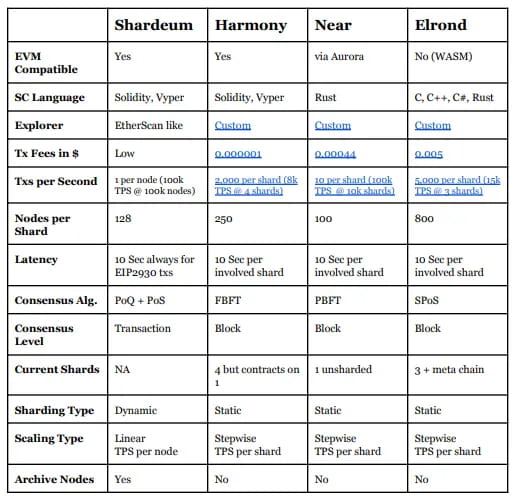
One of the blockchains that is applying this system and that promises “linear scalability” through the shard is Shardeum, I already talked about it in a previous post that you can see here: https://medium.com/@gonzalezweb3/shardeum- the-new-l1-with-linear-scalability-that-resonates-in-the-web-community3-880c9bf73a7a
This is a scalability table of Shardeum vs other L1s;
Layer 2 or Layer 2 solutions
Both sharding and the different consensus mechanisms are what are known as Layer 1 solutions. They seek to change the fundamental design of the underlying network. But other developers who want to solve the trilemma have been working on solutions that build on top of the already existing network structure. In other words, they believe that the solution lies in a second layer, or Layer 2. An example of this could be Coinbase's L2 of #Ethereum , I also talked about it in a previous post that you can see here: https://medium.com/@gonzalezweb3/base-el-futuro-de-blockchain-y-la-adopci%C3%B3n-masiva-9294ca930322
Among other solutions
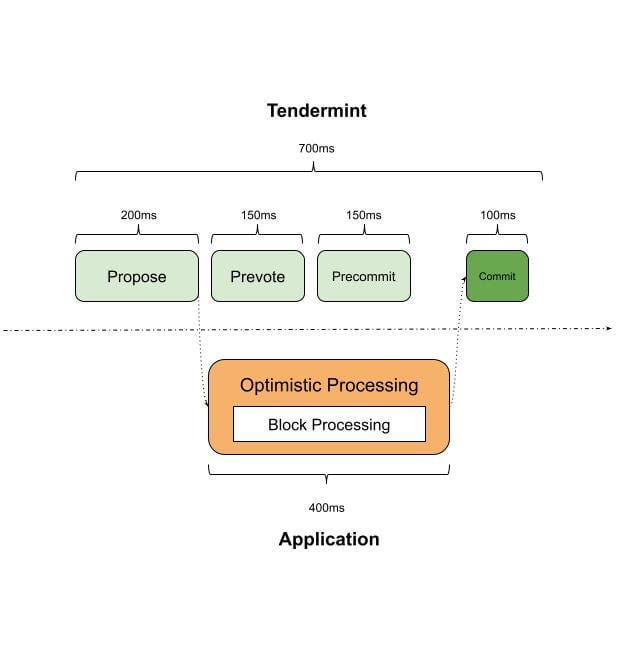
We have Sei Network, which allows CLOBs to be incorporated into the blockchain built on Cosmos SDK and promises to bring the fastest blockchain in the ecosystem (5x times faster than Solana) with a revolutionary governance system. You can learn more about Sei Network here: https://medium.com/@gonzalezweb3/sei-network-el-nasdaq-de-la-defi-1eac907007fa
Conclusions
The blockchain trilemma stands in the way of mass blockchain adoption clearly, so far, there is no proven solution. After reading this article and the possible solutions, which one is the most promising for you?