


Highlights
In a P2P transaction, it is important to find the right counterparty to carry out the trade.
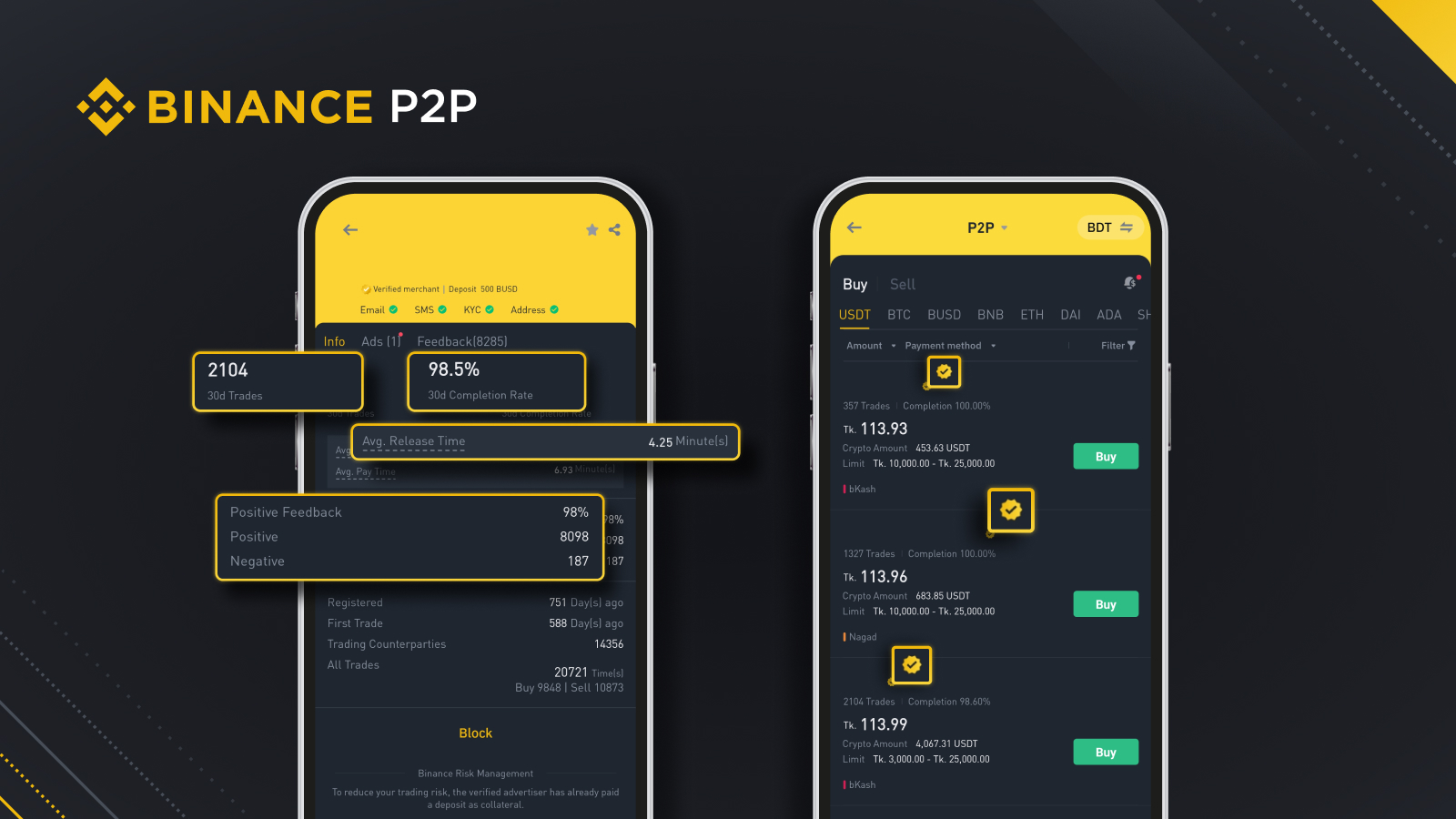
Binance's P2P rating system evaluates a user's role, as well as their completion rate (%) and comments made about them by other users.
In addition to helping users choose the right counterparty, the rating system also incentivizes traders to offer reliable and competitive services.
Make sure you are making a responsible decision when choosing who to trade with on the Binance P2P marketplace.
When using any P2P trading platform, including Binance P2P, you should evaluate the trustworthiness of your potential counterparty. But how can you determine this and identify possible risks? One option is to rely on the reputation the trader has on the platform. However, reputation is a relatively qualitative concept and ranking many users based on trustworthiness can be difficult.
Let's say you want to buy a cryptocurrency and you find a tempting offer on a P2P site with a price surprisingly different from others. Will it be an attempt to deceive or a genuine post from a merchant who simply has a promotional offer at the time?
Understanding what is offered and who is offering it is important. Of course, you'll never be able to know for sure who you're dealing with in the online world, but Binance P2P makes things a little easier with its internal user rating system.
Binance P2P Ranking – A Reliable Tool
With Binance's P2P rating functionality, you can quantitatively and qualitatively evaluate the trustworthiness of each P2P participant. Here, we “digitized” the reputation of each user and obtained a reliable quantitative measure.
Each rating summarizes the user's history on the site, including transaction volume, results, and comments from other users. This allows users to quickly learn the history of a potential counterparty, as well as their behavior and reliability. It is important to mention that a rating is in no way a guarantee of user reliability. It is simply intended to be a useful evaluation tool before making transactions.
How Binance P2P Ranking System Works
Binance's P2P rating system ranks P2P counterparties based on specific aspects, their main characteristics, and how they operate. The classification and reliability of a user consists of the following indicators:
Completion Rate (%): The proportion of successfully completed transactions out of all transactions received, expressed as a percentage
Average release time
Average payment time
Number of counterparties you have traded with
Comments from other users
User status
Completion rate
We show you an example of how the completion rate works. If a supplier received two orders, but completed only one, the completion rate would be 50%. Using this criterion, you can choose and evaluate the reliability of a counterparty.
The higher the transaction completion rate, the more successful orders the trader will have under his belt. On the contrary, you should be wary of merchants with a low completion rate.
An order does not count as completed if:
The buyer cancels the order.
The order expires because the buyer did not pay.
Buyers may have many reasons for taking these actions, but doing so often means that they found the transaction unsatisfactory.
Comments from other users
User reviews are an essential tool for measuring trustworthiness. Here you will find comments from users who completed orders with different suppliers. A user can leave positive or negative feedback only after their order has been completed. You can read more about this functionality here.
However, you should always keep in mind that comments can be subjective. Not all comments are truthful. Make sure you read a lot of reviews before deciding whether to choose a particular provider or rule them out.
User status
Binance P2P has several types of users, which will tell you more about potential counterparties and can help you make better decisions about who to trade with. User types include:
Verified User: A user who has completed the verification process (KYC) on Binance.
Verified Merchant: A merchant who has passed the P2P team's additional verification process. This process includes providing the required documents and having a proven and solid track record on Binance P2P and other platforms.
Block Trader: A trader who offers a large volume of assets to trade and who has the expertise to carry out large transactions in the new Block Zone. A large-scale merchant also has a distinctive diamond icon.
Cash Trader – A user who can post cash trading ads on Binance P2P. This allows traders and users to meet face to face to trade cryptocurrencies with cash.
P2Pro Merchant – An award-winning P2P merchant with a P2Pro status. The Binance P2P team approves P2Pro traders who meet the platform's strict requirements, including advanced qualifications.
The details of each user type tell you the depth of the traders' experience and their rating level on Binance. This information is also essential for choosing a counterparty and making responsible trading decisions. You can also look at the trader's account registration date and first transaction date to determine how long the user has been trading, which can tell you their potential level of experience.

How Binance Improves the Reliability of P2P Trading
Our rating system serves two purposes. Firstly, it gives Binance P2P users a tool to evaluate the reputation and trustworthiness of potential counterparties. Second, it encourages responsible and professional behavior on the part of suppliers. This two-pronged approach should make navigating the platform and choosing a suitable counterparty simpler.
Regardless of the type of user, Binance P2P aims to offer a convenient, secure and affordable way to buy cryptocurrencies directly from other people.
Further reading
Binance P2Pro: Connecting professional exchanges with P2P traders
Five tips for choosing the best deal when buying Bitcoin on Binance P2P
How can I become a Binance P2P trader?
Binance P2Pro Traders
Guide and general rules for P2P cash trading
Disclaimer: Your use of Binance P2P services, information and other content (including third party content) or accessible and available from Binance P2P services is at your own risk. Our sole responsibility is to manage cryptocurrency transactions. All payments are final upon completion, unless otherwise required by law. The Binance P2P platform has no right or obligation to resolve disputes arising from a completed payment. Neither the Binance P2P platform nor the merchants are responsible for your loss resulting from a completed payment.