
This article comes from the "Biteye" community
Author: Biteye core contributor Louis Wang
Editor: Biteye Core Contributor Crush Community: @BiteyeCN
Today, Apple released the much-anticipated head-mounted display product Vision Pro, which undoubtedly excited technology enthusiasts. With the launch of this headset, VR technology will officially enter a wider range of people's horizons, bringing us a more exciting and realistic virtual reality experience.
But to achieve this realistic scene, it is inseparable from the rendering support of hardware infrastructure. Whether in the VR world or in the presentation of various 4K videos and movie special effects, GPU computing power rendering has become the basis for the realization of various realistic images.
With the rapid development of AI technology, the demand for higher-quality image and video rendering is becoming increasingly strong, so computing hardware facilities will become increasingly critical.
Render network uses blockchain technology to expand the distributed rendering network to the greatest extent and has become the leading benchmark in this track.
01
background
Rendering (also known as image synthesis) is the technique of transforming a two- or three-dimensional computer model into a realistic image or scene.
Rendering appears in many backgrounds of our technological lives, as our smartphones and computers constantly present images, videos, and games. Rendering can be as simple as a scene in a 2D cartoon or as complex as an action scene in a Transformers movie.
With the rapid development of technology, from the "Ratatouille" era ten years ago, each frame of animation required 6.5 hours of rendering, to today, realistic scenes can be rendered in real time on tens of thousands of parallel GPUs in the cloud. render.
The rendering process requires a lot of GPU computing power. Depending on the level of detail and complexity of the production, rendering requires different computing power.
If it is a video produced by an individual, you can basically use a personal computer to complete the rendering. If it is a 4K high-resolution multi-channel video, you may need to use a GPU graphics card workstation for rendering.
If it is a large-scale movie special effect, using a workstation to render will take a lot of time, so you need to use a service like a render farm.
According to a QYResearch research report, the global rendering and simulation software market will reach US$30.942 billion in 2025. Especially with the advent of the AI boom, more "Text-to-image" tools are emerging, such as Midjourney, Stable Diffusion and DALL-E. At the same time, more companies have begun to make efforts in the field of reality augmentation technology, which are all important to Rendering, or GPU computing power, puts forward more demands.
In 2009, Jules Urbach founded the cloud computing company OTOY. OTOY's OctaneRender rendering software is a pioneer in the field of GPU rendering. It allows creators to create Hollywood-style works at home. In 2016, it became the leader in the rendering track. The current market value is several billion dollars and the company is profitable.
Although OctaneRender solves the problem of rendering speed, traditional rendering is performed locally. If a creator is working on a large-scale creation at home, rendering often takes days, weeks or even months, so other work cannot be done simultaneously, which will greatly reduce the number of creations for the creator. Building on this foundation, cloud rendering became popular, utilizing remote rendering servers to distribute rendering workloads among multiple computers in a network.
As Ethereum and GPU mining mature, OTOY sees an opportunity to utilize GPUs for cryptocurrency mining to render a new generation of media content.
In 2017, OTOY's distributed GPU rendering network platform Render Network based on the blockchain was launched, aiming to connect more creators with idle GPUs, so that rendering is no longer limited to hardware conditions.
Compared with centralized cloud rendering, RNDR is an unlimited decentralized network that solves the problem of supply and demand, breaks the limitations of centralized storage, gathers spare GPUs, and connects creators who need additional GPU computing power to maximize resource utilization. .
In a blockchain-based peer-to-peer network, rendering tasks are completed quickly and efficiently without errors or delays, and digital rights management is provided for creators to further the development of the Metaverse.
team
The initiator of RNDR is OTOY founder and CEO Jules Urbach. Jules is a pioneer and leader in computer graphics, streaming and 3D rendering, with over 25 years of experience in this field.
RNDR's advisory team also includes Ari Emanuel, co-founder and co-CEO of WME IMG, a well-known Hollywood agency, Chairman and CEO of Bad Robot Film Company, "Star Wars" director J.J. Abrams, and founder and CEO of Brave Software and BAT, Java Script Inventor Brendan Eich and other big names.
RNDR’s investment institutions include Algorand, Microsoft and Kenetic, with project financing of US$134 million. In December 2021, it received another US$30 million in financing from Multicoin Capital, Alameda Research, Solana Foundation, and NFT venture capital company Sfermion.
Market pain points
Render network summarizes four current market pain points:
1. Network scalability
It is very difficult to expand GPU rendering capabilities through local rendering and cloud rendering. These methods cannot effectively utilize the GPU computing power around the world and cannot track rendering tasks.
2. Idle computing power
Many GPU devices are idle when not working. In fact, this idle GPU computing power can be effectively utilized. For example, if someone has a workstation with powerful GPU computing power, this computing power is actually wasted when not producing videos.
3. GPU computing power application
Nowadays, most of the GPU computing power is used for POW operations, which is actually meaningless and inefficient and wasteful. It should be used for rendering.
4. Digital ownership
There is a lack of a unified storage space for creators to store their works, and there is no way to prove that these video works were created by them. Through Render Network, creators can easily store and access their works while confirming ownership.
solution
Creators have rendering needs, and some people also have idle GPU computing power. Therefore, Render Network uses the unique characteristics of blockchain technology to connect rendering needs and idle GPU computing power, making full use of idle resources. .
02
Protocol architecture
The architecture of the Render network mainly consists of two roles: Creators and Node Operators
creator
Creators include graphic artists, mechanical engineers, architects and others who work with digital vision, the demand side of rendering.
To become a creator, you need a subscription to OctaneRender, which costs €19.99/month for an annual subscription and €23.95/month for a monthly subscription.
This subscription provides access to OctaneRender standalone software and DCC plug-ins for a variety of programs such as AutoCAD, Unreal Engine, Adobe After Effects, and more.
To upload render files to the Render network, users need to first use Octane Standalone to export their scenes as ORBX files, which are encrypted during the upload process. After the upload is completed, users can choose the appropriate rendering solution based on rendering requirements, speed, security, etc., and make payment.
node runner
Users with qualified GPU hardware can apply to become a node operator, use the idle time of the machine to earn some RNDR, fill out the form on the official website, and wait for the official to contact you.
Hardware requirements for node runners include: having a CUDA-capable NVIDIA GPU with at least 6GB of VRAM, 32GB of memory, stable and reliable internet, and 100GB of free disk space. Node operators will be assigned rendering tasks and can be rewarded with RNDR tokens upon completion.
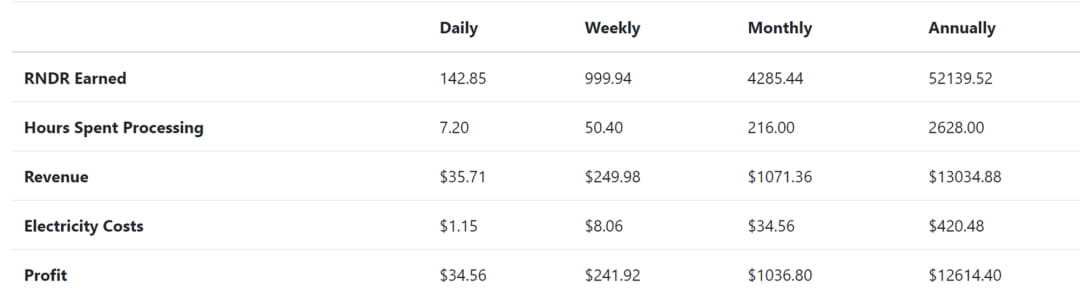
Users can estimate their income in the Render calculator based on their own hardware conditions, as shown in the figure below.
Pricing
Render network's pricing is designed as tiered pricing. Based on speed, security and cost, it is designed into three tiers for different user groups and requirements:
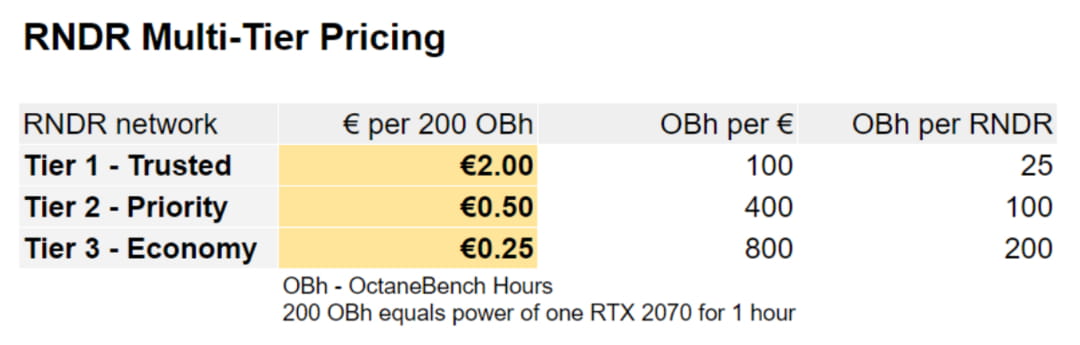
1 RNDR token or 1 RNDR credit corresponds to 1 OctaneBench working unit. OctaneBench is a tool created by OTOY to define the computing power provided by any combination of graphics cards as a score.
http://octanebench.com/
One RNDR credit is equivalent to 100 OBs per hour in Tier 2 and 200 OBs in Tier 3.
In other words, 100 RNDR tokens can provide 2,500 OBh to 20,000 OBh. From a hardware perspective, 100 RNDRs provide 50-100 hours for 1 RTX 2070, or 5-10 hours for 10 RTX 2070s.
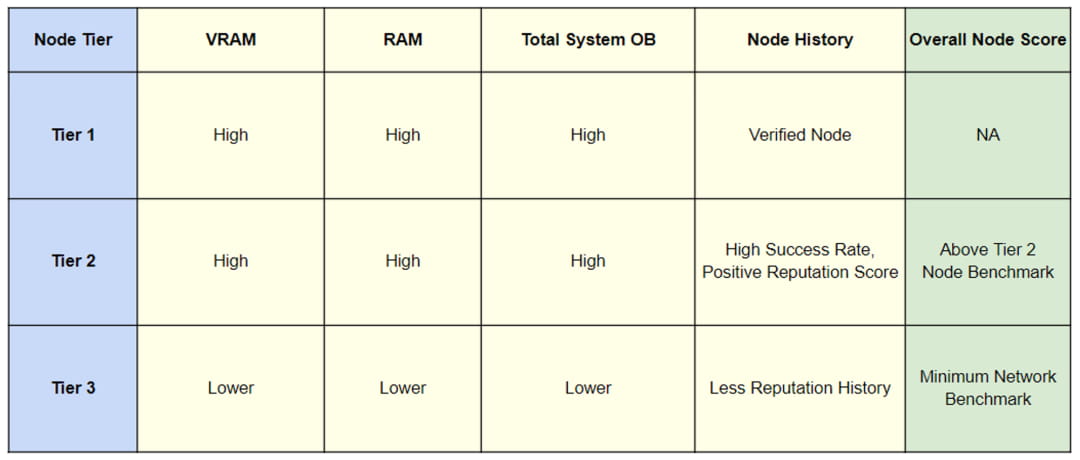
Design details for the three levels are as follows:
simply put
- The first level is to directly connect to large enterprise-level rendering equipment, which is the best, fastest and most expensive;
- The second level is some idle enterprise equipment or mining equipment, which is easy to use and not expensive;
- The third level is some better-equipped personal computers, which are the cheapest.
Currently, only Tier2 and Tier3 are available, Tier1 will be opened in the future.
Payment
Users can purchase RNDR credits with Paypal or Stripe, and the cost of rendering jobs depends on GPU supply and demand. To get an accurate cost estimate, users can render a frame on their system and measure the time.
Cost estimates are then provided based on the intensity of the workload, which is determined by the user's system's OB score, the time it takes for the user's system to render a frame, and the number of frames selected. A transaction fee of 0.5-5% of the total RNDR required to work is used to cover network costs.
When users purchase RNDR credits, these credits are backed by RNDR tokens, which are purchased from exchanges by the project team. That is, when creators use RNDRcredit to pay for their work, node operators will still be paid in RNDR tokens.
If a frame fails to render, it is sent to another node. If multiple re-renderings fail, the job will be quarantined and billed separately.
Payments are made on the Polygon network. Render Network does not use a bidding system to allocate work, but instead relies on tiers, reputation scores, and availability. Reputation scores are determined by a "proof of render" system that uses human and algorithmic verification to ensure quality. This prevents "bad actors" from rejecting valid work and allocates less work to poorly performing nodes.
03
market performance
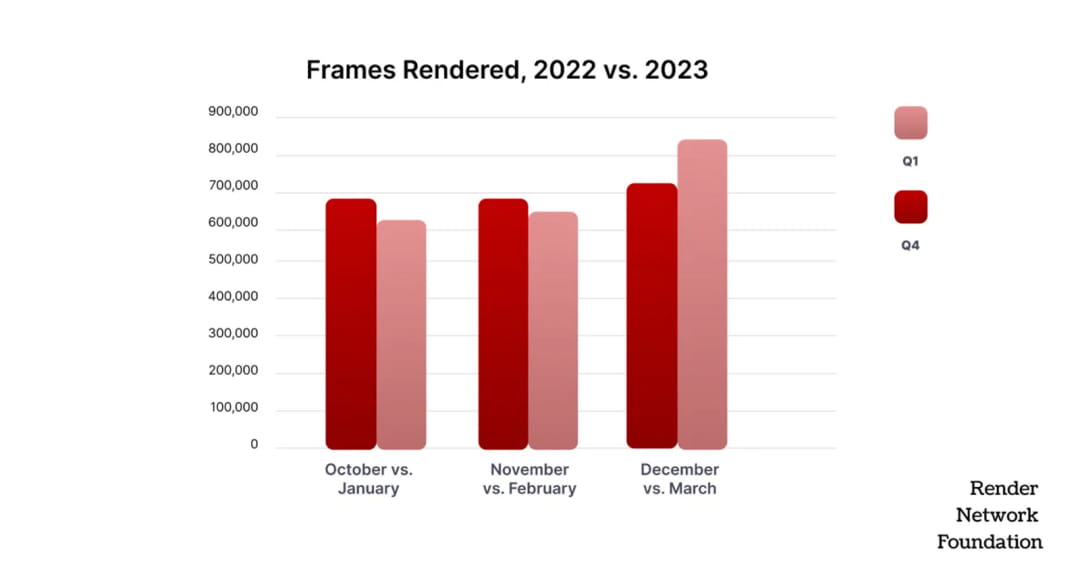
In the past year, the total number of rendered frames in the Render network achieved an annual growth rate of 63% compared with the previous year. At the same time, due to the increase in the price of RNDR tokens, the total transaction volume was 1.7 times that of the previous year.
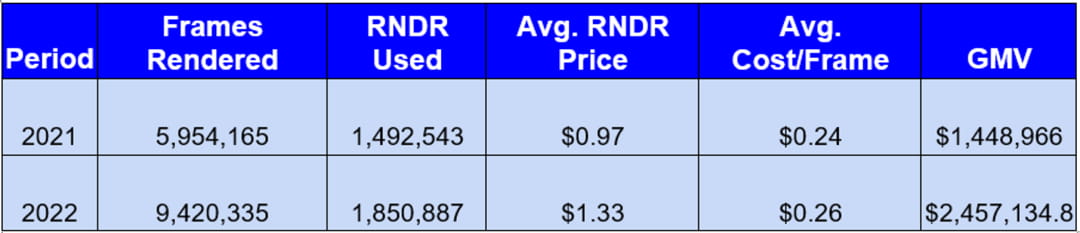
According to the latest data disclosed by Render network, the total number of rendering frames in the first quarter of 2023 was 2,119,813 frames, an increase of 2% compared to the fourth quarter of 2022, maintaining a steady upward trend.
https://medium.com/render-token/q4-2022-q1-2023-metrics-update-monday-may-1st-2023-btn-d89acb2eb2f6
And you can see that since March, there has been a significant increase in workload. In March alone, 840,804 frames of rendering were completed, and 235,955 RNDR reward tokens were issued.
Due to the increase in the price of RNDR tokens, the total transaction volume in the first quarter of this year has accounted for half of last year. In terms of business, the overall workload using Tier 2 has declined, but the number of customers using B2B services using the Render network has increased. B2B users take advantage of the reliability of Tier 2 advanced rendering services to build large-scale businesses based on distributed rendering. apps, while Tier 3 is in greater demand from consumers and price-conscious creators.
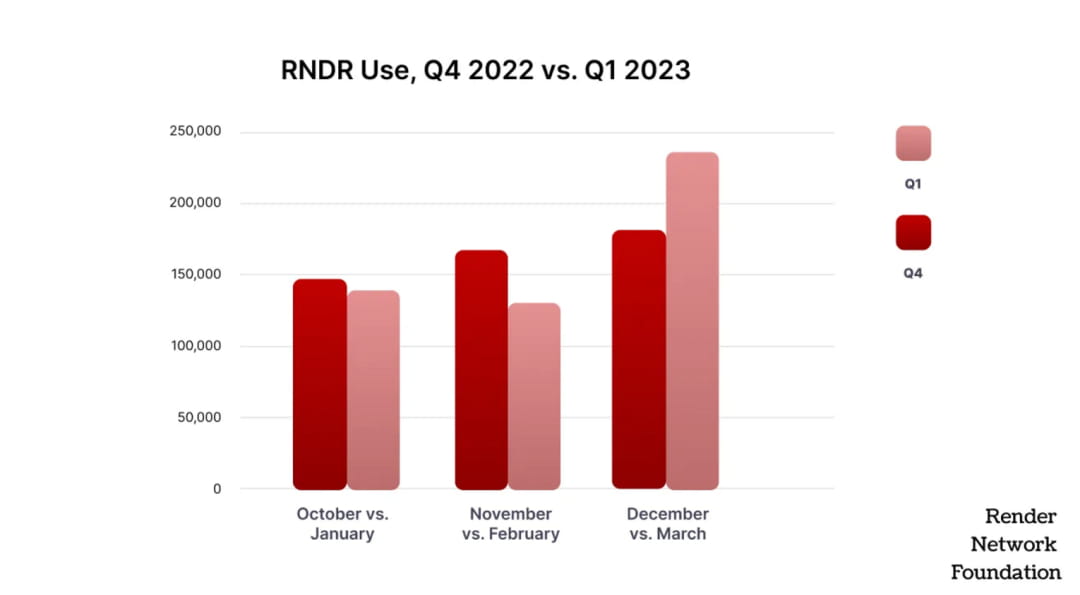
Judging from the number of rendering tasks, there was an explosive growth of 10 times in April and May compared with the previous months (the number of rendering tasks is inferred from the issuance of RNDR token rewards, that is, the issuance of rewards requires calling the Escrow contract. disburseFunds function, here by default you will receive rewards after completing a task, and a rendering task will contain many rendering frames).
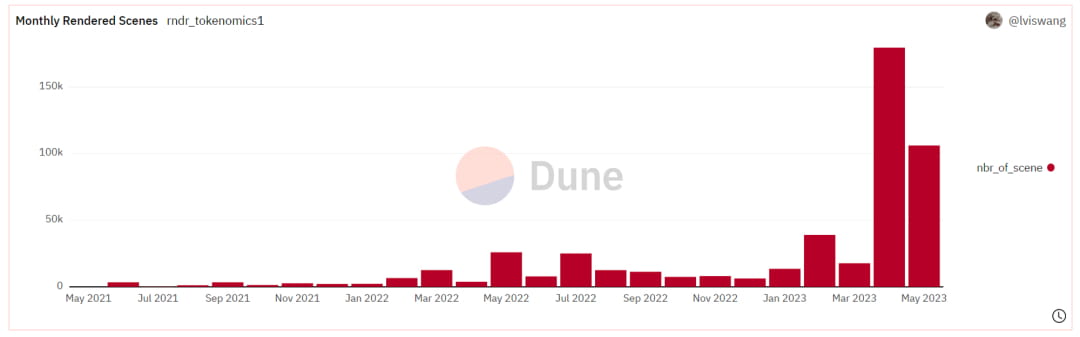
There may be three reasons for the outbreak:
1. LightField Labs, the parent company of Render network, OTOY, invested in February this year. Holographic imaging technology is developing rapidly, and the digital restoration process requires rendering work;
https://www.lightfieldlab.com
2. Recently established a cooperative relationship with Stable Diffusion, large language model generated images, text-to-video/3D scenes can be supported by the Render network;
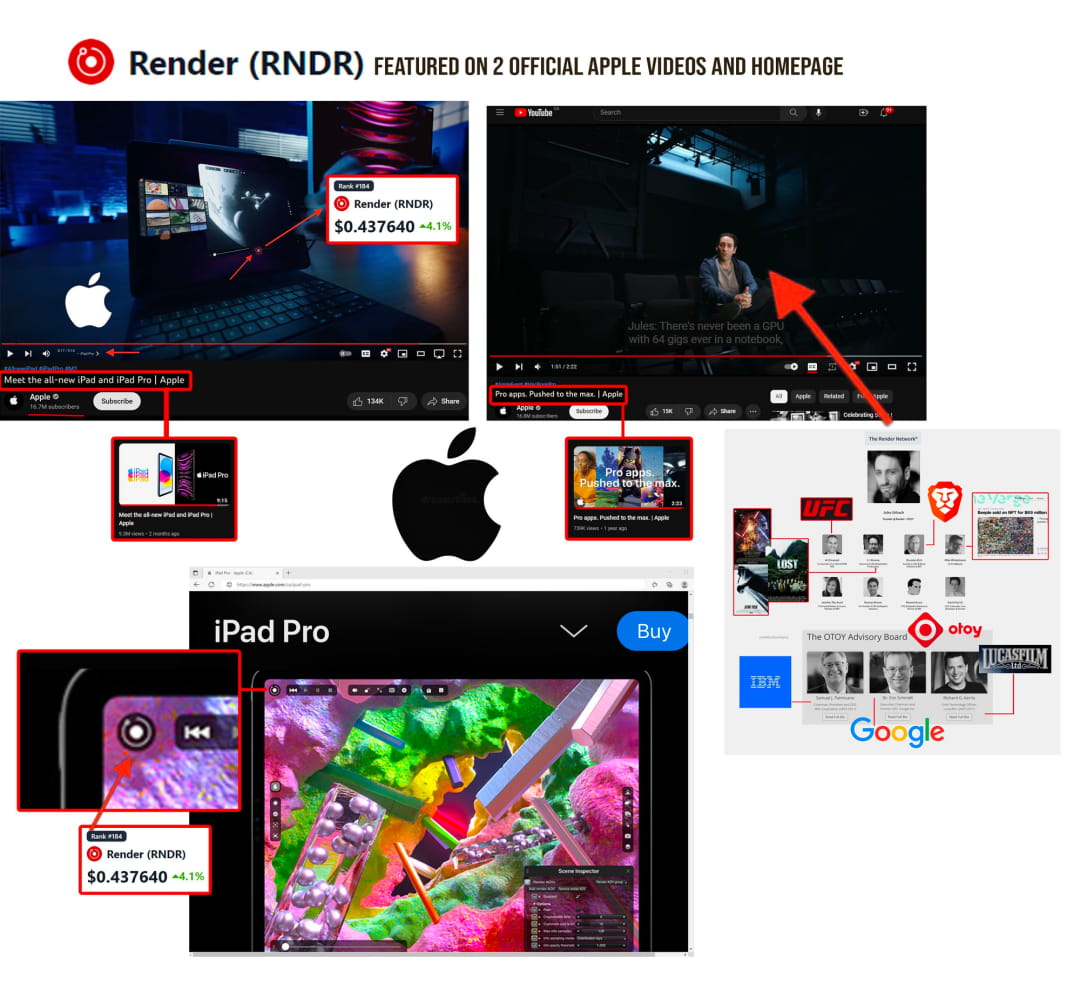
3. The cooperative relationship between the parent company OTOY and Apple. Apple’s official promotional video has appeared many times with the Render network logo. Octane X supports M1 M2 chip Macs and iPads, and render may become a built-in rendering component of Apple software.
https://twitter.com/Machine4lpha/status/1589723282453909504
These three points may introduce a large number of tests or actual application requirements, resulting in a rapid increase in the number of rendering files in the past two months.
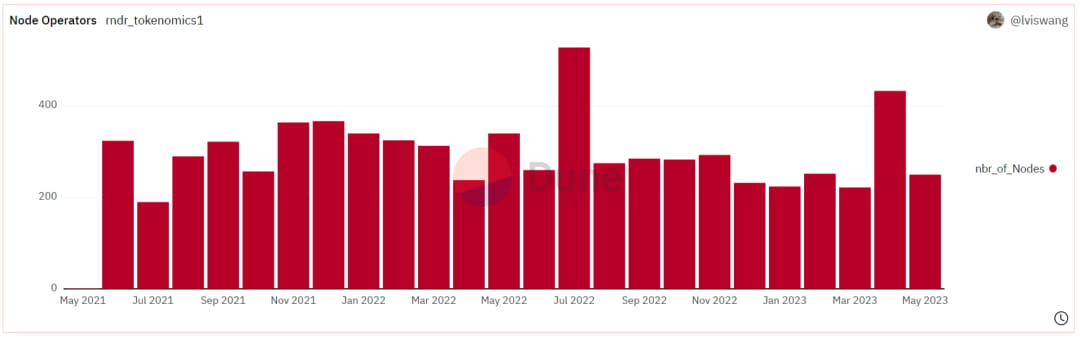
The monthly active node operators of the Render network are very stable, with the number of monthly active nodes remaining at around 250. This only refers to the nodes that receive benefits. There are also cases where nodes are available but are not assigned tasks.
04
Tokenomics
RNDR is one of the earliest ERC20 standard tokens deployed on Ethereum, with the initial total amount set at 536,870,912. There will be a 1:1 migration of old and new tokens with the contract upgrade.
The payment process of Render network occurs on the Polygon network, so it needs to be cross-chained to Polygon for actual use.
Token distribution
- 25% is used to raise funds from sales
- 10% allocated to team and consulting
- 65% saved in the vault
Token sale
The sale took place in two phases, with an initial coin offering (ICO) taking place in 2017, during which 4,650,922 RNDR tokens were sold at a price of $0.25 per token with a 20% genesis bonus. In 2018, a private sale was held at the same price as the ICO, offering bonuses ranging from 2.5% to 30%. Approximately 3% of the total token supply is allocated to this sale, with no lock-in or vesting requirements.
Token buyback
The team repurchased 4.5 million RNDR tokens from the Probit exchange in March 2020. These tokens will flow back into the ecosystem to expand the network of node operators and creators.
BME model (Burn-and-Mint Equilibrium Model)
The BME model describes a relative balance between burned tokens and minted tokens in an ideal process and specific consumer market. It is already a mature token model and is used in projects such as Helium.
Currently, Render network consumer settlement can use RNDR credit and RNDR tokens. The purchasing power of computing power using 1 RNDR and 1 credit is the same. The pricing of 1 credit is fixed at 1 euro, and the current value of 1 RNDR is much higher than 1 euro. Therefore, although the credit income will be used to purchase RNDR tokens on the exchange, it will be very uneconomical to use RNDR to pay for consumption, resulting in a weakening of the token value capture.
In September 2022, RNP-001 proposed changing the token model to the BME model, which will greatly improve the liquidity of the token and the balance between supply and demand. In this model, users use RNDR tokens when purchasing GPU rendering services. The tokens used will be destroyed after the task is completed, and the service provider’s rewards are issued using newly issued tokens. The basis for the rewards is not only based on the task The completed indicators also include other comprehensive factors such as customer satisfaction.
As a result, RNDR tokens have more consumption scenarios in the entire economy. At the same time, the supply and demand relationship of tokens can be balanced and adjusted according to the algorithm between destroying and minting tokens. The entire business model has also continued to evolve from simple C2C. A more managed B2C model.
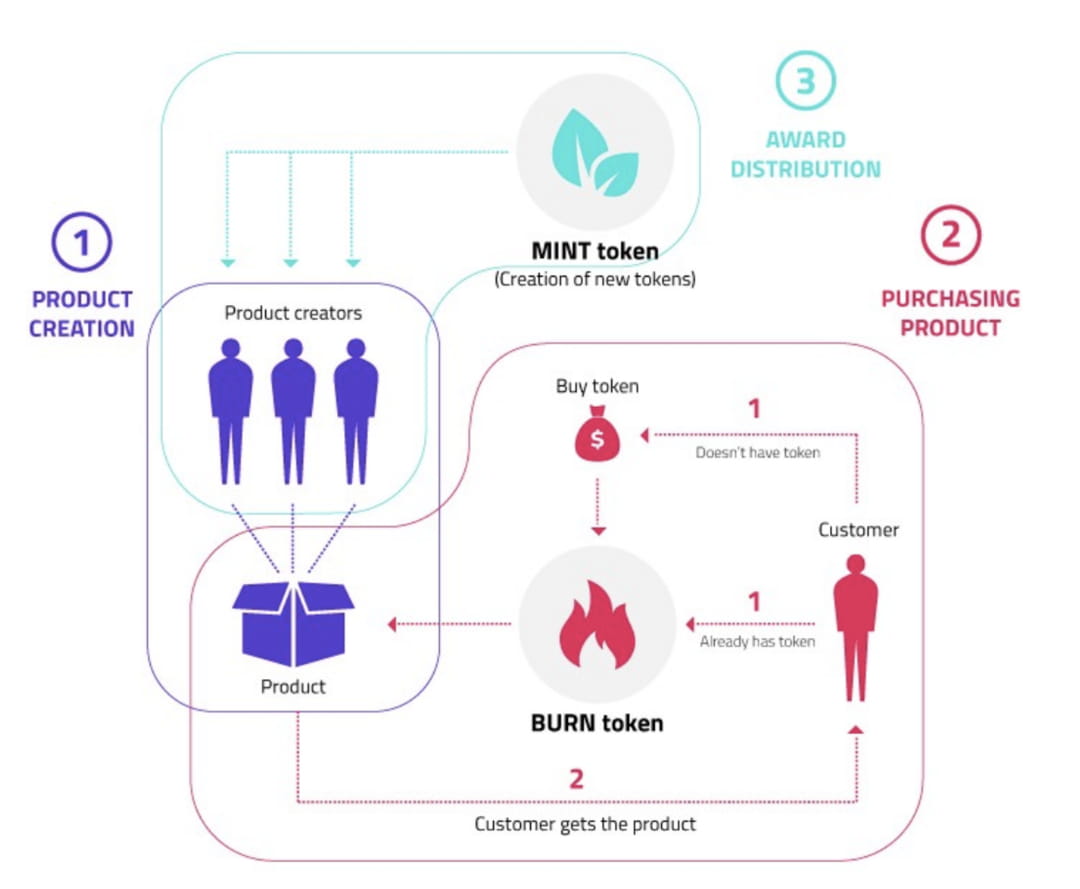
BME workflow
combustion
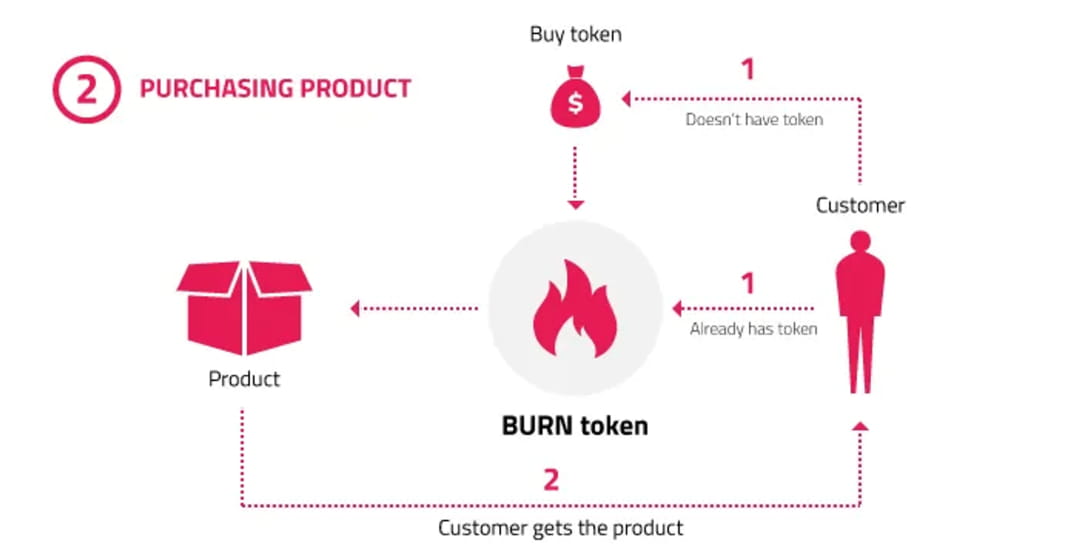
Under Render Network's BME model, work to be completed will be denominated in US dollars (rather than directly denominated in RNDR tokens), and creators need to burn equivalent RNDR tokens to submit work.
- Jobs are priced in US dollars
- RNDR tokens are burned instead of paid directly to node operators
casting
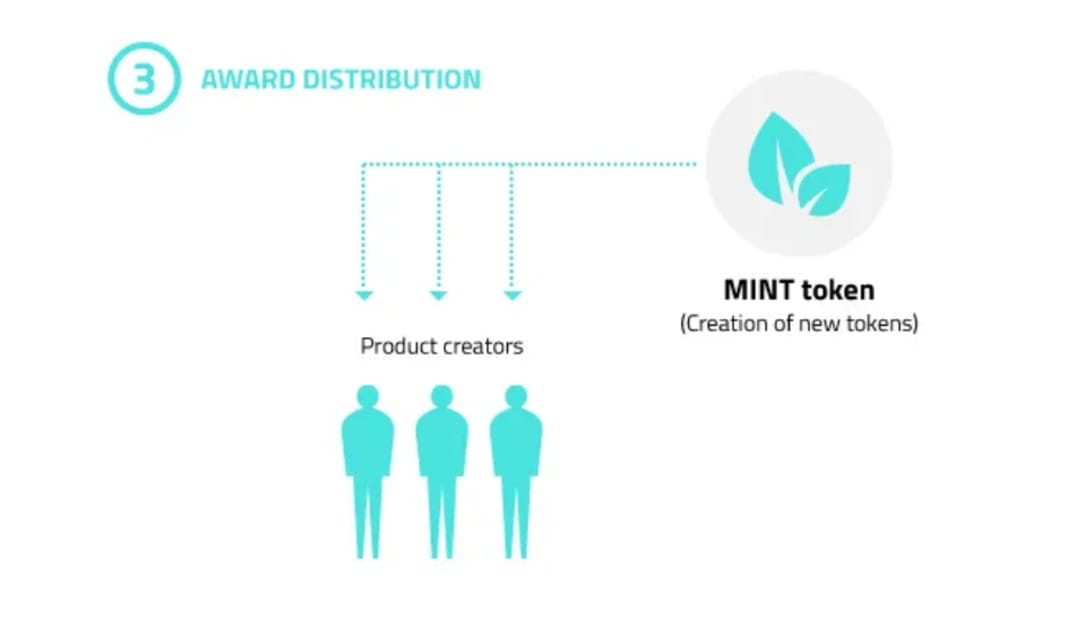
In every epoch (a period of time), new RNDR tokens will be minted, regardless of how many tokens are burned.
Impact on creators, node operators and liquidity providers:
1. Creator: Every epoch, the RNDR consumed by the creator will be partially returned. The initial rebate percentage can be as high as 100% of the cost, and will gradually decrease over time.
2. Node operators: Node operators will be rewarded for completing their work. These rewards are divided into two parts: 1. Workload reward, that is, how much work is completed to get the corresponding reward; 2. Activity reward, that is, staying online at any time and providing readily available resources to the network will also be rewarded.
3. Liquidity providers: Liquidity providers will be rewarded every epoch because they contribute RNDR tokens to the liquidity pool of the partner exchange, so that sufficient RNDR can be used for burning and maintain system balance.
balance
If the usage of the Render network increases and more tokens are burned, the token price will rise. The reduction in total supply caused by burning will cause the price of RNDR tokens to increase, which in turn will reduce the number of tokens that need to be burned and bring the system back to equilibrium. vice versa.
emission
Because there is a minting component, there is actually a net output of tokens. Currently, a 20% net emission limit is designed to ensure that once the network reaches the token supply limit, rewards can still be issued to node operators.
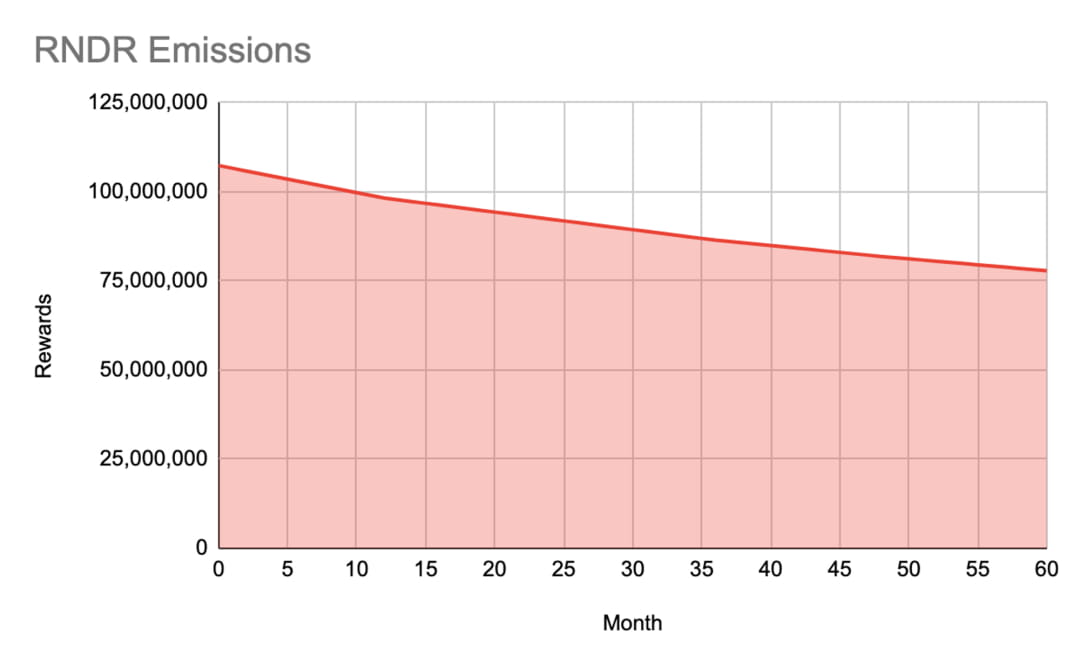
The emission schedule, shown above, calls for an increase in the supply of 107,374,182 (20% of the total supply) tokens to incentivize stakeholders in the network. The increased supply is released in small batches (never more than 10% in a year) and dilutes existing token holders in favor of new users entering the network.
The emissions schedule is divided into two periods: startup (years 1-5) and growth (year 5 - indefinitely). The purpose of this is to design a front-loaded reward schedule in the initial stages of the network to ensure that early participants are rewarded for their participation. During the growth phase, we define year-by-year reductions in emissions based on a damping coefficient (recommended to be 0.945), eventually reaching deflation.
Assuming an average token price of $2.5 at current market prices, an annual growth rate of 63% for rendering frames, and a consistent average cost per frame, we can calculate the estimated emissions and burn as shown in the figure below:
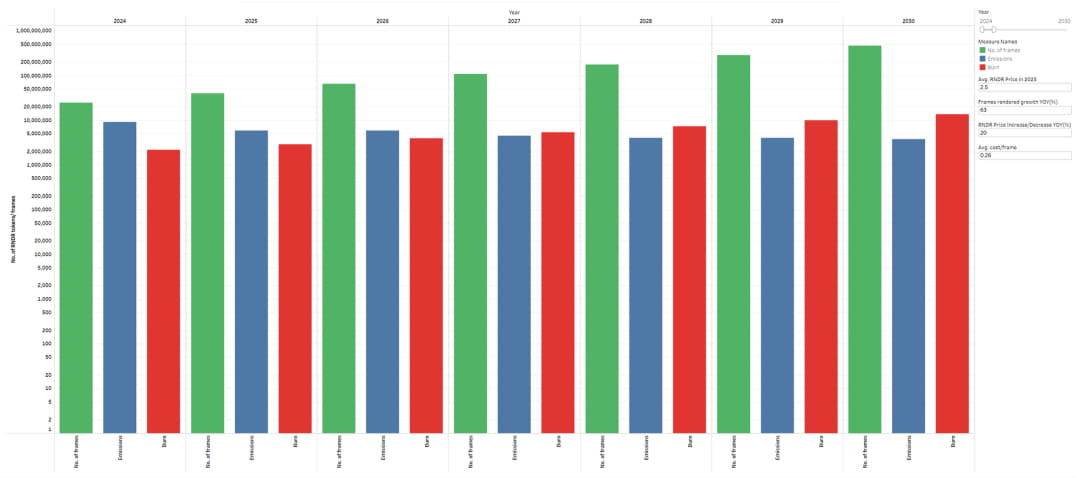
Although the BME model proposal has been passed, it needs to wait for the project to be migrated to Solana before deploying it. The specific numerical design is still under study.
05
Community Governance (RNP Proposal)
1. The RNP-001 proposal passed the BME token model mentioned above, which has greatly improved the liquidity and supply-demand balance of the token. Although it is only a theoretical economic model optimization, from the price of $RNDR Judging from the trend, it still has a great influence on boosting community confidence.
2. The RNP-002 proposal approved the decision to migrate to Solana and explained the main considerations: developer community, TPS, liquidity, transaction fees, programming language, smart contract integration, etc. This proposal is also from the future of the project Considering the expansion capacity, it finally received 99.26% of the votes. After the RNP-002 proposal was passed, community satisfaction and token prices increased positively (token prices increased by 43% in two days), which also proved the good relationship between Render Network and the community.
3. The RNP-003 proposal approved the Render Network Foundation’s team expansion and Grants’ token usage rights needed for future development. This proposal also received a voting approval rate of 99.9%. Render Network ensures that participants receive sufficient rewards while requisitioning a portion of the newly generated tokens to develop the project ecology, which is in the interest of the community for the long-term ecological construction of the project.
06
potential risks
1. Centralization
All work allocation, including reward issuance, is decided by the Render network team. They run a private chain to sort and encrypt all work. This part is not public.
2. Opacity
All user and node operator information is not public, that is, it is not known how many customers there are, how many registered nodes are available, and how large they are.
3. BME model
The current design premise of the BME model is based on a market without speculators, and also based on the premise that the number of users and workload will increase significantly. The parameters of the inflation emission token must be carefully designed, otherwise it may have negative effects.
07
Summarize
Render network is one of the benchmarks in the DePin (distributed physical infrastructure network) track in the Web3 field, providing hardware infrastructure for AI, AR, metaverse and other tracks. Today with the explosion of AI, Render network is one of the few Web3 projects that can directly handle AI traffic.
Its parent company OTOY has rich experience in this field, and its partners are all top media and entertainment companies, giving the project great customer support. At the same time, it makes good use of the characteristics of the blockchain to make rendering more efficient and reliable, and also gives digital copyright to artists' works. It has also achieved a good balance between maintaining community interests and community relations. It is a project with scenarios and rigid needs.
references
[01] https://globalcoinresearch.com/2023/04/26/render-network-scaling-rendering-for-the-future/
[02] https://www.defidaonews.com/article/6818678
[03] https://mirror.xyz/xing824.eth/JmSGCuIwrxmCUQ5gNSsFHk2_qsWxfi6VE0-VZOZ5UG8
[04] https://medium.com/@rendertoken