


Main
Money transfer fraud is a major threat to cryptocurrency users. You can encounter it in two cases: when P2P trading or making transactions to purchase goods and services;
Make sure that you are using a proven P2P platform with effective security measures and that your counterparty is a reliable individual or organization;
Have you been a victim of fraud? Immediately report the incident to law enforcement and Binance support.
Learn how to spot and avoid cryptocurrency transfer scams in the latest installment of our How to Spot a Scam series.
The essence of money transfer fraud is to trick the victim into sending money to the attackers. Such scams usually occur in two cases:
P2P trading. Buyers and sellers on P2P marketplaces can interact directly with each other, agreeing on price, payment methods, and the amount of cryptocurrency exchanged. While P2P crypto trading provides more control over the process than any other trading method, it comes with risks such as fraud.
Conducting transactions when paying for goods or services. Be careful when accepting cryptocurrency as a form of payment. To convince a victim to transfer funds, scammers may use fake emails informing them of a delay or demanding a “deposit fee” to complete the transaction.
In this article, we'll look at common types of money transfer fraud, provide some examples, and tell you how to protect yourself from them.
How does money transfer fraud happen?
Search for a victim
Fraudsters find their victims on social networks or cryptocurrency platforms. They may offer to buy cryptocurrency at a price much higher than the market price or find merchants who accept crypto payments as payment for goods or services.
Gaining trust
To gain the victim's trust, scammers use various tricks, such as creating fake documents confirming payment or showing excessive interest in the merchant's goods or services.
Nudge to action
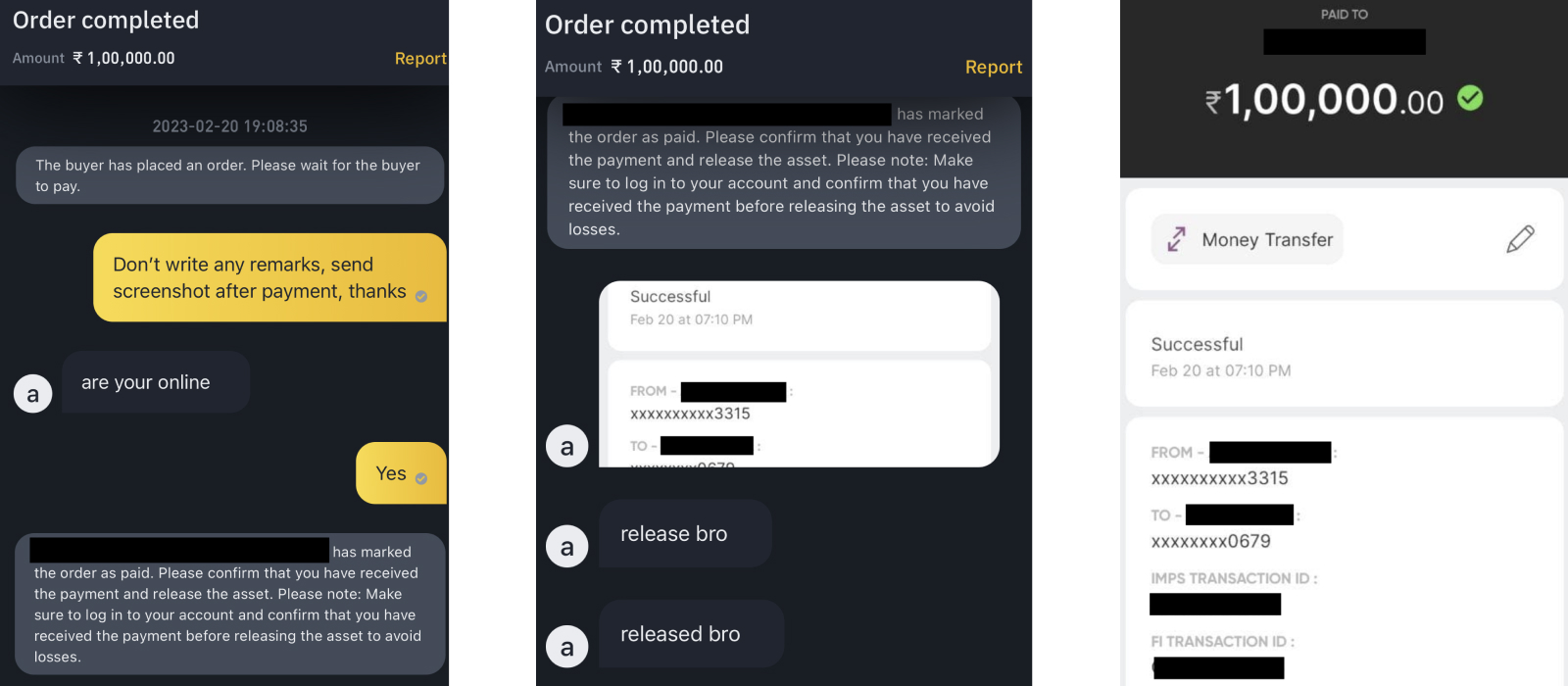
Fraudsters usually put pressure on their target to transfer cryptocurrency as soon as possible. They may send numerous documents or screenshots of a supposed “bank transfer.” Often, an attacker will initiate a bank transfer and cancel it immediately after receiving the cryptocurrency from the P2P seller.
If the transaction involves the purchase of goods or services, the scammer may provide victims with “evidence” of the cryptocurrency transfer and then forge emails indicating a delay in the transfer. He will then ask the victim to transfer back the “excess cryptocurrency” or pay a “transfer fee,” promising that the transfer will be completed as soon as possible.
Receiving funds
The victim transfers cryptocurrency to the scammer and discovers that the screenshots and documents were fake or that the scammer canceled the bank transfer.
If the scam was related to payment for goods or services in cryptocurrency, the attacker will stop responding to the victim’s messages after receiving a “refund” or “transfer fee.” By the time the victim realizes that the screenshots, documents and emails were fake, nothing can be done.
Two examples from life
Example 1: Cryptocurrency Trading
A P2P trader (let's call him Mark) receives an order from a potential “buyer”. The “buyer” then provides a fake invoice with a bank transfer, forcing Mark to transfer the cryptocurrency before receiving confirmation of the deposit from the bank. Mark complies with the scammer's request, and then discovers that the bank transfer has been cancelled. But the cryptocurrency has already been sent to the scammer and Mark is left with nothing.
Example 2: Buying Art
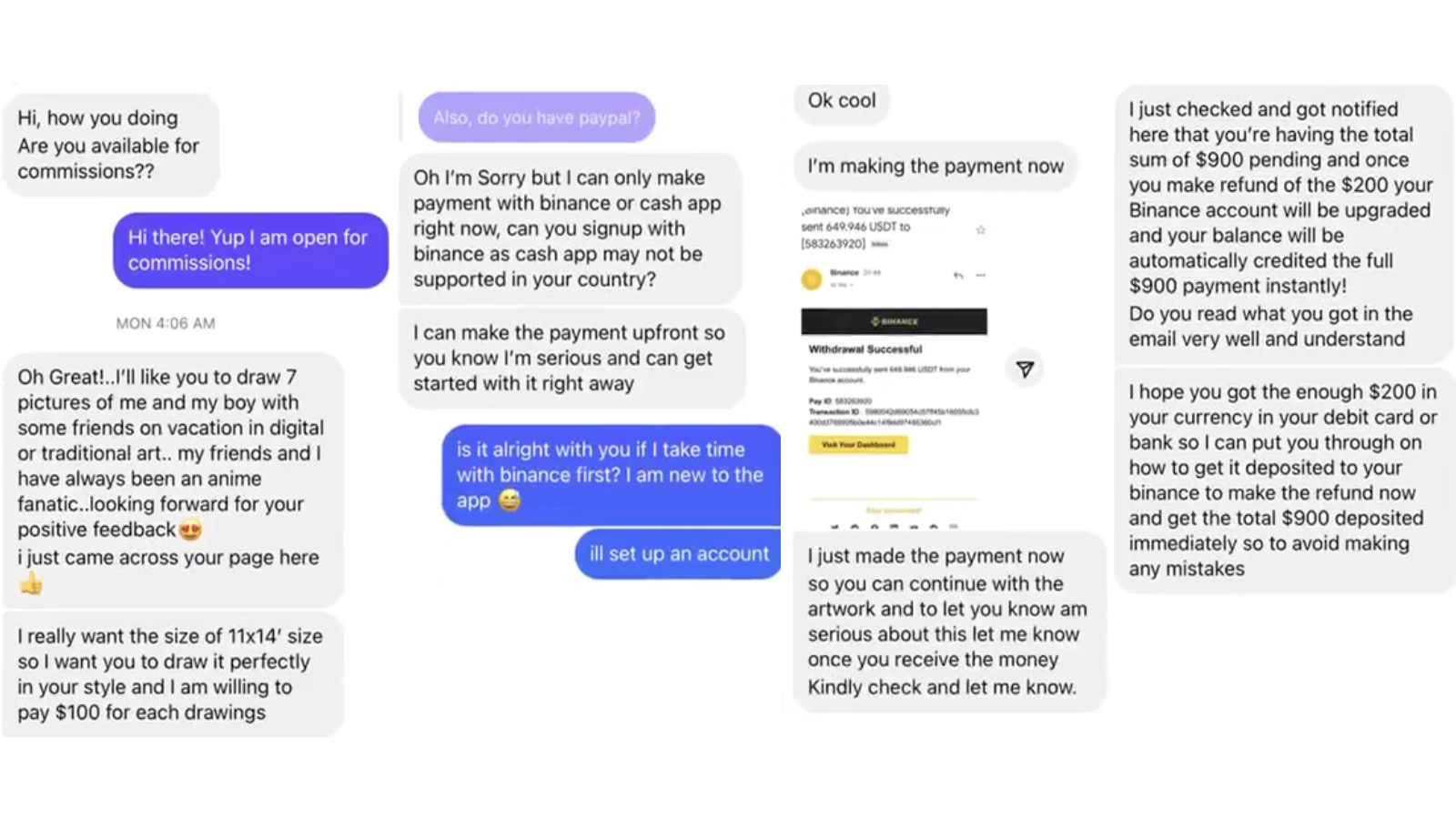
An artist (let's call him James) receives a message from a collector interested in his work. They make a deal, after which the counterparty claims that he transferred $700 to James for the purchase of the painting. He then convinces the artist that the payment was suspended due to an "account update."
The scammer asks James to send him $200, claiming that he needs the money because his $700 is blocked pending transfer. James complies with the request because he is confident that he will receive his funds back after the “account update.” But then he realizes that all the "collector's" assurances were false and that he will not get his $200 back.
How to protect yourself from money transfer fraud
Check your balance
Make sure you have the correct amount of funds in your account before making a P2P transaction. Fraudsters often cancel the transfer after sending a screenshot.
Beware of fake screenshots, documents or emails
Fraudsters may use fake screenshots, documents, and emails to trick you. Carefully check the authenticity of documents before transferring cryptocurrencies.
Use a proven platform
Make sure that the P2P platform you use has a transaction moderation system, escrow service, and customer support. Binance P2P offers strong fraud protections, including KYC and escrow services.
Study your counterparties
P2P platforms and e-commerce sites often contain reviews and ratings of traders or trading organizations. If the counterparty’s profile does not have a single review or too many positive reviews, this is a reason to be wary. On Binance P2P you will find a large selection of “verified merchants”, which can be easily identified by the yellow checkmark next to the username.
To learn more about protection for P2P traders, check out Binance Academy's P2P Trading Safety Guide.
If you have become a victim of crypto scammers
If you are the victim of a scam, take immediate steps to protect your finances. Lock down bank and financial accounts and change passwords for all accounts, including email and social media.
Report the incident to local law enforcement. Share all information collected, including evidence of any interaction with the scammer, such as payment documents received. Binance works closely with law enforcement, and this regularly results in the discovery and seizure of assets. While getting your money back is by no means guaranteed, in most cases it is the only option available.
If your Binance account has been hacked, disable it and follow the instructions in How to Report Fraud on the Binance App. If you suspect that your Binance P2P counterparty may be a scammer, please contact our support team immediately.
Be wary of offers of “refund services.” Although sometimes you may be offered real help, often these are just false promises or advance payment scams. Don't fall for another trick.
We also encourage all users, new and experienced, to review our Crypto Fraud Prevention series to help protect yourself from common threats.
Additional Information
How to recognize fraud
How to Recognize Fraud: Learn to Spot Fake Online Stores
How to Recognize a Scam: Learn to Spot and Avoid Ponzi Schemes