
Cryptocurrencies have gained significant popularity over the past few years, with more people investing in digital assets than ever before. Even though the crypto market presents tempting investment opportunities, this market is not free from fraudulent activities, one of which is wash trading.
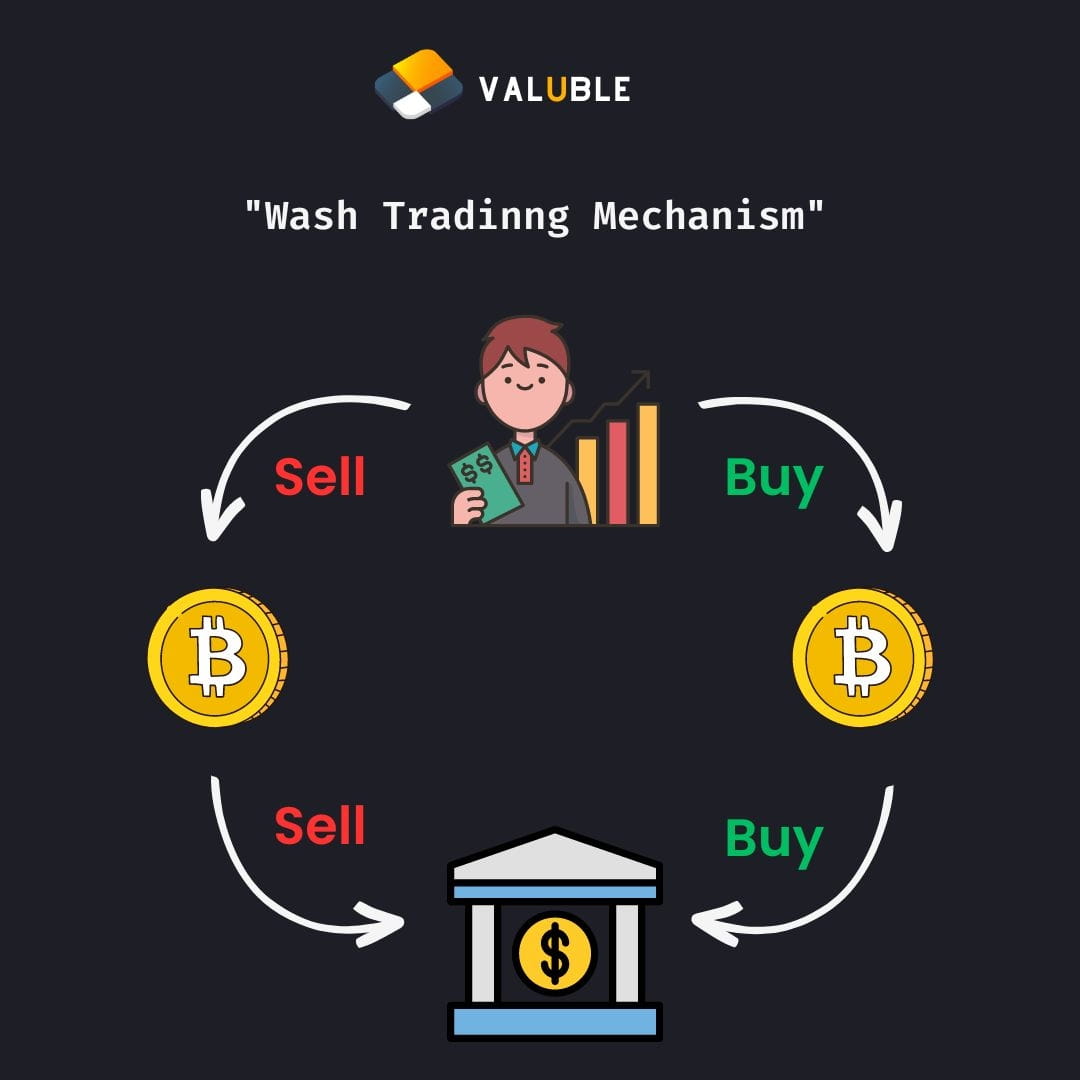
Wash trading is a practice in which a person or entity buys and sells assets to create the illusion of increased trading activity. This is a fraudulent practice that artificially inflates trading volume, giving the impression that there is more demand for an asset than there actually is.
In this article, we will dive deeper into wash trading in crypto, how it works, and its impact on the market.
What is Wash Trading?
Wash trading is a form of market manipulation that involves buying and selling assets simultaneously to give the appearance of increased trading activity. In the context of cryptocurrencies, wash trading is used to manipulate the trading volume of a particular digital asset. The result of this is that it appears as if there is more demand for the asset than there actually is.
This practice involves two parties, a buyer and a seller, entering into a transaction that does not result in a change in ownership of an asset. Wash trading is a fraudulent practice that creates false demand for an asset, giving investors the impression that there is more interest in the asset than there actually is.
In the absence of wash trading, the trading volume of an asset reflects the actual demand for the asset. This is important information for investors who rely on trading volume as a measure of market sentiment.
How Does Wash Trading Work in Crypto?
Wash trading in crypto involves buyers and sellers, who carry out transactions without transferring ownership of the asset. Both parties will place orders to buy and sell the same asset at the same time, at the same price, and in the same quantity.
This creates the illusion of increased trading activity, which attracts new investors who believe that there is genuine demand for the asset. Wash trading in crypto is often carried out by market makers or exchanges who profit from increased trading activity.
Market makers are entities that provide liquidity to the market, allowing buyers and sellers to transact at any time. By artificially increasing trading volume, market makers can attract more investors, increase the liquidity of an asset, and ultimately increase its price.
Impact of Wash Trading on the Market
Wash trading has several negative impacts on the cryptocurrency market, including:
Misleading Investors: Wash trading creates the illusion of increased demand for an asset, which can mislead investors into believing that there is more interest in the asset than there actually is. This can cause investors to make poor investment decisions, leading to significant financial losses.
Market Manipulation: Wash trading is a form of market manipulation that distorts true market sentiment, making it difficult for investors to make informed investment decisions.
Artificially Inflated Prices: Wash trading can artificially inflate asset prices, leading to price bubbles that can ultimately burst, resulting in significant financial losses for investors.
Reduces Market Efficiency: Wash trading reduces market efficiency, making it difficult for investors to find accurate information about the true demand for assets.
Regulatory Issues: Wash trading is a fraudulent practice that is illegal in many jurisdictions. Exchanges involved in wash trading may face regulatory action, including fines and license revocation.
Conclusion
In conclusion, wash trading is a fraudulent practice used to manipulate the trading volume of an asset, creating the illusion of increased demand for that asset. Wash trading in crypto can mislead investors, distort market sentiment, artificially inflate prices, reduce market efficiency, and raise regulatory issues.