
What Is Decentralized Finance (DeFi)?
Decentralized finance (DeFi) is an emerging financial technology based on secure distributed ledgers similar to those used by cryptocurrencies.
Decentralized finance or DeFi for short is an term for services like investing, borrowing, lending and trading based on decentralized, non-custodial infrastructure. Blockchain and cryptocurrencies initiated the conversation on how we can democratize the global economy, but it’s DeFi that is going to get us there.
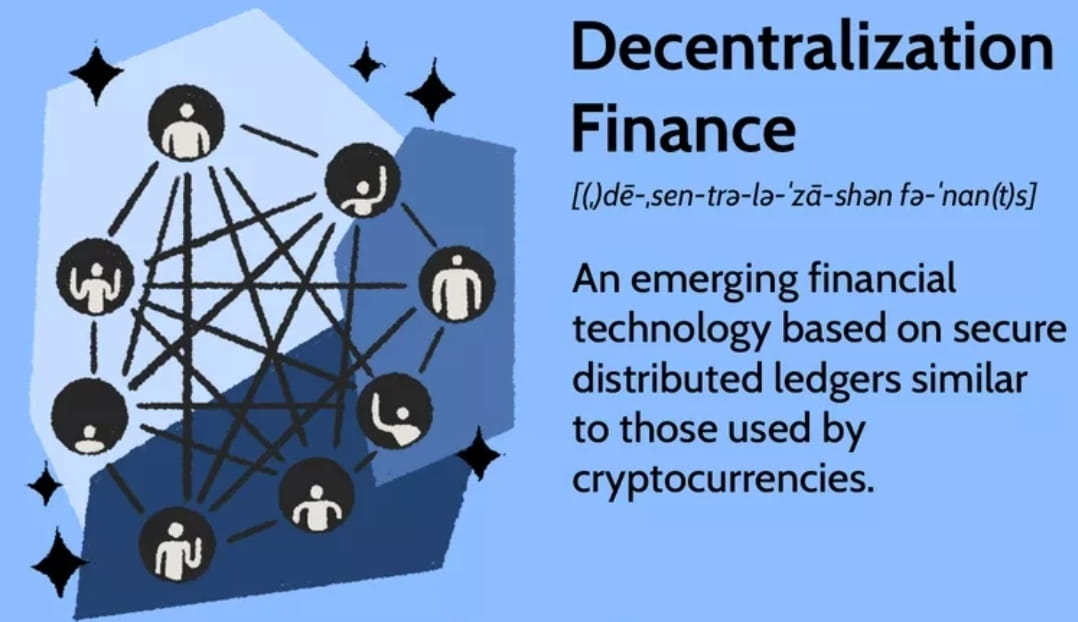
In the U.S., the Federal Reserve and Securities and Exchange Commission (SEC) define the rules for Centralised Financial like banks and brokerages, which consumers rely on to access capital and financial services directly. DeFi challenges this centralized financial system by empowering individuals with peer-to-peer digital exchanges.
DeFi eliminates the fees that banks and other financial companies charge for using their services. Individuals hold money in a secure digital wallet, can transfer funds in minutes, and anyone with an internet connection can use DeFi.
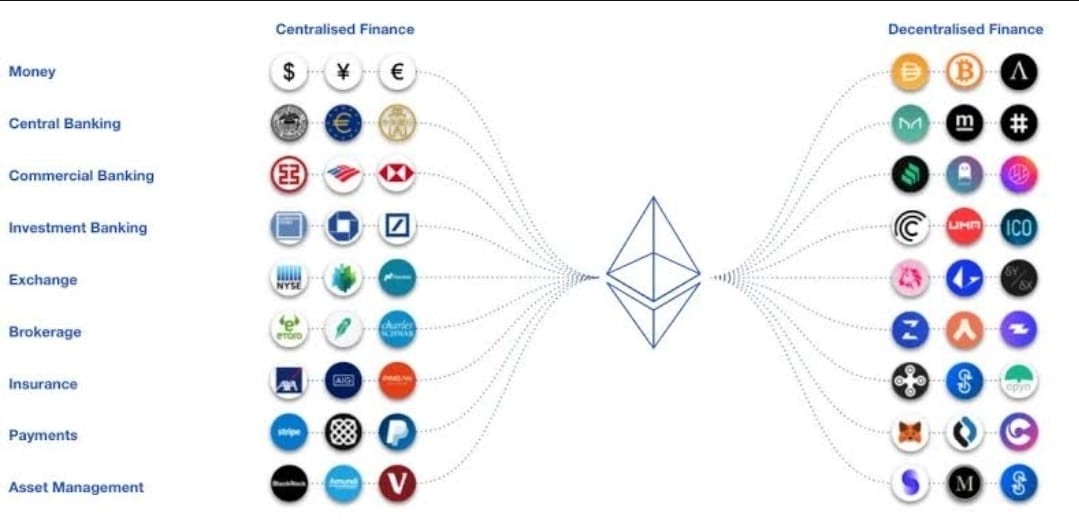
Centralized Finance (CeFi) v/s Decentralized Finance (DeFi)
Decentralized finance differs from traditional, centralized financial institutions and banking.
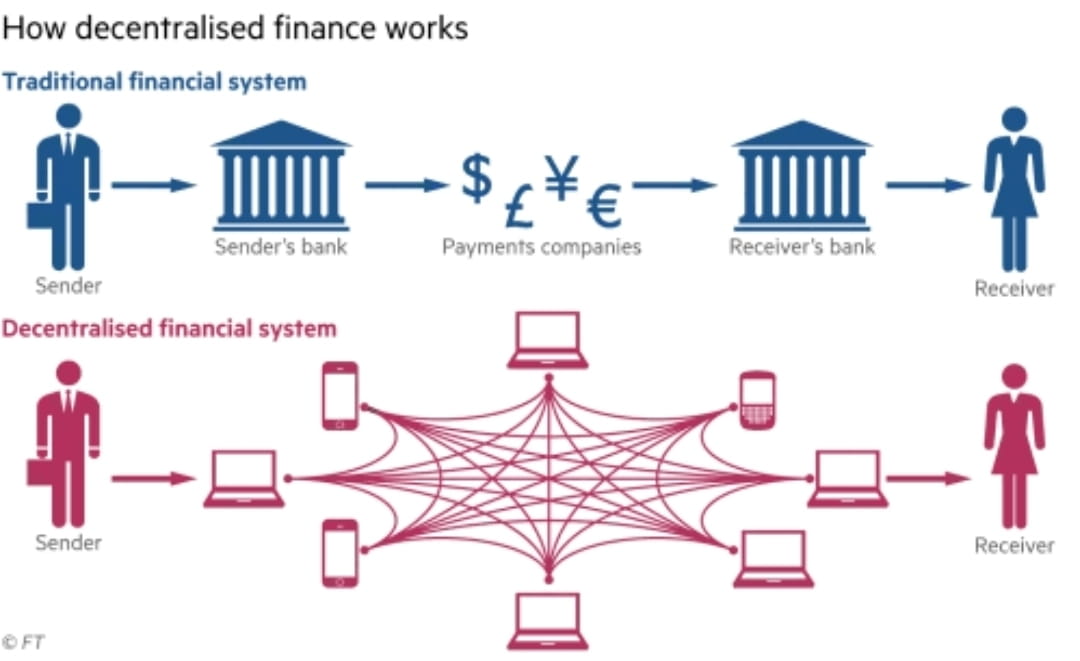
Centralized Finance-
In centralized finance, money is held by banks and third parties who facilitate money movement between parties, with each charging fees for using their services. A credit card charge starts from the merchant and moves to an acquiring banks, which forwards the card details to the credit card network.
The network clears the charge and requests a payment from the bank. Each entity in the chain receives payment for its services, generally because merchants must pay for the use of credit and debit cards.
Decentralized Finance-
Decentralized finance eliminates intermediaries by allowing people, merchants, and businesses to conduct financial transactions through emerging technology. Through peer-to-peer financial networks, DeFi uses security protocols, connectivity, software, and hardware advancements.
Wherever there is an internet connection, individuals can lend, trade, and borrow using software that records and verifies financial actions in distributed financial databases. A distributed database is accessible across various locations as it collects and aggregates data from all users and uses a consensus mechanism to verify it.
Decentralized finance eliminates the need for a centralized finance model by enabling anyone to use financial services anywhere regardless of who or where they are. DeFi applications give users more control over their money through personal wallets and trading services that cater to individuals.
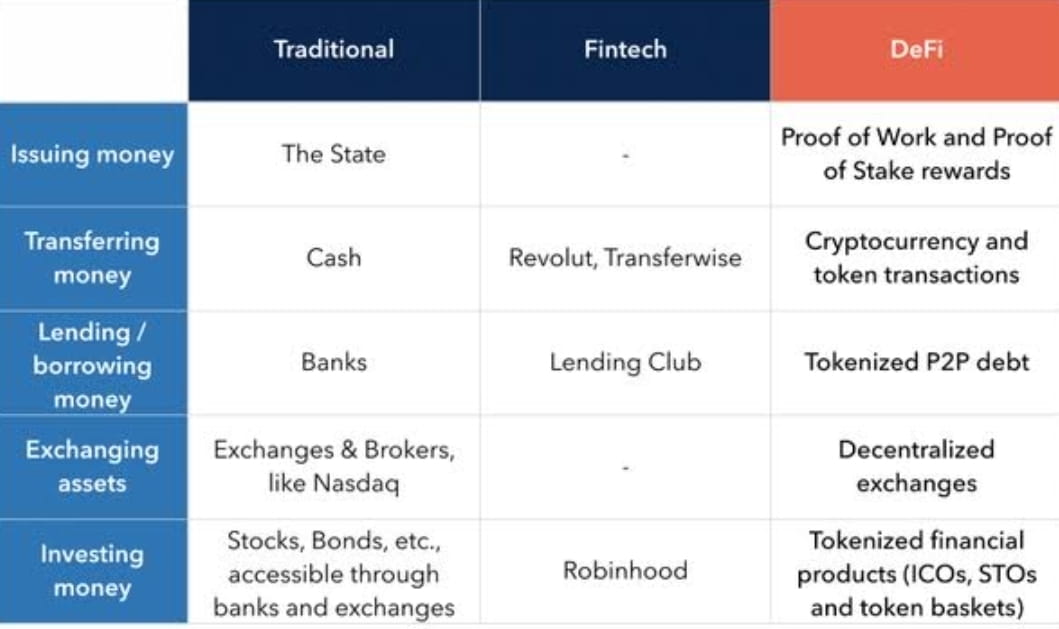
How Does DeFi Work?
Decentralized finance uses the blockchain technology that cryptocurrencies use. A blockchain is a distributed and secured database or ledger. Applications called dApps are used to handle transactions and run the blockchain.
In the blockchain, transactions are recorded in blocks and then verified by other users. If these verifiers agree on a transaction, the block is closed and encrypted; another block is created that has information about the previous block within it.
The blocks are "chained" together through the information in each proceeding block, giving it the name Blockchain. Information in previous blocks cannot be changed without affecting the following blocks, so there is no way to alter a blockchain. This concept, along with other security protocols, provides the secure nature of a blockchain.
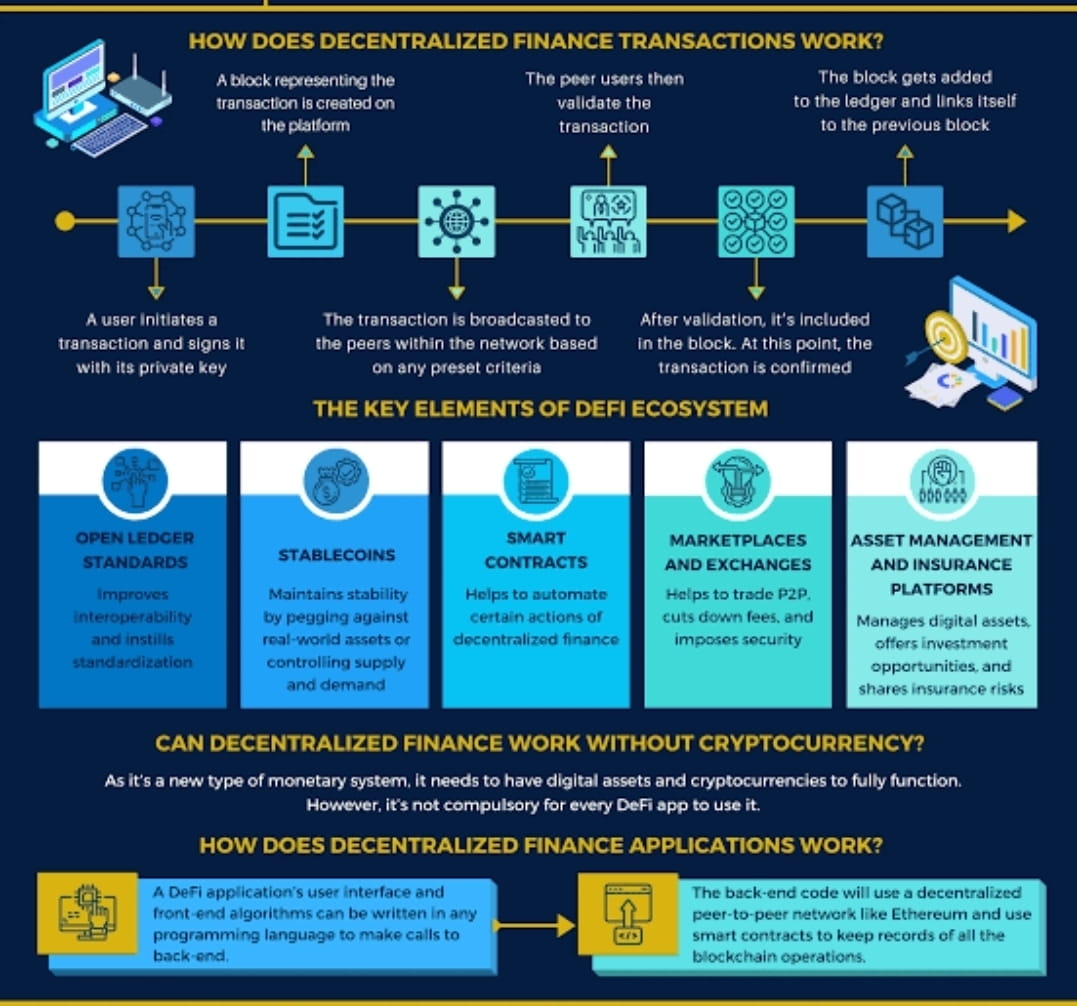
True disruption only comes with full individual control over assets and access, and technology is now enabling this reality. Many builders for innovative financial products are moving towards open-source protocols for exchanging assets through decentralized platforms. The new platforms have two huge advantages over finance as it exists today.
Firstly, individuals will be able to unlock many known and new forms of value while not having to trust any intermediary to take care of their assets for a commission. Anyone has access and there is no central control.
Secondly, all protocols are open-source, so anyone can build new financial products on top of them and people from across the globe can collaborate and come up with new forms of creating value. This can lead to ever-faster innovation and strong network effects as more and more users and builders move onto the platforms.
Decentralized finance, or DeFi, already provides a range of common financial vehicles and marketplaces that ensure that the individual is the sole custodian of their assets at all times. DeFi protocols are characterized by three things: they’re interoperable, programmable and composable.
1. Interoperable means that functionality isn’t siloed. The current financial system is controlled by middlemen and rent seekers, so it’s the norm to restrict access based on arbitrary factors like nationality, income or the bank you use. DeFi is defined by transparency and functions that work seamlessly together, regardless of who created them.
2. Programmable means that transactions are controlled by smart contracts, not people. This makes the system more secure and customizable, so there are limitless possibilities.
3. Composable means that the entire system is a bit like a box of Lego blocks — there is no limit to what can be built. Everything can be assembled in multiple combinations and there’s always a perfect fit.
Uses of DeFi
Peer-to-peer (P2P) financial transactions are one of the core premises behind DeFi. A P2P DeFi transaction is where two parties agree to exchange cryptocurrency for goods or services without a third party involved.
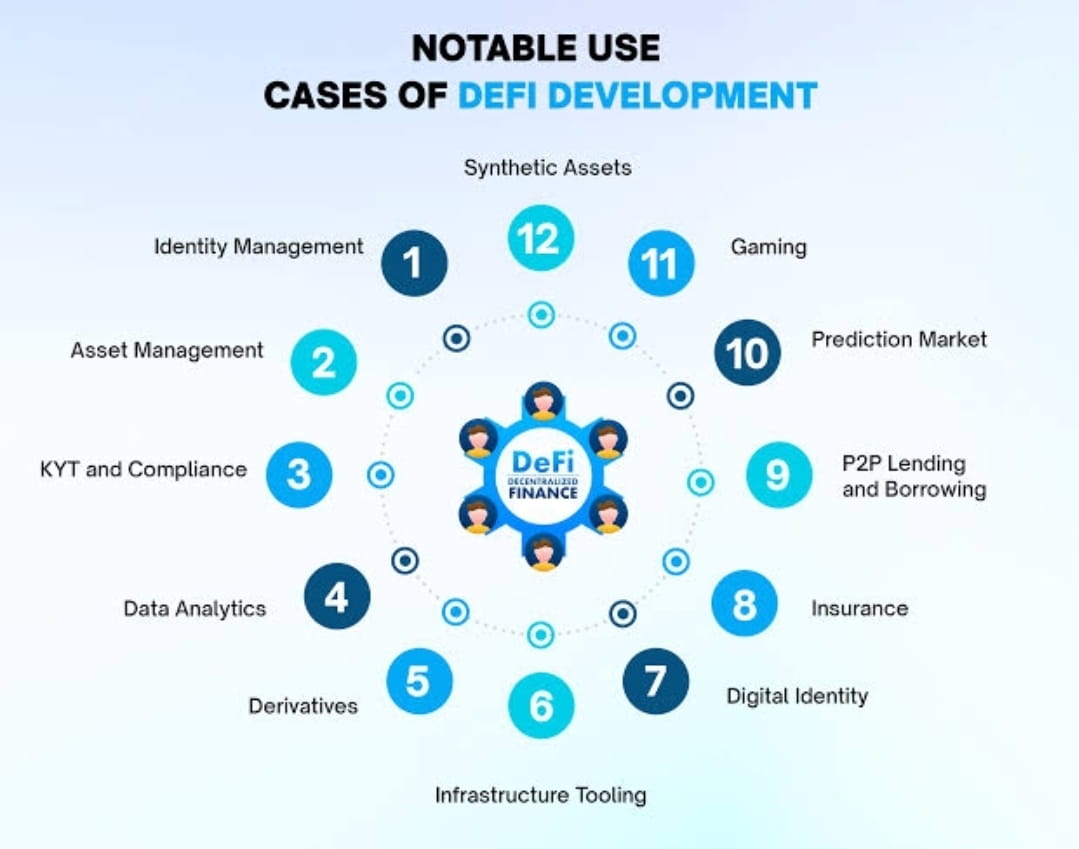
In DeFi, P2P can meet an individual's loan needs, and an algorithm would matches peers that agree on the lender's terms, and a loan is issued. Payments from P2P are made via a decentralized application, or dApp, and follow the same process in the blockchain.9 Using DeFi allows for:
• Accessibility: Anyone with an internet connection can access a DeFi platform and transactions occur without any geographic restriction.
• Low fees and high-interest rates: DeFi enables any two parties to directly negotiate interest rates and lend money via DeFi networks.
• Security and Transparency: Smart contracts published on a blockchain and records of completed transactions are available for anyone to review but do not reveal your identity. Blockchains are immutable, meaning they cannot be changed.
• Autonomy: DeFi platforms don't rely on any centralized financial institutions and are not subject to adversity or bankruptcy. The decentralized nature of DeFi protocols mitigates much of this risk.
Today, all these protocols are based on Ethereum smart contracts. Some of the most promising and advanced ones are:
Decentralized exchanges like Uniswap, 0x & Kyber
Non-asset-backed stablecoins like Dai and USDC, with a reliable value for hedging and transferring
Automated asset management strategies such as Set Protocol, which offers a decentralized equivalent to ETFs
Money markets such as Compound and Aave
Margin trading, like DyDx
Tokenized debt platforms like Dharma or Compound for lending and borrowing
Insurance such as Opyn and Nexus
The markets for them are small for now, but they promise, for the first time, a global financial marketplace with programmable stores of value that do not just serve but belong to the individual. You can find a full list of projects in this great list.
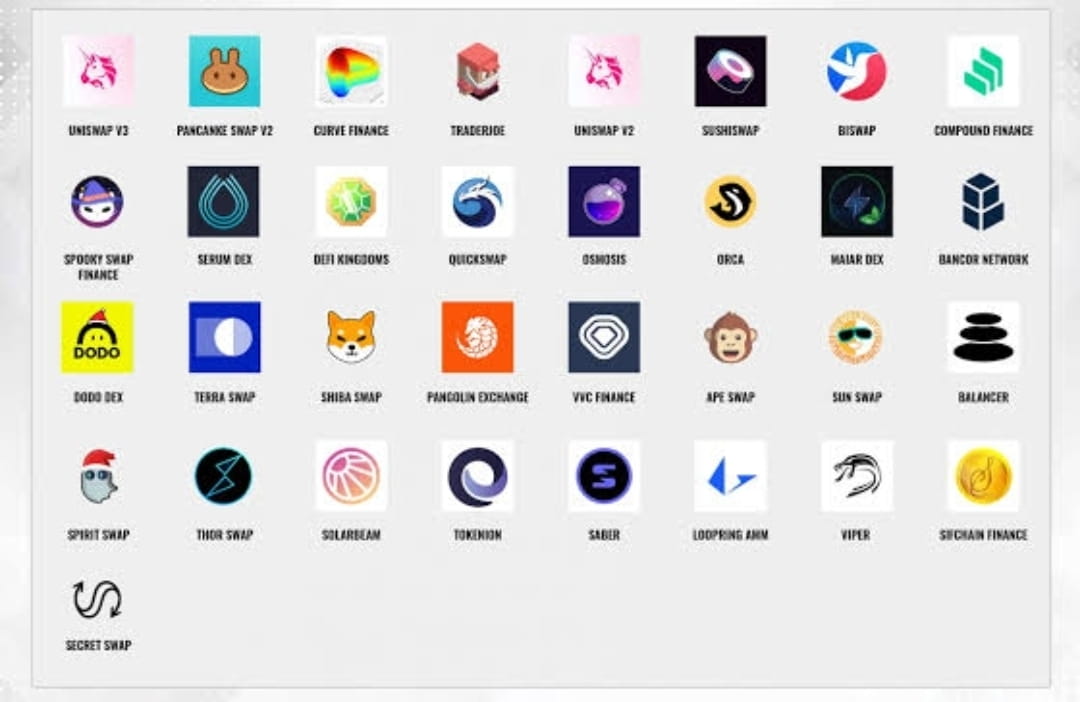
Some of the best DEXs used under DeFi category-
Advantages & Disadvantages of DeFi
Pros-
Decentralized applications allow individuals to transfer capital around the world
Investor's ability to generate income
High level of security
Cons-
Participation in DeFi is complex and not easily understood
High risk of fraud and scams
High level of volatility
The Future of DeFi
Decentralized finance is constantly evolving. It is unregulated and its ecosystem is riddled with infrastructural mishaps, hacks and scams.
Current laws were crafted based on the idea of separate financial jurisdictions, each with its own set of laws and rules. DeFi’s borderless transaction ability presents essential questions for this type of regulation.
Who is responsible for investigating a financial crime that occurs across borders, protocols, and DeFi apps? Who would enforce the regulations, and how would they enforce them?
Other concerns include system stability, energy requirements, carbon footprint, system upgrades, system maintenance, and hardware failures.
What Does Decentralized Finance Do?
The goal of DeFi is to challenge the use of centralized financial institutions and third parties that are involved in all financial transactions.
As per Ethereum Smart Contracts, DaApps, and DeFi's applications compared to CeFi's, there will be next Future is for most likely for DeFi.
Is Bitcoin a Decentralized Finance?
Bitcoin is a cryptocurrency. DeFi is being designed to use cryptocurrency in its ecosystem, so Bitcoin isn't DeFi as much as it is a part of it.
What Is Total Value Locked in DeFi?
Total value locked (TVL) is the sum of all cryptocurrencies staked, loaned, deposited in a pool, or used for other financial actions across all of DeFi. It can also represent the sum of specific cryptocurrencies used for financial activities, such as ether or bitcoin.
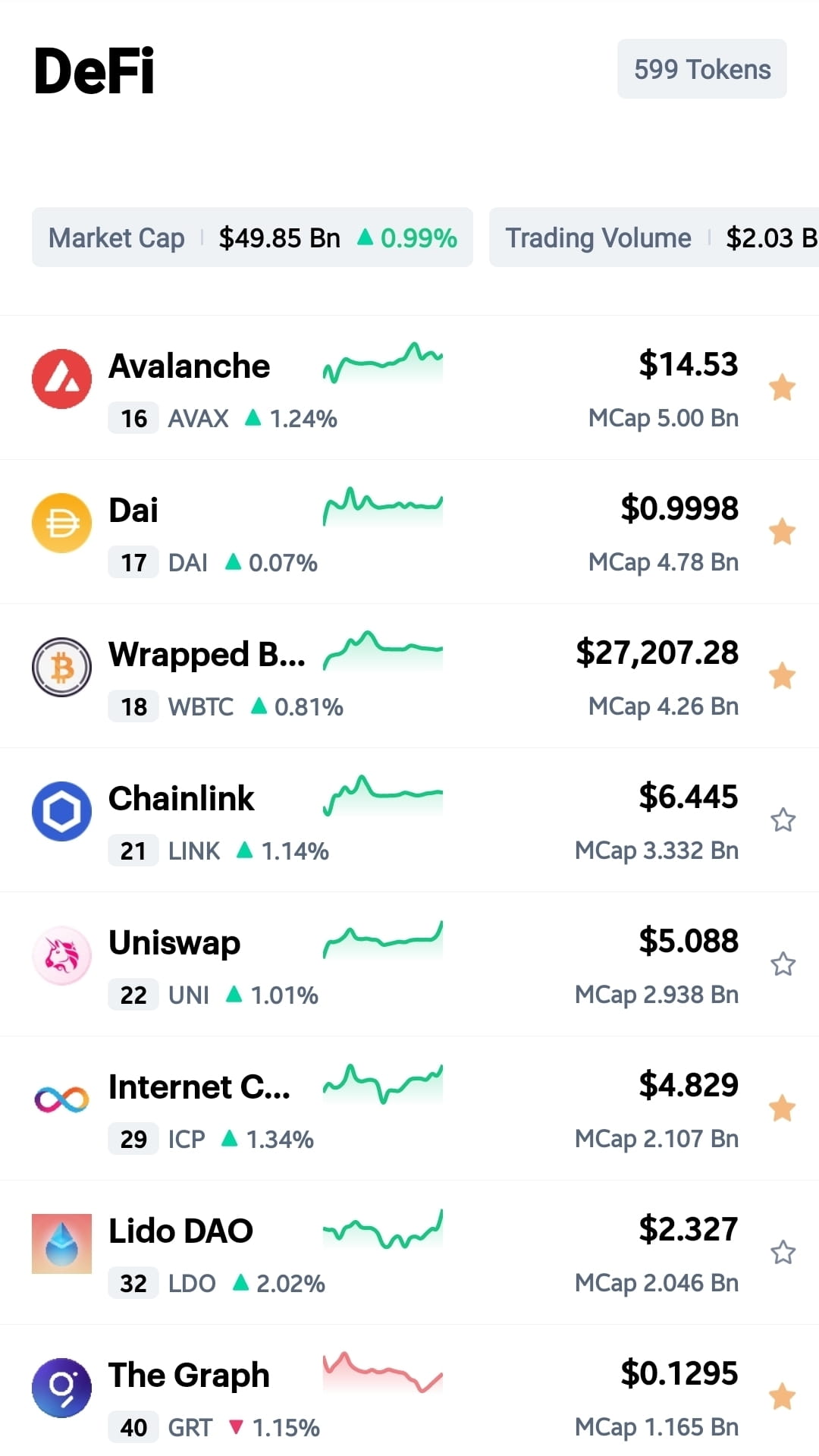
As per present Coin Market Cap data, into DeFi categories, approx. 600 Tokens are available with around $50 Billion of Market Cap. with almost some of very popular DeFi's are AVAX LINK ICP GRT etc..
The Final Remark & Bottom Line-
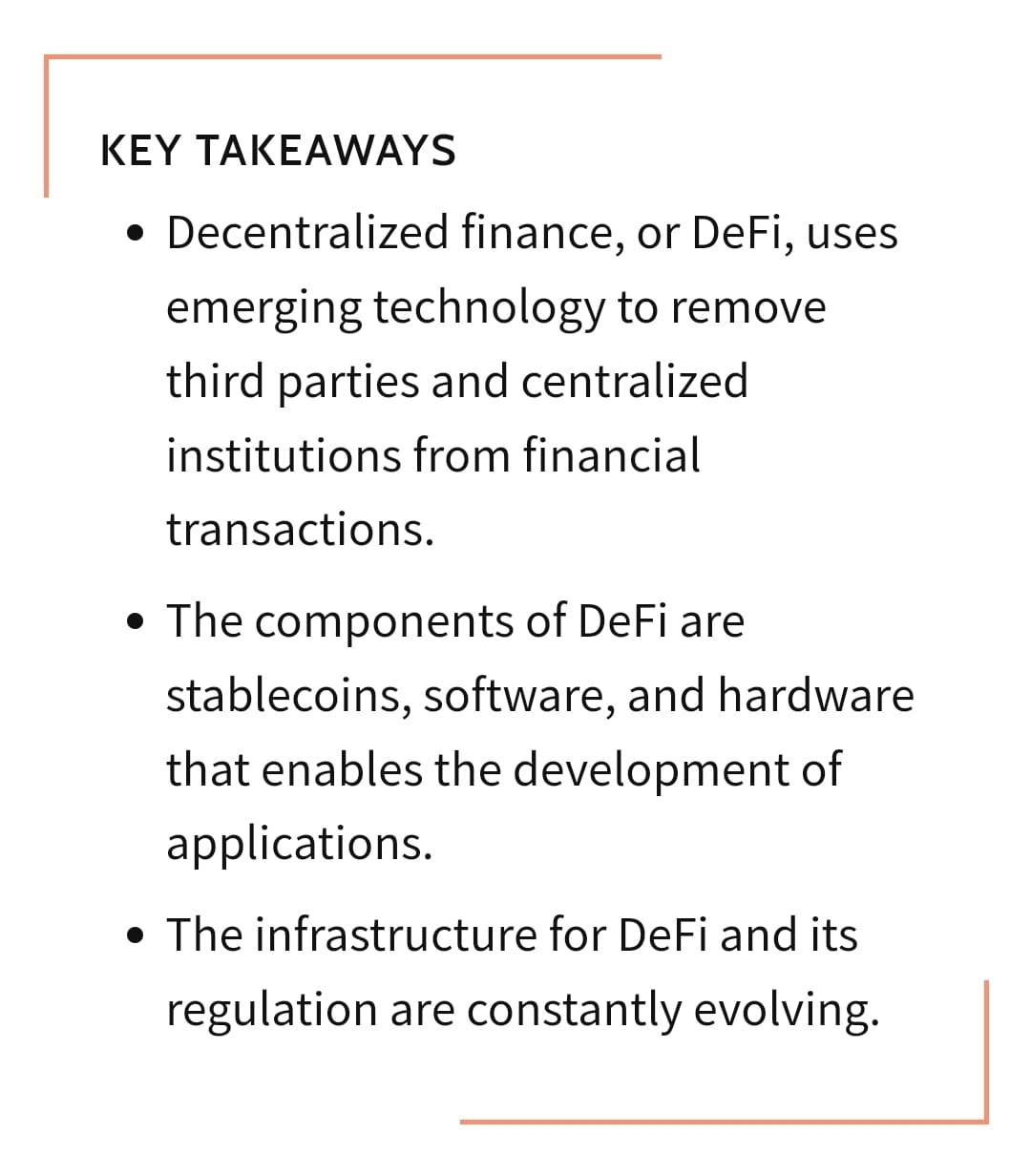
Decentralized finance (DeFi) is an emerging financial technology that challenges the current centralized banking system. DeFi eliminates the fees that banks and other financial companies charge for using their services and promotes the use of peer-to-peer, or P2P, transactions.
DISCLAIMER-
Here all images and data is collective information from Internet to educate people's not intentions to use for any personal benefits and very well know about copyright laws, it's just collection at single place to educate peoples in right direction always.
Always share best & knowledgable informations to your friends, families & colleagues to build a better decentralized crypto community.
Always Do Your Own Research before investing in Decentralised Finance or in Crypto-Currencies.