

On June 1, OPNX, a debt trading platform founded by Three Arrows Capital founder Su Zhu and others, announced two major developments in succession. One was the launch of a new platform coin OX with governance and fee discount utilities; the other was the official launch of Celsius debt trading, which is also the first debt market supported by the platform.
It happened that Odaily Planet Daily met Su Zhu when participating in an offline event in Vietnam some time ago, and had a discussion about the recent development of OPNX. At this critical juncture, in order to help everyone better understand the recent situation of OPNX (including Su Zhu himself, of course), we specially invited Su Zhu to accept an exclusive interview. In the Q&A, Su Zhu not only disclosed some details about OPNX, but also responded to the market's doubts about his personal participation, and made some predictions about the next round of bull market.
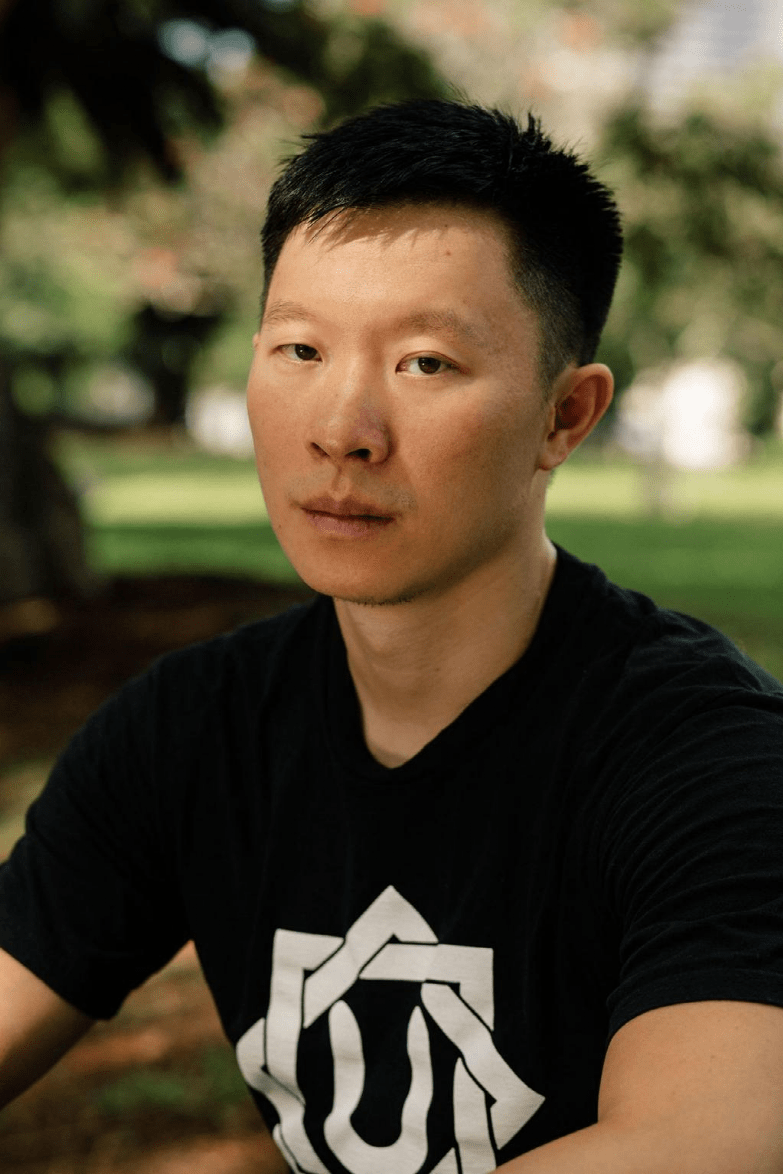
Q1: About OX
Odaily: Yesterday morning, OPNX announced on its official Twitter that it will launch a new governance token, OX. In the tweet, OPNX introduced the fee discount and governance functions of OX (for details, please refer to this newsletter). In your opinion, where is the value of OX to OPNX? What is the design idea of its token economic model?
Su Zhu: Good question. We are very excited about OX for many reasons.
Before creating the OPNX and OX models, we thought deeply about the historical problems faced by exchanges and traders. We have used almost every exchange platform in the past decade and have experienced the best and worst times of cryptocurrencies. Therefore, we hope to use our own experience to ensure that the token economic model of OX is fairer, more democratic, and can keep OPNX and its users closely connected in the long run.
We believe that OX has been designed to achieve this goal. Users can achieve permanent fee-free trading by staking OX in proportion. In this way, on the one hand, traders will be incentivized to stake without having to constantly consume positions due to fees; on the other hand, both large and small traders can profit according to the staking ratio, which is an improvement over those models that give priority to large traders; in addition, users can enjoy these rights permanently, which is like a "royalty income" that can only be obtained by trading on OPNX.
The core token economics of OX will be fixed, but in addition, OX stakers can also create proposals and vote to modify most of the core variables of OPNX, such as non-stakers' fee rates, burn rates, new coin screening, etc. We will release more details on this in the coming weeks.
The most important thing for us is to ensure absolute fairness and incentive consistency in the core token economic model. We think we have achieved this, and it is up to OX stakers, traders, and the community to drive other important things for OPNX.
Q2: About the debt market
Odaily: Last night, OPNX officially launched Celsius debt trading, which means that OPNX has finally ushered in its main business (previously there were only spot and contracts).
However, for users in the Crypto field, most people may not be very familiar with the concept of debt claims, which may affect the start and development of OPNX debt trading. In your opinion, how can we attract more users to contact and use this new trading product?
Su Zhu: “Claims tokenization is a very novel concept, and what we are doing is just responding to market demand. We chose to build a solution for claims because the market is quite large and there are a large number of victims who are frustrated with the bankruptcy process and are looking for alternatives.”
The first thing to understand is that debt trading is related to the liquidity of frozen assets. Choosing "tokenized debt" gives creditors more options - you can cash out in advance; you can also use it as collateral for other derivative transactions; you can continue to hold it and retain your original claim rights. Of course, some creditors may feel that waiting for a few years for bankruptcy proceedings is fine, so they are unwilling to try tokenization. OPNX just gives them an additional option, especially when they feel that the opportunity cost of waiting is too high.
When approaching potential creditor clients, we need to make them understand the benefits of "tokenized claims". In addition, we will provide fee discounts through OX, provide fee-free rewards for early registrants, and will launch a great affiliate program soon. In addition to these, we also need to ensure that the product is advantageous enough so that customers will spontaneously help us promote it.
Based on the buzz to date, there is significant interest in this type of transaction.
Q3: About the seller’s operation
Odaily: There are also many victims of the FTX incident around me. If I want to cash out my debt in advance through OPNX, what operations do I need to do? Will the process be complicated?
Su Zhu: FTX is our next debt market that will be launched soon.
For Celsius, which has just launched, the process is very simple (for more details, visit the OPNX related interface). First, customers need to register OPNX; then they need to provide detailed information and documents about the debt to Heimdall, OPNX's tokenization partner; when the qualifications are confirmed, the customer will receive a notification and be asked to sign a transfer agreement, which will initiate the transfer and tokenization process of their debt; once completed, the customer can freely operate their debt tokens, such as selling, acting as collateral assets for contracts, or simply holding them.
The entire process is quick and uncomplicated, and the fees for tokenization are negligible compared to going through the court process.
FTX’s debt trading will be live soon, but creditors can now fill out Heimdall’s pre-assessment form in advance and be notified immediately after the market goes live.
Q4: Buyer’s rights
Odaily: The subject of transactions in the OPNX debt market is "tokenized debt". For buyers, how can I ensure that the "tokenized debt" I purchased has real claim rights?
Su Zhu: The execution relationship between the "tokenized claims" and the claim holder (the trust) will be legally bound and protected. All documents regarding the transfer of claims are completely transparent. Claims are held in a trust structure, which means that if any other part of the process goes wrong, the claims will also be fully protected. A global law firm will serve as the trustee.
Q5: About personal participation
Odaily: It was reported that you are no longer involved in the daily operation of OPNX, but your personal Twitter still has a lot of content about OPNX, so what is the truth? In terms of the operation of OPNX, has the Three Arrows Capital incident had any special impact on the development of OPNX?
Su Zhu: Kyle Davies (another co-founder of Three Arrows Capital) and I had a vision for the next generation of exchanges and a way to tokenize debt. At the same time, CoinFLEX was also trying to reorganize. We have known Leslie Lamb and Mark Lamb (CoinFLEX cofounders) for many years. They like our vision, we have ideas, they have a technical team, and the timing is perfect (the successive crashes in 2022 made "tokenized debt" completely in line with market demand), so we naturally chose to cooperate.
We contributed a lot of ideas early on and will continue to provide input, but the 75-person team building OPNX itself is based in Hong Kong. As OX, Debt Trading, and other products have come online, we have been amazed at how they have executed on a challenging vision, and now we have complete faith in them.
While the collapse of Three Arrows Capital was a tragedy, we also learned painful and valuable lessons from its operations and bankruptcy proceedings. Without Three Arrows, we would not have had the insight into what the ideal post-FTX exchange would look like, nor the opaque and adversarial nature of bankruptcy proceedings, which often do not produce the best outcomes for creditors.
Working on OPNX seemed like a natural evolution of applying our latest learnings. In general, we don’t want to sit on the sidelines, we want to build on everything that’s been going on.
Q6: About the next bull market
Odaily: You have been very successful in the last bull market. Now the market has been sluggish for a long time. In your opinion, when will the next bull market come? Which concepts will usher in an explosion?
Su Zhu: At present, we think that tokenizing real-world assets is the most interesting thing, which can bring real returns from the real world into the cryptocurrency field. "Tokenized debt" is just the beginning, and we are willing to prove it by delivering more practical results.
Beyond that, the cost of launching a blockchain will continue to decrease, which in turn will present a differentiation challenge to the existing ecosystem. New developments like Worldcoin are also interesting, and there is certainly opportunity to emulate similar concepts in more regional and product-specific markets.