

Key takeaways
Tracking a cryptocurrency wallet involves keeping an eye on the wallet's transactions and noting its significant transactions over time or involving specific assets;
Wallet tracking provides investors with asset movement information based on tracking transactions of major holders, which can be used to speculate on market movements;
Selected wallets can be filtered or tracked using a blockchain explorer or special application;
The dedicated wallet tracker is designed to provide clearer information on wallet movements and notify investors.
How to track a cryptocurrency wallet
There are three main steps to tracking a cryptocurrency wallet: discovering the wallet, collecting in-depth data on transactions on the wallet chain, and translating the data obtained in the first two steps into useful information. Through these, investors can learn about the actions of “smart” investors and potentially predict market movements using clues from the actions made by prominent wallets.
What are other traders buying, who are the buyers, and how well do they understand the market? If they seem to have a better understanding of the market, what are they investing in now and what might they invest in next? On a larger scale, what impact do the actions of people like this have on the market?
If you are confused about these questions and how to apply them, then read on to learn more about cryptocurrency wallet tracking!
What is wallet tracking
Wallet tracking focuses on studying the wallet movements of whales or famous traders to obtain data to guide potential trading decisions.
Cryptocurrency Wallet Tracker is designed to make it easier for individuals to track wallets of interest, such as sending alerts every time a transaction occurs. These trackers allow you to track the activity of your chosen wallet in real time. Cryptocurrency wallet trackers connect to third-party APIs and access various on-chain cryptocurrency data sources to obtain information about transactions; this information is then packaged and presented to users in a more useful form.
Cryptocurrency wallet trackers are designed with customizable features such as push notifications that alert users whenever a transaction is executed by the wallet being tracked. By design, cryptocurrency wallet trackers can display basic information about transactions, such as transaction type and amount involved, as instant alerts on messaging apps like Telegram. This enables users to react quickly without having to use a blockchain wallet browser like Etherscan to search for transaction details.
How to find the wallet you need to track
What should you focus on before tracking a wallet? The answer largely depends on your purpose of tracking a wallet, but here are a few things investors often look for when tracking a wallet:
past investment
When you consider adding a smart wallet to your wallet tracker, you can check its investment history to see what assets they have sold in the past and how they manage them. Look at the timing of purchases and sales, and the resulting gains or losses. This is a great way to evaluate whether a wallet is "smart money." If this wallet has made substantial profits on most of their previous transactions, then they probably deserve some attention.
profit/loss ratio
When you are looking for a smart wallet that can copy trades, it is important to consider their profit/loss ratio, which measures the average profit on winning trades versus the average loss on losing trades over a certain period. Research the assets they keep and their values, and track transactions in the wallet related to the assets to determine whether the wallet is making a profit or losing money. If a wallet is making profits on the assets under its management, then you may want to track its transactions.
transaction flow
Where do the funds in the wallet come from and where do they go? If a wallet frequently receives deposits of different sizes from different wallets, it is likely an exchange wallet. Blockchain explorers attempt to label these transactions and wallets, but may miss them in some cases. Vesting wallets can also be identified by the labels on their transactions. Under normal circumstances, personal wallets should have less transaction frequency and individuals own fewer wallets.
interactive protocol
Personal wallets generally interact with a small number of exchanges and other people. Team and project wallets are more likely to interact with more specialized protocols and perform transactions like staking, mass distribution, and staking reward distribution.
Find a wallet you need to track
Choosing a wallet to track depends on your goals and wallet availability. If you simply want to track the movements of the top holders of a smart contract project you wish to invest in or have already invested in, it will be easier to find a wallet to track. However, if you wish to track "smart money" investors or other famous figures, the process may be a little more complicated.
Based on the previous considerations, let's try to find some wallets that need to be tracked.
How to find top holders using a blockchain explorer
You can find the wallets of the top holders using a browser on the blockchain network the asset runs on. Explorers for older blockchains like Bitcoin and Litecoin often have a "rich list" feature that ranks holders in order of the assets they have custody of. The EVM network has similar functionality for smart contract tokens.
To find the top holders of a smart contract token using the web's browser, you first need to obtain the asset's smart contract address and access the browser for more information. Here we will use the Arbitrum token on the Arbitrum Layer 2 network as an example.
The smart contract was copied from CoinGecko’s asset page. Of course, you can also obtain the asset’s smart contract address through the project’s official website and social media profiles.
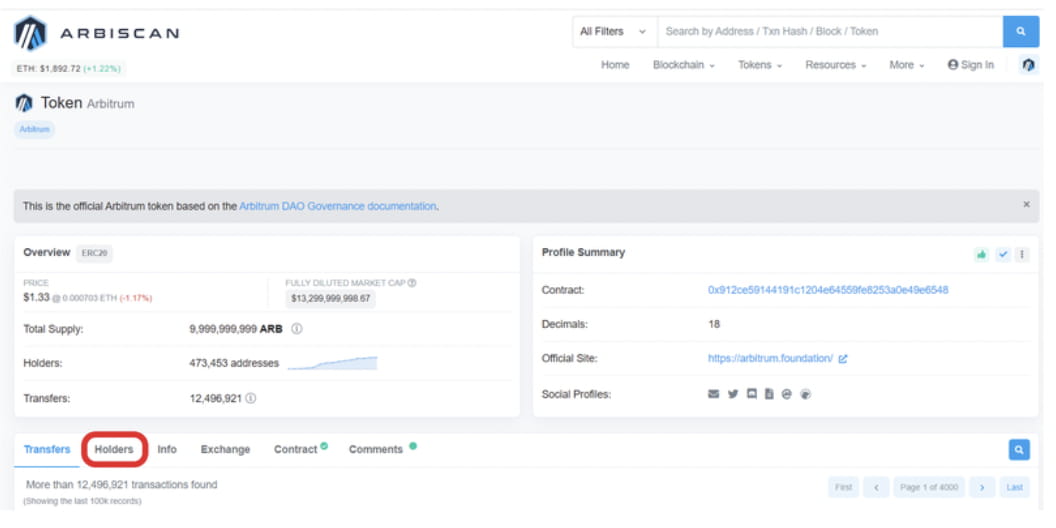
Visit Arbitrum Explorer and navigate to the Arbitrum token page, then to the holders section, where the list of holders is sorted by their holdings. Please note that the top ranked wallets may be official wallets and exchange wallets.
Identifying “smart money” investors
Finding "smart money" investors may require more research and additional tools to simplify the process and make it more effective.
Use a blockchain explorer
The top holders of some successful smart contract projects are a good starting point in your search for “smart money” investors. To illustrate this, we’ll take a look at the Camelot token (GRAIL) on the Arbitrum network, which has been increasing in value over time:
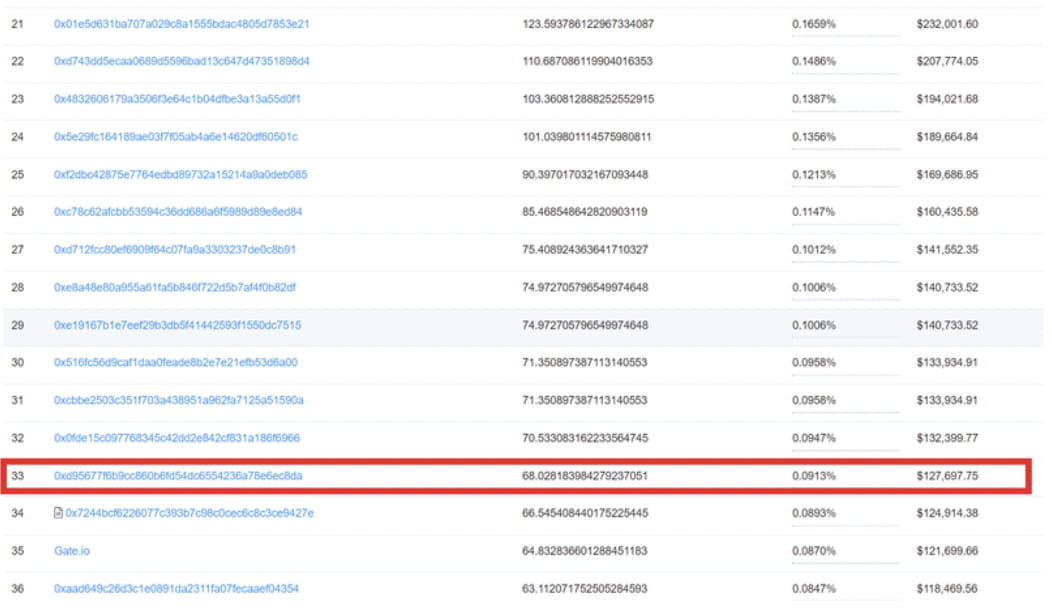
Looking at the top 50 wallets, most seem to belong to exchanges, vesting wallets, and institutions that may be related to the project. You can detect this using transaction labels and transaction frequency. Here we managed to single out the wallet at number 33 in the list of holders (at the time of writing).
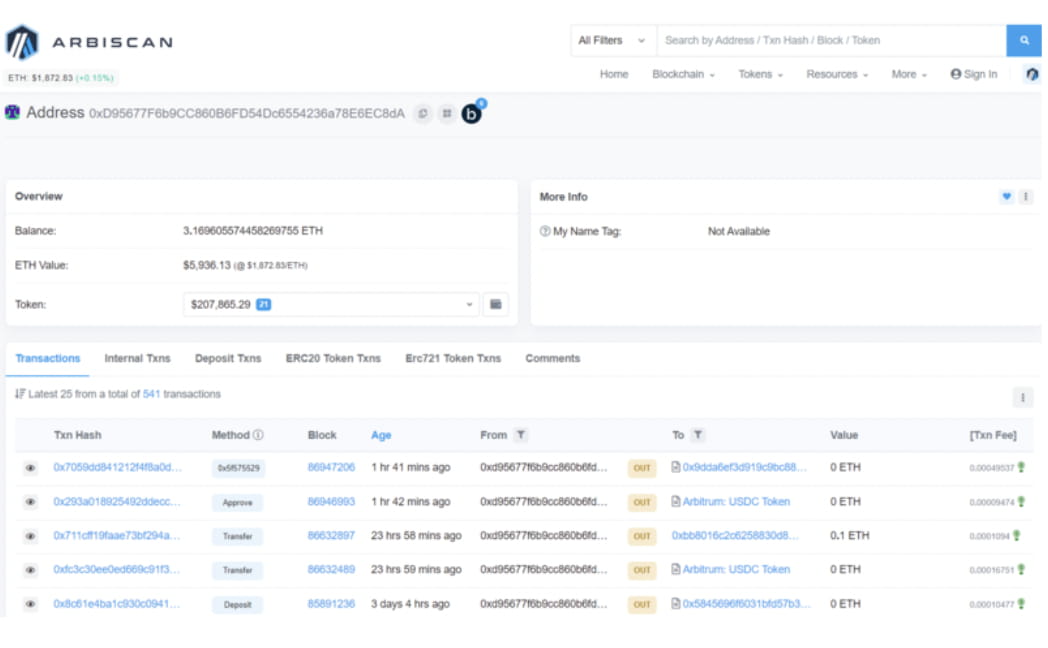
Looking at the wallet (0xD956) there are approximately 68 GRAIL tokens in his custody. 22 of these tokens were purchased on January 17, 2023 for approximately $241 each. GRAIL is trading at $1,899 at the time of writing – that’s over a 780% profit.
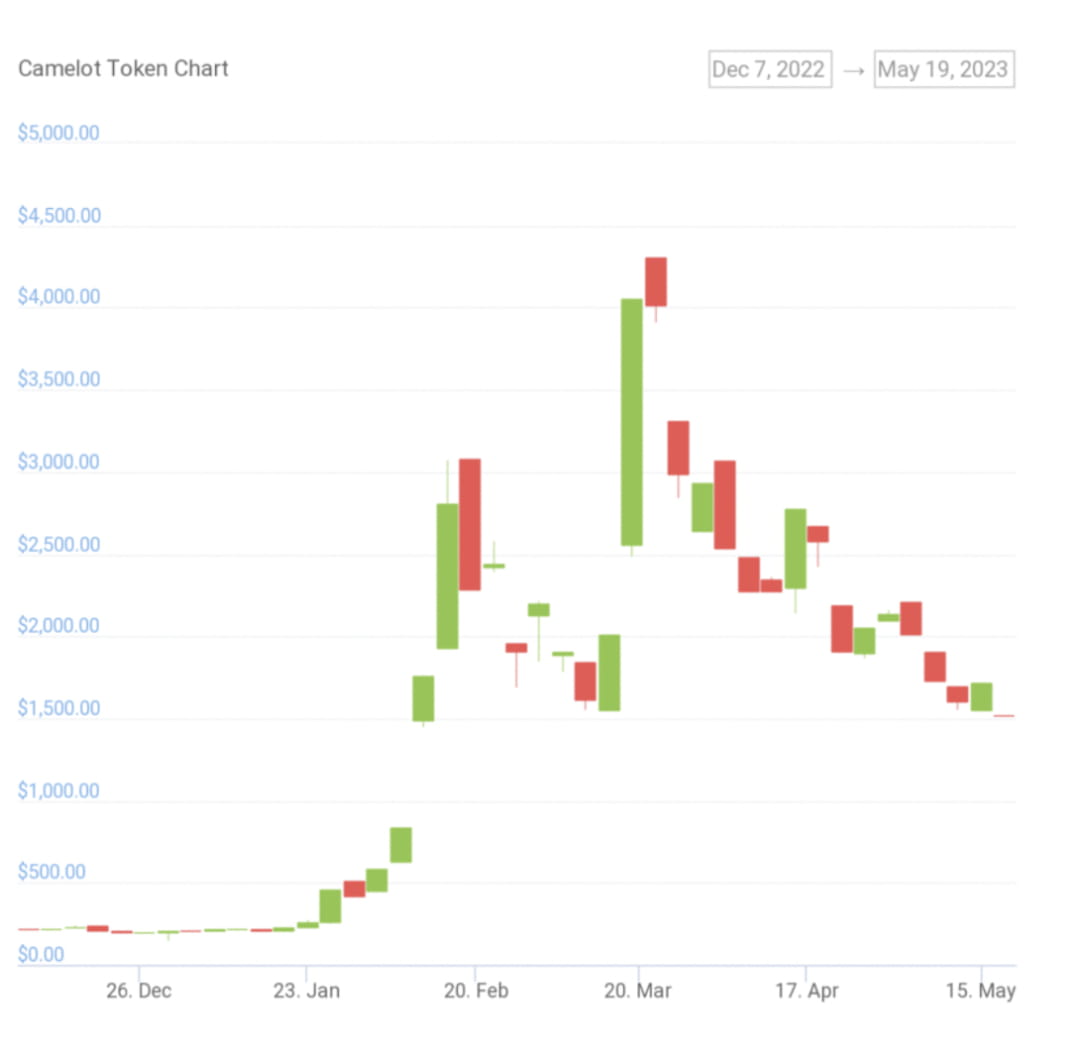
0xD956 also purchased 62 GRAIL on February 2nd for around $550 each, after previously selling 15 GRAIL for over $480, realizing ~100% from his first purchase profit.
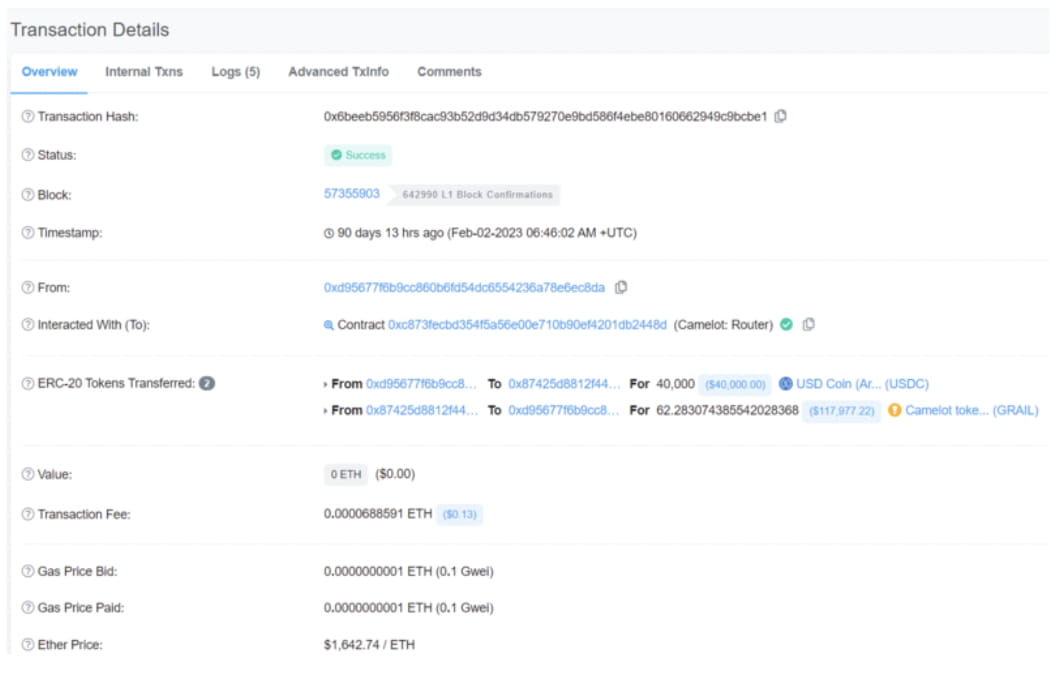
At the current value of the GRAIL token, the February purchase would have resulted in a profit of over $70,000 at this point. This is an example of a "smart" trade. This example is for illustration only. Cryptocurrencies are unstable and this is not financial advice.
social media
Social media, the internet, and peer-to-peer interactions are also great ways to find wallets that need to be tracked. An example of such a platform is Lookonchain. Lookonchain tracks “smart money” wallets and showcases their findings on their Twitter profiles. If these wallets appeal to you, you can also add them to your tracking list. Again, this is not financial advice.
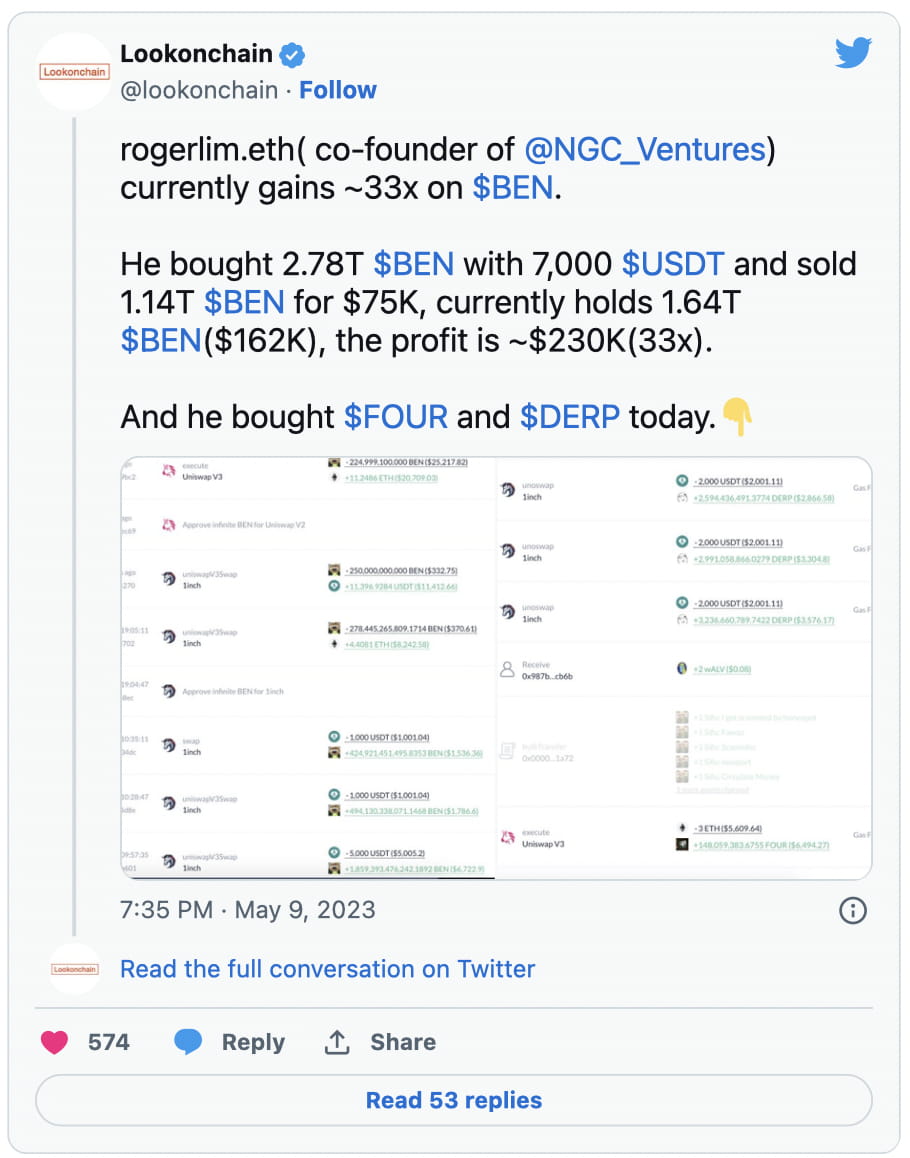
Metrics to watch when tracking your wallet
Now that you've found a smart wallet, here are a few things you should keep in mind when tracking your wallet.
trading assets
What assets are your smart investors holding, buying, or selling? Watch these for more data on how smart money investors feel about assets. If the asset is popular among smart investors, then they may believe the asset will appreciate in value in the long or short term. *Note, this is not strong data that can be relied upon and further research on the asset is recommended.
Transaction Type
Observe whether the wallets you track are buying, selling, claiming rewards, or receiving incentives from the project or other reputable institutions. Depending on why you’re tracking the wallet, this data can give you insights into financial transactions, their involvement in the project, and even more.
Trading direction
If your wallet is sending the focus asset to a centralized exchange, then they may be about to make some profits. If you are tracking multiple "smart money" investors and they are all moving in the same direction (especially if the asset's price has risen), then the most likely answer is profit taking; if the asset has underperformed, then investors May be exiting the market. If the direction is the other way around, then "smart money" investors may be buying the asset, which may be one worth further research.
Amount of the transaction
To assess an investor's belief in an asset or the impact of their trades on the overall market, the proportion of the asset in a trader's portfolio, the percentage of the asset's total supply they hold, and the allocation relative to wallet size are all Indicators worth looking at. Like 0xD956 above, a $40,000 purchase is a sign of strong conviction, especially for individual investors. Depending on GRAIL's available liquidity at the time of purchase, such a transaction could have a significant impact on the market.
Transaction frequency
Your smart money wallet might just be for day trading on a decentralized exchange. This could be market manipulation or normal day trading, but a good way to detect it is to see how often it repeats a specific trade or trading cycle. If it's buying and selling a single asset repeatedly, then the trader may be trying to profit from short-term changes in the asset's value, or simply trying to influence the market.
How to spot a scam
Scam projects try to steal the attention of investors by sending their tokens (unsolicited) to some well-known wallets and induce everyone to buy these project tokens or interact with their smart contracts. It is very important to filter out these coins when tracking smart investor wallets. Blockchain explorers attempt to label this type of token to protect investors. In situations where this information is not available, tracking transaction history is a good way to detect fraudulent coins in a wallet.
Check how the smart wallet acquired this token - were they purchased, claimed, or received from peers? Claim transactions are usually flagged on the EVM web browser; another way to identify a claim transaction is to track the transaction and verify that the investor paid a fee (claim fee) during the process. There should be many similar transactions in "Claim Wallet".
If the investor did not purchase the asset on a decentralized exchange or a centralized exchange, and it was not sent by someone else, then this is most likely a token that is being used to scam the wallet owner’s reputation. Trace the source wallet of this transaction and observe other transactions made by this wallet. Additionally, see if the smart contract’s page provides more information about the issuing project, and if so, verify all information related to the project.
Cryptocurrency Big Account Tracker
Large investors are a unique type of investor. Not only do they hold a large proportion of the assets in circulation, but they are most often considered the most informed and important group of investors. They are considered "most important" because their activities have a huge impact on the market; they are considered "most informed" because they are considered to be closer to the project team or know more about the project than most other investors. More. In addition, they are also regarded as the biggest believers in the project.
Therefore, investors try to track their dynamics and take these into account in their investment strategies. Cryptocurrency Big Trader Tracker helps investors track big traders.
Large account trackers are similar to regular wallet trackers. They also work similarly. Large account trackers connect to aggregated on-chain data via API endpoints, just like wallet trackers. However, one major difference is the information they focus on.
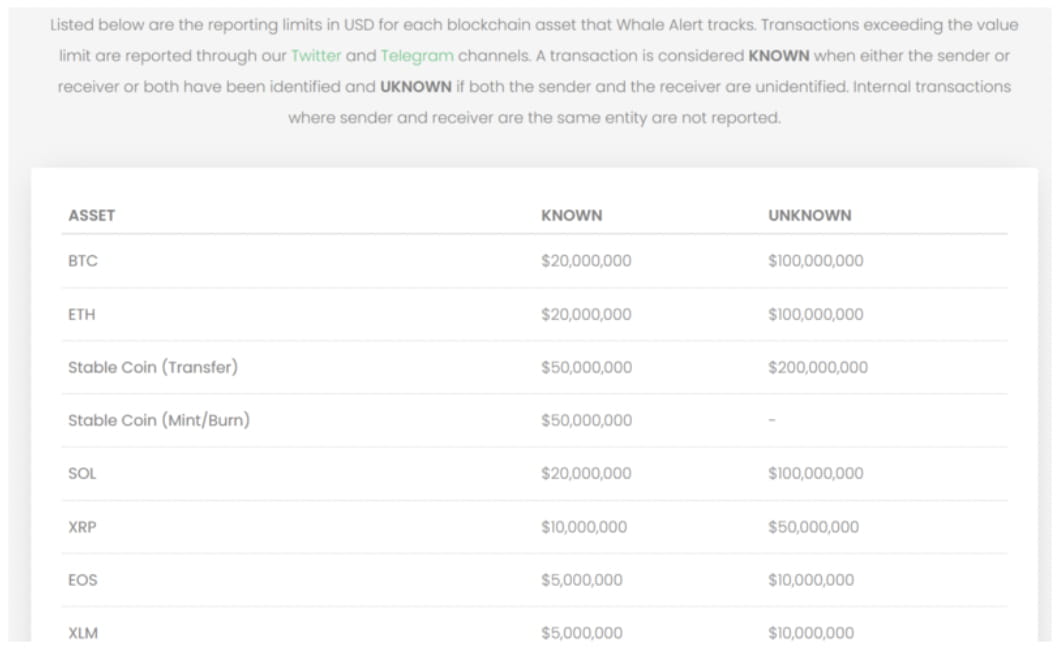
The Big Holder Tracker only focuses on significant transactions by top holders. The information presented by the Big Holder Tracker is usually high value transactions and transactions from "rich" holders. A regular wallet tracker, on the other hand, presents transaction information for the wallet selected by the user. These transactions can be high or low value and can be tracked by any wallet regardless of their position on the holder list.
An example of a large account tracker is WhaleAlert.
Portfolio Tracker
Another related investment tool is a portfolio tracker. Portfolio trackers help investors understand the development of their asset prices. Some portfolio trackers go a step further and aggregate news and additional data about the assets being tracked and make this information available to investors. Crypto portfolio trackers like CoinGecko connect to cryptocurrency exchange data sources to obtain cryptocurrency trading data from each exchange.
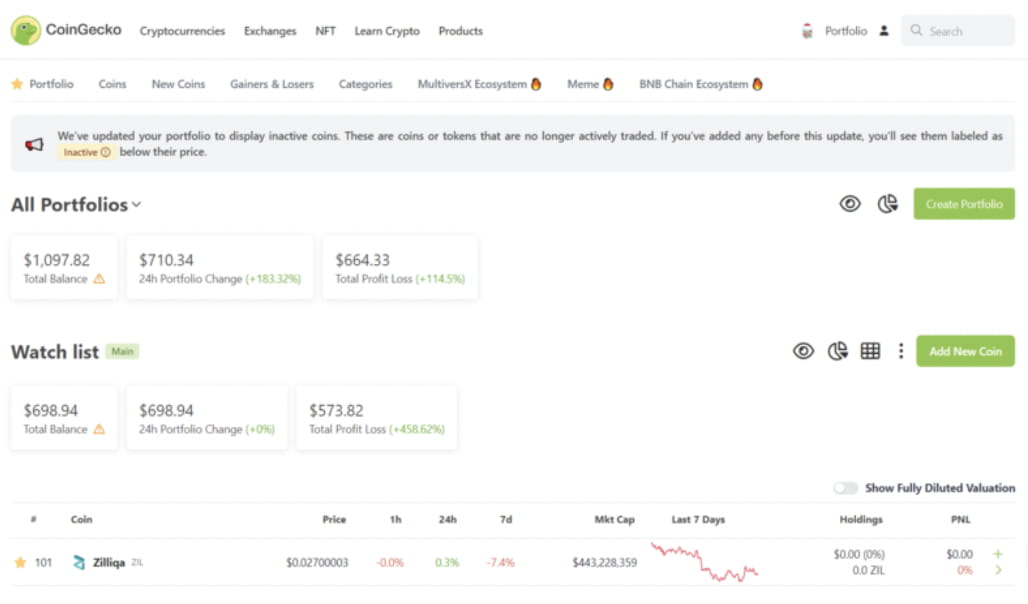
Investors can use portfolio tracking features on platforms like CoinGecko, Debank, and Nansen to bring their crypto assets into one place and make it easy to follow those assets and related developments. Portfolio Tracker can also notify investors of major price changes via push notifications or emails.
Cryptocurrency wallet trackers and portfolio trackers use similar technology, but wallet trackers focus on investor behavior, while portfolio trackers focus more on the price of an asset.
final thoughts
When investing in cryptocurrencies, always conduct your own research, and tracking wallets as part of on-chain data research can aid investment decisions. Wallet tracking may improve investors' chances of making gains, as the goal is to follow "smart" investors with a track record of success.
Tracking a wallet can be tricky, especially when investors are looking to use the data obtained to make larger-scale decisions. That’s because decisions like this require knowing not just what a wallet is holding, but how long they’ve held it or plan to hold it, and why they’re holding it.
Smart investors may view certain assets as non-profit oriented investments and therefore not be concerned with making profits. However, this means that investors tracking wallets may miss out on profit opportunities while waiting for signals from “smart” wallets. It is also possible that there are scam tokens out there that are trying to use wallet tracking to promote their tokens, by sending large amounts of these tokens to well-known wallets, thereby arousing the interest of investors who are tracking that wallet.