


Written by: @Yinan_cycle
Introduction:
PulseChain is a stateful hard fork chain of Ethereum and is the first hard fork to contain the complete state of the Ethereum blockchain, meaning it holds a record of every transaction, user account, and smart contract interaction on Ethereum. .
The platform aims to reduce computational stress on the Ethereum blockchain and create a cost-effective alternative for smart contract developers.
PulseCHain aims to increase the value of the Ethereum network by offloading some of the network load and reducing gas fees. Ethereum’s block time is 15 seconds. However, PulseChain’s block time is 12 seconds, which officials say makes it faster and more scalable.
PulseChain uses Parlia’s fork of the Binance Smart Chain (BSC) proof-of-stake (PoS) consensus mechanism. However, the project has moved to a new Proof-of-Stake Authority (PoSA) consensus model that introduces native validator staking, rotation, and reward reduction contracts.
As of publication, PulseChain has 15,893 verification nodes in the entire network. Anyone can become a validator by staking 32,000,000 native PLS tokens. Validators earn a portion of transaction fees from the entire network.
Pulsechain completed testing of the V3 and V4 versions earlier this year and launched the official version on May 14.
team:
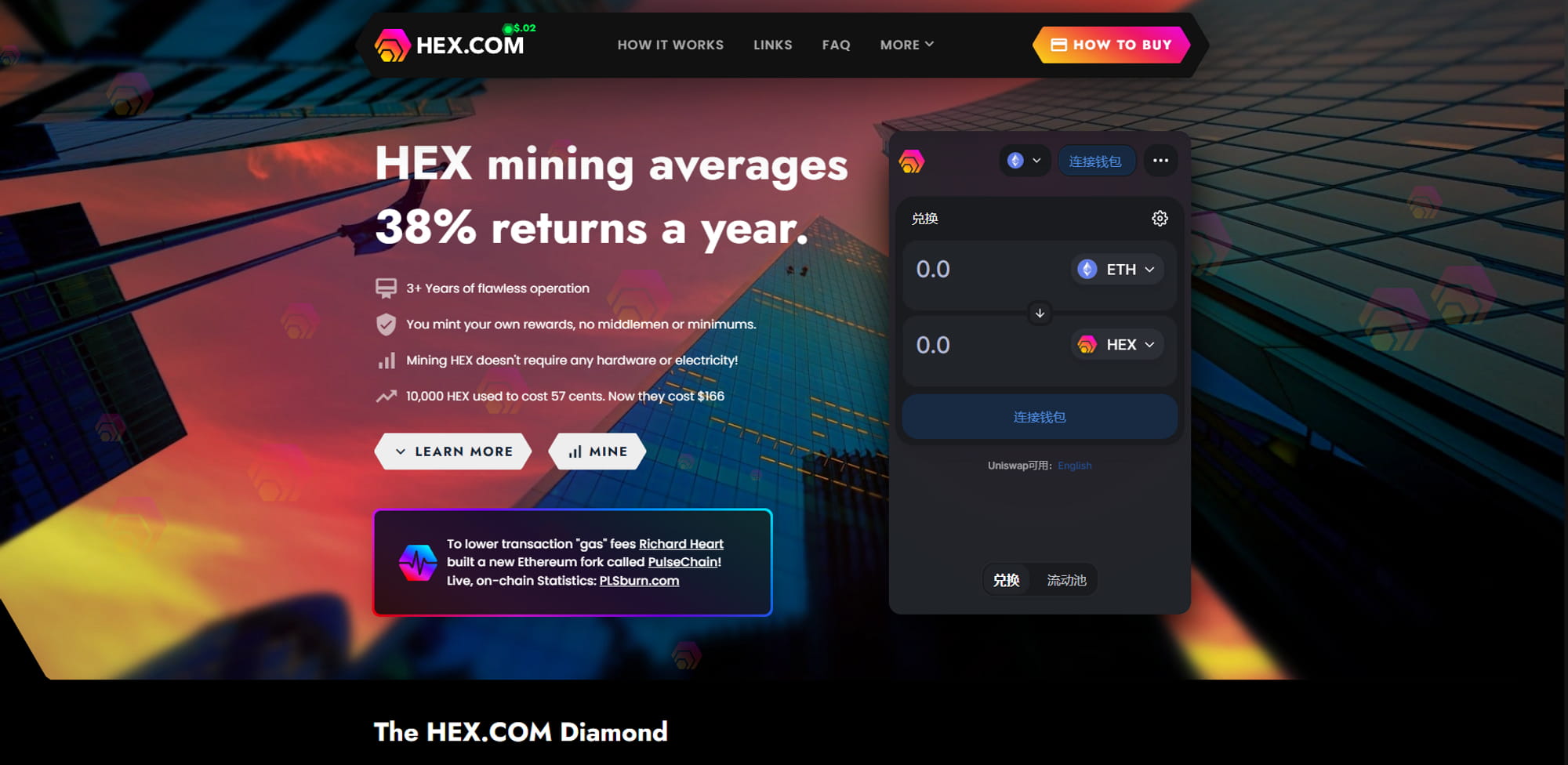
The founder of PulseChain is Richard Heart, who is also the founder of HEX.
RH is an American cryptocurrency entrepreneur. Back in 2015, when Ethereum raised funds through crowdfunding, Richard Heart became one of the first large-scale investors.
He has hundreds of thousands of fans on Twitter and Youtube, and everyone has mixed reviews about him. While he has a large number of loyal fans, there are also a large number of people who think that the projects he is working on are completely Ponzi schemes, and they are not optimistic about him. Scoff.
HEX tokens allow holders to earn annualized returns of up to nearly 40% by locking their tokens. The project raised US$60 million on the first day of its issuance, setting a record for blockchain token issuance at that time. From 2019 to 21, HEX's highest increase reached 10,000 times in 3 years, which made Richard Heart even more Become famous.
RH is also a very good marketer. He previously bought a 555.55-gram black diamond with 55 facets to symbolize the maximum staking period of HEX of 5555 days, and named it "The HEX.COM Diamond", and Sponsored the Daytona 500 race in which JJ Yeley, one of the Triple Crown champions, participated.

HEX:
HEX claims to be the world’s first high-interest blockchain certificate of deposit, promising substantial ROI returns to those who join early. A blockchain project by Richard Heart that distributes HEX to Bitcoin holders in the form of a snapshot of the Bitcoin UTXO set that appeared at block height 606227 on December 2, 2019.
The initial allocation of HEX to Bitcoin holders is 10,000 HEX per 1 BTC. Bitcoin holders can only claim HEX within the first year of issuance. During this period, you can also donate ETH to obtain HEX by interacting with the HEX smart contract.
At the end of the first year of issuance, all HEX coins not claimed by Bitcoin holders will be distributed to other HEX users with active interests. After the first year of launch, HEX is designed to have a maximum annual inflation rate of 3.69%.
Holders of HEX can stake their tokens for a period of time (1-5555 days) and receive the principal and interest on their investment when the specified period is reached. Users who hold HEX and pledge will encounter inflation. If they end their pledge early before the set lock-up period, half of the income will be deducted as a penalty.
For example, at an inflation rate of 3.69% and the staking rate is 10%, the pledger's annualized return on staking is 36.9%. HEX has an OA address that holds 90% of the total token supply. People in the community say that this address has never sold a single token in the past three years, and HEX has never been hacked.
In addition, the project has also designed a promotion reward mechanism. Users who come through referrals will receive a 10% reward, and recommenders will receive a 20% reward. XEN, which was later launched by JACK, was also inspired by many HEXs.
airdrop:
The PulseChain airdrop will begin when the PulseChain blockchain is launched. Anyone with an Ethereum token balance in a non-custodial wallet will receive a 1:1 balance of PLS tokens without having to perform any action, giving users access to all Ethereum tokens on PulseChain. Any ETH held in non-custodial wallets will be replaced by PLS balances. However, all ERC-20 tokens will retain their original names.
But this airdrop has almost no value and is more of a gimmick, because the price of PLS at this time is three zeros after the decimal point, and the 1:1 exchange is almost negligible.
mechanism:
Almost all projects on the Pulse network are launched through Sacrifice activities, which is a donation mechanism. There is no upper limit for donations. The token distribution will determine the distribution of corresponding tokens based on the donation amount.
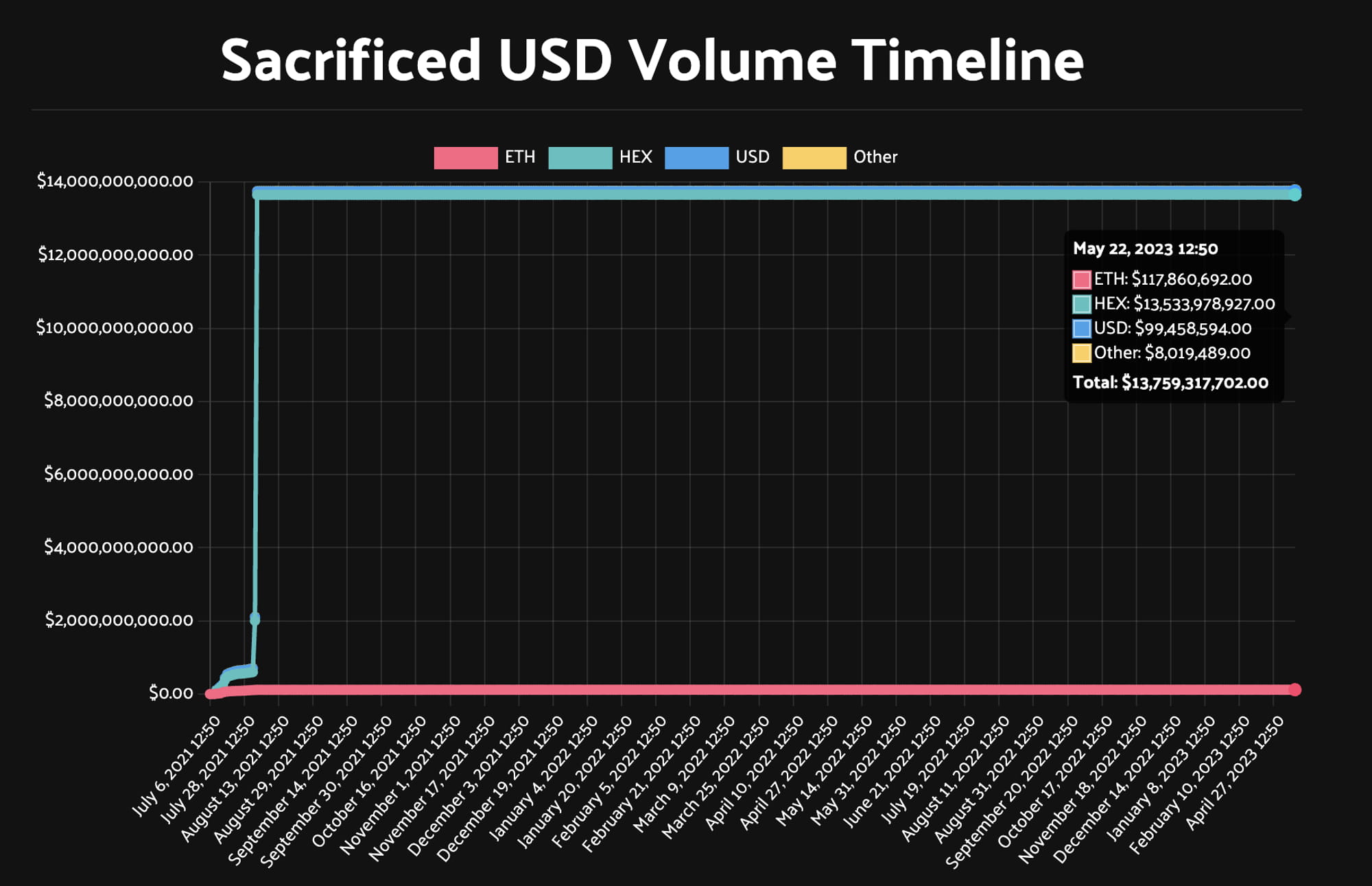
When the initial donation was made, the $PLS community donated $670 million, and the $PLSX community donated $1 billion. At the end of the donation period, OA Wallet (HEX's genesis wallet, generally considered RH's wallet in the HEX community) donated approximately US$13 billion and US$54 billion to the two projects respectively.
Token Economics:
PLS is the native token of PulseChain and serves as the token of the payment network GAS. It uses the PRC-20 token standard, which is a variant of the Ethereum ERC-20 standard.
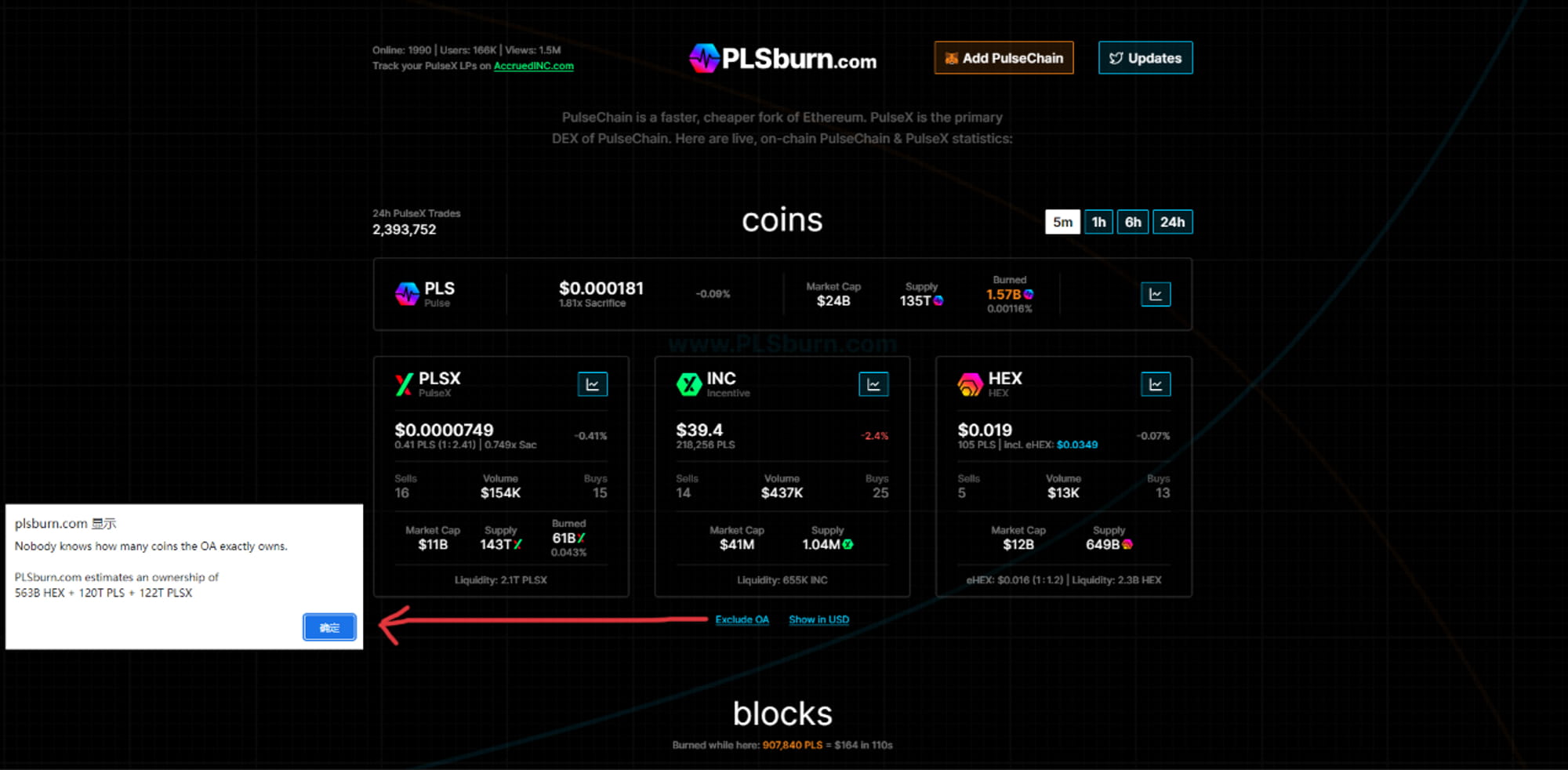
Total amount of tokens: 135T The OA address holds more than 90% of the tokens (the largest HEX address holds) and theoretically does not participate in market circulation. People in the community are relatively confident in this, while people outside the field think this will be a sword of Damocles.
PulseChain validators receive 75% of all PLS tokens generated from transaction fees. The remaining 25% is burned, reducing the circulating supply. Additionally, PLS tokens will be used for community governance and on-chain voting when the final stages of the project roadmap are completed.
PLSX token is the platform token of PulseX exchange and is used for discounted fee payment and trader incentive mechanism. Token holders can receive benefits such as PLS airdrops and transaction fee reductions. PLSX tokens also have certain fee consumption properties. 21% of PulseX fees will be used to purchase and then burn Plsx tokens.
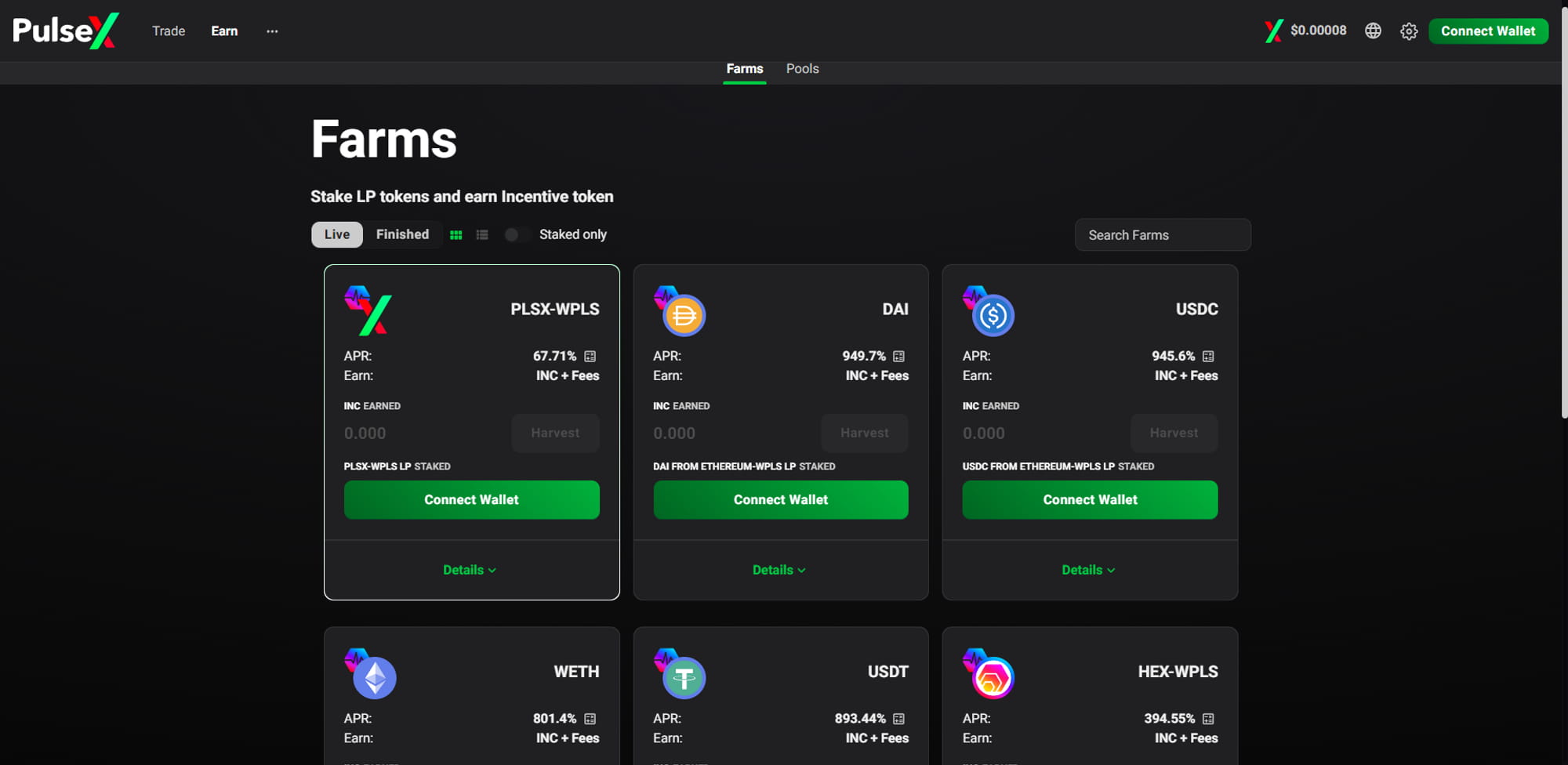
INC tokens are reward tokens for staking mining and are obtained by staking LP.
Project ecology:
PulseX:
It is the official DeFi token exchange platform of PulseChain. It is a fork version of Uniswap. It will provide network participants with access to Defi features such as AMMs, liquidity pools, and liquidity mining.
Liquid Loans:
It is the largest third-party team on PulseChain and is committed to developing its native over-collateralized stablecoin for Pulsechain. Its community has donated nearly 50 million US dollars and has nearly 10,000 participating wallets. Users can stake $PLS and lend out the interest-free stablecoin $USDL. In addition, $LOAN tokens will be issued to reward stable pool pledgers. Liquid Loans is a fork of the LiquityProtocol protocol on Ethereum.
Powercity:
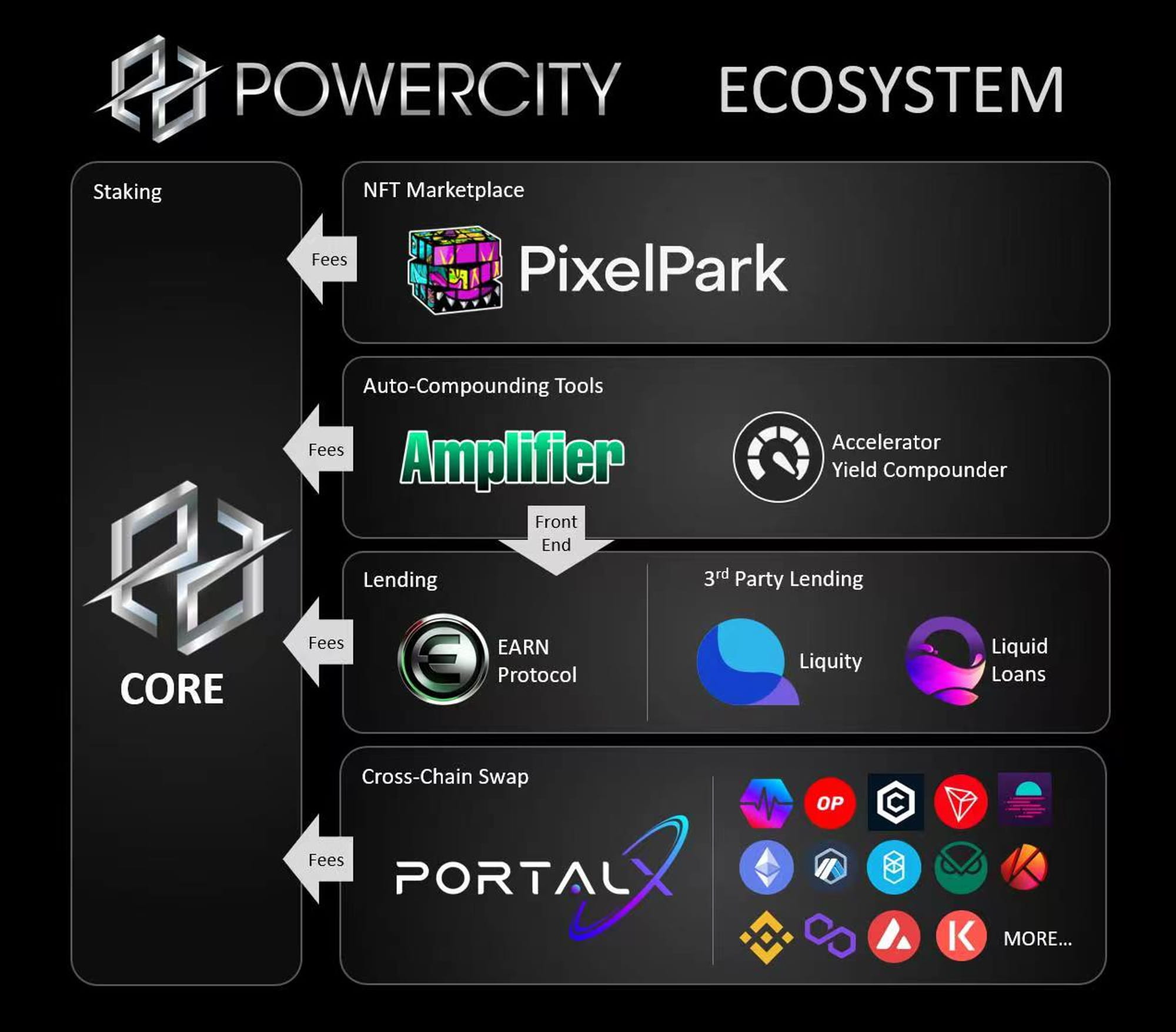
is a group of loyal followers of RH. It is a complex small ecological combination, and its sub-projects cover: pledge, cross-chain bridge, lending, NFT exchange, etc.
Ph series—Phiat, Phamous, Phux, Phatty:
Phiat is a fork of the AAVE V2 version, an on-chain bank that can mortgage and lend against a variety of tokens. The purpose is to provide leverage, short selling and hedging tools for RH tokens.
Phamous is the fork of GMX on PulseChain, a perpetual contract exchange that can conduct long and short positions on tokens with high liquidity on the Pulse chain.
Phux is a fork of Balancer V2, aiming to create an exchange focused on stablecoin exchange and multi-currency liquidity pool indexing. These liquidity pools can be composed of up to 8 tokens.
Phatty is a wallet aggregator similar to Debank, which can better display the assets on the chain, especially the assets on the PulseChain chain. It can not only display the spot holdings, but also the pledged shares.
Summarize:
At present, the entire PulseChain ecosystem is still led by Richard Heart and the HEX community. Most of the ecological projects are also leading projects on Fork Ethereum. Currently, there are not a few introductory articles and audiences on Crypto Twitter. The community promotion is mainly promoted by the Pulse community. Mainly, there are currently no VCs involved in the entire ecological project, and funds are mainly raised through the community. However, one thing to say is that community members still have money. The $PLSX community alone raised 1 billion US dollars, and finally raised a total of 55.4 billion. US dollars, of course, many donations are in the form of HEX.
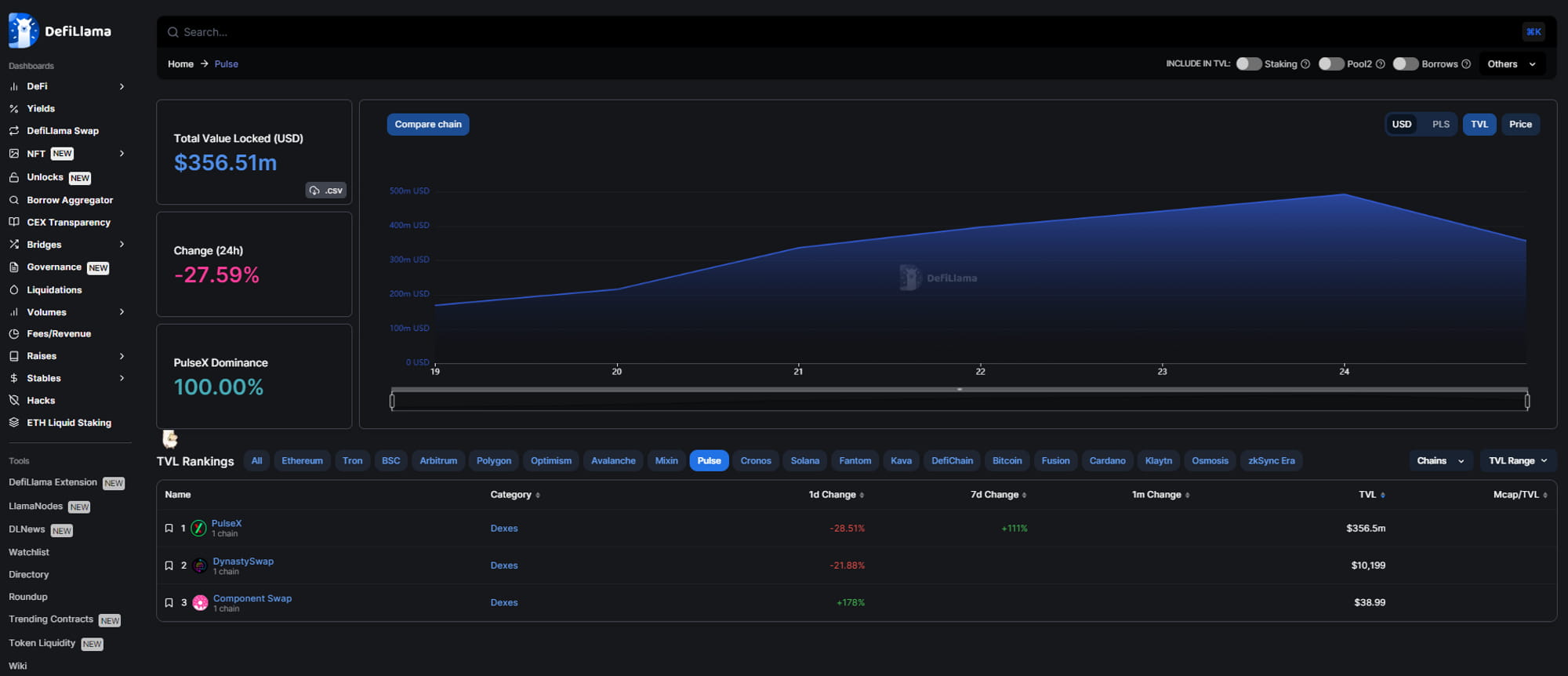
In terms of data, a few days after the mainnet was launched, Pulse’s total TVL on Defillama reached nearly 500 million US dollars, and the public chain ranked 8th, surpassing Solana, There are many public chains such as FTM, but there are only a few ecological projects. Almost all of the TVL comes from PulseX, and the PLSX-WPLS trading pair accounts for more than 40%. Today, 5/25, TVL has begun to decline. It reflects that some funds are being withdrawn. In terms of market, on May 23rd, OKX announced the listing of PLS and officially opened the PLS/USDT trading pair on the 24th. Before that, to purchase PLS, you need to transfer funds to Pulse to buy it, and you need to buy it off-site first. Click PLS as Gas fee. In terms of community, there is currently only one official Telegram group, and other channels such as document blogs have not been seen. The official Twitter updates are less frequent, while the founder RH updates more frequently.
Finally, everyone will have a different judgment on whether it is a risk or an opportunity in a place with few people. The current situation of Pulse is as mentioned above. If you want to participate, you can conduct a more in-depth analysis and investigation on your own.