


After Taproot, BTC holders no longer need wBTC for DeFi
DeFi is even more dominant on the Ethereum network, the leading smart contract platform and the second-largest blockchain by market capitalization. Ethereum has benefited from a first-mover advantage in the space, becoming the first public network to support decentralized applications since 2015.
However, it is increasingly challenged by emerging blockchains such as Solana, Avalanche, Cardano, Polkadot and others. Bitcoin, the flagship blockchain network designed to enable peer-to-peer online transactions, must receive more frequent attention in this discussion.
However, Bitcoin network developers have recently discovered ways to extend the network’s capabilities beyond payments and can now launch DeFi applications native to the Bitcoin ecosystem.
DeFi on Bitcoin launched in November 2021 thanks to the successful implementation of the Taproot upgrade, which enabled more powerful capabilities in complex scripts.
What is DeFi on Bitcoin?
Thanks to Taproot, Bitcoin can now support decentralized applications, making it a viable alternative to Ethereum for developers looking to launch dApps.
Before DeFi applications were launched on the Bitcoin network, BTC holders could convert their holdings into wrapped versions on other blockchains. The most popular asset (ERC-20 token) on the Ethereum network is the wrapped BTC (wBTC) asset.
wBTC allows BTC holders to participate in Ethereum-based DeFi protocols by locking their assets in smart contracts and receiving equal amounts (i.e. a 1:1 ratio) in derivative assets. Users can then save, borrow and earn passive income on these platforms using yield farming. However, converting to other assets has become obsolete since the launch of Bitcoin-based DeFi platforms, and investors can now use BTC tokens natively on these Bitcoin-based DeFi platforms.
How does DeFi on Bitcoin work?
The most common way DeFi interacts with Bitcoin is through the use of wrapped versions of BTC on non-Bitcoin blockchains. With wBTC, investors send BTC coins to a custodian, who stores them and returns wBTC in the same proportion.
For example, if you send one BTC, you will receive one wBTC in return. Wrapped tokens can be used in Ethereum-based DeFi protocols such as Curve, Balancer or AAVE.
You send back your wBTC tokens to exchange for your BTC, and the custodian (smart contract) will return your tokens to you.
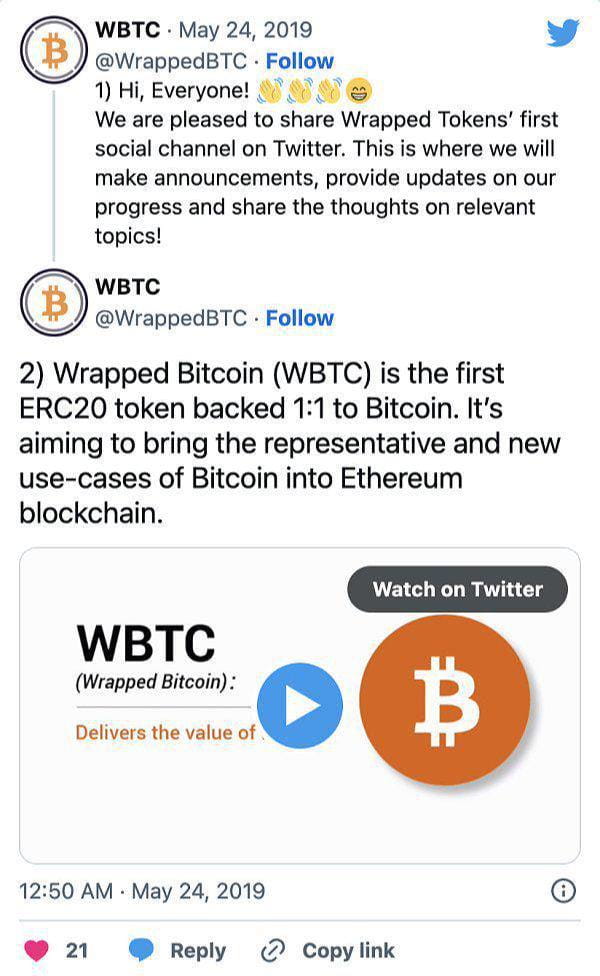
2) Wrapped Bitcoin (WBTC) is the first ERC20 token to support Bitcoin at 1:1. It aims to bring Bitcoin representation and new use cases to the Ethereum blockchain.
With the release of the Bitcoin Taproot upgrade, DeFi is now available on Bitcoin, with one exception. Smart contracts are not supported by the native Bitcoin blockchain, which continues to use a limited scripting programming language. Taproot introduces advanced features only possible with Layer 2 scaling solutions and sidechains.
Sidechains and Layer 2 protocols host dApps in various markets such as DeFi, non-fungible tokens, and the gamefi ecosystem.
Three prominent companies building DeFi solutions on Bitcoin
1. Bitcoin DeFi built on Stacks
**Stacks, like Bitcoin, is an independent layer of blockchain. **Stacks and the Bitcoin network are connected through a process called Proof of Transfer. Miners must send Bitcoins to the Bitcoin network to mine Stacks. Network transactions for multiple Stacks can correspond to one Bitcoin network transaction.
A variety of DeFi applications are possible on the Stacks blockchain, from “stacking” Stacks tokens to earn Bitcoin rewards to exploring decentralized applications that offer familiar DeFi strategies like staking and yield farming.
2. Bitcoin DeFi built on Rootstock
The RSK blockchain operates as a sidechain of the Bitcoin blockchain, and its utility token is Smart Bitcoin (RBTC). On the RSK blockchain, RBTC is used to pay smart contract fees, just like ETH is used to pay fees on the Ethereum blockchain.
**The price of RBTC is pegged 1:1 to the cost of Bitcoin. **Since the RSK blockchain is a side chain of Bitcoin, there is a two-way peg between RBTC and BTC, and the two assets can be transferred back and forth between the two blockchain networks and are interchangeable.
3. Bitcoin DeFi is built on Mintlayer
Mintlayer is a Layer 2 scalability solution for Bitcoin, supporting smart contracts such as DeFi, NFTs, and DEXs. Think of it as an Ethereum competitor with the security of Bitcoin.
**It is designed to provide long-term infrastructure for DeFi development and deployment on Bitcoin and Lightning Network. **This is a Layer 2 payment protocol designed to enable micropayments on the flagship blockchain.
Mintlayer, like Ethereum, is a platform where developers can launch their dApps, unlocking and scaling Bitcoin’s full potential. This solves all three problems DeFi faces on Bitcoin.
WBTC token
Wrapped Bitcoin was released on October 26, 2018 and went live on January 31, 2019. The Wrapped Tokens project (of which WBTC is a part) was created through a collaboration of three organizations: BitGo, Kyber Network, and Ren.
Wrapped Bitcoin is a tokenized Bitcoin that runs on the Ethereum blockchain.
WBTC complies with the Ethereum blockchain’s basic compatibility standard ERC-20. It enables it to fully integrate into the latter’s ecosystem of decentralized exchanges, crypto lending services, prediction markets, and other ERC-20-enabled DeFi applications.
Benefits of WBTC
Faster transaction speed
Wrapped Bitcoin does not run on the Bitcoin network. Therefore, their block speeds and network speeds are based on the Ethereum blockchain and not Bitcoin. Ethereum takes less time to verify blocks to be added to the blockchain, so transactions on the network are faster.
In this way, WBTC helps its holders conduct transactions faster than real Bitcoin.
low cost
**Ethereum has lower transaction fees than Bitcoin to encourage developers to use the network. **Hence, WBTC holders can trade at a cheaper price than those holding BTC.
For example, if a user plans to make multiple fund transfers, they would prefer to use WBTC since they will pay a fee for each transaction. The fee difference is due to Bitcoin’s congestion level. Transactions on the Bitcoin network are blocked, resulting in higher fees for clearing blocks, while Ethereum's clearing rate is faster.
interoperability
**WBTC provides the opportunity to quickly transfer personal crypto assets between blockchains. **Interoperability issues have been a daunting recurring issue for crypto users, especially those in the DeFi space.
However, wrapped cryptocurrencies including WBTC are a viable solution to this problem through their interoperability. This feature means using
There’s no need to sell part of your Bitcoin holdings to access DeFi services on Ethereum. At any time, they can withdraw their tokens if they wish, even after “exchanging” them for Ethereum tokens.
What makes Bitcoin and DeFi different?
The difference between Bitcoin and DeFi is best explained by comparing email to the internet.
When the Internet first opened to the public, it only allowed the use of email. People think of the Internet as using this lightning-fast technology to communicate with each other.
However, as Internet technology developed and spread over the next few years, everyone realized that it was not just limited to email, but a whole new world of endless possibilities.
Likewise, it was great when the blockchain world only focused on Bitcoin. It's very popular. It enables them to make money anonymously on their own in P2P transfers. However, it took us less than a decade to discover the true potential of this technology.
It’s not just a feature that makes blockchain payments faster and cheaper. It is a complete system where you can do anything that requires money. It frees people from banks and financial institutions.
What brings Bitcoin and DeFi together?
The underlying technology, blockchain, connects Bitcoin and DeFi. Despite the differences, it is important to remember that Bitcoin is different from DeFi. It should be considered an integral part of the broader decentralized financial system.
People can only use real-world money to perform some special DeFi-enabled operations.
Because paper or fiat currencies, such as dollars or euros, involve banks and centralized organizations, they directly violate DeFi principles. Therefore, Bitcoin and other crypto tokens – digital stores of value – can be used as governance currencies in the DeFi world.
Why do we need DeFi on Bitcoin?
The flagship cryptocurrency is primarily used as a store of value and, to a lesser extent, a payment method. By allowing DeFi, Bitcoin increases its utility while attracting a wider user base.
However, decentralized finance requires the security and assurance that Bitcoin has, which is what most DeFi investors and users value. Sometimes, DeFi protocols lose user funds to hackers, resulting in a loss of trust.
DeFi on Bitcoin solves these problems while increasing the credibility of various solutions, making them more attractive to potential developers and investors.
Challenges facing DeFi on Bitcoin
DeFi on Bitcoin faces three major challenges, namely:
Scalability
compatibility
Safety
Bitcoin is currently one of the slowest blockchains on the market with a processing speed of around 7 TPS. Ethereum can handle around 12-15 TPS while Cardano and Polkadot can handle up to 1000 TPS. For those looking for a hosting network for their DeFi platform Scalability is an important consideration for developers, and Bitcoin's data needs to be better compared.
Bitcoin's current implementation may be more scalable due to the limited scripting language. In contrast, its competitors, such as Ethereum, are built from the ground up to be composable.
As a result, DeFi developers tend to look to Bitcoin’s competitors as their preferred protocols for launching applications. These protocols make development easier as they provide access to a wide range of easily compatible assets, are free to use and adhere to various internal coding standards.
**Although these second-layer blockchains rely on Bitcoin’s proven security infrastructure, they pose security risks similar to those faced by other dApps and dApp platforms on Bitcoin’s competitor networks. **Smart contract vulnerabilities are a significant risk that every investor faces and developers must consider before interacting with one.
Most DeFi platforms and applications on the Bitcoin network are new, which means they have not yet been fully tested, iterated, and improved to ensure the security of the assets they manage.
Bitcoin Layer 2
It all starts with ordinal numbers. Ordinals are a way of placing NFTs on Bitcoin. This story started a few weeks ago with Bitcoin punks taking over.
Many funds are trying to gain exposure to it and this trend is expected to continue. Yuga Labs also announced the release of an Ordinal series.
Because STX was intended to be a layer on top of Bitcoin and be regulated, the BTC layer narrative was born.
Badger announces LSD-backed Bitcoin. LSD-backed Bitcoin would be called eBTC. It would be backed by liquid-collateralized ETH and denominated in BTC, similar to how DAI is backed by many assets but denominated in USD.
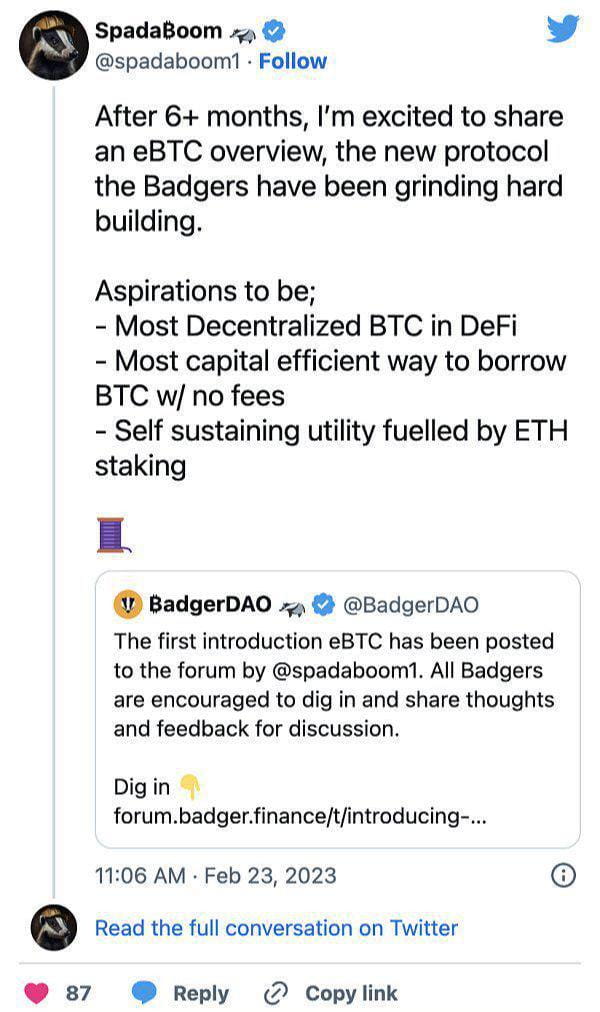
Over 6 months later, I’m excited to share an overview of eBTC, the new protocol the Badgers have been working hard to build. Aim high;
The most decentralized BTC in DeFi
The most capital efficient way to borrow BTC with no fees
Self-sustaining utility driven by ETH staking
Projects with outstanding potential
In addition to Ordinals and LSD-backed Bitcoin, there are several projects worth mentioning, such as:
Bitcoin network and Ren
Ren Protocol (formerly Republic Protocol) was founded in 2017 and focuses on trustless OTC trading. OTC brothers can understand P2P transactions and do not affect the market price of trading tokens.
However, Ren Protocol changed its name and got its name today. The goal is to focus on developing interoperability, a platform that allows you to securely trade tokens between different blockchains. Untrustworthy and decentralized.
The project launched its mainnet in May 2020, allowing BTC, Bitcoin Cash, and Zcash to be converted to the ERC 20 network through the Wrapped and Ren virtual machine mechanisms.
ZeroDAO
ZeroDAO is a messaging protocol that connects assets such as Bitcoin/Zcash and Ethereum.
To integrate the Ethereum ecosystem with the Bitcoin layer, you need a reliable way to transfer assets from Bitcoin to Ethereum. ZeroDAO was previously based on Ren technology.
Now that Ren has been discontinued, ZeroDAO is being developed from scratch and will go live soon (Zero Layer Network).
There are no tokens in ZeroDAO. There will be a way to earn roles in their Discord to provide incentives on ZeroDAO. You can tell them about the BTC-Fi story by assisting them with community service.
Overall, BTC-Fi is used to build a variety of things. Like it or not, it's happening. If we pay attention, this may lead to new opportunities.
in conclusion
There is a constant need for innovation to overcome barriers or challenges that hinder its widespread adoption. One of these innovations is wrapped cryptocurrency.
Bitcoin is the most secure open network and one of the most well-known and trusted. As a result, it is becoming increasingly attractive to DeFi developers and investors.
However, as the Bitcoin DeFi space grows, it remains to be seen whether it will become popular enough to replace Ethereum as the dApp deployment platform of choice.
Overall, BTCFi is used to build a variety of things. Like it or not, it's happening. If we focus on these projects, this could lead to new opportunities.