

Written by: Qiu Chuji
Arrived as promised.
Tonight (May 18), Sequoia Global Managing Partner, Sequoia China Founding and Managing Partner Shen Napeng had a fireside chat with Starbucks founder Howard Schultz.
This is a rare opportunity to see them in the same frame: one is an investor who aspires to be the world's number one, and the other is a world-renowned business leader. The companies behind them have a history of more than half a century and have successfully survived several dark moments and economic cycles.
In this conversation that lasted for nearly an hour, Shen Nanpeng and Howard Schultz shared their latest thoughts on innovation and entrepreneurship, bit by bit.
The following is a transcript of the conversation, in its original form:
A story about starting a business: 242 investors rejected me
Shen Nanpeng: Today, Starbucks is one of the most praised and most loved brands in the world. We all know that when you guys started out, Starbucks was just a small store in Seattle roasting and selling whole bags of coffee beans. Nowadays, Starbucks has become one of the most famous brands in the world, with countless users. Can you tell us the story of your origins? What made you choose coffee as your passion?
Howard Schultz: I grew up in New York City, and after I got married in 1982, my wife and I moved to Seattle, Washington. At that time, there was already a Starbucks in Pike Place Market, which only sold whole bags of roasted coffee beans, but no coffee drinks.
In 1983, I went to Italy for the first time. I had never been to Europe before. I walked the streets of Milan and took the train to Verona. I was fascinated by the Italian cafes. There were hundreds of cafes throughout Italy at that time. You could basically walk a block without encountering a small cafe. When I walked into these shops and drank an espresso, I was deeply moved by its romantic charm and friendly sense of community.
So I immediately returned to the United States with an idea. I wanted to transform Starbucks from a company that only sold whole bags of coffee beans to a company that recommended and sold coffee drinks such as lattes and cappuccinos to American customers. At that time, I had no funds, and I had to convince American investors to provide me with some venture capital to expand Starbucks' business. However, 242 investors and investment institutions rejected me. They said that no one wanted to spend $2-3 on a cup of Italian coffee that they couldn't pronounce.
At that time, in addition to coffee, I had another idea. Because I grew up in a very poor family and had no medical insurance, I wanted to create a company that could provide medical insurance and equity to all partners. Therefore, I not only told investors to invest in this company, but I also told them that I would give part of the equity to our partners and provide them with medical insurance. In a sense, this would "dilute" part of their investment, but I did not think it was "dilution". It was a value-added investment.
I wanted to help our partners reduce turnover, improve performance, and build their sense of ownership. Later, I finally got some investment. In 1987, we had 11 stores and 100 partners, and we also had a dream - to build a different company, a company that can be profitable and socially responsible, a company that can create well-being for the people in our community with conscience. This is the cornerstone of my business creation, and the entrepreneurial journey began.
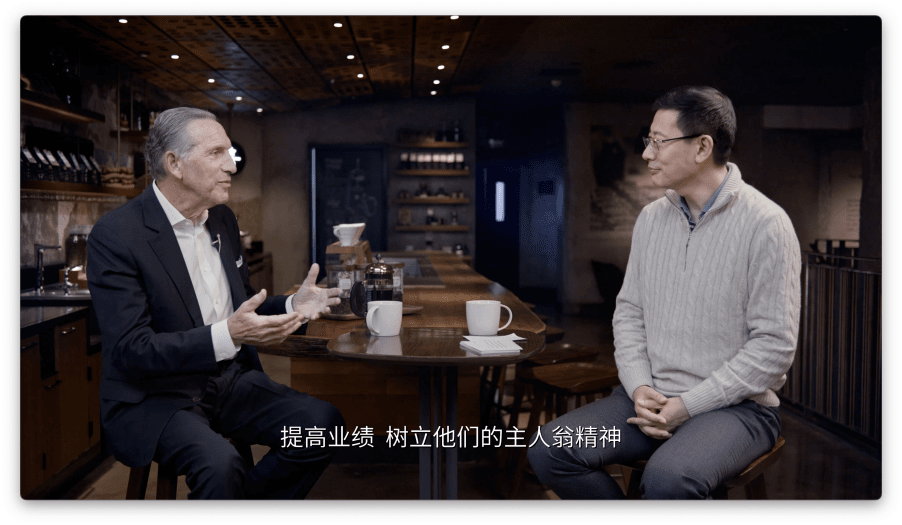
Shen Nanpeng: Let’s talk about the biggest challenge you encountered in the first store in Seattle at the beginning.
Howard Schultz: During the 2008 financial crisis, Starbucks was in a very, very difficult situation. For the first time in history, we had to close stores and lay off employees. I called a company-wide meeting and I cried because I knew we had to make this important decision for the future of Starbucks, but it would have a very negative impact on many people.
It was a tragic time for us, and there were a few other things that happened during that time, because the catastrophic financial crisis was so bad that we were in financial trouble, like a lot of other companies. We were a public company at that time.
An institutional shareholder called me, and I knew him well, and he said to me, "Howard, now is the best time for you to cut partner health insurance." However, Starbucks' culture, values, and code of conduct are the cornerstones of our success. If I cut partner health insurance at that time, we would undermine the most important cornerstone of building this company, which is trust, trust with partners, and honesty, so I refused. Then he told me that when the equity market value report comes out next quarter, you will see that we will cut our investment to almost zero because you are unwilling to cut partner health insurance.
Later, in the next quarter, almost half of the shareholder value evaporated, but I think I made the right decision. This decision was very difficult, but even so we could not cut the medical insurance of our partners. This is just an example of being true to your values, sticking to your core will, and sticking to your original intention of starting a business. Profitability is not the only goal of our business, but it reflects our values and the value of development.
Shen Nanpeng: It is not easy to make this decision at the most difficult time.
Howard Schultz: It was not easy, and I was very isolated and helpless. It is easy to be a leader in good times. However, true leadership requires making difficult decisions in bad times.
Howard Schultz: You are a highly respected investor in both China and the U.S. When you invest, what qualities do you value most in entrepreneurs?
Shen Nanpeng: Frankly speaking, I am also thinking about this issue, because I need to learn from success as well as failure. Like you said, like Starbucks, founders need to be passionate about their business. Secondly, he must be fully prepared for it.
Let me give you an example. One of our member companies was founded by a Chinese who lived in Australia. He opened a few small coffee shops in Australia, but soon discovered a very pressing problem: his customers were all over the world, and people used different payment methods - cash, credit cards, and debit cards from all over the world. So he decided not to run coffee shops anymore, but to create a modern payment system company to solve this problem. He was very passionate about this. Although he had never worked in financial services, he was able to get started quickly because he had worked in the IT department of Morgan Stanley and had a computer science background. So, if you are passionate about a career, you need to be prepared for it.
This shows from another perspective that entrepreneurs set up a company not just to make money or build a certain market value, but to continuously meet people's real but unfulfilled needs. This is the fundamental vision for a company to be evergreen.
Starbucks' secret: never fight a "defensive battle"
Shen Nanpeng: Let's talk about the Chinese market. You entered the Chinese market in 1999. China has a very profound tea culture, but there was almost no coffee culture at that time. What gave you the confidence to engage in such a grand undertaking in China and create a lifestyle that people love like you did in other markets around the world?
Howard Schultz: Starbucks now has stores in 85 countries and regions around the world. We have different languages, different histories, different religions, different cultures and politics, but what can break all these differences? That is what we have learned, which is also the answer to your question. These differences are secondary. The first and most important thing is that we have a common human consciousness and universal values of mankind.
When we ask young Chinese people what do they hope for? What do they want to achieve? It has been 30 years since I first came to China. During this period, whether it is my colleagues working in Starbucks or other people I have met, they say: I want to create opportunities for myself, I want to make my parents, grandparents and family proud. I want to work for a company that can make me feel satisfied and fulfilled when I go home at night, and what I do makes me feel fulfilled and proud. This answer is the same answer I get all over the world.
When I think about Chinese customers, who had no idea about coffee at the time, our strategy was to be a pioneer and popularize coffee knowledge and culture in this market. However, the real opportunity is that we created a store experience in which we exceeded the expectations of our partners, and thus they exceeded the expectations of customers.
Even though customers knew almost nothing about coffee when we first opened stores in China in 1999, they would realize that this is a place I want to visit again, that I want to share this experience with my friends, that it brings me joy, that it is full of friendliness and love. So from the beginning, we created the Starbucks experience, providing a place to taste coffee, bringing a sense of community, and creating a third space for customers outside of their homes and workplaces, a place they want to go. Later, our stores became an extension of our customers' homes and offices, so we started to talk about other topics, some of the initiatives that have been successful in other markets around the world. This is not marketing or public relations, we use the aroma of coffee to prove that it is delicious. At the same time, we also bring different customized flavors to local customers.
Today we have more than 6,000 stores in 240 cities in China. When I came to China in 1999, just like when I tried to raise funds in 1987, no one in the United States or China believed that we could achieve such great success here. The main thread running through this success is humanistic feelings. Everyone wants to get the same things, to be respected, to be dignified, to be cared for and treated like a customer. This feeling is not that the store wants to make money from us, but to share with us. This is how we achieve success.
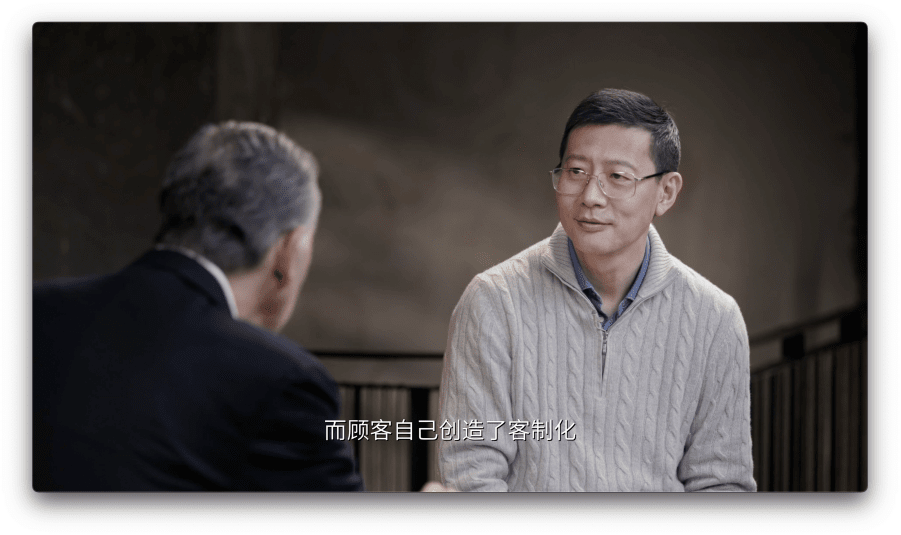
Shen Nanpeng: Starbucks has always enjoyed a high reputation around the world. Sometimes when we talk about investment, we always talk about investing in companies with an evergreen spirit. Starbucks is a typical representative. How have you continued to grow your brand's reputation over the past thirty to forty years and make it a truly enduring company? I know that during the epidemic, you also returned to your position as CEO. How much did your investment contribute to the success of Starbucks?
Howard Schultz: Let me make an analogy. Let's imagine there are two reservoirs, both of which are full. In one reservoir, you keep pumping water out, and in the other, you keep adding water. Therefore, the most important thing to building a great and enduring brand is to keep adding water to your brand assets.
Regarding our brand, people think that Starbucks is a very good marketing company, but we don't advertise, we have never been a marketing-driven company, the secret is that we are a culture-driven company. In fact, we build the brand from the inside out, through the eyes, thoughts, and care of partners wearing Starbucks green aprons.
To build a great and lasting brand, you have to build trust and recognition in all dimensions. Trust with your partners, trust with your customers, trust with your suppliers, trust with everyone. But sometimes, like in 2008, when we had to close stores and lay off employees, it was terrible and we eroded our brand equity.
So the other question is, if you lose brand equity, how do you make it back? I think constantly about values, guiding principles, our brand culture. How can we continue to empower our brand culture? But the worst thing is that I've seen so many times that the success of a brand breeds arrogance and hubris.
No one can achieve success easily, success must be earned through hard work day after day. Starbucks is a growing company. If you start to think that you are so good and so successful, and take your success for granted, a disease like cancer will slowly infiltrate the company.
This disease I call hubris. When hubris enters a company, the reservoir slowly gets drained. Suddenly, you lose touch with what's most important. There have been moments in Starbucks' 52-year history when growth and success were taken for granted. The role of a leader is not only to build a company, but also to have a clear understanding of what's going on. So leaders have to be constantly on the lookout, visiting stores, talking to everyone. So you really understand, in my worldview, I hope that today we are still as hungry and aggressive as we were in 1987, when we didn't succeed, when we were rejected by 242 people.
I would like to remind those who have just joined Starbucks that 5 million people have worked at Starbucks in the past 52 years. Today, we stand on their shoulders. We have a responsibility to those who founded the company. We must continue to do the right thing. In addition to constantly striving to win success, there is another thing: we must maintain Starbucks' entrepreneurial gene (DNA).
Starbucks is successful now. When you are successful, you tend to be cautious, just like playing defense in a game. Suddenly you will find that you are no longer charging forward, but retreating. I want to take a step forward, I want to challenge the status quo. And, I can accept failure. I don't want to repeat failure, but I hope to encourage everyone to try.
We must continue to push for innovation, not be satisfied with the status quo, and not be complacent. I don't want to just look at the stock price or the income statement, because that doesn't represent our success.
Shen Nanpeng: I think the two points you mentioned are very important: first, always maintain sensitivity to new trends and constantly seek innovation, don’t be afraid of making mistakes, and, if you are a market leader, don’t just hit “ Defensive battle”, you can’t feel like you’re safe, nothing can be taken for granted. Second, putting employees and customers in the same and most important position is a very important consideration when making business decisions. Many times shareholders of a company, whether private or public, may forget this. They forget that if you are a CEO, the most important things in your business ecosystem are your customers and employees. From a long-term perspective, this can determine whether the company can last forever.
Howard Schultz: Yes, you said it very well. You also mentioned innovation. Let me talk about my understanding of innovation. First of all, when I hear innovation, the first thing I think of is disruptive innovation. I think of disrupting the market. Many times, people think that product line extensions, new flavors, or even a new size change are great innovations because of positive customer feedback. But in fact, this is not innovation, this is responsibility. I want to disrupt the market, just like when we launched olive oil coffee drinks, this is a disruptive innovation.
Regarding customers and partners, I think this way. We are a company that is 100% consumer-oriented. Our employees are called partners internally because they have equity. We have to face customers, but we cannot only face customers and ignore partners. So when you innovate for customers, you must also innovate for partners.
In the history of Starbucks in the United States, we provided health insurance to our partners 25 years earlier than the US government provided health insurance to its citizens. Starbucks was the first company in the United States to provide health insurance to its partners. A few years ago, Belinda Wong (Wang Jingying, Chairman and CEO of Starbucks China) told me that she liked the benefits we provided to our American partners and she wanted to do something for our Chinese partners as well. She hoped that we could be the first company to provide critical illness insurance for our partners' parents. This was a good idea. She found an insurance company, and then we found the relevant government departments to discuss it. This is what we wanted to do, and suddenly we had a great partner. Starbucks, insurance companies, and government departments, we do inspiring things together. This is an investment for partners, showing Starbucks's dedication and business conscience. This is innovation, and it is not only for customers, but also for partners and people.
Humanism: Employees are the biggest differentiating competitive advantage
Shen Nanpeng: This is also a localization initiative based on Chinese family and culture. You mentioned a word, start from the heart. It's obvious that you have built Starbucks with passion and heart. So are there any examples or stories like this? When you launch a product, when you have to make a choice, what is the process like? It’s not math, it’s not about financial numbers, it’s gut feeling, your heart telling you what is the best option.
Howard Schultz: Yes, for many of us, our adult lives, both personally and professionally, are closely tied to our families of origin. I grew up in federally subsidized public housing, my parents never owned a home, my dad worked a lot of crappy jobs, and I saw firsthand how an American family was broken apart because we had nothing.
If I wasn't an excellent athlete, I wouldn't have been able to go to college. Ten years ago, it was very difficult for young people in the United States to go to college. College tuition was too expensive, and many people dropped out because they couldn't afford the high debt. Today, many people are still burdened with a lot of debt, and they find it difficult to repay it.
So we once again put our minds and hearts into what we could do and what was important to our partners. We did a survey and asked our partners in the U.S., what benefits do you think are most important to you? The answer we got was "free college tuition." "Free college tuition?" What a great, but very expensive idea.
How did we do that? First we prepared a request for proposals to U.S. universities to provide free college to our partners. We talked to Ivy League schools, very famous universities in the world. Arizona State University, the largest university in the U.S., had 100,000 students and a great president. He came to us and shared with us the secret of college tuition. The secret is that universities spend a lot of money on marketing, and these marketing expenses come from student tuition because universities, like businesses, have to compete for the best students. What did we do? We said, we will remove this expense from your income statement, it will disappear, and the U.S. government has a grant to help college students. So once again, the government, Arizona State University and Starbucks came together, and we became the first company in the U.S. to provide free college tuition to our partners.
Shen Nanpeng: Provide services and benefits with practical actions so that employees can benefit from them.
Howard Schultz: We talked about building a company with evergreenism and longevity, and this goodwill runs through the history of Starbucks. We will continue this project and it will not disappear. Now there are 25,000 partners coming to the university every year. Any company should put heart and conscience in the forefront and at the center of the enterprise. We can't regard employees as "labor machines", just like you can't regard customers as "commodity orders".
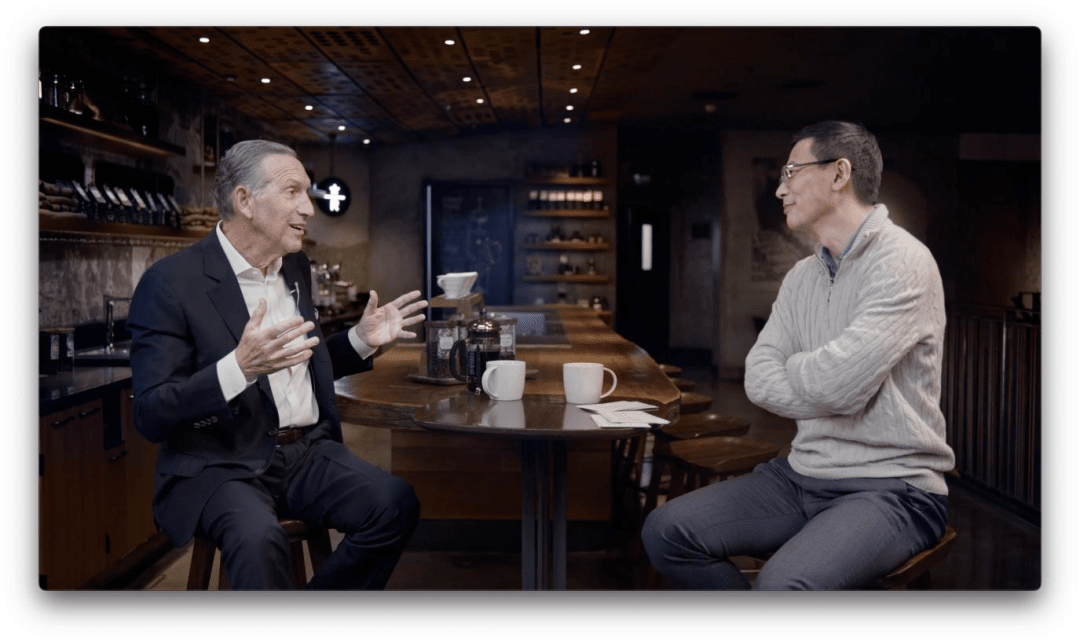
Shen Nanpeng: I remember when I was managing a listed company, an analyst asked me what your competitive advantage was? For a long time, people usually say that we have better technology and better products. In fact, people sometimes forget the real competitive advantage. Only when you win the hearts of employees can you win the hearts of customers. This is the real competitive edge. differentiated advantages.
Last week, my colleagues and I also talked about a topic. I asked them how much time they spend in different places every day, at home or in the office, or somewhere else? They mentioned Starbucks, which has become the third space outside of their home and office. Obviously, we hope that they can stay in the office longer because after the epidemic, people want to communicate face to face. However, the concept of the third space plays an important role in everyone's daily life. So how do you view the development after the epidemic? Especially when the global digitalization process, including China, has been significantly accelerated.
Howard Schultz: This is one of the hidden secrets of today's global society, not just in the United States, not just in China, people feel very, very lonely. In many ways, social media is not a good thing. It makes direct relationships between people shallower, but people need spaces where they can communicate and connect with each other. We are in the business of connecting people. Coffee brings people together. It is a warm drink. People will meet for a cup of coffee. So in many ways, the partners, coffee, and store design in the store are our company's assets, and from the perspective of the physical environment, the store builds a community, which will be a very important part of the company's future. We must find new ways to prevent technology or digitalization from stripping away the real experience brought by the third space.
Shen Nanpeng: You just talked about employees many times. Can we talk about the customer experience? I think that's one of the things that makes you a very special company. What do you do differently to create a very unique customer experience?
Howard Schultz: We think about it in terms of the customer journey. We start by thinking about what happens when a customer walks into a Starbucks store? What are the nonverbal cues that customers get? Our store design brings a sense of style, the music we play in the store, the aroma of the coffee is pleasant. So we bring visual experience, smell experience, and a physical environment with a sense of community. One of the biggest benefits is that we create drinks for customers around the world, and customers create customizations. So, thousands of people come to Starbucks every day, and they may create a drink that is not on our menu, and the customer customizes it to their taste. And our partners respond very quickly to create drinks that are just for customers. You can't drink this drink at home because we customize it for you.
Obviously, Starbucks became, I don't want to say a status symbol, I don't like to say that. But it did bring a lot of respect to the customer, people were happy to hold a Starbucks cup. Now if you ask me when we first came to China in 1999, people told me that Chinese customers would never walk down the street with a Starbucks cup, they wouldn't do it, I think just because this behavior didn't exist at the time.
Shen Nanpeng: You created this consumption behavior.
Howard Schultz: I think so. Another thing is that Starbucks has been in movies for many years, but we have never paid for product placement. In fact, we have turned down many movie placements because we felt that the scripts did not align with our values. We benefit from the fact that so many celebrities drink Starbucks coffee, and the recognition is built.
Shen Nanpeng: Okay. Let’s talk about the coffee industry. Coffee has been iteratively developing very quickly. If instant coffee is the era of coffee 1.0 and specialty coffee is the era 2.0, then what is the era of coffee 3.0? Starbucks is always at the forefront of innovation, so what do you think is the next exciting coffee product we should look forward to?
Howard Schultz: This is a very good question. Our innovative drink has been launched in the United States and Japan. In the future, we will bring it to China, the United Kingdom and the Middle East. It is Oleato.
Shen Nanpeng: Oleato is olive oil + coffee, right?
Howard Schultz: Yes. Oleato is Italian for "oil." Let me quickly share some background with you. Last summer, I met a man in Sicily, Italy, whose family had been growing olives for a hundred years, and they were the highest quality olives. I went to see him every morning and he always drank a spoonful of olive oil. On the third day, I asked him, what are the benefits of drinking this olive oil? Why do you do this? He told me that the Romans, Greeks and Italians have been consuming olive oil for thousands of years. The long life expectancy of people in this area of Sicily is largely due to it.
Shen Nanpeng: By the way, do they taste good?
Howard Schultz: It tastes great. Olive oil and coffee collide and blend, which has a wonderful magic. I think this is a very good idea and will become a global product line.
Finally, let’s talk about something else
Shen Nanpeng: You have recently stepped down from the position of CEO. You just talked about your vision and corporate values system. When you are no longer involved in the daily operations of the company, how do you ensure that Starbucks can continue to uphold such vision and values? OK?
Howard Schultz: I love Starbucks. It's in my blood. I care deeply about the company and I care deeply about the people who work for me. Can I hire someone from the outside and expect them to love the company as much as I do? I have to be realistic about these questions. They are not the founders of the company.
But I've spent six months with our new CEO, and I've been constantly imprinting our company's values and corporate conscience on him. I've also spent a lot of time with the Starbucks leadership team over the past year, talking about the things I've talked about with you today. I'm keeping my eye on all of this in a positive way. The future of the company is going to be very bright, and I'm very optimistic about that. But as I said before, it's not something that can be taken for granted, it has to be earned. I don't want to be a shadow of the new CEO, but I'll be there to help him when he needs it.
Shen Nanpeng: In your opinion, what are the criteria for judging excellent CEOs and excellent professional managers?
Howard Schultz: Three characteristics: the third is IQ, the second is EQ, and the first is curiosity level (CQ).
No matter what industry you are in, we can't just focus narrowly on what you do, otherwise you can't be excellent enough. You have to broaden your horizons and open your heart to see the whole world. I hope people are curious about every corner and have the courage to say I have found something new and we are going to do new things. IQ is indeed important, but it is not the most important. Emotional quotient (EQ) and curiosity level (CQ) are what I want. I want people with these three characteristics.
Shen Nanpeng: Question from the audience: Do you think it is better to start a business right after graduation, or is it better to have some work experience before starting a business?
Howard Schultz: I worked at Xerox for three years after graduating from college. After three years, I felt that this was no longer the right place for me. However, these three years were a very good training experience for me. I learned about the organizational structure of a company and how a company operates, about how a company strikes a balance between profitability and culture... It is impossible to gain insight into these when you are just starting out.
I don't think there is a right or wrong answer to this question, but I've benefited a lot from working for a company. My advice to young people is to work for a company whose values align with your own for a few years, find your passion and love, and then go all in.
Shen Nanpeng: What do you think of Starbucks’ success? Can it be replicated? If someone wanted to start a similar company today, say a coffee business or a tea business, what do you think they should learn from your experience to be successful?
Howard Schultz: We made a very important decision in the early days of our business, which was not to franchise Starbucks. We wanted the company to have a complete system, in which the company's culture is an important asset, and an exclusive asset.
There are so many opportunities to get investment today. If we started today, we might not have time to build our own system and we might be defeated more than a hundred times.
If you start a company today and you have a vision of building a big company, you may need to form partnerships along the way. The challenge is how do you create a common culture with your partners where they are all involved in your business. How do you do that? So I think the challenges of building a Starbucks-type business today are much more difficult than when we started in the past.
Shen Nanpeng: Because there are already too many good brands in this industry.
Howard Schultz: Now if you find something very unique that doesn't exist in the market yet, go for it. There are always new ideas emerging. The challenge is that today's physical retail business is very difficult without e-commerce and food delivery.
Shen Nanpeng: What about the young people who have just joined Starbucks? As a boss, what qualities do you value in a young person? You will feel that he/she has great potential and be willing to spend time training him/her.
Howard Schultz: I think the most important thing is that I look for people who share my values. When we do performance reviews at the end of the year, it's not just based on you, it's based on what have you done for the people you work with? You look at your employees and how much people have grown. I don't look at just academic qualifications. I look at people's experience. I guess I have a soft spot, probably because of my own background. For people who come from tough backgrounds, they have to overcome a lot of personal challenges to get to this position. Nothing is given to them, everything is earned by them.
Shen Nanpeng: Yes, in the venture capital industry, there are many entrepreneurs who were not optimistic at the beginning. They may not have a good educational background, and may not have particularly outstanding performance at the beginning of their careers. But he kept trying and had the same values.
Thank you, it was a pleasure talking to you. I think our time is almost up. I look forward to seeing you again, whether in Seattle or next time you come to Beijing.
Howard Schultz: Thank you for inviting me to this conversation. You are also a very well-known investor in the United States. Both your personal character and investment philosophy are respected. I am very grateful for this opportunity.