

Author | Heimi, Baize Research Institute
The Ethereum developer community continues to push the boundaries of innovation to improve the user experience of decentralized applications (dApps).
"EIP" and "ERC" are "proposals" and formal "standards" respectively, aiming to improve the functionality of the Ethereum network.
They actually also represent one of Ethereum’s main features: the ability to create and manage custom tokens using various standards.
Standards like the fungible token ERC-20, as well as the non-fungible tokens ERC-721 and ERC-1155, have played a crucial role in the development and success of the Ethereum ecosystem, and developers have used them to create many unique and innovative dApp.
Ethereum has several other standards that help it become a thriving ecosystem, including ERC-777 (a security upgrade to ERC-20), ERC-3643 (a security token standard), and others.
But this is definitely not the end of the road to innovation for Ethereum.
The newest and most exciting standard for 2023 is ERC-4337, also known as the “smart wallet” standard or account abstraction. It is designed to simplify the user experience and is therefore expected to be a game changer for blockchain adoption by the next billion users.
In addition, there are 3 other proposals making waves in the first half of 2023.
ERC-4337: Opening the era of private keyless
ERC-4337 aims to upgrade the EOA accounts used by users to "smart accounts" so that the accounts can run as smart contracts. This means that each crypto wallet can have customizable authorization logic to meet the needs of the individual user or application.
Therefore, ERC-4337 is often referred to as the "smart wallet" standard, or also as the "account abstraction".
Crypto wallets are the entry point for anyone who wants to interact on the blockchain and are one of the major sources of friction preventing mass adoption. Why?
The answer to this question is actually all the advantages of ERC-4337:
Simplified access: ERC-4337 provides the possibility to use accounts without storing private keys. Private keys can be stored in the smartphone's standard security module.
Account recovery: If you lose your phone or private key, you can use the social recovery function to contact previously designated users (multi-signature) to help you regain access to your account. If you don't have a trusted friend, you can also pay a fee to a third-party company that provides this service to help you recover your account if needed.
Automated trading: ERC-4337 allows automated trading, including monthly spending limits, AI trading, and adjusting staking positions. These features make it easier for users to conduct transactions.
Gas-free transactions: ERC-4337 supports Gas-free transactions, which allows dApps such as DeFi, chain games, and DAOs to sponsor Gas fees for users, thereby making users' transactions easier. This feature also allows users to pay gas fees using the dApp’s tokens, which can significantly reduce the cost of using the dApp.
Bundled Transactions: Each transaction requires a signature. With account abstraction, transactions can be bundled and multiple transactions sent as one to save time and even gas fees. Similar to a shopping cart, even 10 markets can be packaged with one transaction.
Pre-approval of transactions: Let’s say you’re minting multiple NFTs, or playing a game. With a Smart Account, you can pre-approve transactions based on custom wallet codes and session keys set up ahead of time.
There are many other use cases for ERC-4337, but they all make the user experience of using dApps as simple as Web2 applications. This is why ERC-4337 is often hailed by the Ethereum community as a “game changer for blockchain adoption by its next billion users.”
Although adoption is still in its early stages, the developer community is working hard on new products to unlock the incredible potential of Smart Accounts.
ERC-6551: Making NFTs a true on-chain identity
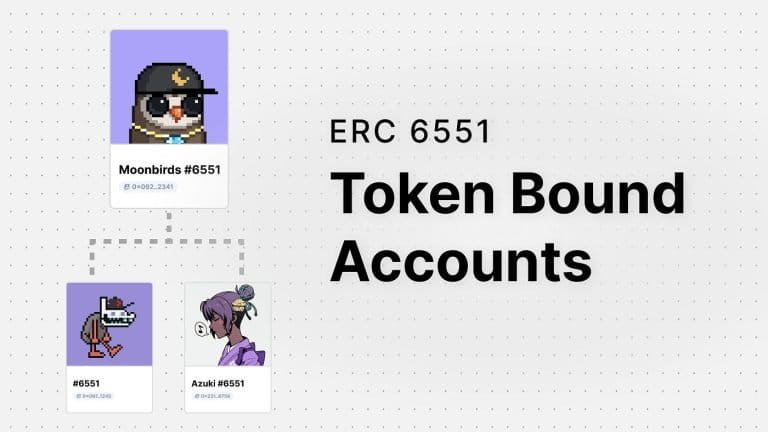
The idea behind ERC-6551 is to connect NFTs (ERC-721) and smart accounts into token-bound accounts (TBA) – yes, it is built on the ERC-4337 standard.
ERC-6551 aims to have a corresponding TBA behind each NFT, allowing NFTs to interact with applications, record transaction history and own on-chain assets (it is worth noting that it does not require changes to the existing ERC-721) .
For example, Xiao Ming obtained an NFT from a project, and then the project decided to airdrop tokens to NFT holders, and also released a series of POAPs for holders to receive.
Scenario A - No TBA used
When Xiao Ming decides to sell his NFT, neither the tokens nor the POAP related to the NFT will be transferred to the buyer.
Scenario B - TBA used
All NFT-related token collection and POAP collection will be recorded in the NFT itself. When selling NFT, the buyer will also see these records, and all related tokens and POAP will be transferred to the buyer. If these are missing, the value of the NFT may also be greatly reduced.
The motivation for ERC-6551 is to enhance the ability of NFTs to become a form of on-chain identity.
Conjecture use cases for TBA:
Characters in role-playing games accumulate assets based on the passage of time and the actions they take (e.g. nuggets)
A car in the metaverse, composed of NFTs as "components"
A punch-pass membership card that grants access to the facility and records a history of past interactions
Social media profiles that allow users to own their content and data
ERC-5507: Token sales are refundable, reducing scams
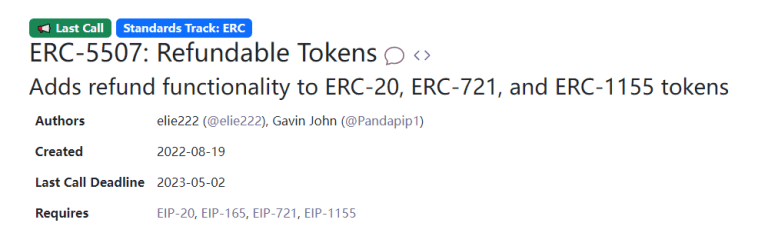
ERC-5507, sometimes called ERC-721R because it is an evolution of the ERC-721 standard for NFTs.
It aims to add refund functionality to fungible and non-fungible tokens (ERC-20, ERC-721 and ERC-1155): users have the right to refund their purchased tokens before a preset time has elapsed .
The motivation for ERC-5507 is to help prevent rug pulls and scams by increasing accountability in the crypto industry, and to provide greater protection to buyers. Incidentally, it would also bring tokens that follow the standard into line with EU regulations – there is a 14-day refund period for online purchases.
Some highlights and benefits of ERC-5507 are:
Build interoperability with various NFT-related applications, such as portfolio browsers and marketplaces.
NFT marketplaces can place a sign indicating that the NFT is still refundable and provide a link to a website that refunds the NFT.
Decentralized exchanges (DEX) can provide refund options for tokens.
Better wallet confirmation dialog.
However, there are also challenges and disadvantages to using ERC-5507: increased gas costs, abuse of refund policies, difficulty in implementation... These are currently being discussed within the Ethereum community, so it is not certain whether the EIP will pass (currently in the review period) .
It is worth noting that the emergence of EIP-5507 and ERC-5507 reflects the crypto industry’s desire to solve compliance and investor protection issues.
EIP-4844: Preparing for Ethereum sharding
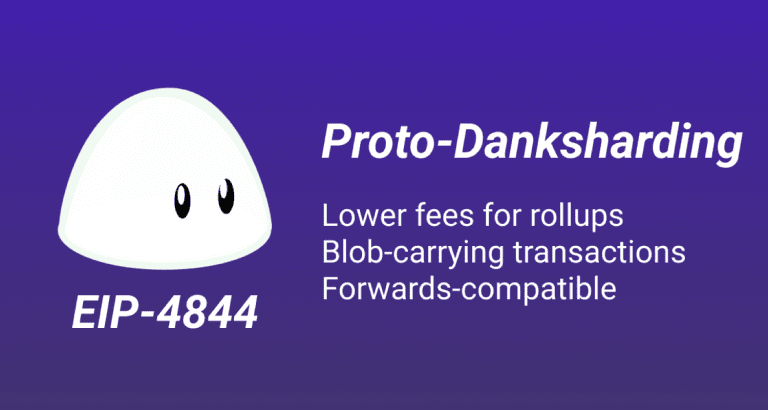
EIP-4844 is an important Ethereum improvement proposal. It is a step before Ethereum DankSharding sharding. It aims to realize the temporary storage and retrieval of off-chain data through Ethereum nodes to meet the data and storage needs of blockchain applications. need.
The proposal introduces blob-carrying transactions (the transaction format required for sharding) that enable blobs to hold more data without incurring additional costs. Blobs are a data type specifically designed for L2 data transfer. Blobs are not permanent as the network deletes them after a few weeks.
If successfully activated, EIP-4844 is expected to reduce transaction costs for L2 rollup solutions, including Optimism and Arbitrum, by 10-100x.
In addition to introducing blob-carrying transactions, EIP-4844 will prepare for sharding by implementing execution layer logic, validation rules, multi-dimensional fee markets, and other system changes required for future sharding.
EIP-4844 is expected to be implemented in the second half of 2023, but delays are possible.
Summarize
These EIPs and ERCs enable new use cases and make it easier for users to interact with dApps – this is especially true for ERC-4337.
2023 could be the year of the developers, as the entire crypto industry looks forward to these EIPs and ERCs and hopes to see the fruits of their work in 2024 – perhaps starting the next bull run?
Regardless, it deserves our close attention.
(The above content is excerpted and reprinted with the authorization of partner MarsBit, original text link | Source: DeFi Baize Research Institute)
Statement: The article only represents the author's personal views and opinions, and does not represent the objective views and positions of the blockchain. All contents and opinions are for reference only and do not constitute investment advice. Investors should make their own decisions and transactions, and the author and Blockchain Client will not be held responsible for any direct or indirect losses caused by investors' transactions.
This article What Ethereum improvement proposals are worth paying attention to in 2023? First appeared in Block Guest.