
听澜321
4.4k Posts

听澜321
 Square Verified+
Report
Block User
深耕web3领域多年|web3知识科普博主|承接KoL宣发&项目推广 | 直播AMA项目合作 |深耕社群互动领域|直播(Live):10:00-14:30|💖X:@hpr2008
Open Trade
High-Frequency Trader
5.9 Years
4.0K+ Following
91.0K+ Followers
49.5K+ Liked
Posts
Portfolio
All
Quotes
Videos
PINNED
·
--
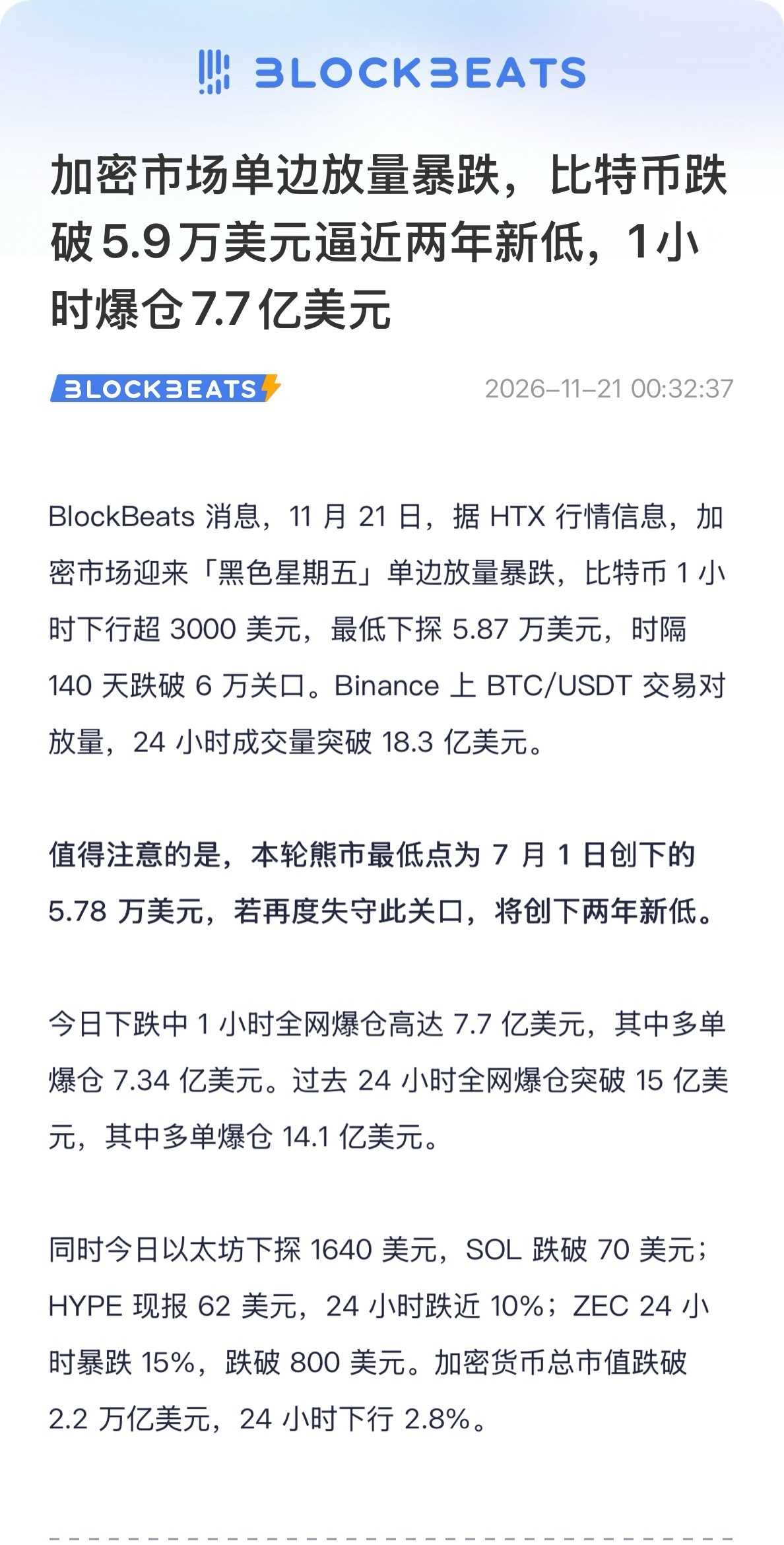
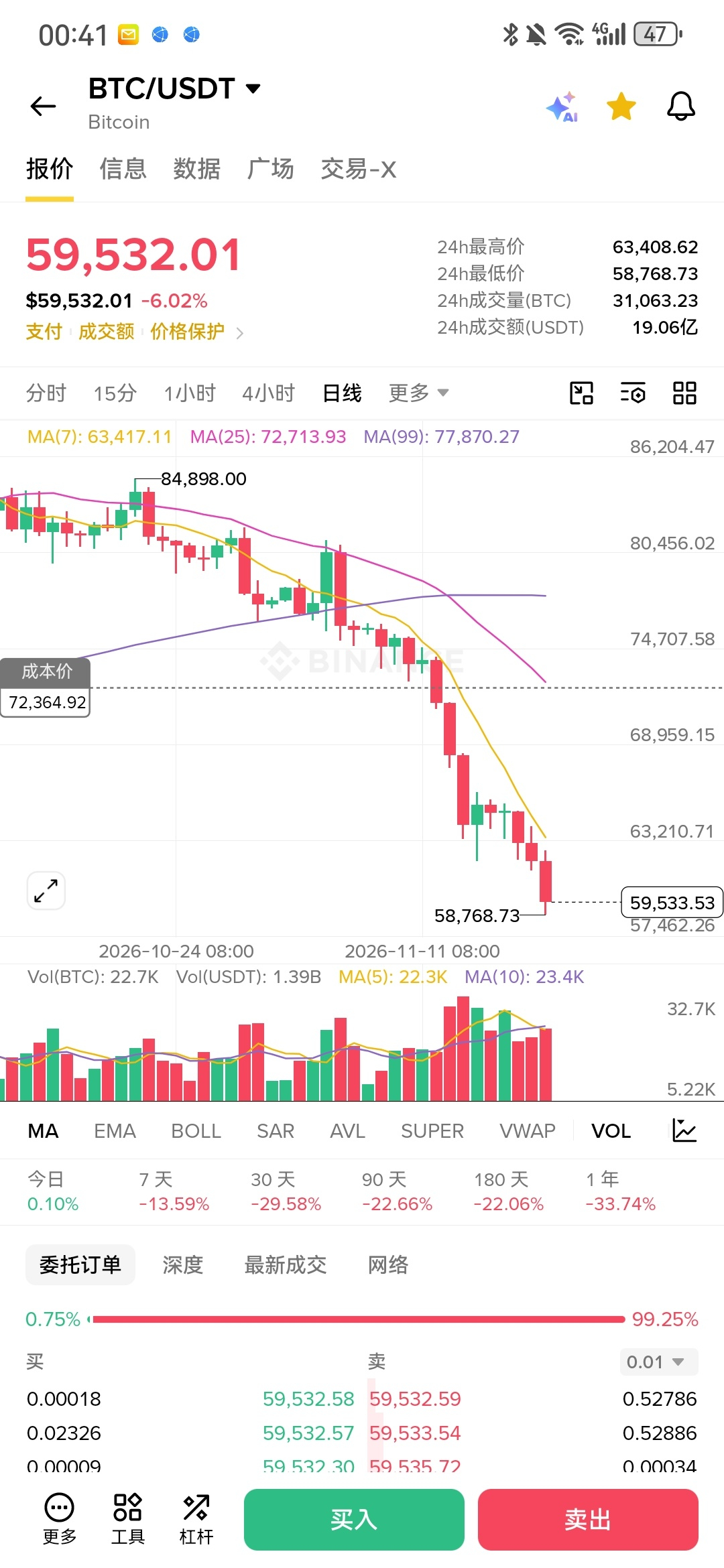
$BTC has fallen below 60k. Can it stabilize in the short term?
My answer may not be very pleasant: it would already be good if the decline can stop; don’t take a rebound too seriously for now~
Is this oversold? Yes, it is oversold…
The daily RSI has been stuck at a low level for several days, the Fear & Greed Index has been crushed to 21,
and longs made up the overwhelming majority of liquidations~
But oversold only means the drop was too fast; it does not mean someone is going to buy.
The weekly structure still shows lower highs, and price is stuck below the main moving averages. If it can’t get back above them, then any rebound is just the market catching its breath after falling too much.
Actually, the real problem isn’t on the candlestick chart…
Look, ETFs are seeing outflows: BlackRock’s IBIT posted a record single-day outflow of $541 million, and nearly $3.5 billion has been withdrawn in November.
And the Fed hasn’t softened its stance either. Capital would rather chase interest-bearing assets than pick up something that doesn’t generate yield.
Citi has already changed its short-term fund flow judgment to “neutral,”
meaning funds are flowing out of the crypto ecosystem.
Looking further down, $BTC 5.8 ten-thousand to 60k is the long-term support zone after the 200-week moving average was broken. That is the real level to watch next.
Personally, I think if it holds, there may be a chance to build a bottom;
if it doesn’t hold, then the downside space will open up…
So whether it can stabilize in the short term has nothing to do with RSI,
but rather whether spot buying is willing to come back. At this point, I don’t see any sign that buyers are returning~
So what do you think—how many days can 60k hold? Let’s talk in the comments👇🏻
#比特币跌破6万美元,短期能否企稳反弹?
{future}(ETHUSDT)
{future}(ZECUSDT)
{future}(BTCUSDT)
$BTC has fallen below 60k. Can it stabilize in the short term?
My answer may not be very pleasant: it would already be good if the decline can stop; don’t take a rebound too seriously for now~
Is this oversold? Yes, it is oversold…
The daily RSI has been stuck at a low level for several days, the Fear & Greed Index has been crushed to 21,
and longs made up the overwhelming majority of liquidations~
But oversold only means the drop was too fast; it does not mean someone is going to buy.
The weekly structure still shows lower highs, and price is stuck below the main moving averages. If it can’t get back above them, then any rebound is just the market catching its breath after falling too much.
Actually, the real problem isn’t on the candlestick chart…
Look, ETFs are seeing outflows: BlackRock’s IBIT posted a record single-day outflow of $541 million, and nearly $3.5 billion has been withdrawn in November.
And the Fed hasn’t softened its stance either. Capital would rather chase interest-bearing assets than pick up something that doesn’t generate yield.
Citi has already changed its short-term fund flow judgment to “neutral,”
meaning funds are flowing out of the crypto ecosystem.
Looking further down, $BTC 5.8 ten-thousand to 60k is the long-term support zone after the 200-week moving average was broken. That is the real level to watch next.
Personally, I think if it holds, there may be a chance to build a bottom;
if it doesn’t hold, then the downside space will open up…
So whether it can stabilize in the short term has nothing to do with RSI,
but rather whether spot buying is willing to come back. At this point, I don’t see any sign that buyers are returning~
So what do you think—how many days can 60k hold? Let’s talk in the comments👇🏻
#比特币跌破6万美元,短期能否企稳反弹?
9
12
30
9.8k
·
--
Dragon Travels the World
Dragon Travels the World

@520龙行天下
is speaking[LIVE] 🎙️ Dollar-cost average into BNB and SOL
6.1k listens
215
·
--
听澜321
·
--
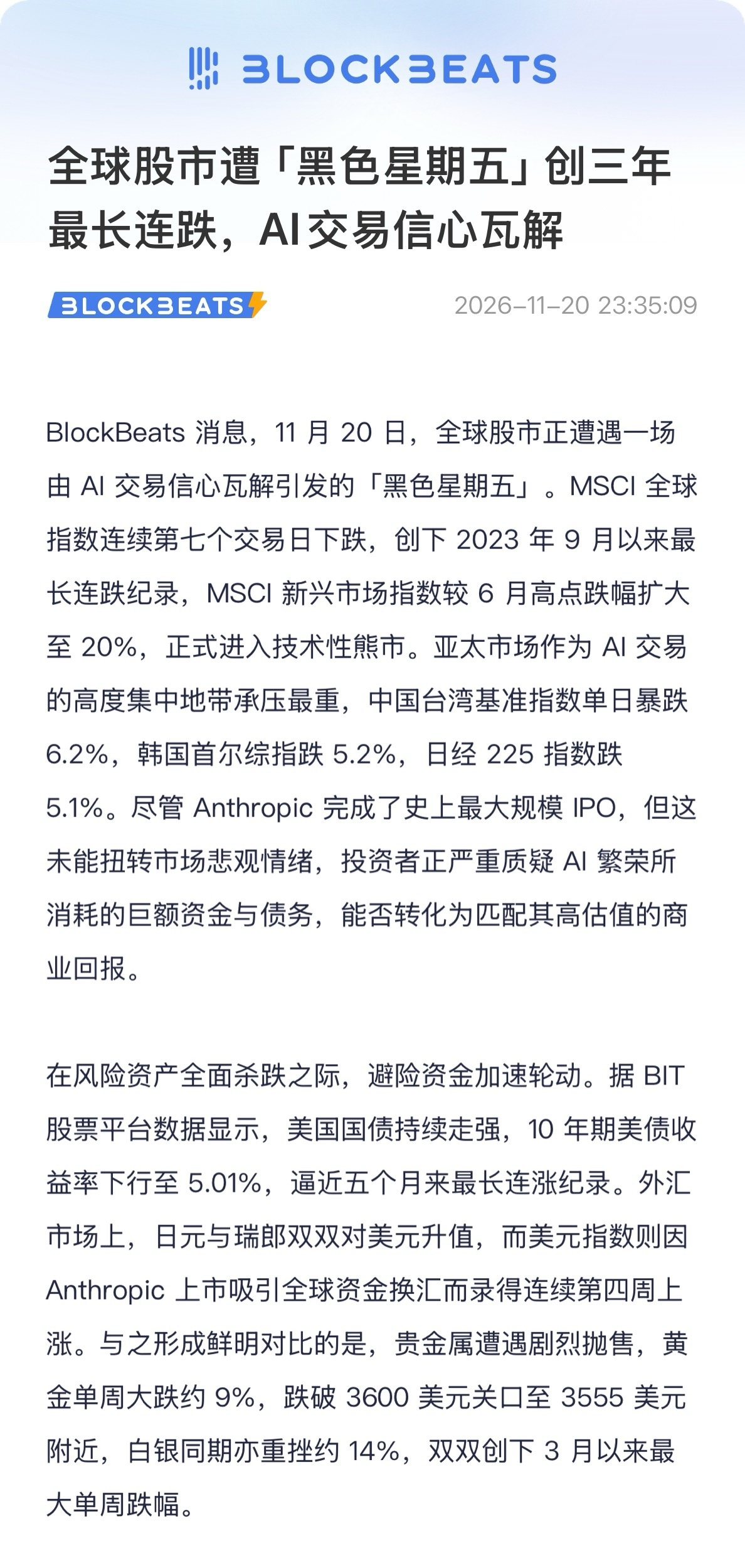
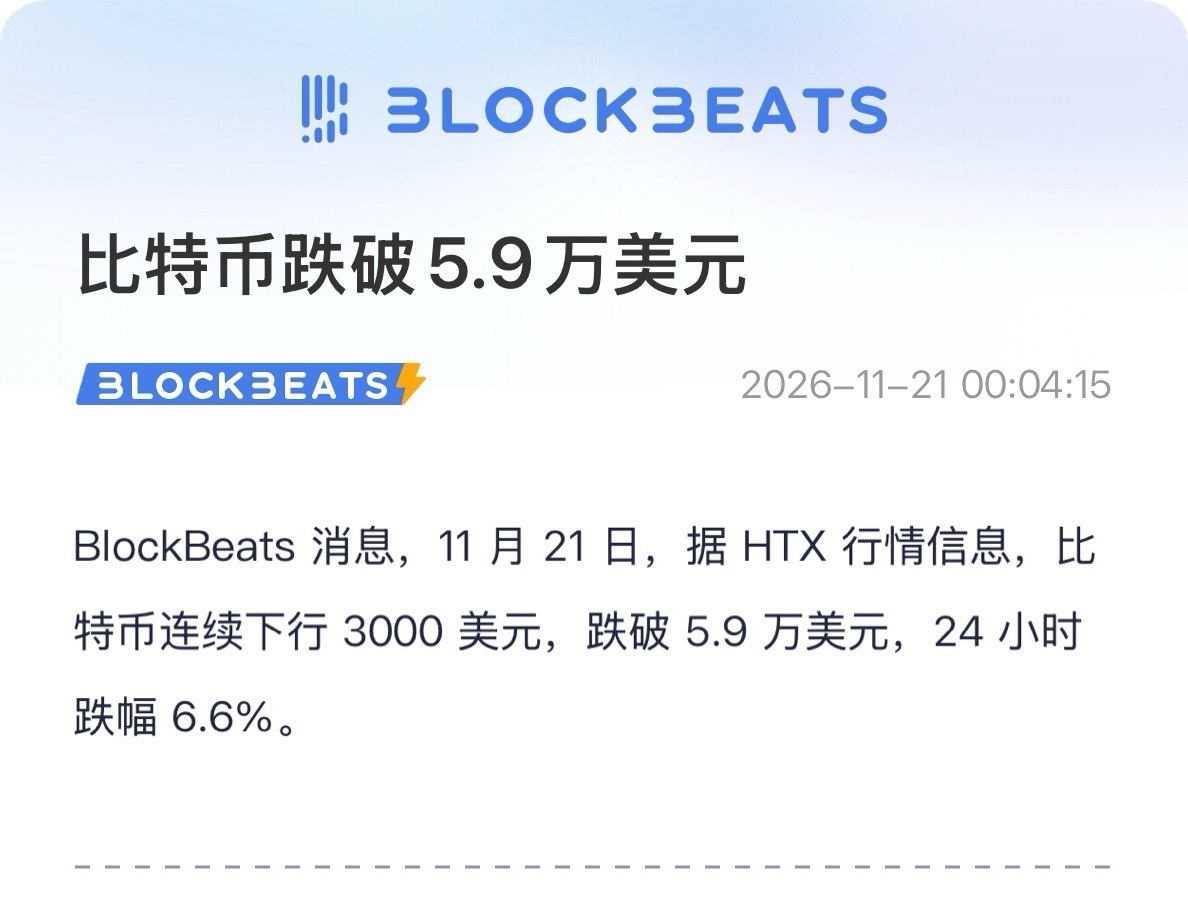
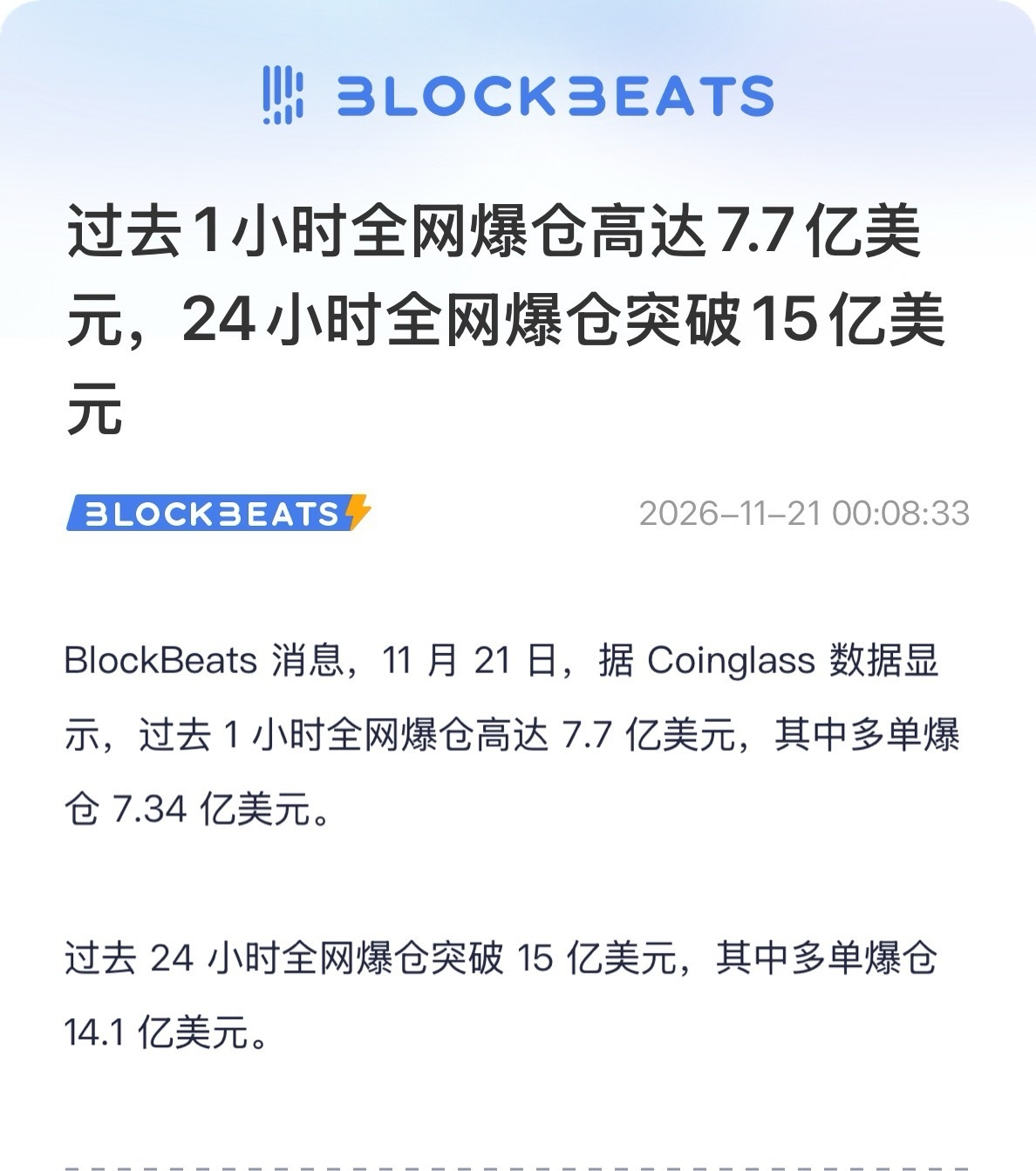
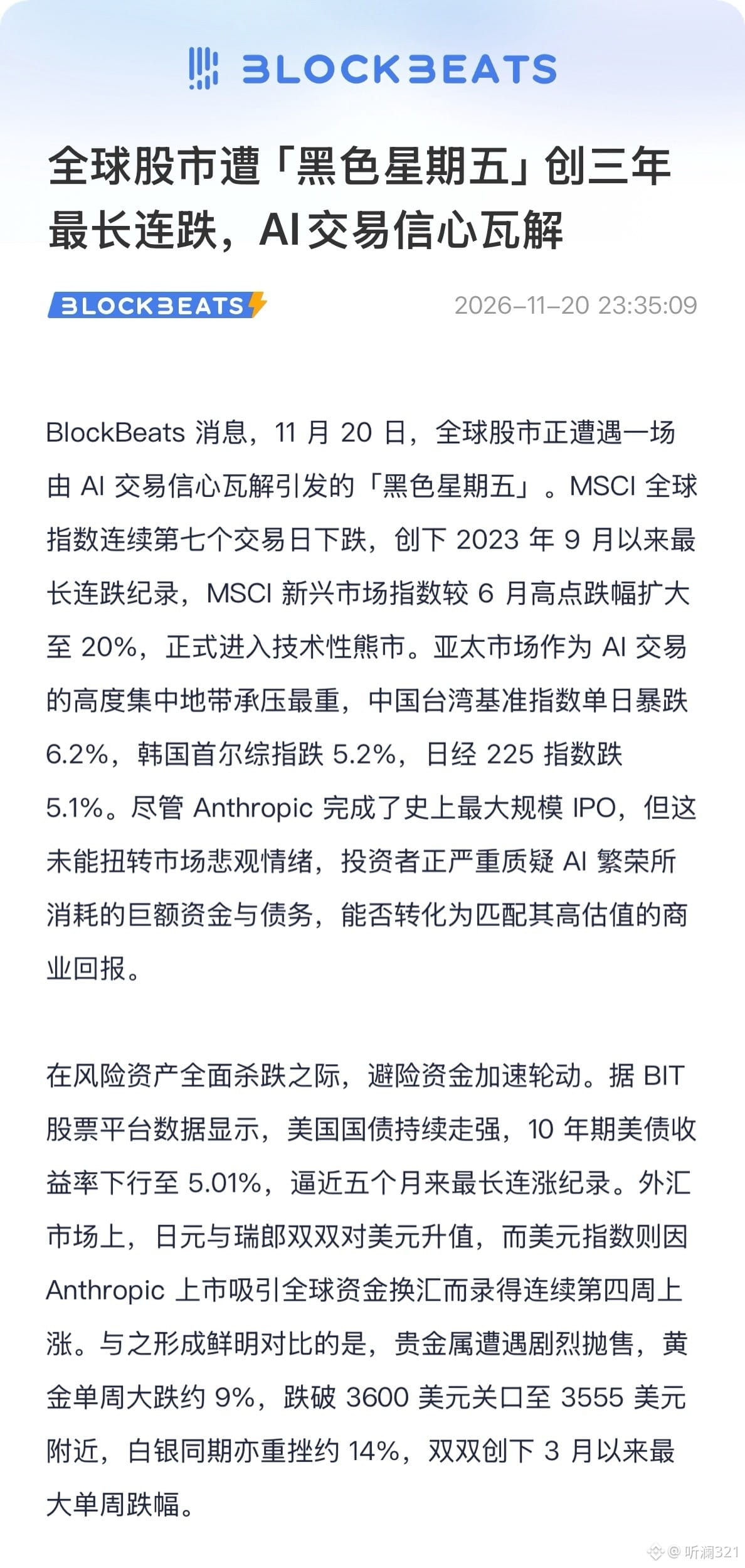
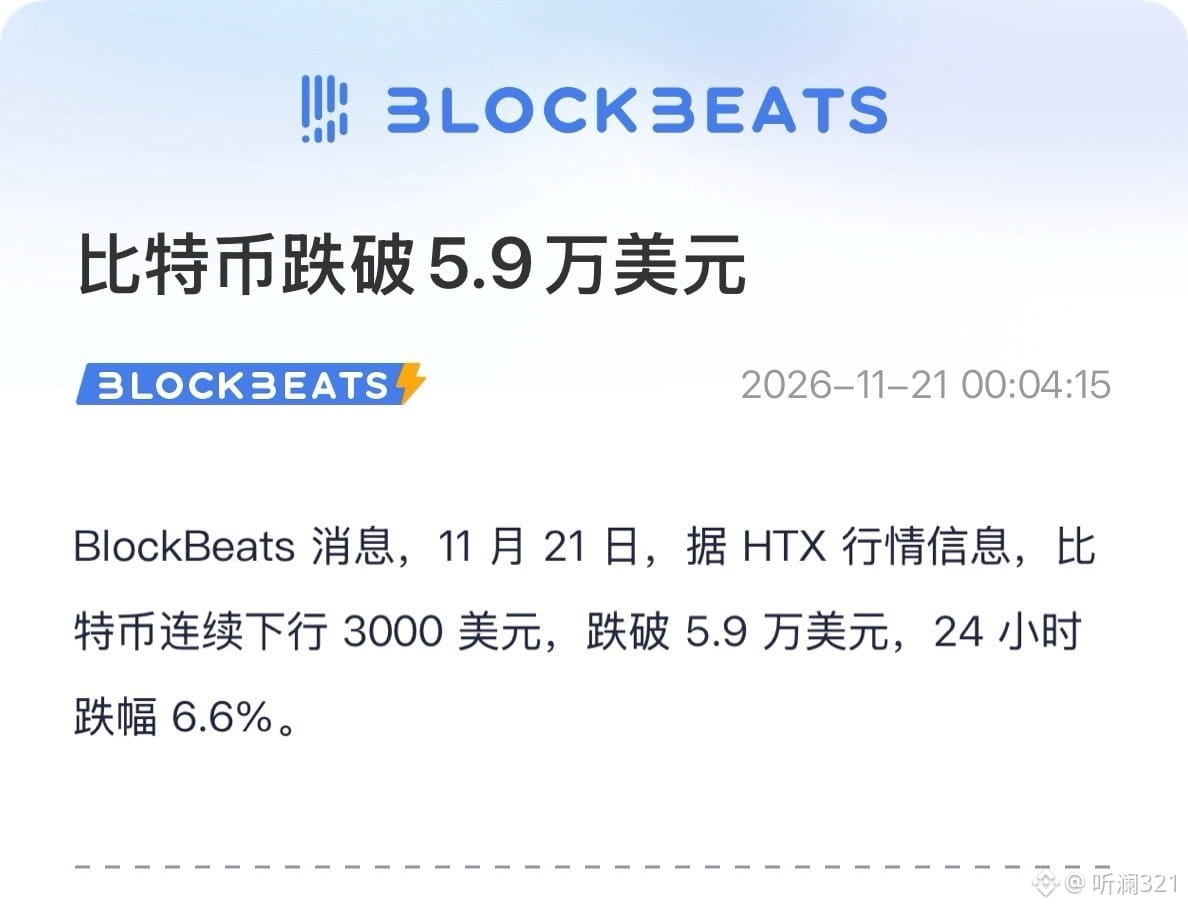
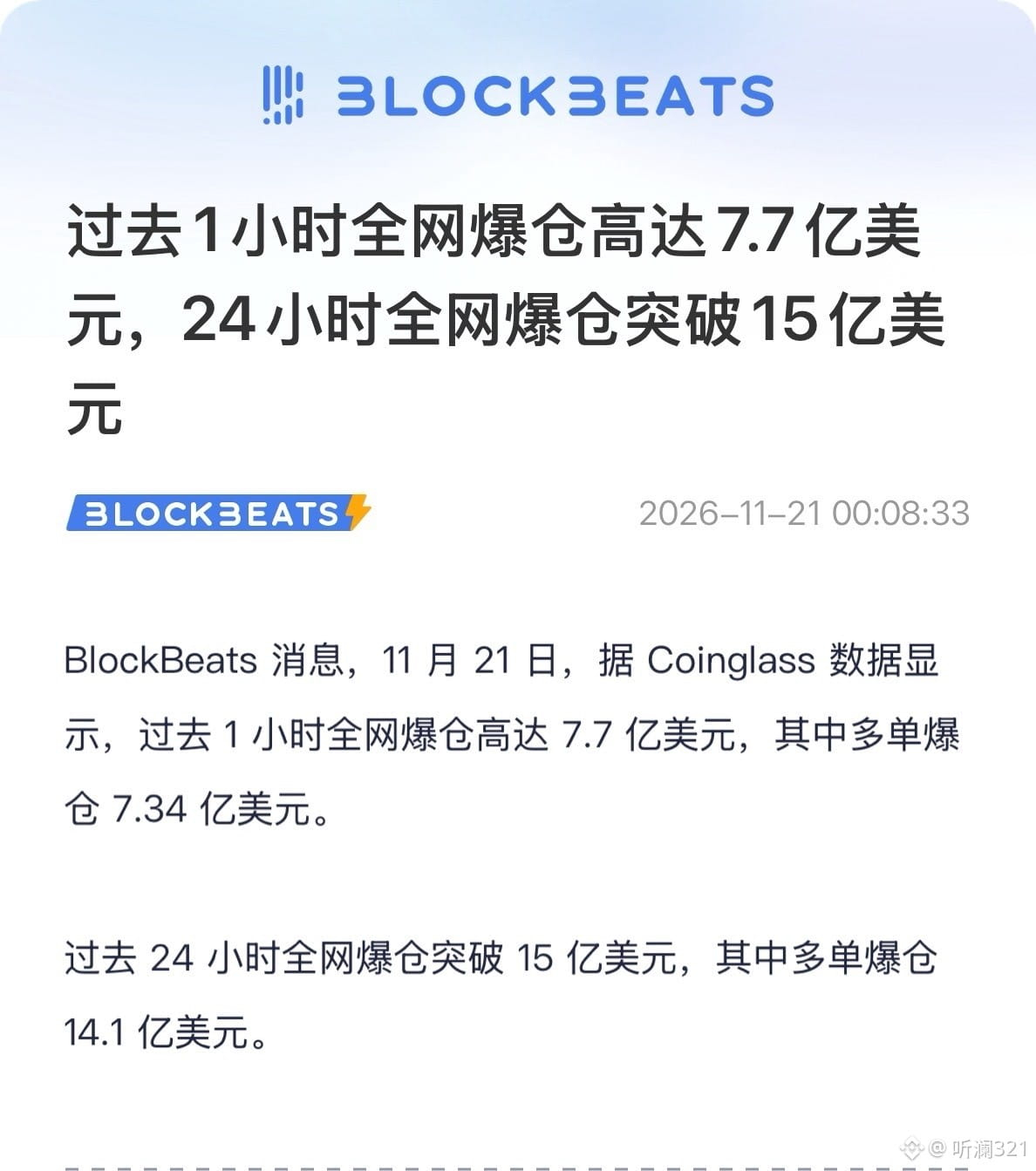
Global stocks have suffered their longest losing streak in three years, while $BTC fell below $60,000 last night!
BTC briefly dropped to $57,684 during Friday trading, falling below the $60,000 mark for the first time since July and hitting its lowest level since September 2024. It has been cut in half from last October’s all-time high of $126,000~
Global stock markets were hit too. The MSCI All Country World Index fell for seven consecutive trading days, its longest losing streak since September 2023. South Korea fell 5.2%, the Nikkei dropped 5.1%, and the MSCI Asia Pacific ex Japan Index was down about 8% for the week. Asia-Pacific became one of the hardest-hit regions…
Why such a sharp drop? Simply put: faith in AI is wavering.
This global bull market has been driven in large part by the AI narrative, but investors are starting to do the math: after pouring in so much money and taking on so much debt to develop AI, will the returns really measure up?
Anthropic pulled off the biggest IPO in history, only to fall below its first-day low on its second day of trading, putting market doubts front and center.
Once that confidence started to falter, selling spread from tech stocks to risk assets across the board~
So where did the safe-haven money go?
U.S. Treasuries. The 10-year Treasury yield has been trending down, while bond prices are rising—a sign that money is seeking shelter in the safest places. The dollar is also attracting inflows, and traditional safe-haven currencies such as the yen and Swiss franc are strengthening too.
But the most striking thing this time is that gold and silver haven’t acted as safe havens at all—instead, they’ve crashed even harder than stocks. Gold fell nearly 9% in a single week, while silver dropped more than 14%. This suggests that it’s not simply a case of “panic-driven flight to safety.” Risk assets are being indiscriminately sold off for cash, with even precious metals being tapped to meet liquidity needs…
$BTC failed to chart an independent course this time. The “digital gold” narrative is once again being put to the test in a genuine flight to safety…
A few suggestions:
1️⃣ Don’t rush to buy the dip. Risk assets are being dumped across the board, and money is moving into cash and U.S. Treasuries—not “switching lanes and partying on.” Waiting for money to choose a new direction matters more than chasing a rebound~
2️⃣ Keep an eye on Treasury yields and the Federal Reserve. The Fed is leaning hawkish internally, rate-cut expectations are fading, and some are even pricing in the possibility of rate hikes~
3️⃣ The long-term BTC narrative isn’t dead, but in the short term, accept that it’s a risk asset.
Crypto isn’t the main character, and it’s unlikely to escape the fallout
So keeping your hands off the button is better than anything~
#全球股市创三年来最长连跌,投资者避险情绪升温
5
1.1k
·
--
Global stocks have suffered their longest losing streak in three years, while $BTC fell below $60,000 last night!
BTC briefly dropped to $57,684 during Friday trading, falling below the $60,000 mark for the first time since July and hitting its lowest level since September 2024. It has been cut in half from last October’s all-time high of $126,000~
Global stock markets were hit too. The MSCI All Country World Index fell for seven consecutive trading days, its longest losing streak since September 2023. South Korea fell 5.2%, the Nikkei dropped 5.1%, and the MSCI Asia Pacific ex Japan Index was down about 8% for the week. Asia-Pacific became one of the hardest-hit regions…
Why such a sharp drop? Simply put: faith in AI is wavering.
This global bull market has been driven in large part by the AI narrative, but investors are starting to do the math: after pouring in so much money and taking on so much debt to develop AI, will the returns really measure up?
Anthropic pulled off the biggest IPO in history, only to fall below its first-day low on its second day of trading, putting market doubts front and center.
Once that confidence started to falter, selling spread from tech stocks to risk assets across the board~
So where did the safe-haven money go?
U.S. Treasuries. The 10-year Treasury yield has been trending down, while bond prices are rising—a sign that money is seeking shelter in the safest places. The dollar is also attracting inflows, and traditional safe-haven currencies such as the yen and Swiss franc are strengthening too.
But the most striking thing this time is that gold and silver haven’t acted as safe havens at all—instead, they’ve crashed even harder than stocks. Gold fell nearly 9% in a single week, while silver dropped more than 14%. This suggests that it’s not simply a case of “panic-driven flight to safety.” Risk assets are being indiscriminately sold off for cash, with even precious metals being tapped to meet liquidity needs…
$BTC failed to chart an independent course this time. The “digital gold” narrative is once again being put to the test in a genuine flight to safety…
A few suggestions:
1️⃣ Don’t rush to buy the dip. Risk assets are being dumped across the board, and money is moving into cash and U.S. Treasuries—not “switching lanes and partying on.” Waiting for money to choose a new direction matters more than chasing a rebound~
2️⃣ Keep an eye on Treasury yields and the Federal Reserve. The Fed is leaning hawkish internally, rate-cut expectations are fading, and some are even pricing in the possibility of rate hikes~
3️⃣ The long-term BTC narrative isn’t dead, but in the short term, accept that it’s a risk asset.
Crypto isn’t the main character, and it’s unlikely to escape the fallout
So keeping your hands off the button is better than anything~
#全球股市创三年来最长连跌,投资者避险情绪升温
{future}(ETHUSDT)
{future}(ZECUSDT)
{future}(XAUUSDT)
Global stocks have suffered their longest losing streak in three years, while $BTC fell below $60,000 last night!
BTC briefly dropped to $57,684 during Friday trading, falling below the $60,000 mark for the first time since July and hitting its lowest level since September 2024. It has been cut in half from last October’s all-time high of $126,000~
Global stock markets were hit too. The MSCI All Country World Index fell for seven consecutive trading days, its longest losing streak since September 2023. South Korea fell 5.2%, the Nikkei dropped 5.1%, and the MSCI Asia Pacific ex Japan Index was down about 8% for the week. Asia-Pacific became one of the hardest-hit regions…
Why such a sharp drop? Simply put: faith in AI is wavering.
This global bull market has been driven in large part by the AI narrative, but investors are starting to do the math: after pouring in so much money and taking on so much debt to develop AI, will the returns really measure up?
Anthropic pulled off the biggest IPO in history, only to fall below its first-day low on its second day of trading, putting market doubts front and center.
Once that confidence started to falter, selling spread from tech stocks to risk assets across the board~
So where did the safe-haven money go?
U.S. Treasuries. The 10-year Treasury yield has been trending down, while bond prices are rising—a sign that money is seeking shelter in the safest places. The dollar is also attracting inflows, and traditional safe-haven currencies such as the yen and Swiss franc are strengthening too.
But the most striking thing this time is that gold and silver haven’t acted as safe havens at all—instead, they’ve crashed even harder than stocks. Gold fell nearly 9% in a single week, while silver dropped more than 14%. This suggests that it’s not simply a case of “panic-driven flight to safety.” Risk assets are being indiscriminately sold off for cash, with even precious metals being tapped to meet liquidity needs…
$BTC failed to chart an independent course this time. The “digital gold” narrative is once again being put to the test in a genuine flight to safety…
A few suggestions:
1️⃣ Don’t rush to buy the dip. Risk assets are being dumped across the board, and money is moving into cash and U.S. Treasuries—not “switching lanes and partying on.” Waiting for money to choose a new direction matters more than chasing a rebound~
2️⃣ Keep an eye on Treasury yields and the Federal Reserve. The Fed is leaning hawkish internally, rate-cut expectations are fading, and some are even pricing in the possibility of rate hikes~
3️⃣ The long-term BTC narrative isn’t dead, but in the short term, accept that it’s a risk asset.
Crypto isn’t the main character, and it’s unlikely to escape the fallout
So keeping your hands off the button is better than anything~
#全球股市创三年来最长连跌,投资者避险情绪升温
2
3
20
2.4k
·
--
听澜321
·
--
$BTC has fallen below 60k. Can it stabilize in the short term?
My answer may not be very pleasant: it would already be good if the decline can stop; don’t take a rebound too seriously for now~
Is this oversold? Yes, it is oversold…
The daily RSI has been stuck at a low level for several days, the Fear & Greed Index has been crushed to 21,
and longs made up the overwhelming majority of liquidations~
But oversold only means the drop was too fast; it does not mean someone is going to buy.
The weekly structure still shows lower highs, and price is stuck below the main moving averages. If it can’t get back above them, then any rebound is just the market catching its breath after falling too much.
Actually, the real problem isn’t on the candlestick chart…
Look, ETFs are seeing outflows: BlackRock’s IBIT posted a record single-day outflow of $541 million, and nearly $3.5 billion has been withdrawn in November.
And the Fed hasn’t softened its stance either. Capital would rather chase interest-bearing assets than pick up something that doesn’t generate yield.
Citi has already changed its short-term fund flow judgment to “neutral,”
meaning funds are flowing out of the crypto ecosystem.
Looking further down, $BTC 5.8 ten-thousand to 60k is the long-term support zone after the 200-week moving average was broken. That is the real level to watch next.
Personally, I think if it holds, there may be a chance to build a bottom;
if it doesn’t hold, then the downside space will open up…
So whether it can stabilize in the short term has nothing to do with RSI,
but rather whether spot buying is willing to come back. At this point, I don’t see any sign that buyers are returning~
So what do you think—how many days can 60k hold? Let’s talk in the comments👇🏻
#比特币跌破6万美元,短期能否企稳反弹?
My answer may not be very pleasant: it would already be good if the decline can stop; don’t take a rebound too seriously for now~
Is this oversold? Yes, it is oversold…
The daily RSI has been stuck at a low level for several days, the Fear & Greed Index has been crushed to 21,
and longs made up the overwhelming majority of liquidations~
But oversold only means the drop was too fast; it does not mean someone is going to buy.
The weekly structure still shows lower highs, and price is stuck below the main moving averages. If it can’t get back above them, then any rebound is just the market catching its breath after falling too much.
Actually, the real problem isn’t on the candlestick chart…
Look, ETFs are seeing outflows: BlackRock’s IBIT posted a record single-day outflow of $541 million, and nearly $3.5 billion has been withdrawn in November.
And the Fed hasn’t softened its stance either. Capital would rather chase interest-bearing assets than pick up something that doesn’t generate yield.
Citi has already changed its short-term fund flow judgment to “neutral,”
meaning funds are flowing out of the crypto ecosystem.
Looking further down, $BTC 5.8 ten-thousand to 60k is the long-term support zone after the 200-week moving average was broken. That is the real level to watch next.
Personally, I think if it holds, there may be a chance to build a bottom;
if it doesn’t hold, then the downside space will open up…
So whether it can stabilize in the short term has nothing to do with RSI,
but rather whether spot buying is willing to come back. At this point, I don’t see any sign that buyers are returning~
So what do you think—how many days can 60k hold? Let’s talk in the comments👇🏻
#比特币跌破6万美元,短期能否企稳反弹?
4
1.2k
·
--
#sxt $SXT @SpaceandTimeDB
The core of Space and Time is Proof of SQL: when you query data, it gives you the results along with a cryptographic proof that the “computation is correct.” Smart contracts or AI can verify it themselves, without having to trust an intermediary.
For AI, it can prove that computations were run on real records without exposing the raw data; for tokenization, it verifiably connects off-chain asset data (such as reserves and net asset value) to the blockchain; for DeFi, verifiable historical lending and liquidation records provide a basis for risk management and dynamic interest rates~
I added a spot trade of $SXT as a component—not as a bullish or bearish bet, just to keep track of the progress of this “data blockchain” infrastructure~
#sxt $SXT @SpaceandTime
The core of Space and Time is Proof of SQL: when you query data, it gives you the results along with a cryptographic proof that the “computation is correct.” Smart contracts or AI can verify it themselves, without having to trust an intermediary.
For AI, it can prove that computations were run on real records without exposing the raw data; for tokenization, it verifiably connects off-chain asset data (such as reserves and net asset value) to the blockchain; for DeFi, verifiable historical lending and liquidation records provide a basis for risk management and dynamic interest rates~
I added a spot trade of $SXT as a component—not as a bullish or bearish bet, just to keep track of the progress of this “data blockchain” infrastructure~
1
22
8.5k
·
--
This week, both traditional markets and crypto are facing a “test”~
Let’s start with traditional markets~
Nvidia reports earnings after the U.S. market closes on Tuesday. It’ll be the first “report card” since Jensen Huang stepped down. The market expects revenue of around $109 billion, but what’s really making everyone nervous isn’t the number—it’s whether the new management team can keep things steady, and whether the AI story can keep going…
The options market is even betting that Nvidia’s share price could move around 8.5% in either direction after earnings~
Around the same time, the Fed will release minutes from its October meeting. Markets are pricing in a decent chance of a rate hike in December, and expectations for rates to stay “higher for longer” are still weighing on risk assets~
Crypto has its own rough patch to deal with…
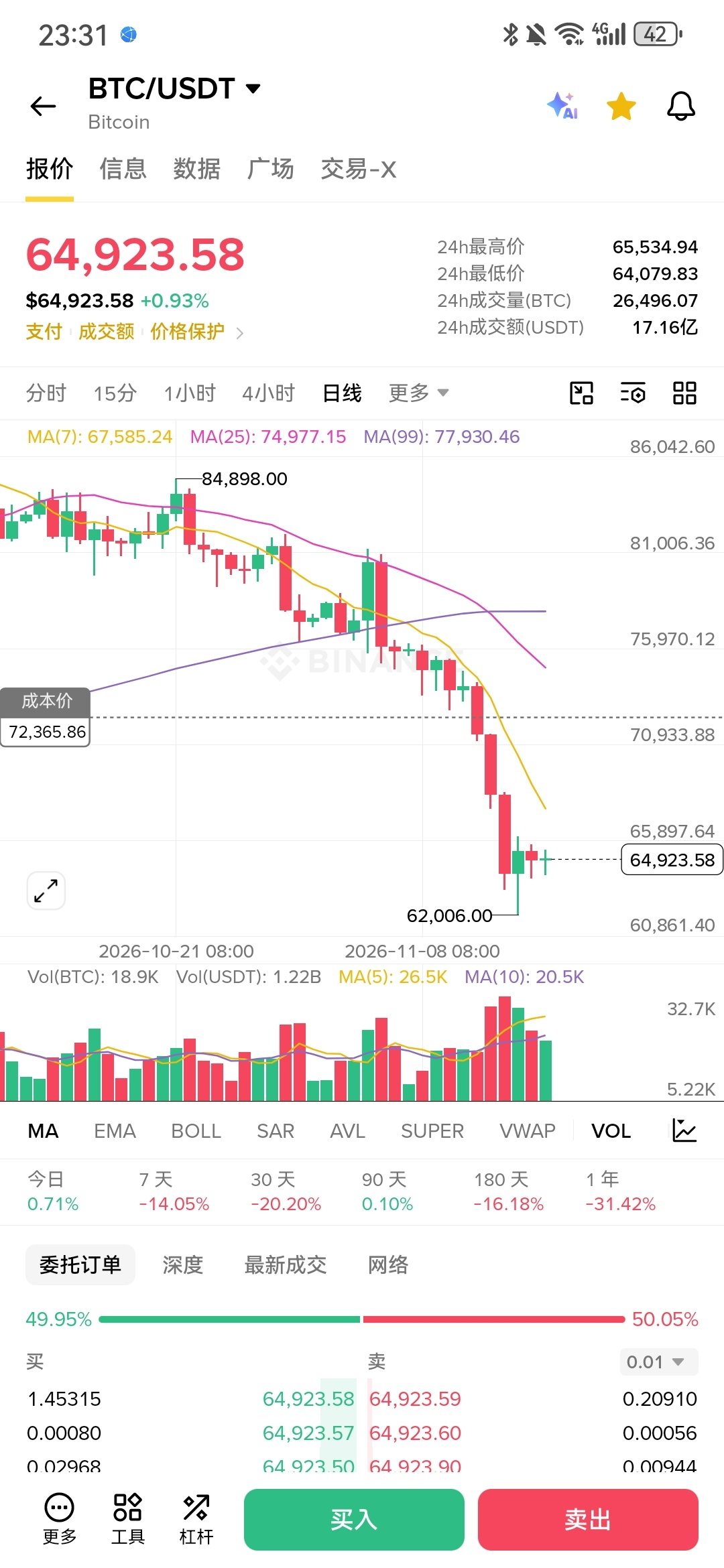
$BTC has fallen about 25% from its early-October high, and the Fear and Greed Index has dropped to 10, putting it in “extreme fear” territory.
U.S. spot Bitcoin ETFs have seen cumulative net outflows of around $2.35 billion in November, with institutional money moving out. On top of that, Anthropic’s trillion-dollar IPO is soaking up liquidity, and some investors may even be selling crypto to get in on the IPO~
So this isn’t the week to see who’s got the biggest appetite for risk—it’s about who can keep their positions under control. If either Nvidia or the Fed fails to give the market the answers it wants, volatility could intensify. Crypto is already facing outflows, and sentiment is fragile, so it’s probably best to watch and wait. Both markets are being “tested”—don’t take on heavy leverage in “extreme fear.” Better to wait and see how this week’s “landmines” play out one by one~
#本周财报与宏观事件密集,市场再迎波动考验
{future}(ETHUSDT)
{future}(NVDAUSDT)
{future}(ZECUSDT)
This week, both traditional markets and crypto are facing a “test”~
Let’s start with traditional markets~
Nvidia reports earnings after the U.S. market closes on Tuesday. It’ll be the first “report card” since Jensen Huang stepped down. The market expects revenue of around $109 billion, but what’s really making everyone nervous isn’t the number—it’s whether the new management team can keep things steady, and whether the AI story can keep going…
The options market is even betting that Nvidia’s share price could move around 8.5% in either direction after earnings~
Around the same time, the Fed will release minutes from its October meeting. Markets are pricing in a decent chance of a rate hike in December, and expectations for rates to stay “higher for longer” are still weighing on risk assets~
Crypto has its own rough patch to deal with…
$BTC has fallen about 25% from its early-October high, and the Fear and Greed Index has dropped to 10, putting it in “extreme fear” territory.
U.S. spot Bitcoin ETFs have seen cumulative net outflows of around $2.35 billion in November, with institutional money moving out. On top of that, Anthropic’s trillion-dollar IPO is soaking up liquidity, and some investors may even be selling crypto to get in on the IPO~
So this isn’t the week to see who’s got the biggest appetite for risk—it’s about who can keep their positions under control. If either Nvidia or the Fed fails to give the market the answers it wants, volatility could intensify. Crypto is already facing outflows, and sentiment is fragile, so it’s probably best to watch and wait. Both markets are being “tested”—don’t take on heavy leverage in “extreme fear.” Better to wait and see how this week’s “landmines” play out one by one~
#本周财报与宏观事件密集,市场再迎波动考验

15
20
48
33.8k
·
--
Verified
170,000 people are calling for him to come back, while Bessent has given him a 10-day ultimatum!
The same issue, but two completely opposite countdowns~
Nvidia will report its Q3 earnings after market close on November 17. It’ll be the first earnings call since Huang’s departure, and he’s not expected to attend. Interim CEO Colette Kress will step in to speak. The board’s independent investigation is still ongoing, with Wachtell conducting the probe. Arm CEO Rene Haas has already been approached~
On one side, Musk, Uber’s former CEO, and YouTube’s co-founder have publicly thrown their support behind him. The petition has topped 170,000 signatures, with Nvidia employees alone accounting for nearly one-fifth.
On the other side, Treasury Secretary Bessent said directly on Fox: find a CEO from outside the company, and respond within 10 days on chip export compliance~
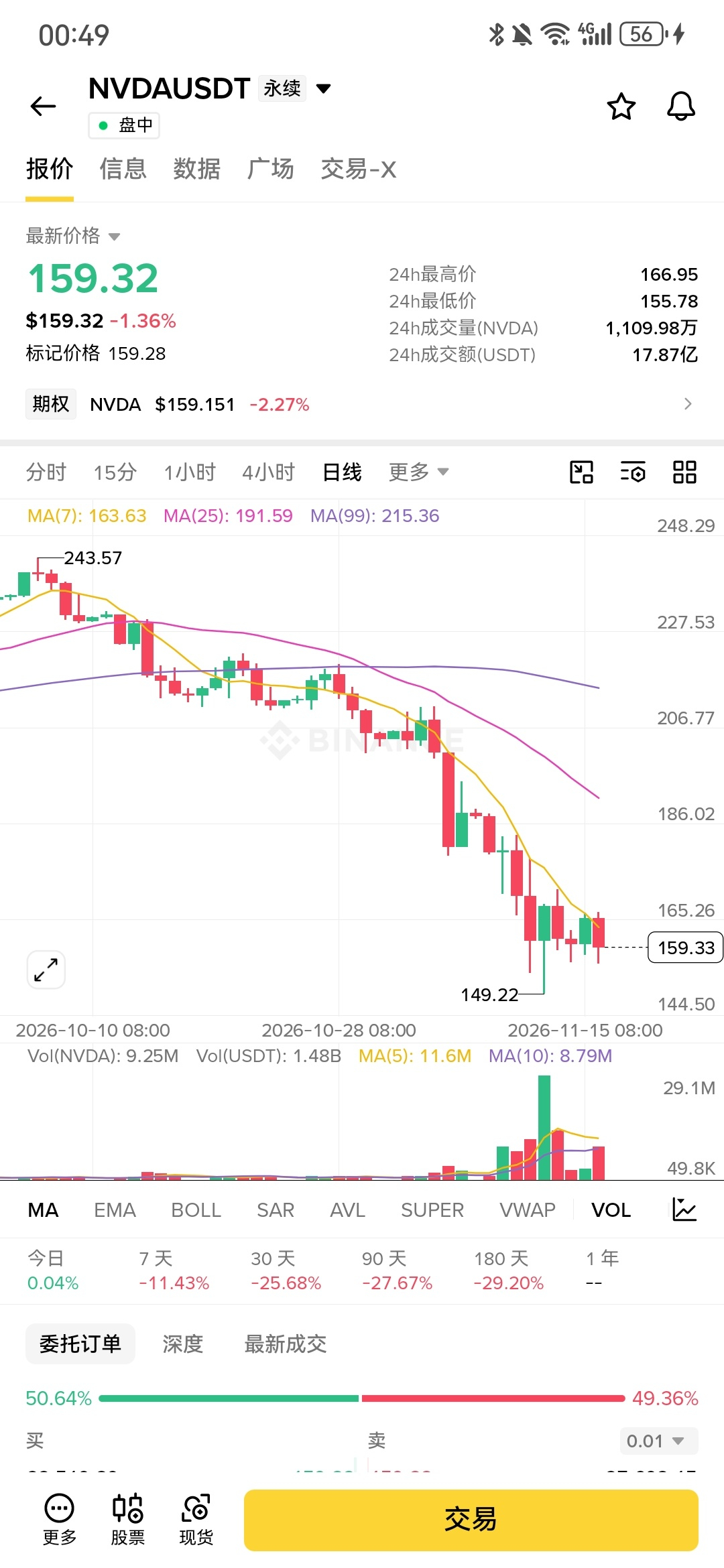
Huang owns only 3.6% of the shares, so he can’t overturn any board decision. The stock fell 12.75% last week. HSBC slashed its price target from 365 to 170. It’s now at 158.6, with a market cap of 3.83 trillion and a 52-week low of 148.8 just below~
So the market isn’t really betting on “whether Huang wants to come back.” It’s betting on whether the board dares to bring him back before the investigation is over. Some analysts are bluntly calling that “corporate governance suicide”~
So, which side are you betting on? Will Nvidia hit its 52-week low of 148 before earnings, or reach 170 first? Drop your call in the comments, and let’s check the answer after the close~
#英伟达 #英媒报道黄仁勋正考虑重返英伟达
{future}(NVDAUSDT)
{future}(HYPEUSDT)
{future}(ZECUSDT)
170,000 people are calling for him to come back, while Bessent has given him a 10-day ultimatum!
The same issue, but two completely opposite countdowns~
Nvidia will report its Q3 earnings after market close on November 17. It’ll be the first earnings call since Huang’s departure, and he’s not expected to attend. Interim CEO Colette Kress will step in to speak. The board’s independent investigation is still ongoing, with Wachtell conducting the probe. Arm CEO Rene Haas has already been approached~
On one side, Musk, Uber’s former CEO, and YouTube’s co-founder have publicly thrown their support behind him. The petition has topped 170,000 signatures, with Nvidia employees alone accounting for nearly one-fifth.
On the other side, Treasury Secretary Bessent said directly on Fox: find a CEO from outside the company, and respond within 10 days on chip export compliance~
Huang owns only 3.6% of the shares, so he can’t overturn any board decision. The stock fell 12.75% last week. HSBC slashed its price target from 365 to 170. It’s now at 158.6, with a market cap of 3.83 trillion and a 52-week low of 148.8 just below~
So the market isn’t really betting on “whether Huang wants to come back.” It’s betting on whether the board dares to bring him back before the investigation is over. Some analysts are bluntly calling that “corporate governance suicide”~
So, which side are you betting on? Will Nvidia hit its 52-week low of 148 before earnings, or reach 170 first? Drop your call in the comments, and let’s check the answer after the close~
#英伟达 #英媒报道黄仁勋正考虑重返英伟达

16
7
52
42.4k
·
--
Crypto and U.S. stocks are both taking a beating. Don’t rush to call it “over”—this time, crypto didn’t bring it on itself; it was dragged down by the same force as everything else~
After such a steep drop, the real catalyst for a rebound may not be “good news” at all. It may simply be that all the positions that needed to blow up have already blown up~
Here’s a counterintuitive point: during this drop, long-term holders have barely sold. The on-chain mean reversion index has fallen deep into value territory, marking the fourth capitulation-style sell-off from an all-time high. The ones really selling at a loss are people who chased the market at 80,000—not long-time holders.
So who’s taking the hit? Leveraged bulls.
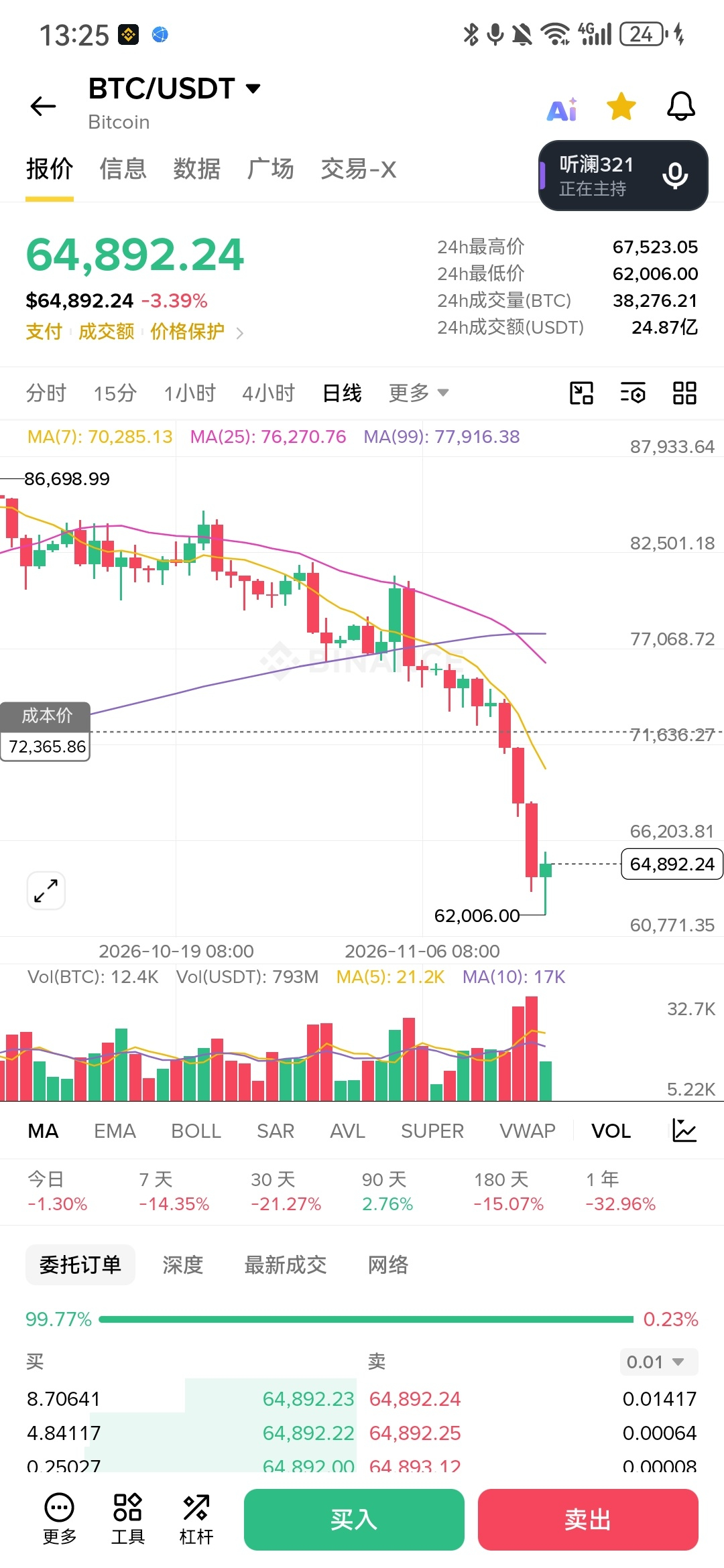
In 24 hours, $1.9 billion was liquidated: $BTC 6.84 hundred million, $ETH 4.66 hundred million, with longs accounting for the vast majority. Open interest has shrunk from $61.7 billion at its September peak to around $46 billion, wiping out more than half the leverage and returning to levels seen before the explosive rally in August. This is defusing a bomb, not planting one.
But there’s one detail that looks odd: the Fear and Greed Index has plunged to 13, signaling extreme fear, yet the retail long-to-short ratio is still above 3, favoring longs.
Retail traders are still piling into longs amid extreme fear, which suggests the cleanup isn’t quite finished. The bottom will be more convincing once the long-to-short ratio falls and funding rates turn negative, flushing out the last stubborn longs. ETH and $SOL have already seen funding rates turn negative, and shorts are more crowded there—which, conversely, is a sign that those markets are closer to a localized washout.
So the next rebound may depend less on “waiting for rate cuts” or “waiting for ETF inflows to return” and more on letting positioning work itself out.
Good news may be the fuse, but the powder has to be cleared first. So it’s still a bit early to call for a V-shaped recovery~
#加密美股齐跌,下轮反弹的驱动力在哪?
{future}(ZECUSDT)
{future}(XAUTUSDT)
{future}(BNBUSDT)
Crypto and U.S. stocks are both taking a beating. Don’t rush to call it “over”—this time, crypto didn’t bring it on itself; it was dragged down by the same force as everything else~
After such a steep drop, the real catalyst for a rebound may not be “good news” at all. It may simply be that all the positions that needed to blow up have already blown up~
Here’s a counterintuitive point: during this drop, long-term holders have barely sold. The on-chain mean reversion index has fallen deep into value territory, marking the fourth capitulation-style sell-off from an all-time high. The ones really selling at a loss are people who chased the market at 80,000—not long-time holders.
So who’s taking the hit? Leveraged bulls.
In 24 hours, $1.9 billion was liquidated: $BTC 6.84 hundred million, $ETH 4.66 hundred million, with longs accounting for the vast majority. Open interest has shrunk from $61.7 billion at its September peak to around $46 billion, wiping out more than half the leverage and returning to levels seen before the explosive rally in August. This is defusing a bomb, not planting one.
But there’s one detail that looks odd: the Fear and Greed Index has plunged to 13, signaling extreme fear, yet the retail long-to-short ratio is still above 3, favoring longs.
Retail traders are still piling into longs amid extreme fear, which suggests the cleanup isn’t quite finished. The bottom will be more convincing once the long-to-short ratio falls and funding rates turn negative, flushing out the last stubborn longs. ETH and $SOL have already seen funding rates turn negative, and shorts are more crowded there—which, conversely, is a sign that those markets are closer to a localized washout.
So the next rebound may depend less on “waiting for rate cuts” or “waiting for ETF inflows to return” and more on letting positioning work itself out.
Good news may be the fuse, but the powder has to be cleared first. So it’s still a bit early to call for a V-shaped recovery~
#加密美股齐跌,下轮反弹的驱动力在哪?
15
14
85
46k
·
--
Verified
Polkadot’s vote this time was really interesting:
97% of voters agreed to try a “different way of doing things.” Polkadot has always given people the impression that its technology is impressive, but ordinary people don’t know what to do with it.
This time, it’s adopting a new strategy—in other words, no more “building for developers just to impress themselves.” It’s going straight to making things ordinary people can use~
And the concrete move is pretty straightforward: build a mobile app,
called Polkadot App. It can send private messages and make digital cash payments. It’s free, usernames are simple, and you can use it right on your phone.
In other words, Polkadot wants you to use it the way you use WeChat and Alipay, instead of having to learn a bunch of on-chain concepts first.
It’s also planning to launch a stablecoin, dotUSD, pegged to the US dollar and backed by $DOT .
Here’s the key point: the more dotUSD is used, the greater the demand for DOT should theoretically be.
Polkadot doesn’t want to be just “infrastructure” anymore. It wants you to actually hold $DOT , spend it, use it, and create demand for it~
The broader context is worth mentioning too: $DOT is currently trading at around $0.78, and the RSI has fallen to around 23. Sentiment is ice-cold…
At a time like this, passing a “shift toward users” strategy with 97% of the vote sends a signal that matters more than the number itself~
Of course, 97% looks pretty “explosive,” but the vote only drew about 9.65 million DOT, which isn’t especially high relative to the circulating supply.
Still, the direction has been set. Polkadot’s next KPI won’t be the number of code commits, but how many real people are willing to open that app…
My one-line summary is this: Polkadot doesn’t want to be a “technology museum” anymore. It now wants to build something people can actually use on their phones. It’s too early to say whether this move will work, but at least the direction is finally becoming more practical~
#波卡社区以97%票数通过新战略
{future}(ETHUSDT)
{future}(KAVAUSDT)
{future}(XRPUSDT)
Polkadot’s vote this time was really interesting:
97% of voters agreed to try a “different way of doing things.” Polkadot has always given people the impression that its technology is impressive, but ordinary people don’t know what to do with it.
This time, it’s adopting a new strategy—in other words, no more “building for developers just to impress themselves.” It’s going straight to making things ordinary people can use~
And the concrete move is pretty straightforward: build a mobile app,
called Polkadot App. It can send private messages and make digital cash payments. It’s free, usernames are simple, and you can use it right on your phone.
In other words, Polkadot wants you to use it the way you use WeChat and Alipay, instead of having to learn a bunch of on-chain concepts first.
It’s also planning to launch a stablecoin, dotUSD, pegged to the US dollar and backed by $DOT .
Here’s the key point: the more dotUSD is used, the greater the demand for DOT should theoretically be.
Polkadot doesn’t want to be just “infrastructure” anymore. It wants you to actually hold $DOT , spend it, use it, and create demand for it~
The broader context is worth mentioning too: $DOT is currently trading at around $0.78, and the RSI has fallen to around 23. Sentiment is ice-cold…
At a time like this, passing a “shift toward users” strategy with 97% of the vote sends a signal that matters more than the number itself~
Of course, 97% looks pretty “explosive,” but the vote only drew about 9.65 million DOT, which isn’t especially high relative to the circulating supply.
Still, the direction has been set. Polkadot’s next KPI won’t be the number of code commits, but how many real people are willing to open that app…
My one-line summary is this: Polkadot doesn’t want to be a “technology museum” anymore. It now wants to build something people can actually use on their phones. It’s too early to say whether this move will work, but at least the direction is finally becoming more practical~
#波卡社区以97%票数通过新战略

15
7
46
27.9k
·
--
Verified
PPI came in below expectations, but does that mean $BTC is in the clear? Don’t rush to call the bull market back~
Here’s the main point: the data was bullish, but Bitcoin didn’t rise—instead, it fell below 70,000~
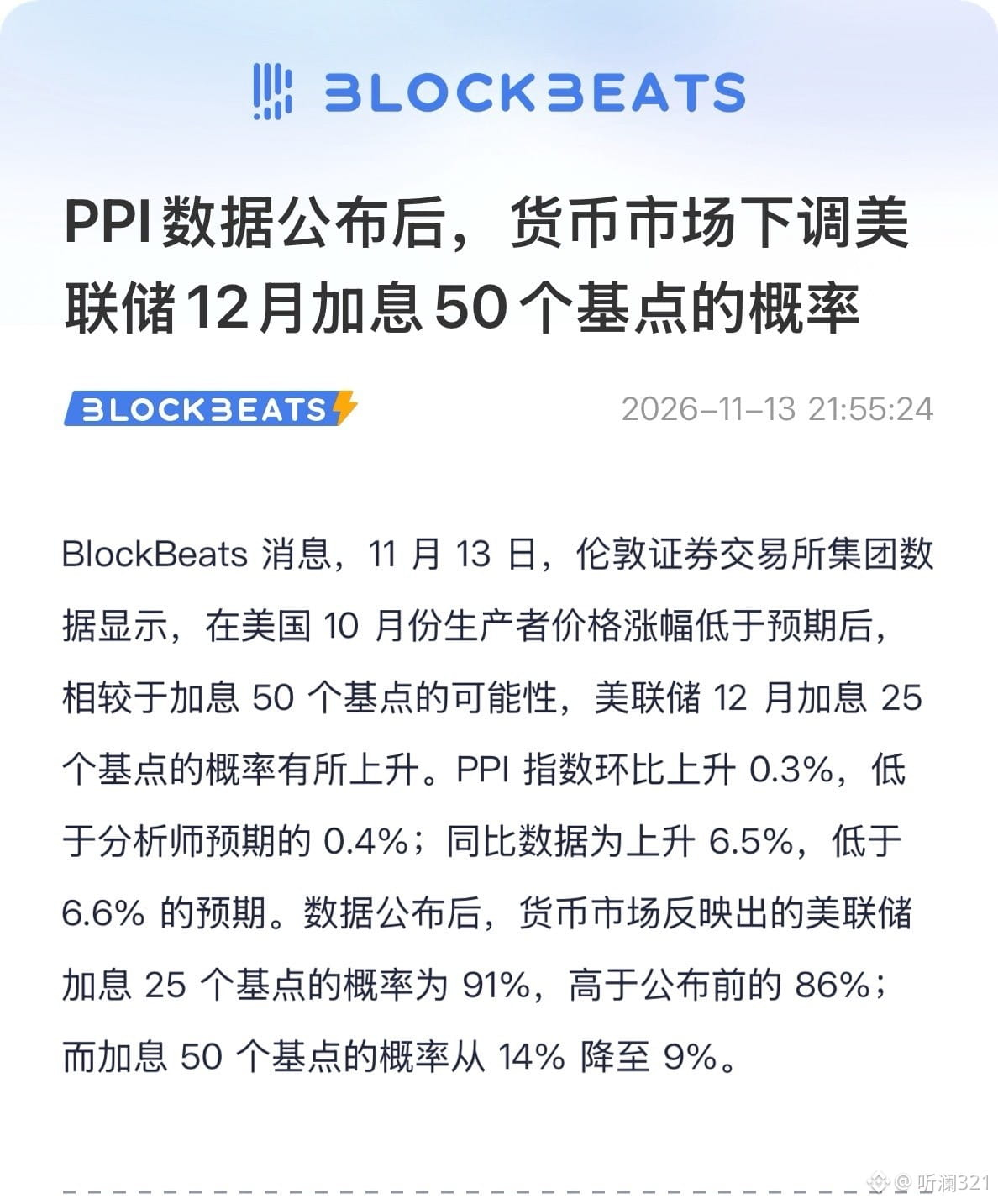
US October PPI was up 6.5% year over year, versus 6.6% expected and 6.3% previously; month over month, it was up 0.3%, versus 0.4% expected.
Both figures came in below expectations, so traders immediately lowered their expectations for Fed tightening. By textbook logic, that should be good news for risk assets. But $BTC wasn’t buying it…
After the data came out, Bitcoin plunged to a low of 68,943, with 1.088 billion in long positions liquidated.
Why did prices fall despite the bullish news?
Because cooler PPI doesn’t mean money will immediately flow back into crypto~
Bitcoin is now watching three things: whether the dollar stays strong, whether ETFs see real inflows, and whether leveraged longs have been cleared out. If even one of these is missing, any rebound could easily be a one-day wonder~
The market isn’t trading on this PPI report alone, but on the macro pressures that have built up over the past week. Hot CPI pushed December rate-hike expectations above 80%, the dollar is strong, and ETF funds have seen continued outflows~
PPI coming in below expectations merely gave the stock market a breather. But crypto’s leveraged longs had already been crushed by the earlier pressure. Last night’s drop was essentially a final wave of forced selling as leverage unwound—not a sell-off triggered by fresh bad news, but old longs who couldn’t hold on getting wiped out…
The most dangerous move right now is seeing the words “below expectations” and rushing in to buy the dip~
I think there’s one key level to watch: can $BTC reclaim 73,200? That’s around the 200-day moving average. If it can’t get back above it, any rebound is just a recovery, not a trend reversal…
#美国PPI年率6.5%,低于预期或缓解BTC压力
{future}(ETHUSDT)
{future}(XAUUSDT)
{future}(ZECUSDT)
PPI came in below expectations, but does that mean $BTC is in the clear? Don’t rush to call the bull market back~
Here’s the main point: the data was bullish, but Bitcoin didn’t rise—instead, it fell below 70,000~
US October PPI was up 6.5% year over year, versus 6.6% expected and 6.3% previously; month over month, it was up 0.3%, versus 0.4% expected.
Both figures came in below expectations, so traders immediately lowered their expectations for Fed tightening. By textbook logic, that should be good news for risk assets. But $BTC wasn’t buying it…
After the data came out, Bitcoin plunged to a low of 68,943, with 1.088 billion in long positions liquidated.
Why did prices fall despite the bullish news?
Because cooler PPI doesn’t mean money will immediately flow back into crypto~
Bitcoin is now watching three things: whether the dollar stays strong, whether ETFs see real inflows, and whether leveraged longs have been cleared out. If even one of these is missing, any rebound could easily be a one-day wonder~
The market isn’t trading on this PPI report alone, but on the macro pressures that have built up over the past week. Hot CPI pushed December rate-hike expectations above 80%, the dollar is strong, and ETF funds have seen continued outflows~
PPI coming in below expectations merely gave the stock market a breather. But crypto’s leveraged longs had already been crushed by the earlier pressure. Last night’s drop was essentially a final wave of forced selling as leverage unwound—not a sell-off triggered by fresh bad news, but old longs who couldn’t hold on getting wiped out…
The most dangerous move right now is seeing the words “below expectations” and rushing in to buy the dip~
I think there’s one key level to watch: can $BTC reclaim 73,200? That’s around the 200-day moving average. If it can’t get back above it, any rebound is just a recovery, not a trend reversal…
#美国PPI年率6.5%,低于预期或缓解BTC压力
17
11
65
32k
·
--
Huang Renxun is gone, and NVIDIA’s “soul” went with him~
Don’t just focus on those few points the stock price has dropped. Let me explain from an even more painful angle: NVIDIA’s real “moat” was never its GPUs—it was Huang Renxun himself…
Look, CUDA lost money for years, and Wall Street criticized it every day. But he still dragged the whole company into the “fire pit,” and in the end, they came out as the AI leader.
Could a professional manager take that kind of gamble—“I call the shots, and I’ll own the losses”? The interim CEO taking over from him comes from a CFO background. Would you really expect someone who manages the books to green-light the next “lose a billion dollars betting on the future” project? Even if she dared to take that bet, the board wouldn’t let her~
And what’s even more subtle is the customer relationships.
Why do those emerging cloud providers buy from NVIDIA? Because Huang personally endorses it. Once he gives the nod, the money follows.
Customers are buying “Huang Renxun thinks you’re good,” not “NVIDIA chips score well on benchmarks.”
Now that he’s gone, someone else simply can’t pick up this “network of personal connections” and “chain of trust”~
So don’t ask whether “NVIDIA will become the next Apple.” Apple still had Ive and Cook after Jobs was gone.
But aboard this ship called NVIDIA, Huang is the captain and the rudder,
And he’s also the one standing at the bow, shouting, “There’s an iceberg ahead, but we’re going through it anyway”…
Now he’s gone, but the ship is still sailing.
So, in the short term, you can only look at the financial reports to get a sense of direction. In the long term, it’s down to fate~
As for whether now’s the time to buy the dip?
All I can say is this: wait until the new CEO is appointed, then see whether they come from a technical or financial background. The answer will be written all over their face~
#黄仁勋辞任CEO,英伟达战略走向受关注
{future}(NVDAUSDT)
{future}(ETHUSDT)
{future}(ZECUSDT)
Huang Renxun is gone, and NVIDIA’s “soul” went with him~
Don’t just focus on those few points the stock price has dropped. Let me explain from an even more painful angle: NVIDIA’s real “moat” was never its GPUs—it was Huang Renxun himself…
Look, CUDA lost money for years, and Wall Street criticized it every day. But he still dragged the whole company into the “fire pit,” and in the end, they came out as the AI leader.
Could a professional manager take that kind of gamble—“I call the shots, and I’ll own the losses”? The interim CEO taking over from him comes from a CFO background. Would you really expect someone who manages the books to green-light the next “lose a billion dollars betting on the future” project? Even if she dared to take that bet, the board wouldn’t let her~
And what’s even more subtle is the customer relationships.
Why do those emerging cloud providers buy from NVIDIA? Because Huang personally endorses it. Once he gives the nod, the money follows.
Customers are buying “Huang Renxun thinks you’re good,” not “NVIDIA chips score well on benchmarks.”
Now that he’s gone, someone else simply can’t pick up this “network of personal connections” and “chain of trust”~
So don’t ask whether “NVIDIA will become the next Apple.” Apple still had Ive and Cook after Jobs was gone.
But aboard this ship called NVIDIA, Huang is the captain and the rudder,
And he’s also the one standing at the bow, shouting, “There’s an iceberg ahead, but we’re going through it anyway”…
Now he’s gone, but the ship is still sailing.
So, in the short term, you can only look at the financial reports to get a sense of direction. In the long term, it’s down to fate~
As for whether now’s the time to buy the dip?
All I can say is this: wait until the new CEO is appointed, then see whether they come from a technical or financial background. The answer will be written all over their face~
#黄仁勋辞任CEO,英伟达战略走向受关注

5
6
41
10k
·
--
Verified
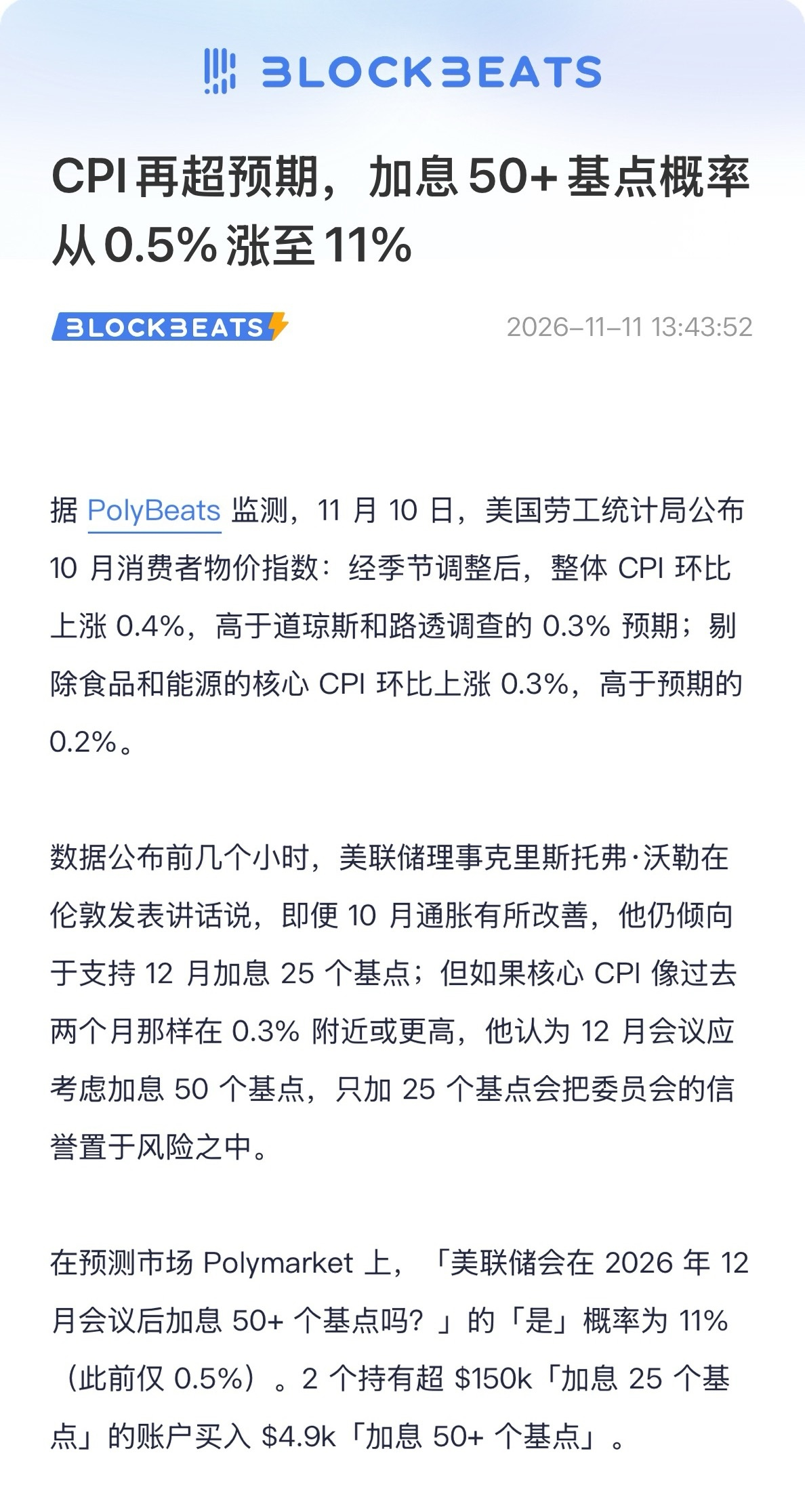
CPI has blown up again, and both U.S. stocks and Bitcoin got hammered 😂
The worst part of this CPI shock wasn’t the price drop—it’s that leverage hasn’t been flushed out yet~
U.S. CPI rose 0.4% month over month in October, above expectations of 0.3%. Core CPI also came in hotter than expected.
As soon as the data came out, traders priced in the highest odds of a Fed rate hike in December, and some even started betting on a 50-basis-point hike!
Fed Governor Waller said a 50-basis-point hike in December could be considered, and Logan piled on, saying “at least two more hikes” are needed.
The 10-year Treasury yield came close to 5%, while the dollar hit a one-month high. In this environment, a rebound takes serious buying power—but leveraged bulls are blocking the door. Who’s going to push prices up?
The result: U.S. stock futures plunged, $BTC fell below $74,000, and more than 80,000 people were liquidated in 24 hours.
The logic is simple: if inflation can’t be brought under control, the Fed will have to keep raising rates. Money gets more expensive, and risk assets are the first to take a hit~
Personally, I think if Bitcoin breaks below 72,700, the bulls will start trampling each other on the way out. So don’t be the one who jumps in early to buy the dip and gets buried.
Better to wait until the leverage has been flushed out before taking another look~
#CPI高于预期,美股与BTC再度承压
{future}(ETHUSDT)
{future}(SOLUSDT)
{future}(ZECUSDT)
CPI has blown up again, and both U.S. stocks and Bitcoin got hammered 😂
The worst part of this CPI shock wasn’t the price drop—it’s that leverage hasn’t been flushed out yet~
U.S. CPI rose 0.4% month over month in October, above expectations of 0.3%. Core CPI also came in hotter than expected.
As soon as the data came out, traders priced in the highest odds of a Fed rate hike in December, and some even started betting on a 50-basis-point hike!
Fed Governor Waller said a 50-basis-point hike in December could be considered, and Logan piled on, saying “at least two more hikes” are needed.
The 10-year Treasury yield came close to 5%, while the dollar hit a one-month high. In this environment, a rebound takes serious buying power—but leveraged bulls are blocking the door. Who’s going to push prices up?
The result: U.S. stock futures plunged, $BTC fell below $74,000, and more than 80,000 people were liquidated in 24 hours.
The logic is simple: if inflation can’t be brought under control, the Fed will have to keep raising rates. Money gets more expensive, and risk assets are the first to take a hit~
Personally, I think if Bitcoin breaks below 72,700, the bulls will start trampling each other on the way out. So don’t be the one who jumps in early to buy the dip and gets buried.
Better to wait until the leverage has been flushed out before taking another look~
#CPI高于预期,美股与BTC再度承压
4
5
39
37.6k
·
--
Verified
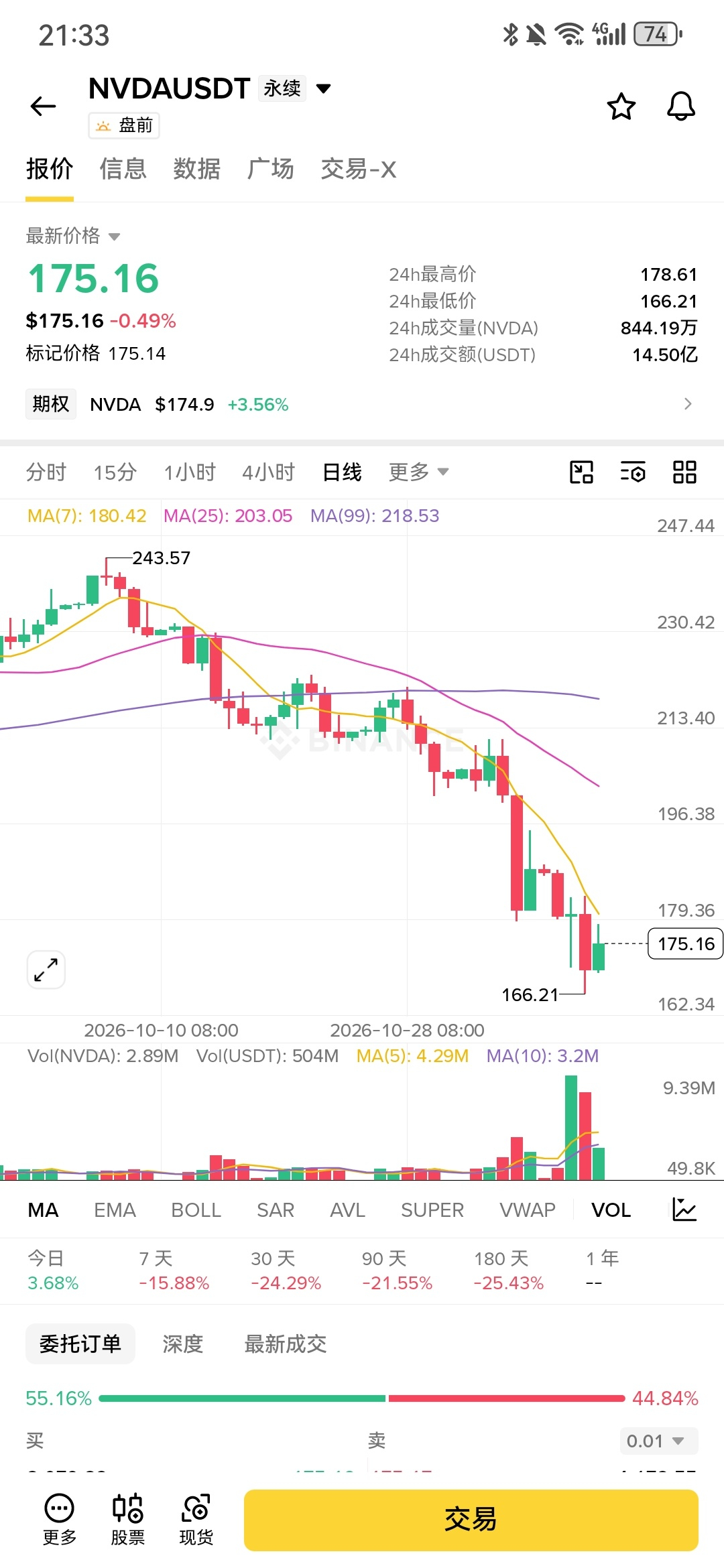
Nvidia’s Q3 earnings are coming up: a showdown between faith in AI and a CEO storm!
This time, the bet isn’t on performance—it’s on whether “Jensen Huang is still around”~
When it comes to the earnings report for No. $NVDA 17, everyone talks about revenue and gross margins, but what’s really keeping investors up at night is something else…
One detail tells us everything: Jensen Huang has always led the earnings calls. But this time, he’s embroiled in controversy, and the board has hired a former federal prosecutor to conduct an independent investigation. Whether he joins the call on the 17th, what he says, and whether he sounds composed matter ten times more than the revenue figures!
Institutional investors are already divided:
Goldman Sachs says the fundamentals are sound and any pullback is a buying opportunity. Citi is still saying “Buy,” but has cut its price target from 315 to 285, giving a very blunt reason: the risk to the CEO’s long-term stability warrants a discount.
In other words, Wall Street hasn’t lost faith in AI—it’s just unsure whether “the person at the helm is still on board.”
Nvidia has no obvious successor, while Jensen Huang has exceptionally strong control over the company. For a company like this, the CEO is both its “greatest asset” and its biggest single point of failure.
So here’s what’s “strange” about this earnings report: even if results beat expectations, the stock might not rise, because everyone will ask, “What comes next?”
If results fall slightly short, it could instead be interpreted as “the problem is with operations, not the person,” and the stock could rebound after an initial sell-off…
Personally, I wouldn’t fixate on a few billion dollars’ difference in revenue. After the market closes on the 17th, watching Jensen Huang’s demeanor on the earnings call will be more useful than looking at the numbers. If he calmly lays out the 2028 order outlook, the market may breathe a sigh of relief. But if he’s vague—or doesn’t show up at all—that’s when the real alarm bells should ring~
What do you think: if a company’s fate rests on one person, should its valuation carry a premium or a discount?
#英伟达Q3财报将至:能否化解市场疑虑?
{future}(NVDAUSDT)
{future}(ETHUSDT)
{future}(ZECUSDT)
Nvidia’s Q3 earnings are coming up: a showdown between faith in AI and a CEO storm!
This time, the bet isn’t on performance—it’s on whether “Jensen Huang is still around”~
When it comes to the earnings report for No. $NVDA 17, everyone talks about revenue and gross margins, but what’s really keeping investors up at night is something else…
One detail tells us everything: Jensen Huang has always led the earnings calls. But this time, he’s embroiled in controversy, and the board has hired a former federal prosecutor to conduct an independent investigation. Whether he joins the call on the 17th, what he says, and whether he sounds composed matter ten times more than the revenue figures!
Institutional investors are already divided:
Goldman Sachs says the fundamentals are sound and any pullback is a buying opportunity. Citi is still saying “Buy,” but has cut its price target from 315 to 285, giving a very blunt reason: the risk to the CEO’s long-term stability warrants a discount.
In other words, Wall Street hasn’t lost faith in AI—it’s just unsure whether “the person at the helm is still on board.”
Nvidia has no obvious successor, while Jensen Huang has exceptionally strong control over the company. For a company like this, the CEO is both its “greatest asset” and its biggest single point of failure.
So here’s what’s “strange” about this earnings report: even if results beat expectations, the stock might not rise, because everyone will ask, “What comes next?”
If results fall slightly short, it could instead be interpreted as “the problem is with operations, not the person,” and the stock could rebound after an initial sell-off…
Personally, I wouldn’t fixate on a few billion dollars’ difference in revenue. After the market closes on the 17th, watching Jensen Huang’s demeanor on the earnings call will be more useful than looking at the numbers. If he calmly lays out the 2028 order outlook, the market may breathe a sigh of relief. But if he’s vague—or doesn’t show up at all—that’s when the real alarm bells should ring~
What do you think: if a company’s fate rests on one person, should its valuation carry a premium or a discount?
#英伟达Q3财报将至:能否化解市场疑虑?
3
2
22
3k
·
--
🔥 BOSS | Arriving with capital ambitions
━━━━━━━━━━━━━
A community-building movement for the capital markets
Jointly launched by the grassroots BNB Chain community
The “BNC On-Chain Board of Directors” is the vision
Bringing the community onto the capital stage is the ambition
◆ Understand BOSS, and see the vision of a group of people~
━━━━━━━━━━━━━
A community-building movement for the capital markets
Jointly launched by the grassroots BNB Chain community
The “BNC On-Chain Board of Directors” is the vision
Bringing the community onto the capital stage is the ambition
◆ Understand BOSS, and see the vision of a group of people~

3
2
18
5.7k
·
--
What really stings about Huang’s situation isn’t the affair—it’s that Washington has finally got a ready-made excuse~
According to The New York Times, U.S. intelligence officials suspect that a businesswoman surnamed Huang was involved in collecting intelligence for Beijing. She was formerly an executive at Megaspeed, a company that bought $4.8 billion worth of Nvidia chips over two years. It was registered in Singapore and bypassed export restrictions on sales to China. Three congressional committees have already asked Huang to give a closed-door briefing on the 18th of this month.
The board says there’s “no reason to believe confidential information was leaked,”
but an independent investigation is already underway.
Trump called him “a good man,” but that kind of endorsement won’t count for much before Congress~
The real issue has nothing to do with morality. What they mainly want to know is who Nvidia’s chips are being sold to and whose hands they pass through. Every link in that chain is now going to be scrutinized under a magnifying glass.
Huang used to be able to lobby in Washington for looser restrictions. Now he first has to clear himself of any wrongdoing in the briefing room. Export controls are only going to get tighter~
Personally, I think those of you trading $NVDA should hold off on jumping in for now. Not because of the gossip, but because those people have finally got an excuse to push ahead with a review without having to make one up~
#黄仁勋因婚外情致歉,英伟达启动独立调查
{future}(NVDAUSDT)
{future}(ETHUSDT)
{future}(ZECUSDT)
What really stings about Huang’s situation isn’t the affair—it’s that Washington has finally got a ready-made excuse~
According to The New York Times, U.S. intelligence officials suspect that a businesswoman surnamed Huang was involved in collecting intelligence for Beijing. She was formerly an executive at Megaspeed, a company that bought $4.8 billion worth of Nvidia chips over two years. It was registered in Singapore and bypassed export restrictions on sales to China. Three congressional committees have already asked Huang to give a closed-door briefing on the 18th of this month.
The board says there’s “no reason to believe confidential information was leaked,”
but an independent investigation is already underway.
Trump called him “a good man,” but that kind of endorsement won’t count for much before Congress~
The real issue has nothing to do with morality. What they mainly want to know is who Nvidia’s chips are being sold to and whose hands they pass through. Every link in that chain is now going to be scrutinized under a magnifying glass.
Huang used to be able to lobby in Washington for looser restrictions. Now he first has to clear himself of any wrongdoing in the briefing room. Export controls are only going to get tighter~
Personally, I think those of you trading $NVDA should hold off on jumping in for now. Not because of the gossip, but because those people have finally got an excuse to push ahead with a review without having to make one up~
#黄仁勋因婚外情致歉,英伟达启动独立调查

14
10
50
19k
·
--
🌺 Fans from 66.6k → 77.7k → 88.8k!
The ups and downs along this journey
were never visible on the surface
A special thank-you to every friend who stayed
You’re not just numbers
—you’re the only light on this journey~
Next stop: 99.9k!
#新人宝典:从零了解TradFi
{future}(ETHUSDT)
{future}(BTCUSDT)
{future}(ZECUSDT)
🌺 Fans from 66.6k → 77.7k → 88.8k!
The ups and downs along this journey
were never visible on the surface
A special thank-you to every friend who stayed
You’re not just numbers
—you’re the only light on this journey~
Next stop: 99.9k!
#新人宝典:从零了解TradFi
The ups and downs along this journey
were never visible on the surface
A special thank-you to every friend who stayed
You’re not just numbers
—you’re the only light on this journey~
Next stop: 99.9k!
#新人宝典:从零了解TradFi



32
11
86
9.2k
·
--
Verified
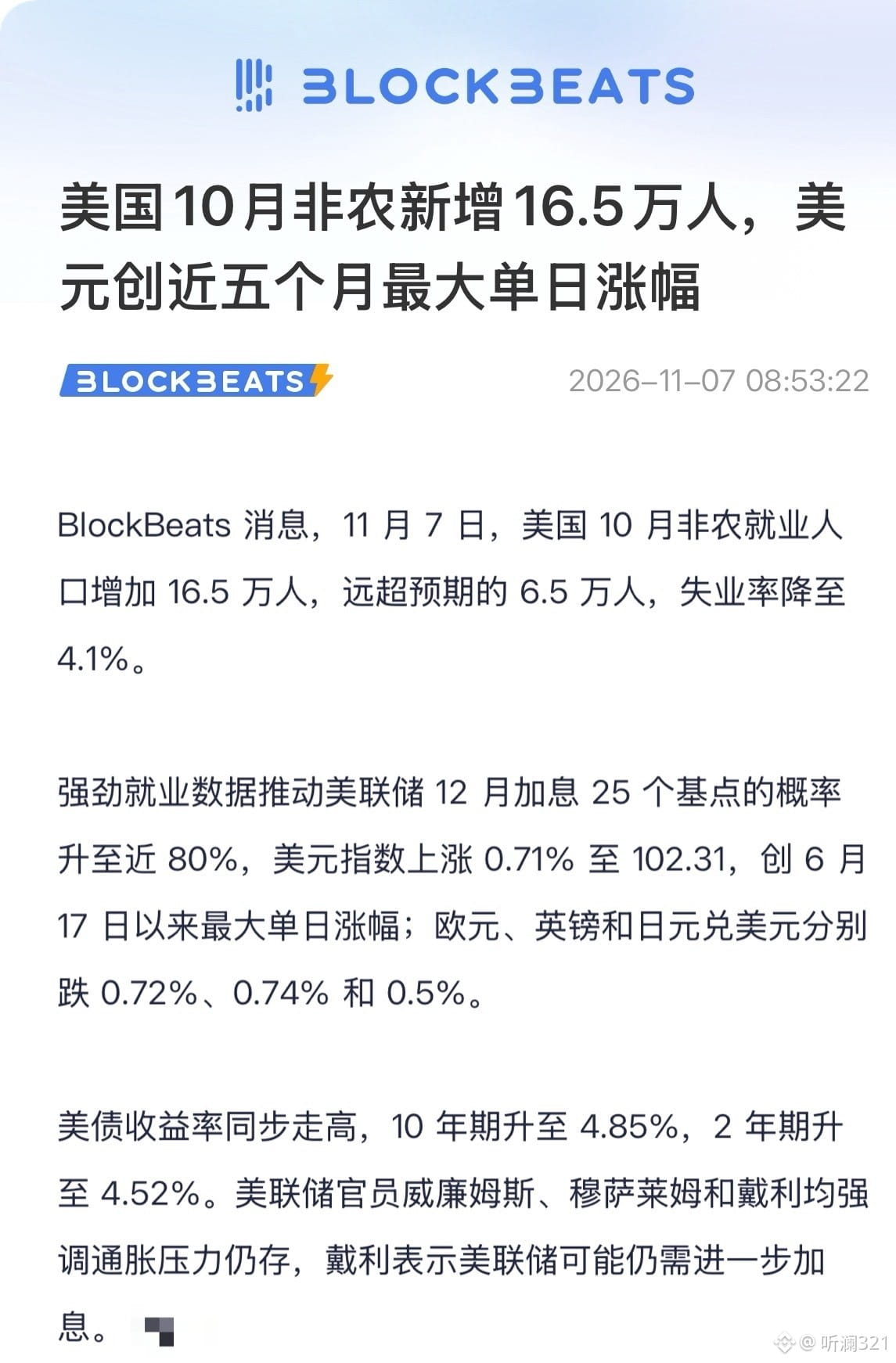
Last night, when the nonfarm payrolls data came out, I stared at the screen in disbelief for a few seconds!
165,000, compared with expectations of just 65,000—that’s more than double~
And the unemployment rate fell to 4.1%…
Honestly, these numbers were unbelievably strong. I’d been hoping for a rate cut in December, but now expectations that rates will stay higher for longer have heated up, so hopes for near-term cuts may cool off~
Simply put, money is about to get more expensive again.
When the dollar strengthens, risk assets are the first to take a hit. $XAUT Gold and other volatile assets may come under pressure, and altcoins could see even bigger swings. $BTC and $ETH haven’t exactly collapsed along with them,
but don’t assume they’ll be immune. There’s only so much capital in the market, and with rate-hike expectations weighing on things, institutions don’t dare charge in aggressively either!
As for altcoins, well, they’re even more vulnerable. Once liquidity dries up, there’s no getting out in time.
I trimmed some of my altcoin positions yesterday. When the macro outlook shifts like this, staying alive matters more than anything. Of course, this is just my personal opinion and not investment advice~
That said, there could still be opportunities in the other direction. If the December rate decision turns out to be a case of “sell the rumor, buy the news,” or CPI unexpectedly cools next week, these expectations could be overturned at any moment—and then a whole different group of people will be left on the sidelines. So I didn’t sell everything; I just reduced my leverage 🥳
What percentage of your portfolio are you invested in right now? Let me know in the comments—I’m curious what everyone thinks 😃
#非农就业数据推升加息预期
{future}(ZECUSDT)
{future}(SOXLUSDT)
{future}(ETHUSDT)
Last night, when the nonfarm payrolls data came out, I stared at the screen in disbelief for a few seconds!
165,000, compared with expectations of just 65,000—that’s more than double~
And the unemployment rate fell to 4.1%…
Honestly, these numbers were unbelievably strong. I’d been hoping for a rate cut in December, but now expectations that rates will stay higher for longer have heated up, so hopes for near-term cuts may cool off~
Simply put, money is about to get more expensive again.
When the dollar strengthens, risk assets are the first to take a hit. $XAUT Gold and other volatile assets may come under pressure, and altcoins could see even bigger swings. $BTC and $ETH haven’t exactly collapsed along with them,
but don’t assume they’ll be immune. There’s only so much capital in the market, and with rate-hike expectations weighing on things, institutions don’t dare charge in aggressively either!
As for altcoins, well, they’re even more vulnerable. Once liquidity dries up, there’s no getting out in time.
I trimmed some of my altcoin positions yesterday. When the macro outlook shifts like this, staying alive matters more than anything. Of course, this is just my personal opinion and not investment advice~
That said, there could still be opportunities in the other direction. If the December rate decision turns out to be a case of “sell the rumor, buy the news,” or CPI unexpectedly cools next week, these expectations could be overturned at any moment—and then a whole different group of people will be left on the sidelines. So I didn’t sell everything; I just reduced my leverage 🥳
What percentage of your portfolio are you invested in right now? Let me know in the comments—I’m curious what everyone thinks 😃
#非农就业数据推升加息预期
7
5
47
8.1k
·
--
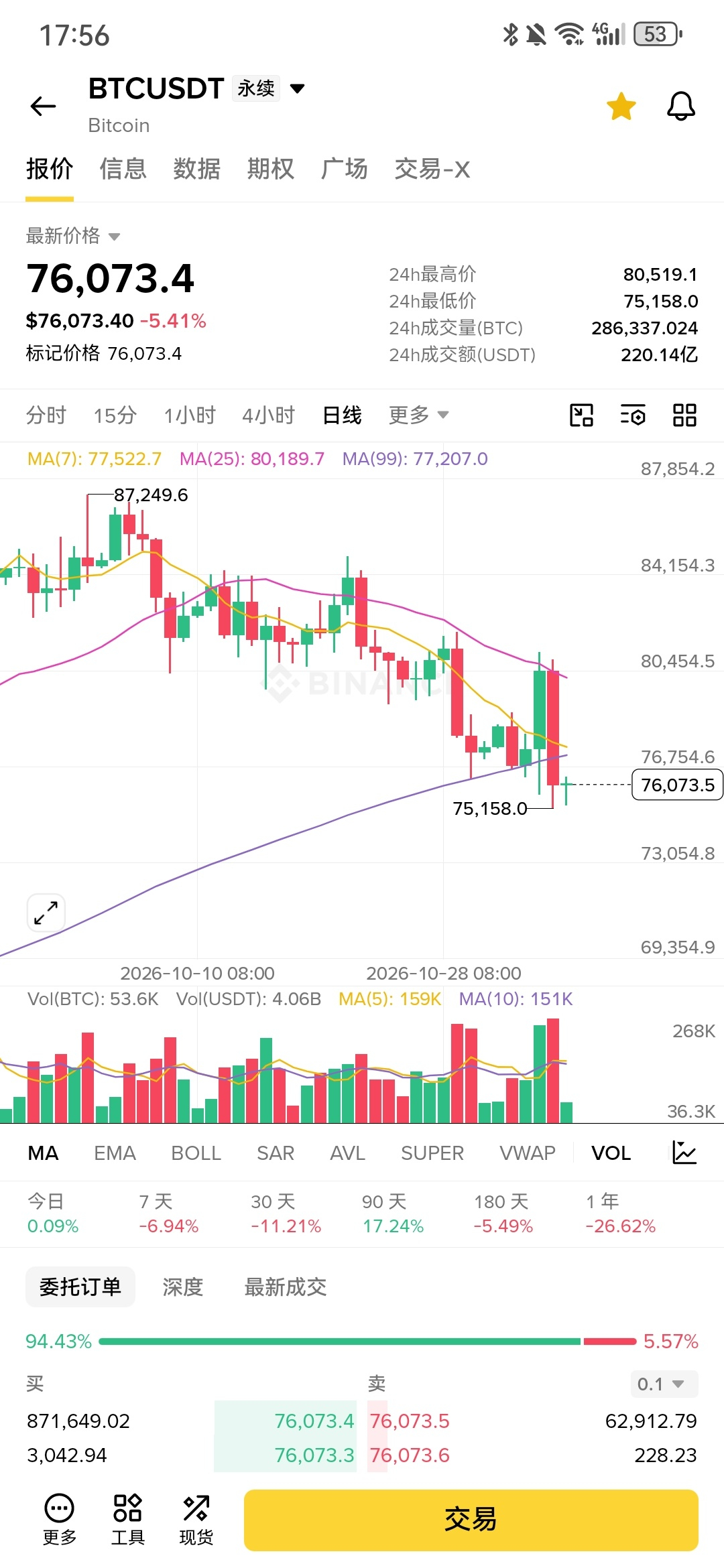
U.S. stocks crashed again! Crypto got dragged down too. Is this the bottom yet?
Guys, did your heart sink when you opened the charts?
U.S. stocks have been doing terribly these past few days, and crypto immediately went down with them! $BTC and $ETH both pulled back, while altcoins just lay flat and stopped moving…
So if the big brother can't make it, don't expect the little brother to do any better 😂
Why does crypto tremble whenever U.S. stocks fall?
Let me explain in three points 👇🏻
1️⃣ Money flows freely. When Wall Street loses money on stocks, it pulls cash out of crypto to plug the holes. When liquidity tightens, can crypto prices really hold up?
2️⃣ Sentiment is contagious. When U.S. stocks fall, everyone thinks the economy is in trouble, so risk assets are the first to “run for the exits”—and crypto runs faster than anything else 😂
3️⃣ The Fed is still dragging its feet. Rate-cut expectations keep getting pushed back, and no money is coming in from the sidelines. Who's supposed to pump the market?
So what can we actually do right now?
Personally, I don't think we should rush to buy the dip, because U.S. stocks haven't stabilized yet, and it's hard for crypto to move independently. Catching a falling knife right now could easily leave you with a cut hand 😂
Leave some room in your positions; definitely don't go all in. Keep some powder dry,
so when the market really drops into a golden buying opportunity, you'll have the confidence to act~
One more important thing: check the charts less!
Watching this kind of market too much makes your fingers itch 😂, and it's easy to make mistakes when you trade. Right now, keeping your hands off the keyboard is better than anything~
Crypto and U.S. stocks have been moving in tandem for a long time. When one falls, they fall together. Once U.S. stocks recover, crypto won't hesitate to bounce back either.
Right now, it's all about who can stay in the game the longest~
When markets are bad, let's trade less and learn more, then wait for the wind to come…
How much do you think $BTC can hold this time? Come chat in the comments 👇
#美股走弱,加密货币市场普遍承压
{future}(SOXLUSDT)
{future}(ZECUSDT)
{future}(ETHUSDT)
U.S. stocks crashed again! Crypto got dragged down too. Is this the bottom yet?
Guys, did your heart sink when you opened the charts?
U.S. stocks have been doing terribly these past few days, and crypto immediately went down with them! $BTC and $ETH both pulled back, while altcoins just lay flat and stopped moving…
So if the big brother can't make it, don't expect the little brother to do any better 😂
Why does crypto tremble whenever U.S. stocks fall?
Let me explain in three points 👇🏻
1️⃣ Money flows freely. When Wall Street loses money on stocks, it pulls cash out of crypto to plug the holes. When liquidity tightens, can crypto prices really hold up?
2️⃣ Sentiment is contagious. When U.S. stocks fall, everyone thinks the economy is in trouble, so risk assets are the first to “run for the exits”—and crypto runs faster than anything else 😂
3️⃣ The Fed is still dragging its feet. Rate-cut expectations keep getting pushed back, and no money is coming in from the sidelines. Who's supposed to pump the market?
So what can we actually do right now?
Personally, I don't think we should rush to buy the dip, because U.S. stocks haven't stabilized yet, and it's hard for crypto to move independently. Catching a falling knife right now could easily leave you with a cut hand 😂
Leave some room in your positions; definitely don't go all in. Keep some powder dry,
so when the market really drops into a golden buying opportunity, you'll have the confidence to act~
One more important thing: check the charts less!
Watching this kind of market too much makes your fingers itch 😂, and it's easy to make mistakes when you trade. Right now, keeping your hands off the keyboard is better than anything~
Crypto and U.S. stocks have been moving in tandem for a long time. When one falls, they fall together. Once U.S. stocks recover, crypto won't hesitate to bounce back either.
Right now, it's all about who can stay in the game the longest~
When markets are bad, let's trade less and learn more, then wait for the wind to come…
How much do you think $BTC can hold this time? Come chat in the comments 👇
#美股走弱,加密货币市场普遍承压
9
6
38
13.9k
·
--
I read the investigation report on #币安 .
Honestly, there’s just one key takeaway: an engineer’s laptop was hacked, and then 6.3 billion was gone.
It wasn’t a leaked private key or a compromised wallet—it was just one person and one computer~
My first reaction was: this is even more chilling than a private key leak.
A leaked private key means there was a problem with how you protected it;
a compromised laptop means the attack surface is much larger than you think.
One DevOps engineer’s computer was enough to access service containers and submit withdrawal requests. It sounds simple, but when you think it through, it’s pretty terrifying…
But the Binance team reacted quickly. 3 billion was frozen,
and SAFU covered the rest, so users didn’t lose their money. They handled that part really well, because they didn’t make users pay for it~
My take is a bit more cautious.
In the short term, the sentiment around $BNB and $BTC will definitely need time to settle,
after all, “the biggest exchange got hacked.” The market will need some time to process that, which is perfectly normal. But I don’t think it’s a reason to believe the trend has reversed.
6.3 billion sounds like a lot, but Binance can cover it.
What we should really be watching is the full technical postmortem report that comes later,
to see whether this was an isolated lapse or a systemic issue.
If it was the former, the dip could actually be an opportunity;
but if it was the latter, then we’ll have to reassess…
Anyway, I haven’t changed my positions. I’ll wait a couple of days and see 😊
#币安10·30安全事件调查报告
{future}(ETHUSDT)
{future}(ZECUSDT)
{future}(XAUTUSDT)
I read the investigation report on #币安 .
Honestly, there’s just one key takeaway: an engineer’s laptop was hacked, and then 6.3 billion was gone.
It wasn’t a leaked private key or a compromised wallet—it was just one person and one computer~
My first reaction was: this is even more chilling than a private key leak.
A leaked private key means there was a problem with how you protected it;
a compromised laptop means the attack surface is much larger than you think.
One DevOps engineer’s computer was enough to access service containers and submit withdrawal requests. It sounds simple, but when you think it through, it’s pretty terrifying…
But the Binance team reacted quickly. 3 billion was frozen,
and SAFU covered the rest, so users didn’t lose their money. They handled that part really well, because they didn’t make users pay for it~
My take is a bit more cautious.
In the short term, the sentiment around $BNB and $BTC will definitely need time to settle,
after all, “the biggest exchange got hacked.” The market will need some time to process that, which is perfectly normal. But I don’t think it’s a reason to believe the trend has reversed.
6.3 billion sounds like a lot, but Binance can cover it.
What we should really be watching is the full technical postmortem report that comes later,
to see whether this was an isolated lapse or a systemic issue.
If it was the former, the dip could actually be an opportunity;
but if it was the latter, then we’ll have to reassess…
Anyway, I haven’t changed my positions. I’ll wait a couple of days and see 😊
#币安10·30安全事件调查报告
18
8
80
52.4k
Log in to explore more content
Join global crypto users on Binance Square
⚡️ Get latest and useful information about crypto.
💬 Trusted by the world’s largest crypto exchange.
👍 Discover real insights from verified creators.
Email / Phone number
Trending Topics
XRPDropsToTwoYearLowNear87Cents
0 views
25 Discussing
Guys... $XRP just dropped to its TWO YEAR LOW near $0.87 😳
Seriously... who imagined XRP would be trading below $1 again after hitting $3.66??
Now around $0.92 and the weekly chart is still looking bearish... no clear reversal yet.
But honestly, i am seeing this as another opportunity to accumulate $XRP for long term 😁
I know the bottom might still be ahead... that's why i am planning to DCA slowly around $0.85 - $0.95 and keep some USDT for deeper dips.
Not going ALL IN just because it's cheap 😂
Are you accumulating XRP below $1 or waiting for $0.70? 👀
$BTC
#XRPDropsToTwoYearLowNear87Cents
ParvezMayar
·0 Likes
·352 views
BitcoinFallsBelow$57KToTwoYearLow
0 views
4 Discussing
NvidiaLoses$2.7TrillionInMonthAndAHalf
82 views
21 Discussing