

The main point
Fake investment scams use the promise of high profits to lure victims into investing their money.
Fraudsters typically employ a four-step process: discovery, gaining trust, persuading, and closing the deal.
Report fraud targeting you to authorities, change compromised passwords, and freeze any accounts if you have transferred money.
Protect yourself from crypto fraud by learning how to identify and avoid fraudulent investment schemes. Find out how in this week's edition of Know Your Scam!

They may appear genuine on the surface, claiming to be crypto financial advisors, employees of prominent financial companies, or even celebrities. They promise high returns with low or no risk or even effort required on your part. They are actually investment fraudsters.
Although they appear in various forms, investment fraud has the same mechanism: promising victims extremely high returns, then making off with their money. If you only need to remember one thing, remember this: if it seems far-fetched — it probably is. Avoid.
For starters, let's look at how fake investment scams generally work.
Four Step Process
1. Finding
Fraudsters usually find potential targets on popular social media platforms such as Facebook, Instagram, or Twitter. Scammers may contact victims by pretending to be an investment manager offering advice or someone wealthy who "accidentally" sent a message to the wrong person.
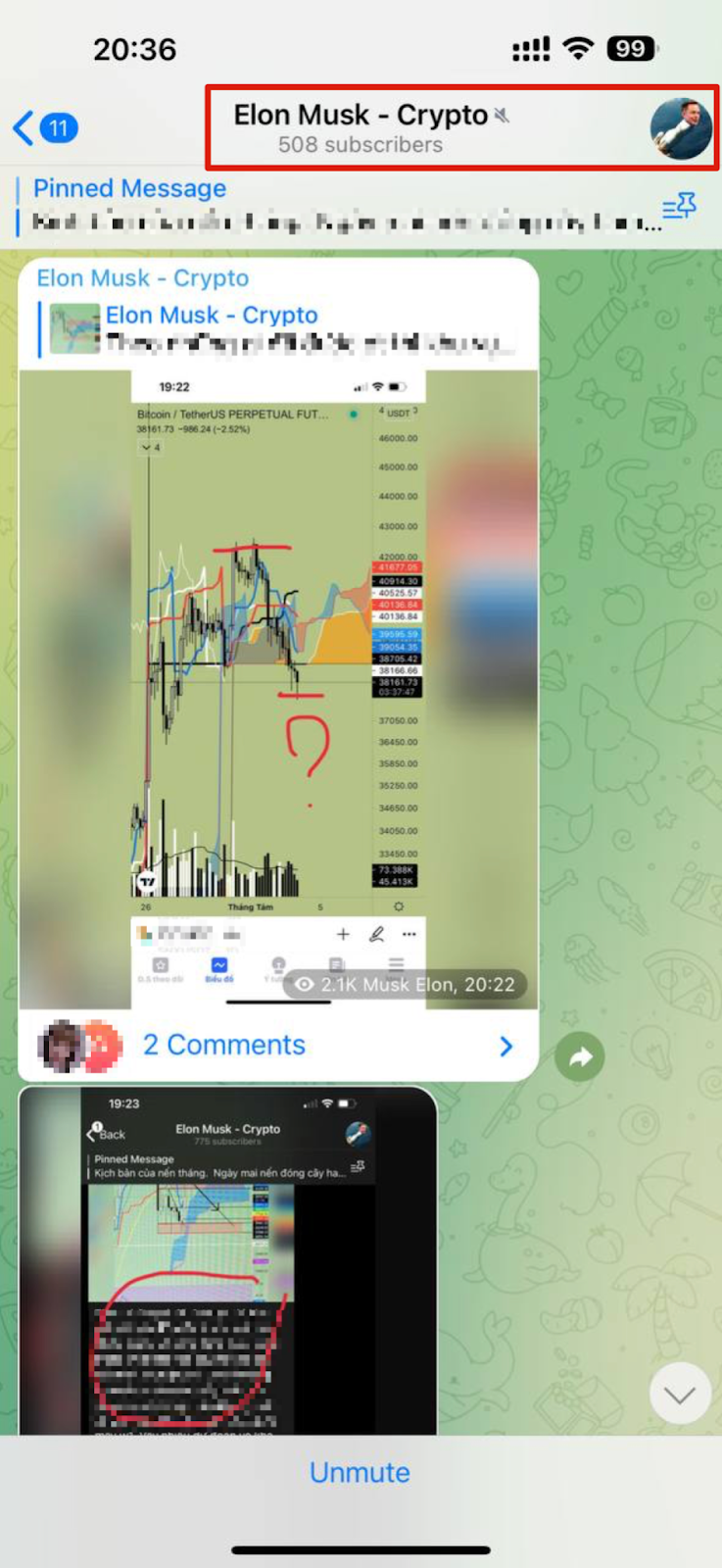
However, fake investment scams are not always straightforward. We may come across advertisements on social media that use famous brands or figures, such as Elon Musk, to promote their services. Then, these ads will link to professional-looking websites that can be trusted.
2. Gain trust
Fraudsters begin to build trust in their targets by sharing investment success stories, impressive user “testimonials” and fake income reports. Some scammers go so far as to discuss topics such as health, emotional well-being, and even the victim's family members.
3. Persuade
After a period of “friendship” — and brainwashing — the fraudster has built trust with the target and will shift the conversation toward investments and how to make large amounts of money.
Our team has also seen several cases of fraudsters promoting fake investment software that offers fake prices, investment returns and coin listings. Furthermore, fraudsters can even fake bullish movements with doctored charts to lure investors into depositing their money.
4. Closing
The final step is “closing the transaction.” Often, while victims are celebrating their newly earned profits, their money suddenly cannot be withdrawn or the account has been “closed.” The "investment manager" could no longer be contacted and eventually stopped responding to messages.
At this stage, the target has become a victim of fraud. The scammer may even ask the victim for more funds to help with the withdrawal process.
See Two Examples of Fraudulent Actions
Here are two examples of fake investment fraud that occurred in the real world. We lay them out here in the hope that users will be able to identify the common methods, patterns, and conversation starters behind crypto investment scams.
Example 1: Crypto Financial Advisor
The user, let's call him Mark, fills out an online form about habits and attitudes regarding crypto that he finds in cyberspace. After that, he received a call from a fraudster claiming to be a financial advisor.
The two of them had a working relationship for several months, talking and exchanging information every day. Eventually, the con artist gains Mark's trust.
One day, the fraudster convinces Mark to make an investment through a platform that provides 2% returns daily. Mark, who simply believed it, deposited 5,000 USDT.
Mark's money increased as promised over the next few days. The con man encouraged Mark to invest more; Mark agreed, then deposited 30,000 USDT. One week later, Mark realized that he had been conned.

Example 2: Celebrities
The user, let's call her Lucy, found a link on Facebook to "Elon Musk's AI Quantum Trading Platform." Turns out, Lucy just needs to deposit crypto, and the AI will do the trading for her.
After contacting the “ AI Quantum Trading Platform ,” Lucy made an initial deposit of $250. Trading begins and the profits add up quickly. Lucy was convinced that “investing” $5,000 in the platform would pay off handsomely and deposited the money. Lucy realized she had been scammed after her withdrawal attempt was blocked on “anti-money laundering (AML)” grounds requiring her to pay a 30% deposit fee.
How to Protect Yourself from Fake Investment Scams
Do Your Own Research (DYOR)
Every cryptocurrency project must have a whitepaper. The whitepaper should explain the mechanics and tokenomics of the project. If someone persuades you to invest in a project with a whitepaper that doesn't make sense – or worse, doesn't exist – beware.
Conduct background checks on the company, owners, directors and team members. At the very least, do a quick Google search and use some common sense.
Ask yourself: Does this project have a real team? What problem does this project aim to solve? Is there an official user community behind the project or product?
Make sure it's authentic
A professional-looking website, advertisement, or social media post does not indicate a genuine investment opportunity. Criminals can and often do exploit trusted brand names, such as Binance, or famous people to make their scams appear genuine.
Beware of high yields
No financial investment can guarantee future returns. No person, algorithm, or project can systematically predict the market with accuracy. Anything that promises guaranteed returns is a red flag. Pay close attention to statements like “earn 3% per day.” Don't be fooled by low numbers that sound convincing: 3% per day equals 1095% per year – a return on a very unreasonable investment.
Avoid unsolicited investment offers
Investment experts or interesting people who contact you are likely scammers. Remember — professional scammers chat and flirt with hundreds or even thousands of targets every day.
As long as there is at least one person investing, it means the fraudster is not wasting his time. Don't be persuaded or forced to make investment decisions.
Protect your personal information
Confirm the identity of anyone speaking to you about investments via official websites or social media and never reveal your personal or account details to anyone else.
If you receive a message from someone asking for sensitive information, such as a 2FA code or password, block the contact and file a report with authorities.
If You Have Been a Victim of Fraud
This did happen. Do not be shy. Falling victim to a cryptocurrency scam can be devastating, but you need to act quickly.
If you become a victim of social media fraud, file a report with the relevant social media platform and report the case to local authorities.
Change your password and freeze financial accounts if you have made payments or transfers using a debit/credit card. Additionally, crypto fraudsters often sell stolen credentials to other parties. Make sure you change all usernames and passwords to prevent worse impacts.
Don't trust strangers who contact you immediately after a scam occurs, especially if they offer to refund your money. Follow-up scams may be unrelated to the previous scam, for example an offer to refund your money after you have paid an upfront fee.
If your Binance account has been compromised, contact us immediately: How to Report Fraud at Binance Support.
Further Reading
(Academy) 8 Common Bitcoin Scams and How to Avoid Them
(Blog) How to Identify and Avoid Scams from Common Crypto Scammers
(Blog) Know Your Scam: The Ultimate Guide to the Most Common Crypto Scams
(Blog) Binance Partners with Law Enforcement Agencies to Launch Joint Campaign Against Scams
Disclaimer and Risk Warning: This content is presented to you on an “as is” basis for general information and educational purposes only without representation or warranty of any kind. This content should not be considered financial advice nor is it intended to suggest the purchase of any particular product or service. Digital asset prices can be volatile. The value of your investment may fall or rise. You may not get back the amount invested. You are fully responsible for your investment decisions. Binance is not responsible for any losses you may experience. Not financial advice. For more information, read our Terms of Use and Risk Warning.