

周周1688
 Square Verified+
1688品牌创始人 ‖ BNB布道者 ‖ 晚上19:00-22:00直播 ‖ KOL宣发&项目推广‖ 💗推特X:zzhou1688
Frequent Trader
9.3 Years
1.5K+ Following
111.4K+ Followers
169.3K+ Liked
Posts
All
Quotes
Videos
PINNED


静静Emily
·
--
Things aren’t going well on the crypto front either…
$BTC has pulled back about 25% from its early-October high, and the Fear & Greed Index has fallen to 10, in “Extreme Fear” territory.
U.S. spot Bitcoin ETFs have seen cumulative net outflows of about $2.35 billion in November, as institutional money moves out. On top of that, Anthropic’s trillion-dollar IPO is draining liquidity, and some investors may even be selling crypto to get in on the IPO~
So this week isn’t about who has the most nerve—it’s about who can keep their positions under control.
If either Nvidia or the Federal Reserve fails to give the market the answers it wants, volatility could be amplified. Meanwhile, crypto is already bleeding capital, and sentiment is fragile. So it’s still best to watch more and trade less. Both domestic and overseas markets are “sitting exams”—don’t take on high leverage in “Extreme Fear.” Better to wait until this week’s “landmines” have all detonated before deciding what to do~
#本周财报与宏观事件密集,市场再迎波动考验

追风爱交易
·
--
Markets rise and fall, with temptations and traps along the way. Keep greed in check, respect risk, use a system to counter emotions, and gradually build your own success through trading.$SOL


奕泽YIZZE-1688
·
--
Why was BTC the exception? Crypto markets saw $1.86 billion in outflows in October, but Bitcoin bucked the trend and attracted inflows
CoinDesk Research’s October institutional report revealed a noteworthy set of figures:
In October, global digital asset ETPs saw net outflows of about $1.86 billion, including $1.66 billion from Ethereum products—roughly 89.3% of total outflows.
But Bitcoin moved in the opposite direction: BTC-related ETPs saw net inflows of $87.4 million in October.
More notably, companies also continued accumulating. The report shows that digital asset treasury companies added 15,976 BTC in October, with Strive alone adding 15,124 BTC.
What signal do these figures send?


静心1688
·
--
🎉Follow, Like, Comment🎁🎁🎁
#俄罗斯央行拟2027年允许投资基金持有加密货币
#俄罗斯央行拟2027年允许投资基金持有加密货币


江阳ETH
·
--
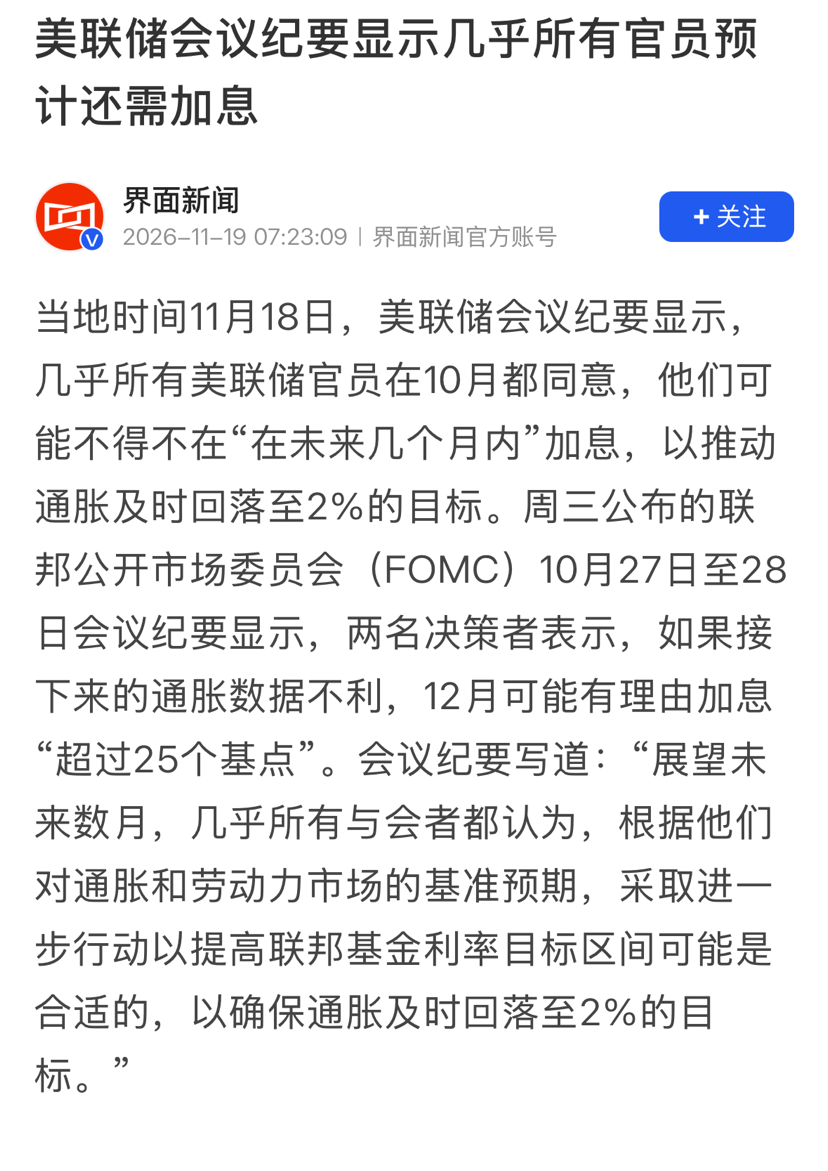
#美联储纪要放鹰,比特币继续承压
$BTC
$BTC

光明社区-阿波罗-LUCiC
·
--
A floral jacket on the outside, a lifetime of hardships within.


bape社区-菜园儿
·
--
Growth is painful, but we can't refuse to grow. When opportunity comes, seize it! 🤟🤟🤟
May you hold on to your position and wait for it to blossom.
May you stay calm in bear markets, avoid chasing highs in bull markets, and reap long-term returns.
May you hold on to your position and wait for it to blossom.
May you stay calm in bear markets, avoid chasing highs in bull markets, and reap long-term returns.




寿山福禄Luffy
·
--
- Outside the window, cherry blossoms are in full bloom; inside, she is a picture of loveliness. Standing there in her qipao, she outshines countless springtimes in this world.
Let me ask just one thing: are there any men who want to marry her?
Let me ask just one thing: are there any men who want to marry her?


DK短线复刻
·
--
Follow and reply to receive a red envelope🎁🎁



卓越-BTC
·
--
BullishBNB Red Packet 🧧 Thanks everyone for following!
We’re about to hit 15,000 followers, so I’m sending everyone BNB red packets! 🧧
Repost, follow, and comment to claim yours.
BNB Red Packet 🧧 – Thanks for following!
We’re about to hit 15,000 followers, so I’m giving away BNB red packets! 🧧 To claim yours: follow, repost, and leave a comment.
Reply “1” in the comments to receive BNB

奕泽YIZZE-1688
·
--
Why was BTC the exception? Crypto markets saw $1.86 billion in outflows in October, but Bitcoin bucked the trend and attracted inflows
CoinDesk Research’s October institutional report revealed a noteworthy set of figures:
In October, global digital asset ETPs saw net outflows of about $1.86 billion, including $1.66 billion from Ethereum products—roughly 89.3% of total outflows.
But Bitcoin moved in the opposite direction: BTC-related ETPs saw net inflows of $87.4 million in October.
More notably, companies also continued accumulating. The report shows that digital asset treasury companies added 15,976 BTC in October, with Strive alone adding 15,124 BTC.
What signal do these figures send?
In October, global digital asset ETPs saw net outflows of about $1.86 billion, including $1.66 billion from Ethereum products—roughly 89.3% of total outflows.
But Bitcoin moved in the opposite direction: BTC-related ETPs saw net inflows of $87.4 million in October.
More notably, companies also continued accumulating. The report shows that digital asset treasury companies added 15,976 BTC in October, with Strive alone adding 15,124 BTC.
What signal do these figures send?

正乾--四条2
·
--
Guys, feeling overwhelmed?\nGold, silver, stocks, and crypto are all getting dumped 📉 It’s not that safe havens have stopped working—the key is that expectations for the Fed have changed: rate-cut expectations have completely reversed, hawkish signals have emerged, and the market is starting to reprice in rate hikes. The dollar is strengthening and Treasury yields are surging, making it more costly to hold non-yielding assets like gold. Institutions are deleveraging en masse, selling assets across the board to raise liquidity, regardless of quality. Silver is falling even harder—not only because of the sell-off in precious metals, but also due to cyclical concerns about industrial demand.\n\nIn short: this is indiscriminate selling across asset classes, driven by interest-rate expectations, dollar liquidity, and position adjustments. It doesn’t mean gold has stopped being a safe haven. Stay calm, everyone—don’t let short-term market moves throw you off course.\n欢迎加入正乾研习社

Quoted content has been removed

远方1688BNB
·
--
#DeepSeekbug #BNB
The ultimate expression of material aesthetics is simplicity
The ultimate expression of spiritual aesthetics is truth
Glamour is the standard in other people’s eyes
Vitality is the soul’s true nature
The ultimate expression of material aesthetics is simplicity
The ultimate expression of spiritual aesthetics is truth
Glamour is the standard in other people’s eyes
Vitality is the soul’s true nature


飞舞飞扬 Elaine
·
--
🧧🎁🎁🎁 🐸 PEPE has fallen quite a bit—what should you watch next?
The crypto market has been anything but calm lately, and PEPE has also seen a noticeable pullback. Rather than discussing when it might rise again, I’m more interested in what developments around this long-standing Meme coin are worth watching next.
🔥 1. The PEPE spot ETF remains uncertain
Canary Capital previously filed an application for a PEPE ETF, bringing the possibility of Meme coins entering traditional financial markets back into the spotlight.
But filing an application doesn’t mean it will be approved. Whether it ultimately moves forward depends on regulatory developments.
🐋 2. Whale activity is drawing attention
There has been plenty of discussion recently about large PEPE holdings and on-chain transfers. Whale buying may affect market sentiment, but large transfers may also be wallet adjustments and don’t necessarily signal a bullish outlook.

Log in to explore more content