
 LIVE
周周1688
 Square Verified+
1688品牌创始人 ‖ BNB布道者 ‖ 晚上19:00-22:00直播 ‖ KOL宣发&项目推广‖ 💗推特X:zzhou1688
High-Frequency Trader
9.3 Years
1.5K+ Following
110.8K+ Followers
168.3K+ Liked
Posts
All
Quotes
Videos
Live
PINNED
·
--
🎙️ Market downturn, dollar-cost averaging into BNB!

 LIVE
10.7k listens · 3 in Live Trading

15


火烽
·
--
🧧🧧🧧Wishing everyone money-making days 🧧🧧🧧


磊哥1688
·
--
Crouching to gather strength is the prelude to a leap; weathering a low point lays the groundwork for a comeback. The strength built through steady accumulation will eventually break through every obstacle and bring your moment in the spotlight!
Squatting to gather strength is the prelude to a leap; settling in the trough foreshadows your comeback. The power of gradual accumulation will eventually break through all obstacles and usher in your own shining moment.
Squatting to gather strength is the prelude to a leap; settling in the trough foreshadows your comeback. The power of gradual accumulation will eventually break through all obstacles and usher in your own shining moment.


慢就是快Mike8
·
--
Jensen Huang, $INTWB 63 years old, resigned as Nvidia’s CEO on Thursday; Colette Kress will succeed him. According to Nvidia, on Thursday (November 12), co-founder and CEO Jensen Huang resigned as CEO and stepped down from the board. CFO Colette Kress will serve as interim CEO. Huang co-founded Nvidia in 1993, holds about 3.6% of the company’s shares, and led the chipmaker through the AI boom. A few days before Huang’s resignation, the company announced an independent investigation into undisclosed matters. Bloomberg Originals released a 45-minute documentary on November 12, in which Huang discussed AI development, China export restrictions, AI safety, and succession planning.


Node知行
·
--
Bullish🧘 Discipline and execution: Trade less, wait for your opportunity
Frequent trading is the most typical way beginners wear themselves down. Placing five or six trades a day and treating trading like manual labor means fees, slippage, and emotional strain all eat away at your capital.
A more sustainable pace is:
· Only trade markets you understand; if you don’t understand them, stay on the sidelines. Trading isn’t about who makes the most trades, but who makes the fewest mistakes.
· Trade less often. Limit yourself to 2–3 trades a day, and only trade when you have a plan.
· Don’t chase rallies or be the last one left holding the bag. When even casual observers are talking about a coin, it’s often already in the distribution phase.
· Follow the trend: look to buy dips in an uptrend, and sit tight in a downtrend. Most people who try to pick tops and bottoms end up getting burned.
· Step away from the charts as soon as your emotions take over. Rushing to win back your money after a loss is often the start of an even bigger one.


启航0677
·
--
SOL is the native token of the Solana public blockchain. Solana uses a consensus mechanism combining Proof of History (PoH) and Proof of Stake, and focuses on high throughput and low fees. Its mainnet launched in 2020, with a focus on decentralized applications, NFTs, and DeFi. Its exceptionally fast transaction speeds once made it one of the most popular public blockchains.



正乾--四条2
·
--
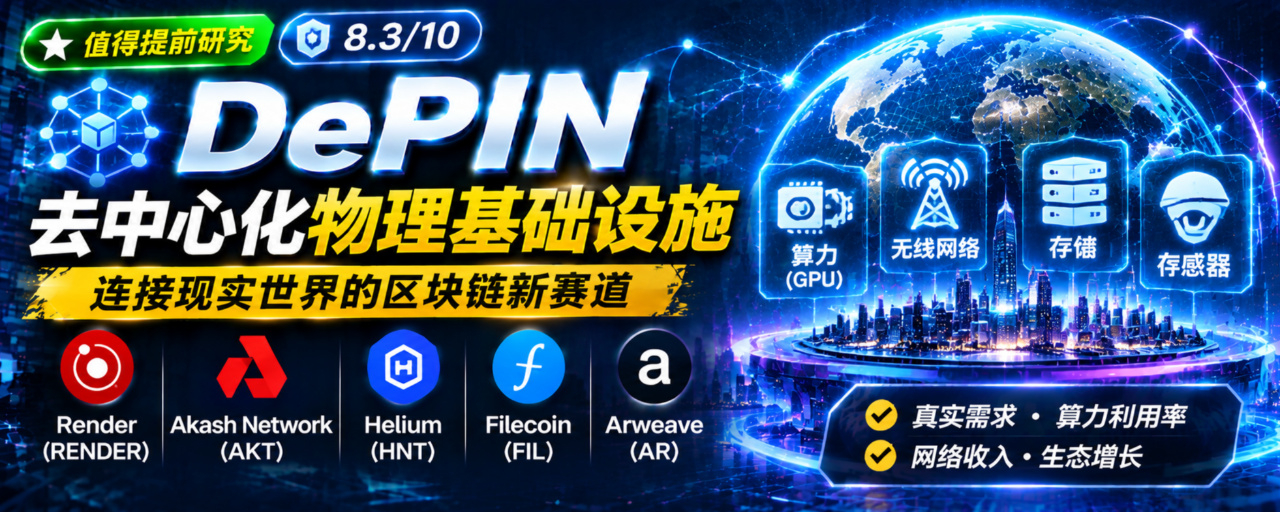
DePIN: Decentralized Physical Infrastructure—Turning Computing Power, Storage, and Wireless Networks into Tradable Digital Resources (Series 7)
Friends, today let’s take a good, in-depth look at a very special sector. Our research rating is 8.3/10, making this a core trend worth keeping an eye on early and studying over time: DePIN.
After spending a while in crypto, many people have seen DeFi, RWA, and AI Crypto—again and again, it’s all purely online stuff like accounts, contracts, and assets. But DePIN is different: it’s one of the few narratives that truly reaches into the real world and its hardware. In simple terms, it uses blockchain and token incentives to pool GPUs, hard drives, routers, and wireless hotspots scattered among everyday people and small studios around the world, turning them into a usable infrastructure network.
After spending a while in crypto, many people have seen DeFi, RWA, and AI Crypto—again and again, it’s all purely online stuff like accounts, contracts, and assets. But DePIN is different: it’s one of the few narratives that truly reaches into the real world and its hardware. In simple terms, it uses blockchain and token incentives to pool GPUs, hard drives, routers, and wireless hotspots scattered among everyday people and small studios around the world, turning them into a usable infrastructure network.

静心1688
·
--
🎁Follow and reply to claim🧧🧧🧧
#加密美股齐跌,下轮反弹的驱动力在哪?
#加密美股齐跌,下轮反弹的驱动力在哪?


路飞社区糖宝Luffy
·
--
The weather is getting colder, so keep warm. $SOL Follow to claim your red packet. Love you!


奕泽YIZZE
·
--
$BTC Falls Below $69,000! The Most Worrying Thing About This Drop May Not Be the Price Itself
Recently, the Bitcoin market has once again seen significant volatility.
According to a market report from The Block on November 13, amid market concerns related to Nvidia and shifts in risk appetite driven by expectations for Federal Reserve policy, $BTC fell below $69,000.
Many people seeing this news may first ask: Is Bitcoin going to keep falling?
But I think the more important question to examine this time is: Why are movements in U.S. tech stocks having such a clear impact on the cryptocurrency market?
Actually, this isn't hard to understand.
As more and more institutions participate in the digital asset market, $BTC is no longer a completely independent investment market. Federal Reserve rate expectations, dollar liquidity, tech stock performance, and institutional risk appetite can all influence how capital is allocated across different assets.

阿婧1688
·
--
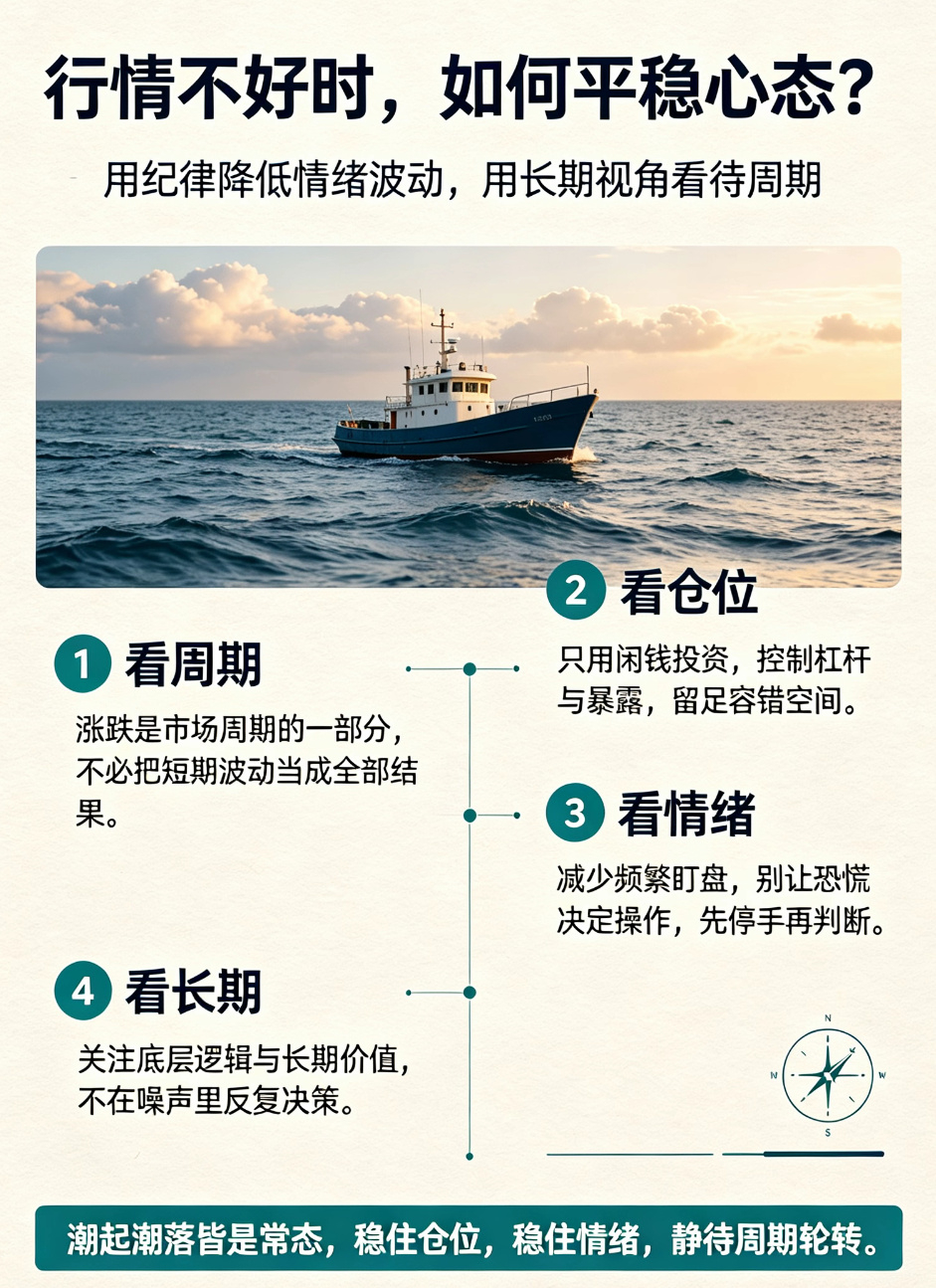
A downturn is also an opportunity. A pullback in high-quality assets creates a window for those willing to wait—but don’t blindly buy the dip. 🌹💰
$SOL
$SOL
卓越-BTC
·
--
BNB Red Packet 🧧 Thanks for following!
We’re about to hit 13,000 followers, so I’m giving away BNB red packets! 🧧 Follow, repost, and comment to claim yours.
Reply “1” in the comments to claim BNB
We’re about to hit 13,000 followers, so I’m giving away BNB red packets! 🧧 Follow, repost, and comment to claim yours.
Reply “1” in the comments to claim BNB



大鹤1688
·
--
#sxt $SXT @SpaceandTime
Space and Time Enterprise Launches:
In the AI Era, What’s Truly Scarce Isn’t Computing Power—It’s “Verifiability”
On November 9, Space and Time launched its enterprise-grade platform, Space and Time Enterprise. Its first partners include Maple Finance, Indomobil, Trenez, and The Data Foundation. This news carries far more weight in tech circles than its visibility on market-tracking apps might suggest.
I. The problem it solves
Businesses want AI agents to handle workflows, but they don’t dare hand over their raw databases. SXT Enterprise’s approach is to keep the data on the company’s own servers and share only “the computation result + a cryptographic proof.” Auditors, counterparties, and AI applications can verify whether the result was calculated correctly without seeing the underlying records.
II. Under the hood: Proof of SQL
This is SxT’s patented technology. It’s like attaching a “receipt” to every SQL query to prove that the query was correctly executed on a specified dataset. The technology has already been integrated with Google Cloud BigQuery. The enterprise version can run directly on standard servers, without operating a blockchain, requiring dedicated GPUs, or relying on external proof services.
III. How it relates to SXT
SXT Enterprise is designed for private environments, while SXT Chain is designed for on-chain use, providing verifiable data for DeFi, tokenized assets, and stablecoins. Once an enterprise application needs to connect to on-chain markets, the related workloads will be settled on the SXT network. In other words, the enterprise side handles integration, while the on-chain side handles settlement.
IV. Three easily overlooked caveats
1) Proof of SQL proves that a “computation is correct”; it does not prove that the “underlying data is true.” If the data was entered incorrectly, the proof will still pass.
2) The enterprise version does not require the use of an on-chain network, so in the short term, the number of enterprise customers cannot be equated directly with demand for SXT.
3) Competition in this sector is intensifying, with ZK proofs, oracles, and data availability layers all moving toward “verifiable data.”
V. My take
As AI agents begin making decisions for businesses, “How was this conclusion calculated?” will become a genuine necessity—not just a native narrative in crypto circles. SxT occupies a distinctive position: enterprise privacy-preserving computation on one side, on-chain settlement on the other, connected by the same proof technology.
This is not investment advice. Do your own research.

大丽7613
·
--
Bitcoin is at a critical turning point!
To put it bluntly, I’m ready to go all in: I’ve added to my position at 68,800.
If you don’t dare to take action, how can you seize the opportunity? Most people who earn outsized returns are willing to take risks at crucial levels. This time, I’ve chosen to enter the market.
The area above 68,000 is strong support. A reversal isn’t guaranteed, but there’s a chance of a decent rebound, with a target range of 68,500–68,800.
What if support breaks?
If it breaks decisively, the market will weaken further. But there’s no need to panic right away. False breakdowns are common in crypto: if the price dips below 68,000 and quickly recovers, the structure is still healthy.
Most people hesitate and sit on the sidelines when opportunities arise. When others are fearful, I choose to be greedy and take a calculated risk.
This is a major decision for me this year, with both opportunity and risk. There are only two possible outcomes: a big gain, or a small stop-loss and exit. I’m willing to take on this risk.

Log in to explore more content