

DeFi has always been completely decentralized. There is no KYC for DeFi projects and platforms. However, it seems that this is coming to an end.
Uniswap is about to introduce KYC procedures on its platform. Is this a good or bad thing for DeFi? So, let’s take a deeper look at the case for Uniswap to introduce KYC procedures on its protocol.
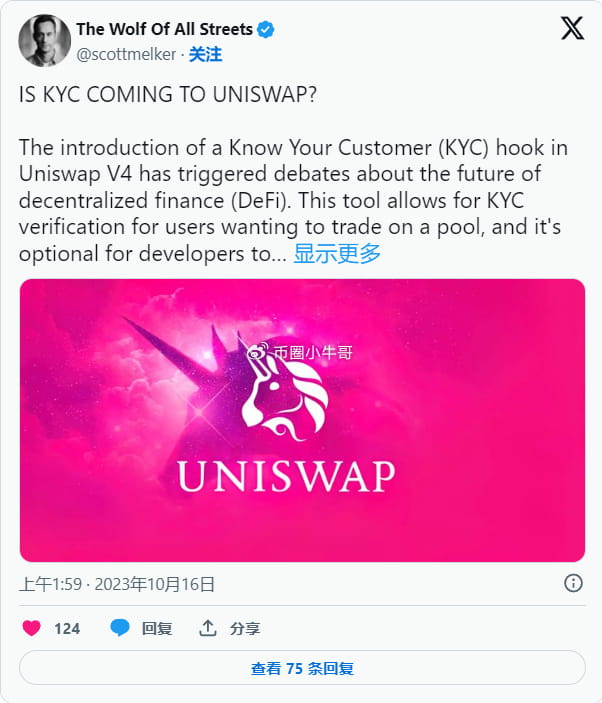
What is the KYC controversy on Uniswap about?
Uniswap expects to release its upcoming V4 in late Q4 2023 or Q1 2024. This V4 will contain all liquidity pools in one contract. This is in contrast to V3. In V3, each liquidity pool had its own contract. As a result, the cost of creating a pool or multi-pool swap was high. V4 solves this problem and is therefore more cost-effective. For example, Uniswap expects the cost of pool creation to drop by 99% with V4.
The most important new feature in V4 are “hooks”. These are customizable snippets of code. For example, you can add dynamic fee adjustments to your pool. Or add a stop-loss order. Currently, there are 74 such hooks. Now, one of these hooks has attracted attention and caused all the controversy.
This particular hook allows for a KYC procedure. So, you can add it to the pool. Now, everyone who wants to join a pool with this hook must first undergo KYC. The KYC procedure is the Know Your Customer procedure. Among other things, it requires you to provide an official government-issued ID. Currently, this hook seems to be well suited for US-enabled pools. It allows either a KYC or a whitelist application. The latter is for users who want to join such liquidity pools.
In short, this hook has divided the DeFi space into two camps. There is one camp that believes KYC is good for DeFi. The other camp believes it is the end of decentralization. So, let’s take a closer look at these pro and con camps. The image below shows the much discussed KYC hook.
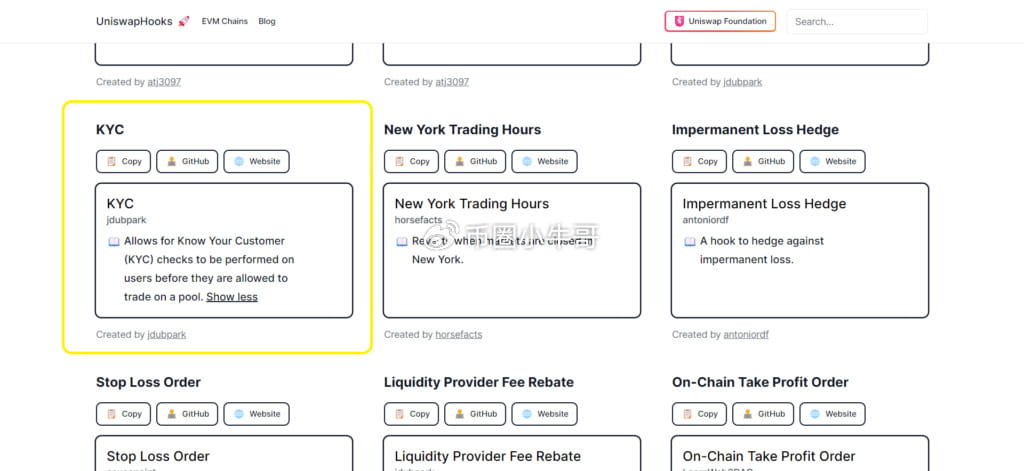
Source: Uniswap hook page
Are you for or against KYC Hook?
There is a long list of arguments made by those for and against KYC pegs. More and more governments around the world are starting to take notice of DeFi. This also makes it an interesting discussion. It is also important to point out that this is an opt-in feature. The pool creator decides if they want to add it to the pool, not Uniswap. At least, not yet. This means that regulations may change and Uniswap may have to re-evaluate their policies.
So, let’s start with some arguments against KYC hooks. One of the main appeals of DeFi is that anyone can join. It’s also permissionless. KYC procedures will change that. Others think this could be just the beginning. This could lead to a situation where if you don’t do KYC, you’re labeled a terrorist. For example, authorities could view you as a money launderer. Overall, this camp believes that DeFi is moving towards centralization. The actual KYC certification is done through NFTs. This also shows how NFTs are finding their place in many Dapps.
In the professional camp, other arguments are used. Some see it as a logical progression. They believe regulation is inevitable. It is also a means to stop the many scams that plague the DeFi space. They also believe it is for specific pools, not all pools.
In this context, it is interesting to look at the latest global initiatives by governments. Take the G20 for example. They gave the green light to develop a regulatory roadmap for cryptocurrencies. Both the IMF (International Monetary Fund) and the FSB (Financial Stability Board) initiated this initiative. The image below shows the difference between swap in V3 and V4.
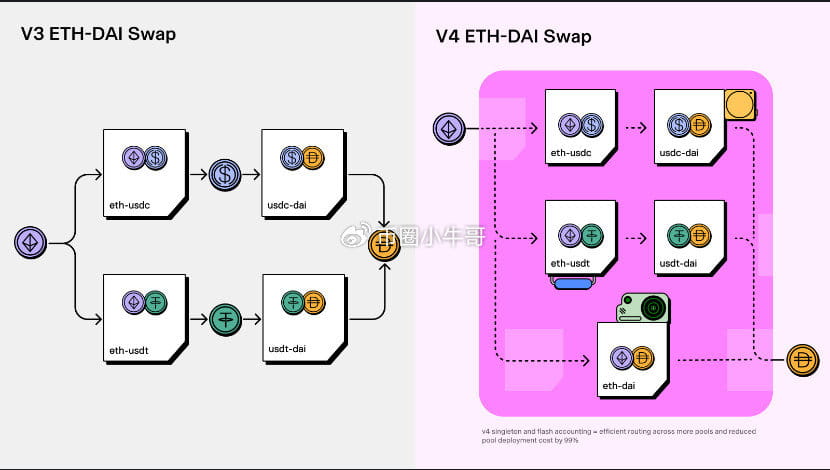
Source: Uniswap Blog
in conclusion
DeFi seems to have found a new challenge. How to balance the delicate act of decentralization with global government regulation. The latter is by no means a clear and crisp script. The current situation is quite murky in comparison. However, the sector will change. Crypto regulation seems inevitable, including DeFi.
Disclaimer:
The information discussed is not financial advice. This is for educational, entertainment and informational purposes only. Any information or strategies are thoughts and opinions related to the acceptable risk tolerance level of the author/reviewer, and their risk tolerance may differ from yours. We are not responsible for any losses you may incur as a result of any investment directly or indirectly related to the information provided. Bitcoin and other cryptocurrencies are high risk investments, so please do your due diligence.
Source: Altcoin Buzz Pte Ltd.