

橙子Joyce
 Square Verified+
十年以上专注美股市场实战投资策略与资产管理|十年以上投资BTC.ETH.BNB.|每日分享美股实盘与宏观盘面解盘|追踪美联储货币政策解读|前瞻·宏观数据点评·加密市场的联动分析|贵金属投资策略黄金.白银.铜|中长期价值投资者|直播北京时间晚上21:00-23:30|推特X:@Joyce88AI|✨星河社区联合创始人✨

BNB Holder
Frequent Trader
8.9 Years
1.9K+ Following
42.8K+ Followers
49.4K+ Liked
Posts
All
Quotes
Videos
Live
PINNED
Verified

MUUS+5.64%
SPCXUS+11.63%
TSMUS+8.78%
@钞机八蛋
is speaking[LIVE] 🎙️ Will the market continue to slide?
4.9k listens




叮当 Doraemon
·
--
No wonder Elon is the world’s richest man 👍 He quickly found a way to break the deadlock:
This time, Musk got smarter. Instead of clashing head-on with regulators, he’s starting by showing local residents the numbers.
The lesson from Texas is right there for everyone to see: data centers were built too quickly, the community pushed back, and approvals were frozen outright. Of 41 measures across 10 states, 40 were unfavorable. The new governor hasn’t even taken office, and talk of a freeze is already out there.
SpaceX has turned to Arizona. On the evening of November 4, it held a community meeting in Cochise County, acknowledging that the project—747 acres, nine data center buildings, and 6 GW at full capacity—is its own. About 275 residents attended.
The key isn’t how big the project is. It’s how the offer is made.
SpaceX will spend $3.6 billion of its own money to upgrade the power grid, cut local residents’ electricity bills by 10% to 40%, create 1,000 permanent jobs, and generate $34 million to $103 million in property taxes each year. The water used for cooling would be equivalent to what 20 to 30 households use.
When a data center used to move into a town, residents first wondered how much electricity prices would rise and how much water would be drawn. Now SpaceX is turning the equation around: first make sure the town benefits, then talk about whether to approve the project.
We’ll know more after the December 9 hearing. But whatever the outcome, this approach has already made its mark. From now on, data centers hoping to get built will be competing not just on computing power, but on who can win over the local community first.


艾伦Eren1688
·
--
BullishCristiano Ronaldo officially announced today that he is retiring from the national team.
A legendary chapter comes to an end.🇵🇹🐐
On the way to 20,000
Reply :1
answer :1
#1688家族family #predictons
A legendary chapter comes to an end.🇵🇹🐐
On the way to 20,000
Reply :1
answer :1
#1688家族family #predictons


一休哥168
·
--
BullishGet out into the mountains more; take things less to heart.
#币安安全事件恢复进展:98%被盗资产已回填
#币安安全事件恢复进展:98%被盗资产已回填



生蚝哥Oyster
·
--
BullishToday's crypto market: another reminder not to mistake short-term volatility for a trend.
Bitcoin surged to around $80,000 yesterday, then pulled back today and traded in the $75,000–$78,000 range. The whole market got hammered alongside the Nasdaq and AI stocks, with long positions liquidated one wave after another. Market cap fell from nearly $2.7 trillion to around $2.6 trillion. It looks scary, but honestly, this move didn't surprise me at all.
My key takeaways:
1. Crypto still isn't truly “uncorrelated”
It may claim to be an independent asset, but its actions tell the truth. When U.S. tech stocks fall and macro sentiment sours, BTC and ETH follow right away. As long as leverage remains and liquidity still relies mainly on the dollar system, this correlation won't disappear. Anyone hoping the “crypto narrative” will make them completely immune to traditional market risks might want to wake up.
2. There's too much short-term sentiment trading and too little genuine value investing
After the midterm election results came out, shorts got squeezed and prices surged. Then the next day, one weak macro data point or a dip in stocks was enough to liquidate the longs. Back and forth, it's all a leveraged game. The people who can truly ride out the noise are still those who can hold BTC for years—not those staring at charts every day, shouting “It's going to $100K!” or “It's going to zero!”
3. My long-term view on BTC hasn't changed
It's still the best candidate for “digital hard money” we have today. Its fixed supply, censorship resistance, and global transferability—these qualities will only become more valuable in an uncertain macro environment. But don't expect it to go up every day, and don't question the entire thesis because of one pullback. Volatility is part of its price. If you can't handle it, stay away.
4. The biggest thing to watch out for right now isn't a price drop—it's leverage
The number of liquidations today shows that plenty of people in the market are still using high leverage to bet on direction. A bull market can make you money; a bear or sideways market can liquidate you. Personally, I prefer spot buying and holding for the long term, with less tinkering.
In short:
Today's market action is “normal”—almost boringly so. Don't let daily price swings dictate your decisions. Managing your position size and thinking through your thesis are far more useful than checking the charts all day.
What do you think of this move? Do you think prices will keep sliding, or are people already gradually accumulating at these lows?

叮当 Doraemon
·
--
SpaceX May Be Planning to Build Arizona’s Largest AI Data Center
SpaceX has filed for a 6 GW data center in Arizona, next to a power plant, with electricity from the grid.
Texas’s new governor wants to freeze new data centers, but has no authority here.
The site is in Cochise County in southeastern Arizona, spans 747 acres, and is adjacent to the Apache Generating Station.
Up to 9 data center buildings, in 4 phases. The first phase is about 1.5 GW, and construction power draw is set to begin in March 2027. All electricity will come from the grid; there will be no on-site power plant. Each building will have only about 10 MW of natural-gas emergency generation, plus 24 GWh of batteries. Dry cooling, with no cooling towers. At full capacity, annual water use will be 7 to 10 acre-feet, which the application says is equivalent to 20 to 30 households.


九公子探密
·
--
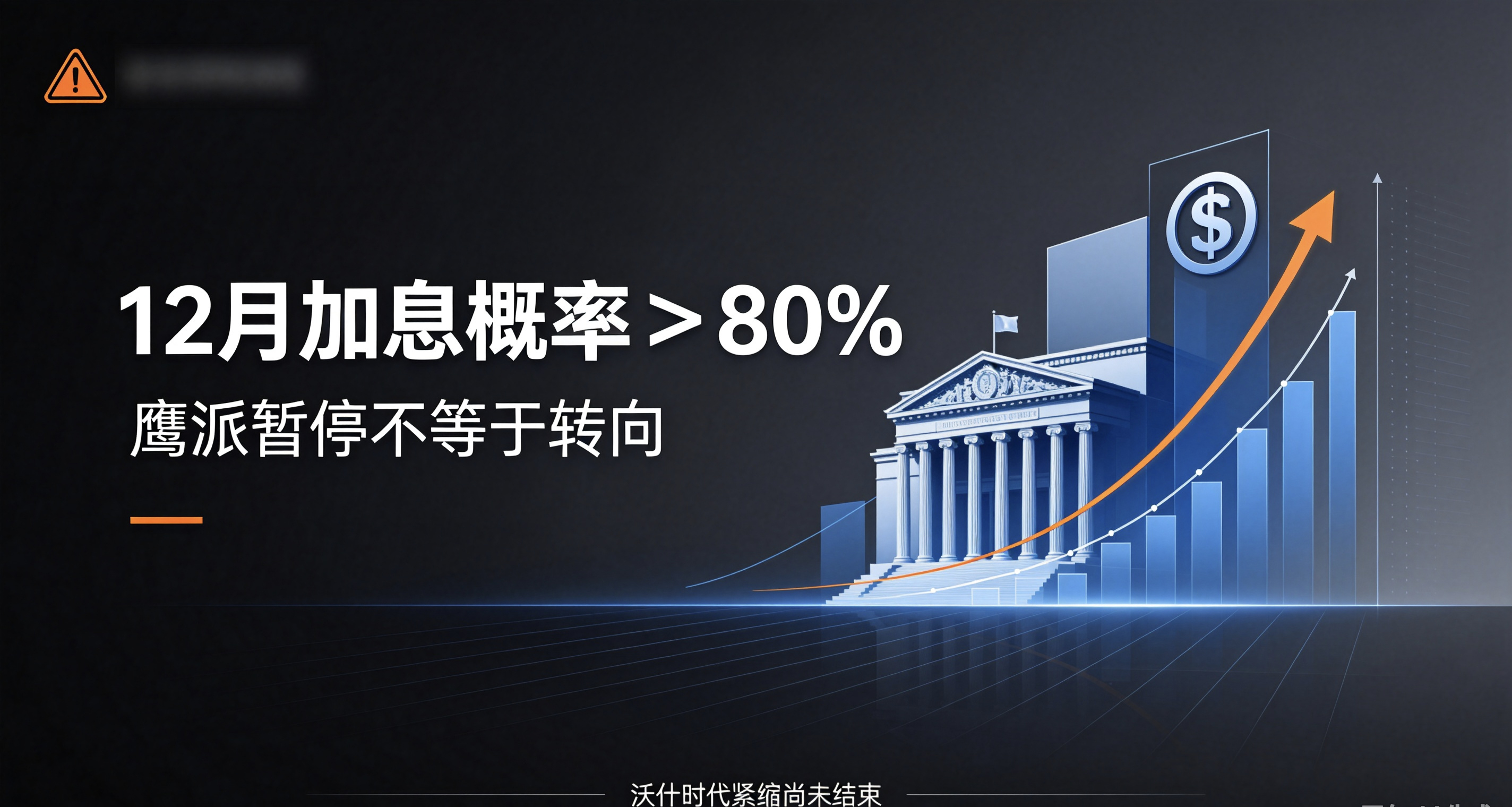
🔥🧧🧧🧧Fed rate-hike odds for December surge above 80%
The Fed held rates steady at 3.75%–4.00% at its October meeting, but the vote was 10–2, with two members insisting on a rate hike.
CME pricing shows the odds of another 25-bp hike in December have already topped 80%.
The current tightening cycle led by Warsh is nowhere near over. Some institutions even expect another hike in 2027 after this one.
A hawkish pause ≠ the start of a rate-cut cycle. It’s time to cool down those hopes for looser policy in crypto and U.S. stocks.
Do you think there really will be another rate hike in 2027?
Let’s discuss in the comments.🎁🎁🎁🧧🧧🧧
⚠️Information shared for informational purposes only; not investment advice
#美联储 #加息 #宏观 $BTC
$ETH
$BNB

晚风Vesper_1688
·
--
[Replay] 🎙️ Build Binance Square—everyone, follow mainstream cryptocurrencies with lasting value: BTC ETH
BNB SOL 🚀🚀🚀🚀
02 h 01 m 20 s · 1k listens
晚风Vesper_1688
·
--
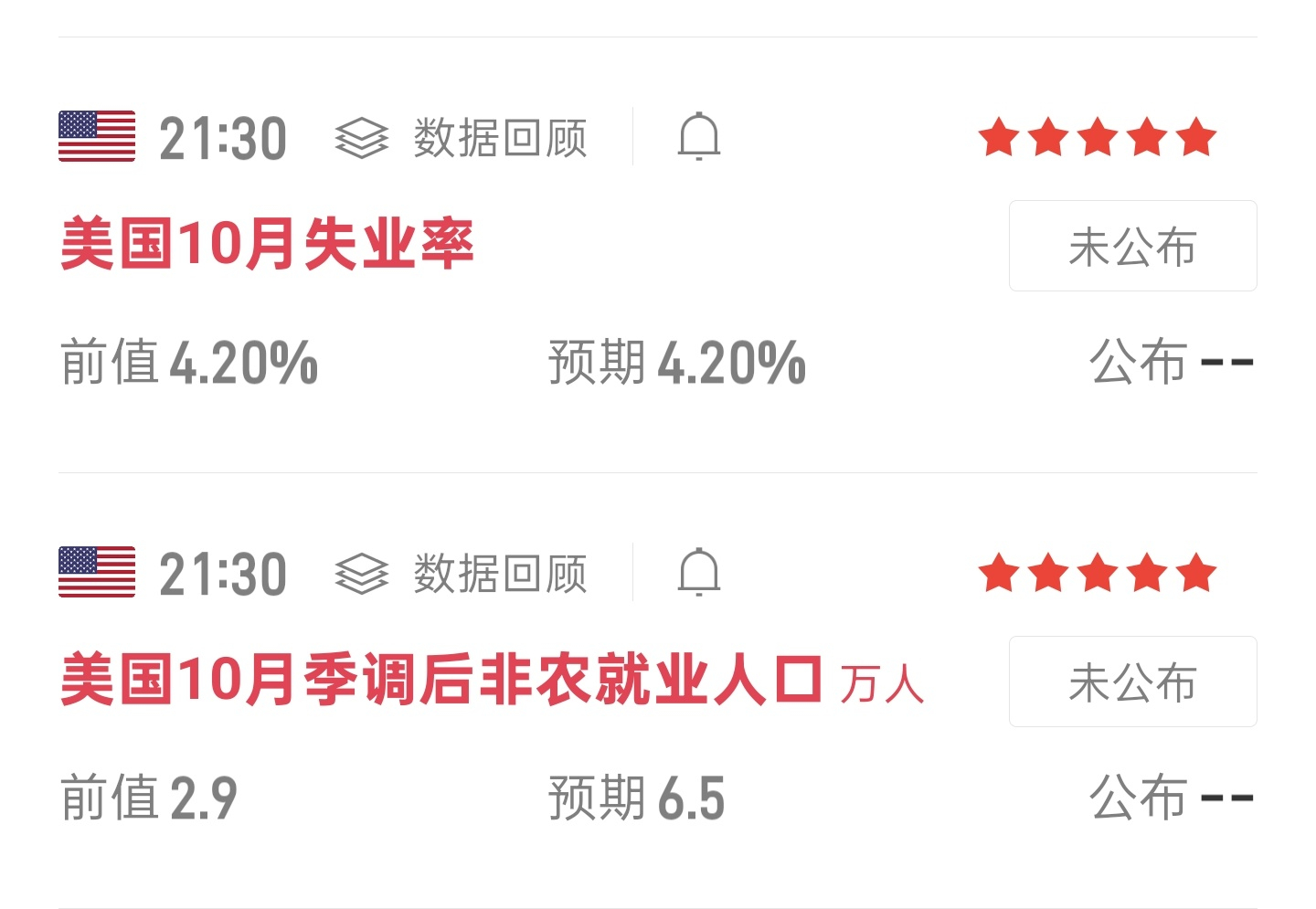
🔥Friday at 9:30 PM | Major U.S. nonfarm payrolls and unemployment rate data coming up❗
📊Data preview:
▫️U.S. October unemployment rate | Previous: 4.20% | Forecast: 4.20%
▫️U.S. October seasonally adjusted nonfarm payrolls | Previous: 29,000 | Forecast: 65,000
As we await the data, are you leaning more bullish or bearish?
📊Data preview:
▫️U.S. October unemployment rate | Previous: 4.20% | Forecast: 4.20%
▫️U.S. October seasonally adjusted nonfarm payrolls | Previous: 29,000 | Forecast: 65,000
As we await the data, are you leaning more bullish or bearish?
·
--
🎙️ Build Binance Square; everyone, follow mainstream value coins: BTC, ETH, BNB, SOL 🚀🚀🚀🚀

End
02 h 01 m 20 s
988
8

幸运雨Rainny
·
--
✨ Debut Livestream Preview · Lucky Rain Rainny
⏰ November 10, 18:00–20:00
Market insights, thoughtful discussions, and a leisurely chat about the vast world of Web3 🌙
Looking forward to seeing you all in the livestream
⏰ November 10, 18:00–20:00
Market insights, thoughtful discussions, and a leisurely chat about the vast world of Web3 🌙
Looking forward to seeing you all in the livestream


光明社区-亮总
·
--
In the crypto world, I only recognize Binance—aside from CZ’s integrity and Yijie. I only recognize @光明社区-明道 . Let’s build Binance together, and of course the Bright Community.


兰汐kyL
·
--
Market analysis. If prices can consistently return above and hold above MA25 and the recent 7-day high zone, while trading volume and open interest rise in tandem, risk appetite may improve. A rebound led by major cryptocurrencies would then be more likely to sustain its momentum.
Sideways scenario: If prices fluctuate within the recent 7-day high-low range and trading remains subdued, the market is more likely to stay range-bound. In this environment, capital tends to favor highly liquid major assets, and divergence among altcoins is likely to become more pronounced.
Weakening scenario: If the recent 7-day low zone is breached again, accompanied by rising volume and open interest, selling pressure may once again take the lead. In this environment, highly volatile assets typically face greater pullback risk.
Yesterday's market brief showed that $BTC ,$ETH ,$SOL edged up only slightly overall, suggesting that the market has yet to form a broad consensus around a strong trend. Going forward, it is especially worth tracking macro liquidity, regulatory news, spot trading volume, and whether futures funding rates and open interest begin to strengthen or weaken in tandem.
#AMD超预期大涨,AI叙事延续? #币安将恢复更多资产提现
晚风Vesper_1688
·
--
🔥Friday at 9:30 PM | Major U.S. nonfarm payrolls and unemployment rate data coming up❗
📊Data preview:
▫️U.S. October unemployment rate | Previous: 4.20% | Forecast: 4.20%
▫️U.S. October seasonally adjusted nonfarm payrolls | Previous: 29,000 | Forecast: 65,000
As we await the data, are you leaning more bullish or bearish?
📊Data preview:
▫️U.S. October unemployment rate | Previous: 4.20% | Forecast: 4.20%
▫️U.S. October seasonally adjusted nonfarm payrolls | Previous: 29,000 | Forecast: 65,000
As we await the data, are you leaning more bullish or bearish?
Quoted content has been removed

紫藤Sofi
·
--
Red envelopes 🧧🧧 are waiting for you
Hong Kong plans to establish a licensing regime for virtual asset trading, custody, advisory and management services. Christopher Hui, Deputy Secretary for Financial Services and the Treasury, said the relevant amendment bill will be submitted to the Legislative Council in 2026. According to Foresight News, Hui made the remarks at the main forum of the 11th Hong Kong FinTech Week x StartmeupHK 2026. The event concluded on November 3, exploring how finance, artificial intelligence and global expansion can become drivers of growth.
Hong Kong plans to establish a licensing regime for virtual asset trading, custody, advisory and management services. Christopher Hui, Deputy Secretary for Financial Services and the Treasury, said the relevant amendment bill will be submitted to the Legislative Council in 2026. According to Foresight News, Hui made the remarks at the main forum of the 11th Hong Kong FinTech Week x StartmeupHK 2026. The event concluded on November 3, exploring how finance, artificial intelligence and global expansion can become drivers of growth.



Log in to explore more content