
Preface
In this article, Little Penguin Api will introduce you to Auction Market Theory (AMT, or translated as Bidding Market Theory) and help you understand the operating principles of the market and order liquidity. Auction market theory is a school of technical analysis. This concept can be used as the basic principle of MP (Market Profile) and VP (Volume Profile), and can be of deeper help for subsequent learning of TPO (Time-Price Oppotunity) and VP.
Principles of Auction Market Theory
The main concept of auction market theory is that the financial market is no different from other auction sites. There are buyers and sellers trading in the market at all times. In this theoretical model, the main purpose of the market is:
Realize transactions in the two-way auction process - buying and selling
Seek fair value for assets

Auction market theory presents this process through the dynamics of supply and demand and price behavior. In terms of tools, we can use the form of MP or VP to describe the auction market theory, in which we will use the area of one standard deviation (about 68%) of the bell-shaped distribution as the value area.
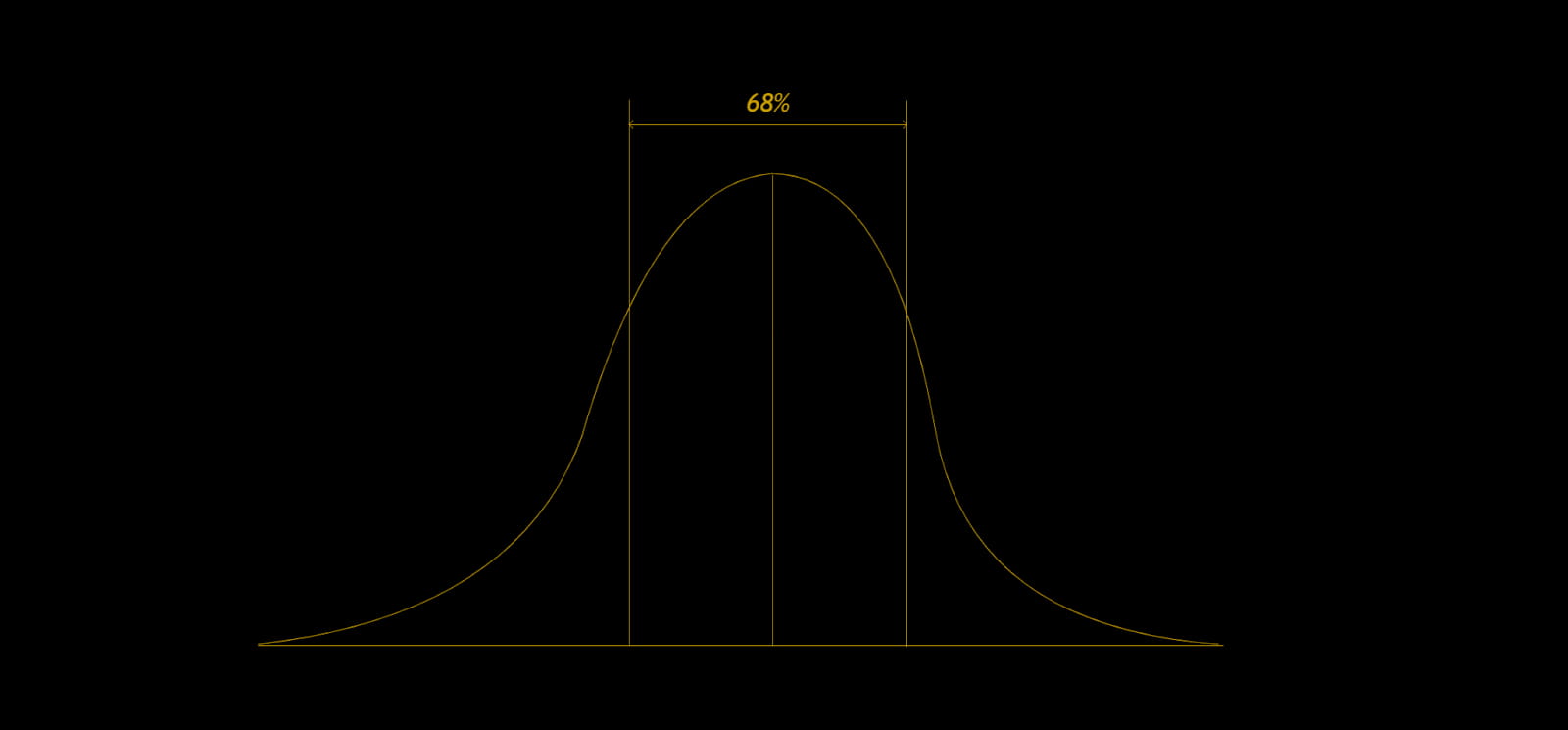
Key concepts of auction market theory
First, let’s understand the three important key elements in auction market theory, which are:
Price: Advertise a transaction in the market, such as a reasonable purchase price
Time: the opportunity to adjust the price, such as judging the buying point through time
Volume Volume: Measures the success or failure of the auction
Next, we divide the market into two types:
Balanced market Balance: In a balanced market, buyers and sellers reach a consensus on the price and are willing to buy and sell at the current price. This is because they believe the price at this time is reasonable (fair). A balanced market usually exhibits small fluctuations, little price change, and a volatile market. Through MP or VP, we can quickly find this reasonable price, and usually the distribution at this time will also approach a bell-shaped distribution.
Imbalance market: Imbalance market is exactly the opposite of balanced market. Market participants are divided over what is a fair price, with one side being more aggressive and causing the market to trend.

Generally speaking, the market is only trending (imbalanced) about 20% of the time, and fluctuating or consolidating (balanced) 80% of the time. In terms of price behavior, once the market enters a reasonable price, it is more likely to remain balanced and explore within this reasonable price range. And if the market is in an unbalanced state, it will usually explore up or down until it stops. Usually the stopping position will be within a reasonable price range in the past.
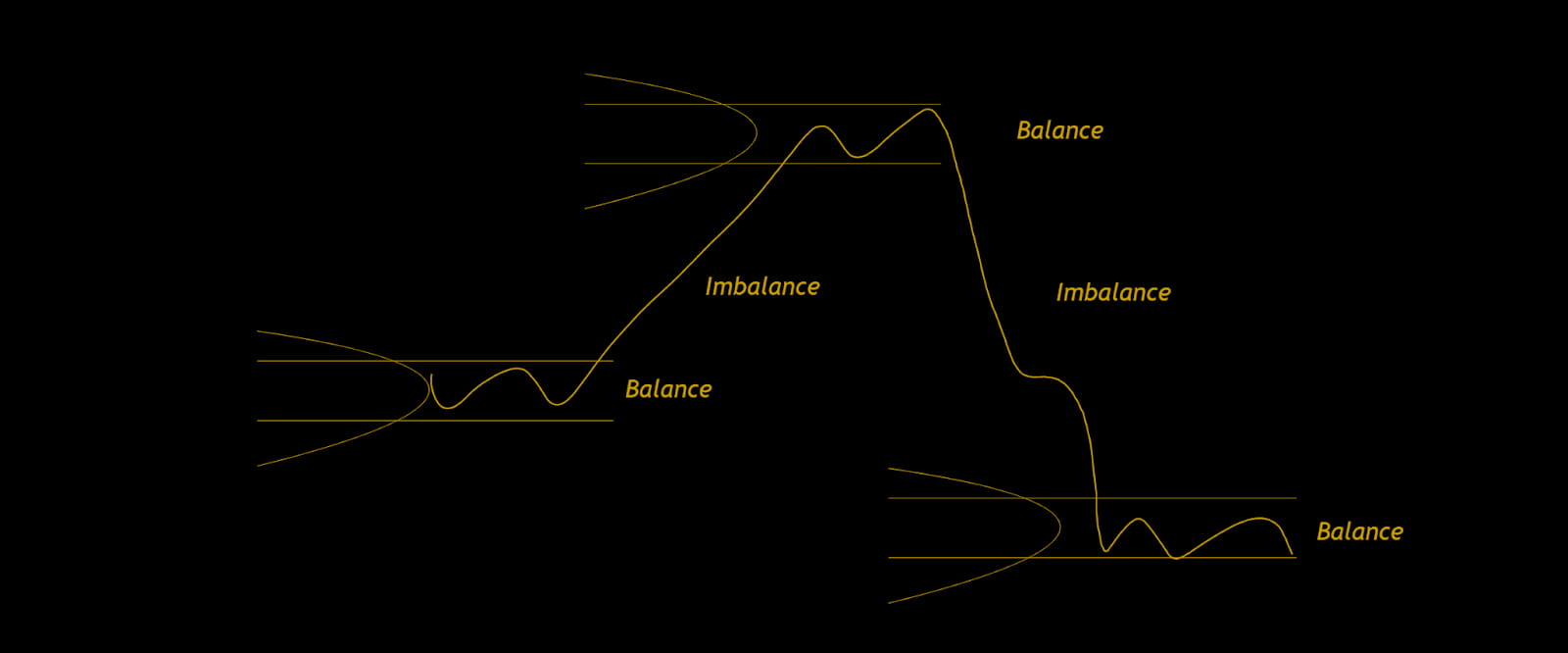
summary
This article provides an in-depth introduction to the basic concepts of auction market theory. As the basic principle of financial markets and order liquidity, auction market theory includes factors such as price, time, and trading volume, and divides markets into two major types: balanced markets and imbalanced markets. Through the understanding of these concepts, we will mention market activities and application principles in the following pages. The following learning content will be to master the basic skills of TPO and VP, supplementing one of the important pieces of the puzzle for us to learn order flow.
Note: The content of this article mainly comes from TradingRiot. If you need to read the original text, please search online.