

Hong Kong has the potential to become a cryptocurrency capital, but becoming a Web3 hub seems a long way off.
Written by halou.eth, Foresight News
On the streets of Hong Kong, people can see the headlines of Sing Tao Daily with the words "Hong Kong Web3.0 Association to be established tomorrow" written in large and bright letters; at the corners of busy alleys, long and huge posters promoting cryptocurrencies such as Bitcoin and LED screens with the names and introductions of rolling crypto exchanges attract the attention of passers-by; ATMs that convert cryptocurrencies into Hong Kong dollars are scattered in many corners of the city, and transactions can be completed within a minute...
Some entrepreneurs have opened crypto schools in Hong Kong, and some middle-aged and elderly residents in Hong Kong have actively signed up for training; some employees of financial institutions have begun to handle cryptocurrency-related businesses. This is the first time that their institutions have cooperated with cryptocurrency companies; some Hong Kong residents have found that there are more and more cryptocurrency elements around them, in restaurants, on billboards on the streets, in office buildings, at roadside newsstands, and on football fields...
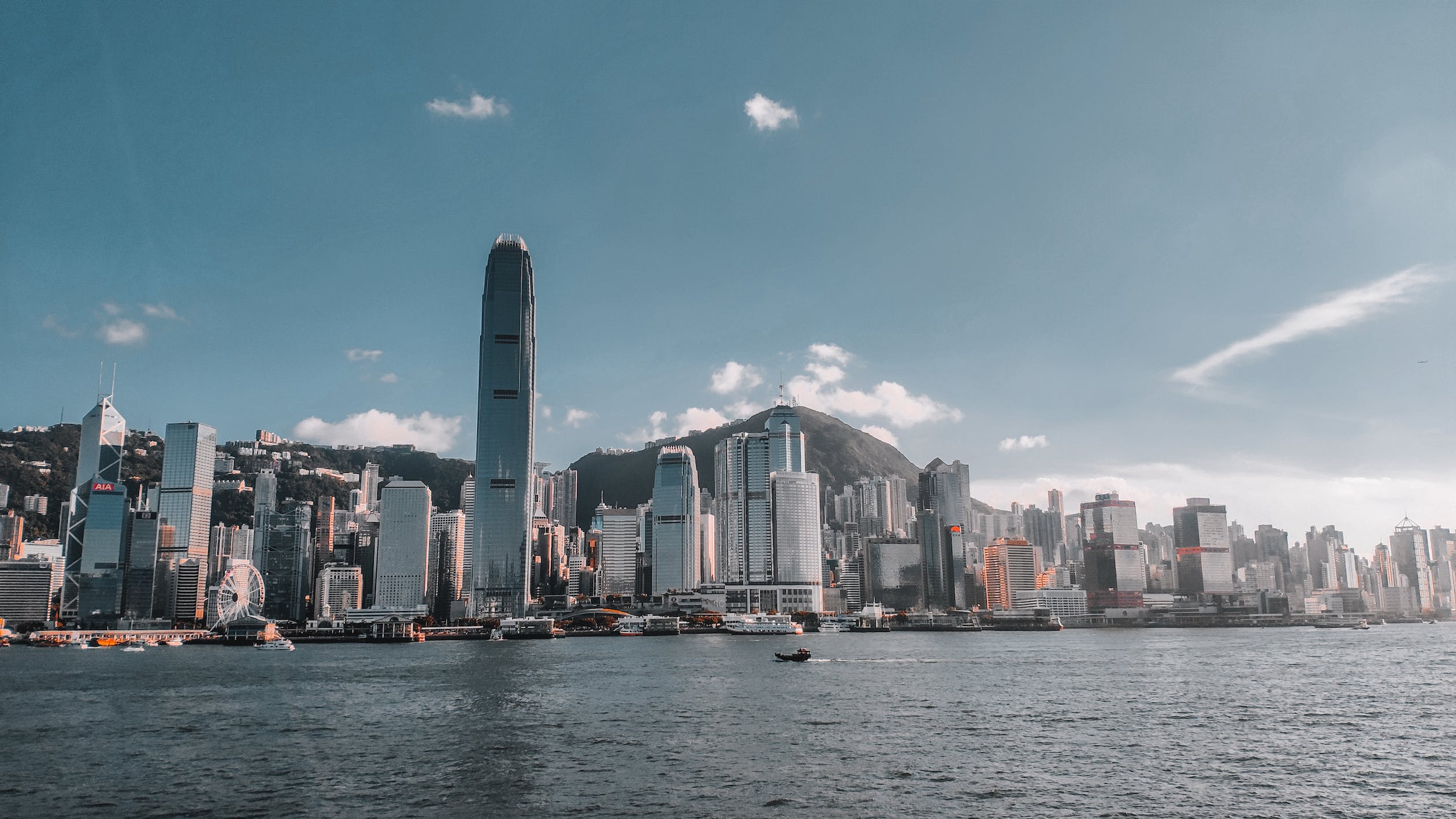
Three years after the pandemic, Hong Kong is eager to once again become an international financial free port, and cryptocurrencies are rapidly integrating into the city at this moment.
Promoters
"From top to bottom, every government department and every level of government officials in Hong Kong are promoting the goal of Hong Kong becoming a global virtual asset center," Lily Z. King, COO of digital asset custody service provider Cobo, told Foresight News.
In mid-April 2023, during the Hong Kong Web3 Week, Web3 practitioners from all over the world flocked to Hong Kong. A total of 50,000 people participated in the "2023 Hong Kong Web3 Carnival" in four days, and more than 150 surrounding activities were held. During this period, the Hong Kong government's unusually supportive attitude towards cryptocurrency and Web3 left a deep impression on many entrepreneurs.
Among them, the three most representative figures of the Hong Kong government who are most noticed by practitioners are: Chief Executive of the Hong Kong Special Administrative Region John Lee, Financial Secretary of Hong Kong Paul Chan, and Head of Fintech of Invest Hong Kong, David Leung.
On April 11, the Hong Kong Web 3.0 Association was officially established. The Chief Executive of the Hong Kong Special Administrative Region, John Lee, led a team of leaders from the Special Administrative Region to attend the ceremony. John Lee delivered a speech: The development of Web 3.0 is at a golden starting point. This disruptive technology can change many existing business operation models.
The next day, Hong Kong Financial Secretary Paul Chan delivered an opening speech at the main venue of the "2023 Hong Kong Web3 Carnival": Now is a golden opportunity for the development of Web3, but also a thrilling moment. Looking back at history, the development of Web3 will develop rapidly again after experiencing shocks.
Liang Hanjing, Head of Fintech at the Fintech Department of Invest Hong Kong, is extremely busy. He meets various Web3 practitioners almost every day.
Liang Hanjing told Foresight News: "Since Hong Kong issued the Virtual Asset Declaration at the end of October 2022, it has received a large number of Web3 practitioners every day. Before that, the Hong Kong Investment Promotion Agency had only one person in charge of cryptocurrency and Web3, but now there are 6." People can see Liang Hanjing at many events and occasions. He may be the Hong Kong government official who has the most contact with entrepreneurs and investors in the Web3 field.
In addition to these three representative figures, government officials from various key fields in Hong Kong, including Hong Kong Securities Regulatory Commission Chairman Cai Zhonghui, Hong Kong Legislative Council member Qiu Dagen, Hong Kong Cyberport CEO Yan Jingxin, and Hong Kong Monetary Authority Chairman Chen Jiaqi, also delivered speeches in support of the development of Hong Kong's Web3 at the "2023 Hong Kong Web3 Carnival". It can be said that everyone is determined to build Hong Kong into an international cryptocurrency center.
During the Hong Kong Web3 Week, many Web3 practitioners told Foresight News that they were impressed by the people-friendly and efficient image of Hong Kong government officials.
"If you want to have a deeper communication with Paul Chan (Financial Secretary of Hong Kong), then you can write to the Secretary's office and he will do his best to put your needs on his calendar. This attitude is a very big signal to Web3 institutions. I think this is one of the reasons why we see so many institutions and founders, whether from Singapore, mainland China or the United States, flocking to Hong Kong." said Cobo COO Lily Z. King.
Cobo is a well-known digital asset custody service provider in Asia, with nearly 200 employees. In 2021, Cobo chose to move its headquarters to Singapore instead of Hong Kong. As early as 2019, Cobo set up an office in Hong Kong with a team size of about 10 people, but it had never expanded until Hong Kong issued the "Policy Declaration on the Development of Virtual Assets in Hong Kong" in October 2022. They immediately came to Hong Kong to communicate with various regulatory agencies and found that Hong Kong was indeed different this time.
At the "2023 Hong Kong Web3 Carnival", a senior reporter from traditional media said after completing an interview: "You can feel the sincerity of Hong Kong government officials when answering questions, and the frankness and sincerity when contacting every entrepreneur. Not all countries and regions can do this."
Cryptocurrency, as a new asset class, is growing rapidly, and almost all global financial centers are working hard to "grab" the position of cryptocurrency center. This is accepted by more and more people. From the perspective of market value, the total market value of cryptocurrency is already in the same echelon as gold, silver and other currencies that have existed for thousands of years. Before 2009, cryptocurrency had not yet been born. As of April 23, 2023, its total market value has exceeded 1.1 trillion US dollars (the highest total market value exceeded 2.6 trillion US dollars), and according to 8Marketcap data, the current total market value of silver is 1.4 trillion US dollars, and the total market value of gold is 13 trillion US dollars.
The total market value of cryptocurrencies has exceeded that of silver many times. Judging from the speed of development, it may be the asset class with the greatest potential to surpass gold. As one of the international financial centers, Hong Kong is ambitiously hoping to add another title to its business card to show its international friends - the capital of cryptocurrencies.
Influx into the "Crypto New Town"
“We wanted to move the company to Singapore, but after the Hong Kong policy came out, we decided to stay in Hong Kong,” Eric Wang, a Hong Kong native and CIO of cryptocurrency smart investment advisory company DCBot, told Foresight News.
After the Hong Kong government introduced a series of policies favorable to cryptocurrencies, some local cryptocurrency institutions in Hong Kong gave up their plans to leave Hong Kong. Eric is just one of them. At the same time, global crypto institutions and talents are also pouring into Hong Kong.
"We have seen many of our friends (in the cryptocurrency industry) relocate to Hong Kong. During this process, Hong Kong may accumulate more (blockchain) professional and technical talents." Shen Yu, co-founder and CEO of Cobo, shared his recent observations.
During the period from 2020 to 2022, people's impression of Hong Kong was more about the massive loss of talent and capital.
For the cryptocurrency industry, the turning point occurred on October 31, 2022, when Hong Kong, China officially released the "Policy Declaration on the Development of Virtual Assets in Hong Kong", which officially announced to global investors and entrepreneurs Hong Kong's determination to develop into a global virtual asset center.
In the six months since the announcement, Hong Kong has continued its policy of supporting Cryptocurrency, which has led more and more practitioners who are waiting to see what is happening to the cryptocurrency industry to choose Hong Kong. At the same time, the tightening of cryptocurrency policies in Singapore and the United States has also made Hong Kong's position in the Crypto world increasingly important.
"Because of regulatory constraints in the United States, developers began to migrate outside the United States. Some of them came to Hong Kong and Singapore, and some went to Europe," Shenyu said.
After Hong Kong implemented a crypto-friendly policy for half a year, many Web3 organizations have settled in Hong Kong. Through word of mouth, the interest of Web3 practitioners around the world, especially Chinese, in Hong Kong has reached a climax. Practitioners continue to travel to Hong Kong, and large and small conferences are also held here.
Among them, the Hong Kong Web3 Week in mid-April 2023 undoubtedly left a deep impression on Chinese Web3 entrepreneurs.
On April 10, the "Foresight 2023 HK Summit" was held, with nearly 3,000 Web3 people participating and more than 3 million online hits on the same day.
On April 11, the Hong Kong Web 3.0 Association was officially established. The Chief Executive of the Hong Kong Special Administrative Region, John Lee, led a team of leaders from the Special Administrative Region to attend the ceremony. John Lee delivered a speech: The development of Web 3.0 is at a golden starting point. This disruptive technology can change many existing business operation models.
From April 12 to April 15, during the "2023 Hong Kong Web3 Carnival", a total of 50,000 people participated, and more than 150 peripheral activities were held.
According to Foresight News, 115 Web3 events were held in Hong Kong during the week of April 10 to April 16, with more than 10 events held in Hong Kong every day. Hong Kong hotels skyrocketed. The Grand Hyatt Hotel near the Hong Kong Convention and Exhibition Center has doubled its hotel accommodation. In restaurants near the Hong Kong Convention Center, practitioners with exhibition signs can be seen everywhere. Web3 practitioners travel between summits, cocktail parties and dinners. Some participants keep switching venues in order to attend more meetings in a limited time, and the taxi fare reaches thousands of yuan a day.
"Not a lot of choice"
The conference is a place to build consensus. For Web3 practitioners, the issues they are most concerned about include: how strong is Hong Kong's Web3 policy, what is the support behind Hong Kong's policy, how long will Hong Kong's policy continue, and what entrepreneurs can do in Hong Kong.
Regarding the second question, Lily believes that Hong Kong actually has no other choice.
“Hong Kong’s traditional economy, whether it is the shipping industry, the financial industry, or the real estate industry, has already encountered a major bottleneck and is in urgent need of fresh young people and vitality to supplement it. In addition, with the advantages of the already deeply accumulated financial system and regulatory framework, the development of digital assets (cryptocurrency) is actually the best choice for Hong Kong.”
“I think the policy dividends from Hong Kong supporting the development of cryptocurrencies and Web3 will last for at least two to three years,” Lily said.
However, Liang Hanjing, head of fintech at the Hong Kong Investment Promotion Agency, believes that Web3 practitioners who come to Hong Kong to start a business do not need to worry too much about policy issues.
Liang Hanjing gave Foresight News an example: "For example, NFT is not considered a security in Hong Kong, and the SFC does not care about it, so NFT is completely legal in Hong Kong. If the SFC decides to regulate NFT one day, it will also need to go through the process. Web3 companies will have at least one year to deploy or respond to regulation. This is very important. Hong Kong will not suddenly shut down any Web3 company casually."
Why did Hong Kong develop cryptocurrency? Some attribute it to geopolitics; some believe that the epidemic acted as a catalyst; some believe it was due to Hong Kong's own economic reasons; some believe that Web3 is more suitable than the Metaverse and ChatGPT. The characteristics of the crypto industry itself may be the most fundamental reason.
The two most important characteristics of the crypto industry are finance and technology, which are also the characteristics of cryptocurrency since its birth. Bitcoin represents currency and financial attributes, while blockchain represents technological attributes. In terms of currency and financial attributes, the total market value of cryptocurrency of $1.1 trillion is already in the first echelon with gold and silver, and has developed a whole set of decentralized financial systems that are different from traditional finance, including storage, lending, insurance, investment, etc. As one of the global financial centers, this is an important factor in the development of the cryptocurrency industry in Hong Kong.
In terms of technological attributes, many Fortune 500 companies or Internet giants are trying to introduce blockchain technology into the application layer, but they have not been able to prove their success in business. However, with the explosion of NFT applications, the technological attributes of the crypto industry have made it possible for blockchain technology to enter various industries on a large scale. The meaning and definition of the crypto industry have also changed accordingly. Its financial attributes are constantly growing, and its technological attributes have made breakthrough developments. This makes Hong Kong, which has always focused on the development of science and technology, unwilling to miss it.
In fact, after the emergence of NFT and Web3, Asian countries' attitudes towards the cryptocurrency industry have undergone substantial changes. The heads of some countries and regions even characterized Web3 (the aspect of the crypto industry that focuses more on technological attributes) as the next generation of the Internet.
Japanese Prime Minister Fumio Kishida: The advent of the Web3 era could lead to (Japan’s) economic growth… As we enter the Web3 era, I strongly believe that we must firmly promote this environment from a political perspective. (May 2022)
Hong Kong Chief Executive John Lee: The third generation of the Internet represented by Web3.0 has great development potential...Facing the development trend of Web3, we must dare to become the leader of this wave of innovation. (April 2023)
Compared with 2017, Asian countries and regions such as Japan, South Korea, and Hong Kong, China have undergone significant changes in their attitudes towards cryptocurrencies. On the one hand, this is related to the rapid growth of the entire market size of cryptocurrencies, which has reached a point where some countries and regions have to pay attention to it. On the other hand, the entire financial system of the crypto industry is constantly improving, and the technological attributes of the crypto industry are also continuing to break through and improve, which may be a more critical reason.
“Crypto Capital” Does Not Mean “Web3 Paradise”
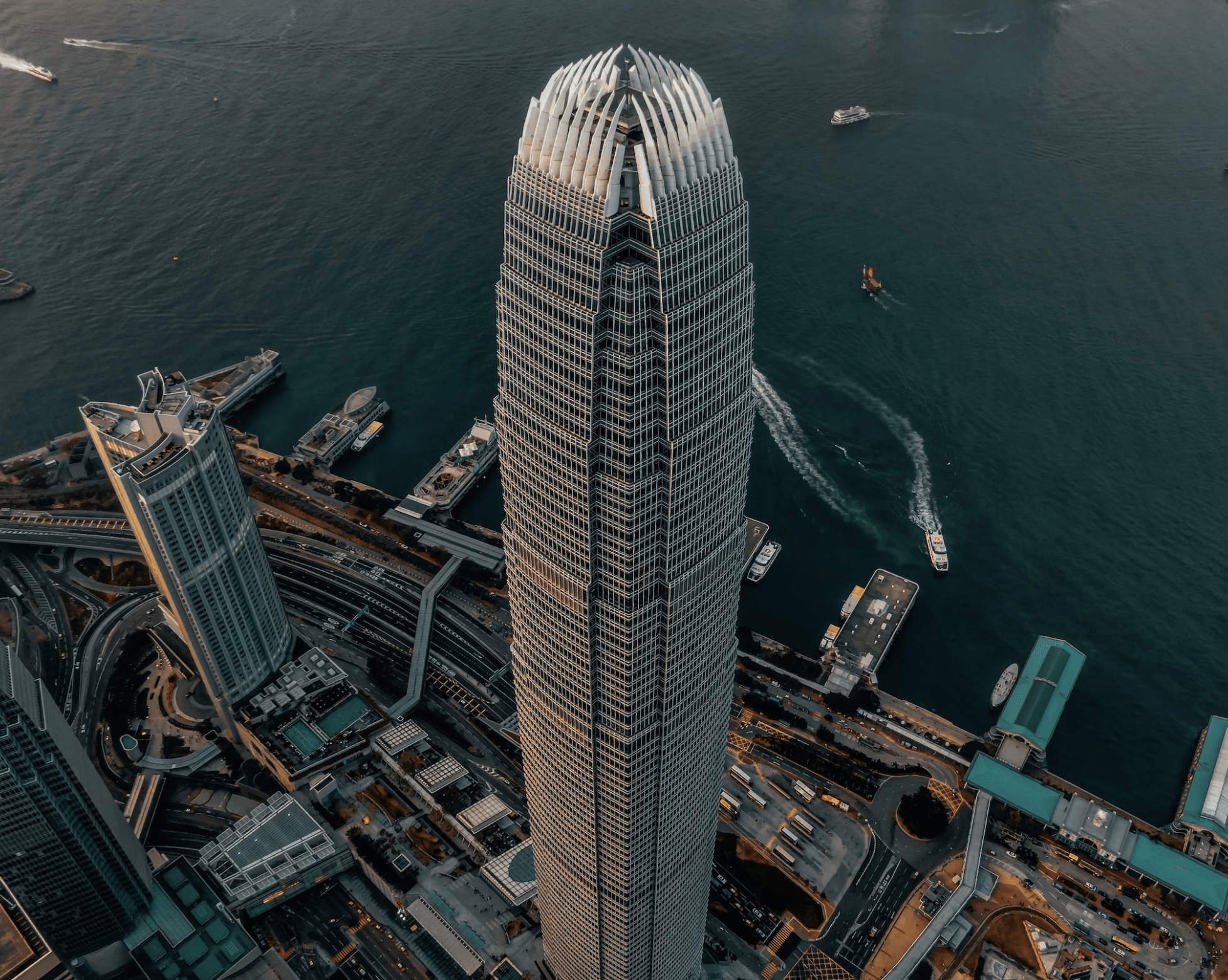
Hong Kong has the potential to become a cryptocurrency capital, but becoming a Web3 hub seems a long way off.
"Hong Kong failed to seize the opportunity in the Web1 and Web2 eras." A Web3 practitioner said that there are still relatively few Web3 companies that have landed in Hong Kong, and most of them are crypto financial institutions. Crypto financial institutions and Web3 institutions both belong to the crypto industry, but the former are more inclined to financial business, while the latter are more inclined to decentralized Internet business.
The development of Web2 in Hong Kong is not as rapid as in the mainland. Various paper newspapers can be seen everywhere on the streets, and some citizens are still accustomed to reading newspapers rather than Internet products to get information. Taxis and old restaurants in Hong Kong are still accustomed to using banknotes or coins for payment, while few people in the mainland use banknotes or coins... Hong Kong, which lacks Web2, does not seem to be an ideal place for most Web3 practitioners to start a business.
Even for crypto-financial businesses, it will take time to test Hong Kong's regulatory capabilities and the effectiveness of corporate development after regulation.
Jeff, partner of OKX Ventures, told Foresight News: “Hashkey has been licensed for a long time, but has not yet started operations. OSL has also obtained a license, but has not officially started operations. Whether they can make good profits under the premise of compliance is also a topic of concern in the industry.”
"In order to obtain a Hong Kong license, crypto institutions such as OSL first need to adjust their other business structures, and then enter a compliant market that is much smaller than the normal crypto market. This is a dilemma for fully market-oriented crypto institutions, especially companies with considerable profits," said Jeff.
This may also be the reason why some large cryptocurrency exchanges, although expressing their active embrace of Hong Kong, are still waiting and watching in terms of compliance.
Hong Kong’s embrace of cryptocurrency and Web3 has only been half a year, but it has already brought many direct benefits to its economy (hotels, tourism, investment attraction, etc.). However, Hong Kong has its advantages as well as its obvious disadvantages. On the road to becoming the capital of cryptocurrency, it is bound to face more thorns.