

Main
Fraudsters lure victims into parting with their money with promises of huge profits.
The scam itself usually consists of four stages: find a victim, ingratiate yourself, lure and disappear.
Report all fraudulent activities to the appropriate authorities, change passwords that are known to the attackers, and freeze bank accounts if you have already transferred money.
Learn to spot and avoid fraudulent investment schemes to protect yourself from cryptocurrency scams. Learn more in this week's episode of How to Spot a Scam!

At first glance, such people may not arouse any suspicion, posing as crypto-financial consultants, employees of well-known financial firms, or even celebrities. They promise huge profits, requiring virtually no effort or risk on your part. In fact, these are investment scams.
Investment scams come in many forms, but they share a common mechanism: scammers promise their victims exorbitant returns, but end up disappearing with their money. The main formula to remember is this: if the offer seems incredibly profitable, most likely there is something really wrong with it. Stay alert.
First, let's look at how an investment scam usually unfolds.
Four stages of a fraudulent scheme
1. Find the victim
Scammers usually find potential victims on popular social networks such as Facebook, Instagram and Twitter. The attacker may pose as an investment manager and offer advice, or contact you under the guise of a wealthy person who “accidentally” sent a message to the wrong recipient.
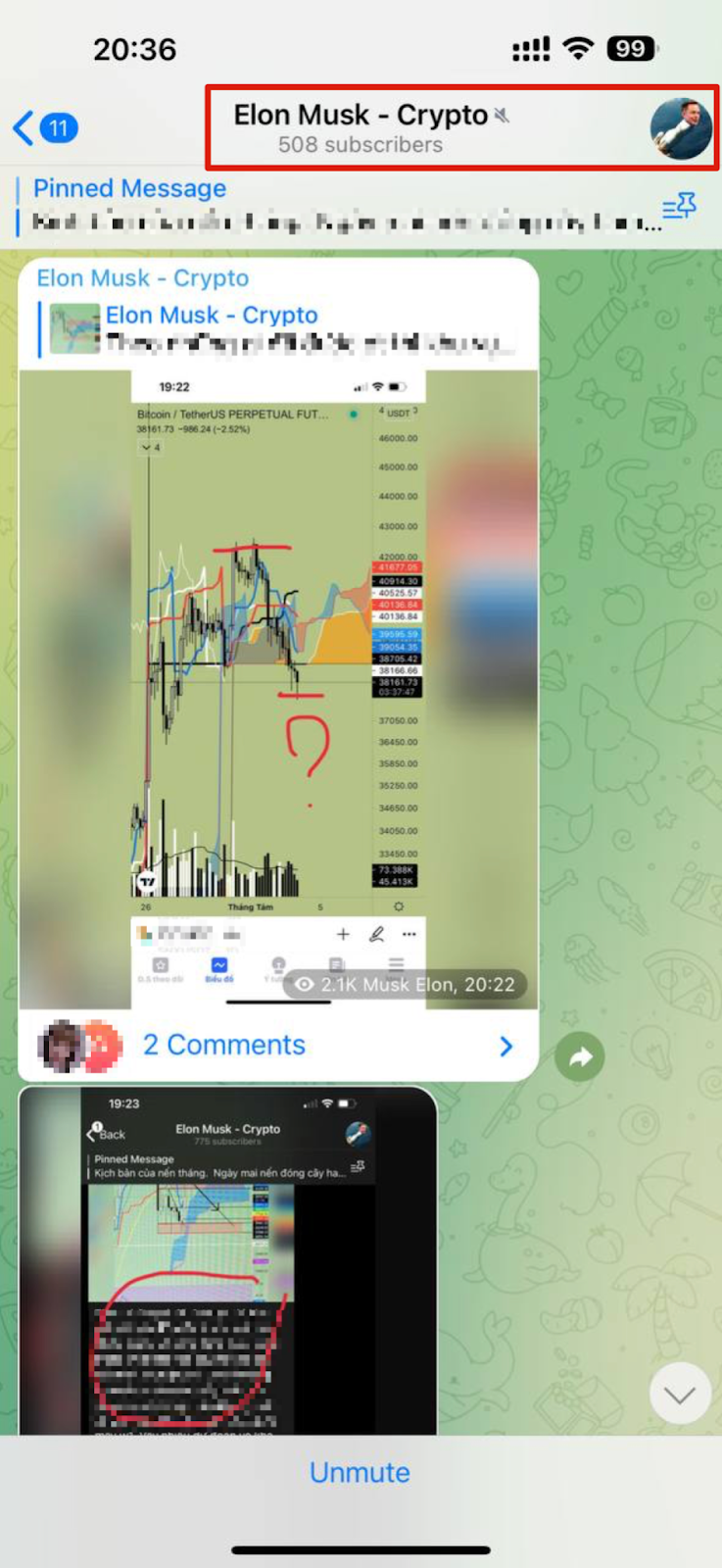
However, investment scams are not always so obvious. On social networks, you can come across advertisements in which attackers use a well-known brand or celebrity, such as Elon Musk, to promote their services. These types of ads link to professional-looking websites that are designed to earn your trust.
2. Gain trust
The attacker begins to build a trusting relationship with the new victim, telling stories of investment success, showing rave reviews from “clients” and false income reports. Some scams cover topics such as health, emotional well-being, and even the victim's family.
3. Procrastinate
After a period of “friendship” and brainwashing, the scammer, who has established a basic trusting relationship with the victim, turns the conversation to the topic of investing and earning big money.
Our experts have also encountered cases where scammers advertise fake investment programs where victims are offered fake prices, payback rates and non-existent coins. Some scammers go even further and may even create fake charts that show a bullish movement to trick an investor into investing money.
4. Disappear
The final step is “closing the deal.” Often, at the moment when the victim is enjoying the money he has just earned, it suddenly turns out that it is impossible to withdraw it or the account is closed. The “investment manager” responds to messages less and less often and eventually disappears from the horizon.
At this stage, a person finally becomes a victim of fraud. The scammer may even ask the victim to deposit additional funds, supposedly in order to withdraw the invested money.
Two examples from life
Here are two examples of investment scams that happened in real life. We've outlined them below to help users identify common methods, patterns, and communication methods used by crypto investment scammers.
Example 1: Crypto financial advisor
A user, whom we'll call Mark, fills out an online survey about his habits and views in the context of cryptocurrencies. He then receives a cold call from a scammer posing as a financial advisor.
For several months, they communicate and exchange information every day, thereby establishing a business relationship. In the end, the scammer gains Mark's trust.
One day, a scammer invites Mark to invest money in a platform that brings in 2% profit every day. Mark, completely trusting his interlocutor, invests 5000 USDT.
Within a few days, Mark's investments grow, as promised. The scammer convinces Mark to invest more. Mark agrees and invests 30,000 USDT. A week later, Mark realizes that he has fallen for scammers.

Example 2: Celebrity
A user we'll call Lucy finds a link on Facebook to "Elon Musk's quantum artificial intelligence trading platform." It looks like you just need to invest cryptocurrency there, and artificial intelligence will trade automatically.
Contacting the owners of a “quantum AI-powered trading platform,” Lucy invests $250 to get started. Trading begins and its profits grow rapidly. Lucy is convinced that “the investment in the platform will pay off in spades” and contributes $5,000. Lucy realizes she has been scammed when she is unable to withdraw funds. The operation is blocked due to “anti-money laundering” and for withdrawal an additional “deposit fee” of 30% is required.
How to protect yourself from crypto investment scams
Do your own research
Every cryptocurrency project must have technical documentation (whitepaper). It should disclose the mechanics and tokenomics of the project. If someone convinces you to invest in a project with meaningless or no documentation, be careful.
Check information about the company, its owners, directors and employees. At the very least, it's worth searching it on Google and thinking logically.
Ask yourself: does the project have a real team? What problem is he trying to solve? Is there a real community of users behind the project or its product?
Be suspicious of everything
Professional-looking websites, advertisements and social media posts are not indicative of a genuine investment opportunity. Criminals may use the names of trusted brands like Binance or famous people to make their scams look legitimate.
Beware of promises of huge profits
No financial investment guarantees profit. No person, algorithm or project can accurately and consistently predict market behavior. Guarantees of high returns are a red flag. Pay special attention to statements like “earn 3% per day.” Don't be fooled by the low percentage that may seem plausible: 3% per day is the same as 1095% per year, and that level of return is obviously unrealistic.
Avoid Unsolicited Investment Proposals
So-called investment experts who find you themselves are most likely scammers. This is not unusual: professional scammers communicate with hundreds and even thousands of potential victims every day.
Even if one of them invests her money, the scammer will not waste his time. Never make investment decisions in haste or under pressure, even if someone insists on it.
Protect your personal information
Always verify the identity of the person offering you to invest money on official websites and social networks, and do not disclose your personal information or account details to anyone.
If you receive a message asking for sensitive information, such as two-factor authentication codes or passwords, block the person and report them to authorities.
If you have become a victim of scammers
It happens. There is no need to be ashamed of this. Realizing that you have been scammed can be disheartening, but in such a situation it is important to act quickly.
If a scammer has contacted you through a social network, report this to the platform owners, as well as your local authorities.
Change your passwords and block your accounts if you have already made a payment or transferred money from a bank card. Additionally, crypto scammers often sell stolen credentials to other attackers. Be sure to change all usernames and passwords to avoid further losses.
Don't trust strangers who contact you immediately after a scam, especially if they offer to return your money. They may act on their own or be associated with criminals who have already deceived you (for example, you may be offered to return the invested funds - but for an advance payment).
If your Binance account has been hacked, please contact us immediately using the instructions in the How to Report Fraud to Binance Support article.
Additional Information
(Academy) Eight Common Bitcoin Scams and How to Avoid Them
(Blog) How to Identify and Protect Against Imposter Scams
(Blog) How to Recognize a Scam: A Complete Guide to Identifying the Most Common Cryptocurrency Scams
(Blog) Binance launches anti-fraud campaign with law enforcement agencies
Risk Warning and Disclaimer: The following materials are provided “as is” without warranty of any kind for general reference and educational purposes only. This information should not be considered financial advice or a recommendation to purchase any specific product or service. The value of digital assets may be volatile, increasing the risk of loss of investment. You are solely responsible for your investment decisions. Binance is not responsible for your possible losses. This information does not constitute financial advice. Please see our Terms of Use and Risk Disclosure for details.