

Airdrop farmers have started spamming comments on GitHub repositories of projects that may launch token airdrops in the future, frustrating developers.
A researcher at Scroll named Pseudo said:
“Please do not submit GitHub issues just for farming purposes. The core Scroll team is busy enough, please do not make our lives harder.”
Airdrop farming is not uncommon. As several major projects unexpectedly offered governance tokens to early adopters in 2020, people have attempted to game the system by taking actions that they believe will make them eligible for future airdrops from other projects. Typically, this focuses on on-chain activity, such as making transactions on the blockchain network.
However, recent airdrops, such as Celestia and Starknet, have changed the distribution criteria. Celestia offered 6% of the supply in its airdrop, with 1/3 of that going to contributors, mostly on GitHub.
The Starknet Foundation has allocated about 7% of its airdrop to contributing developers. The event is scheduled to open for claims on February 20.
Starknet developers account for 2% of the total 700 million airdrop tokens, with 5% allocated to Ethereum and open source developers outside of Web3.
Eligible Starknet developers include those who have contributed at least 3 commits to the repository listed in Starknet's Electric Capital report by November 15, 2023.
One qualified contributor who did a simple spell check received 1,800 Starknet tokens from a single comment that hadn't even been merged. At current pre-launch prices, that would be worth $3,200.
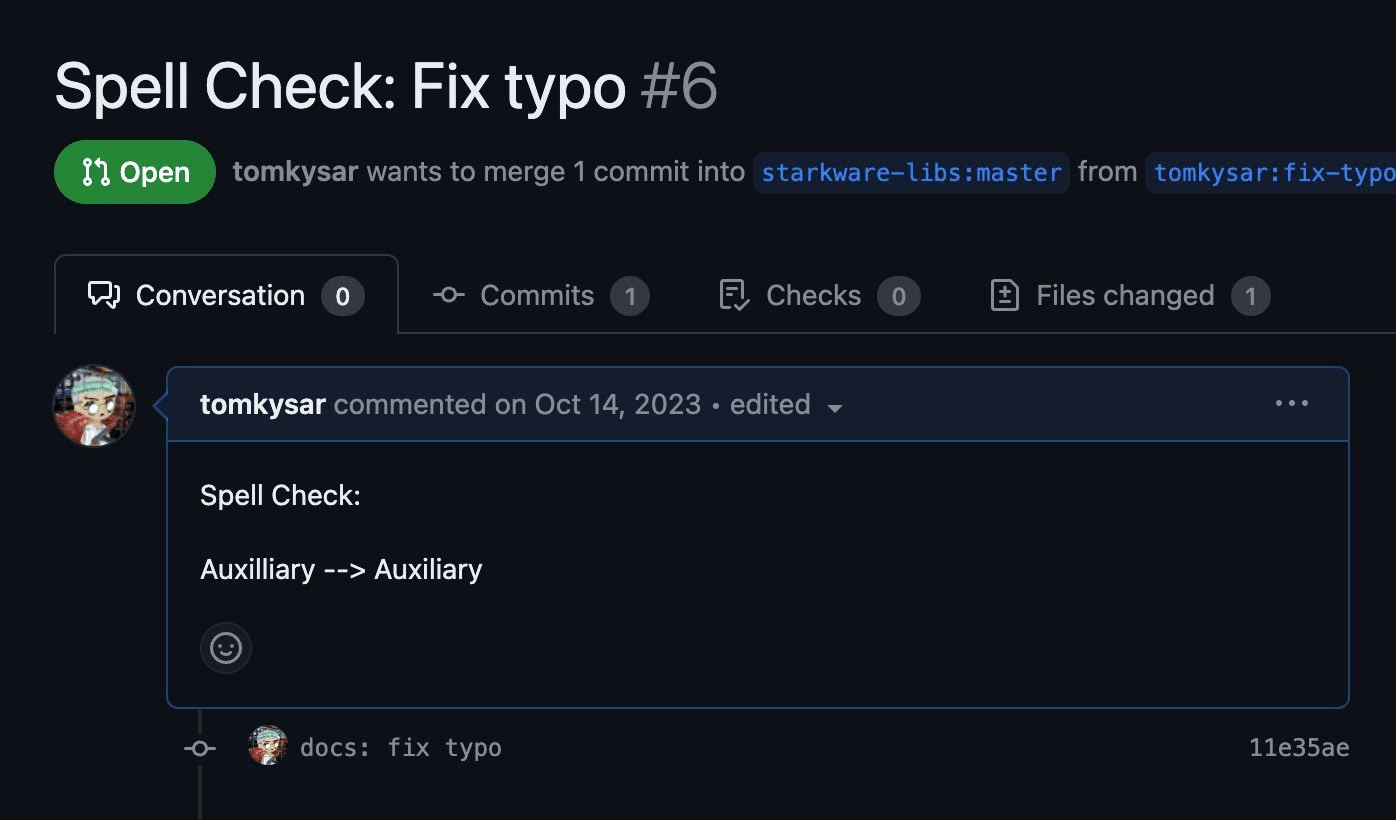
Source: X
Unsurprisingly, since this is a criteria for inclusion on the list, airdrop hunters are targeting the GitHub repositories of projects that do not yet have tokens.
One airdrop strategist has cited the Starknet airdrop to justify contributing to Scroll GitHub in hopes of getting an extra share of any potential airdrop.
“Open source contributions are important in the digital age.”
Comment Spam on GitHub
Pseudo noted that the Scroll GitHub repository received over 1,000 comments over the weekend, most of them from airdrop farmers. A look at one of the main zkSync repositories also showed an increase in comments, with people making basic requests like the project should integrate with another protocol.
“Airdrop farmers are also part of the crypto community, but it is important that people contribute based on their strengths rather than following trends. Outside of GitHub, we are also seeing healthy ecosystem growth, which is the ecosystem with the largest growth according to L2beat. Scroll has always been community-first and there is always room for everyone,” Pseudo said.
There are a number of ways projects are trying to combat spam on GitHub. For example, Pseudo has attempted to introduce activity limits on the Scroll repository, although it has yet to be implemented. While blocking newly created accounts is easy, the problem becomes more complicated when airdrop farmers have GitHub accounts that they have used for a while and have made a lot of comments on — as it becomes difficult to distinguish them from real contributors.
However, the comments may not be so bad because the easiest fix is to find the typo. Or, as Synthetix Spartan Council member Millie X put it, “the bright side of the new airdrop farming is that all crypto Github repositories will at least now have perfect grammar.”
https://tapchibitcoin.io/airdrop-farmer-spam-github-sau-cac-dot-phan-phoi-cua-starknet-va-celestia.html