
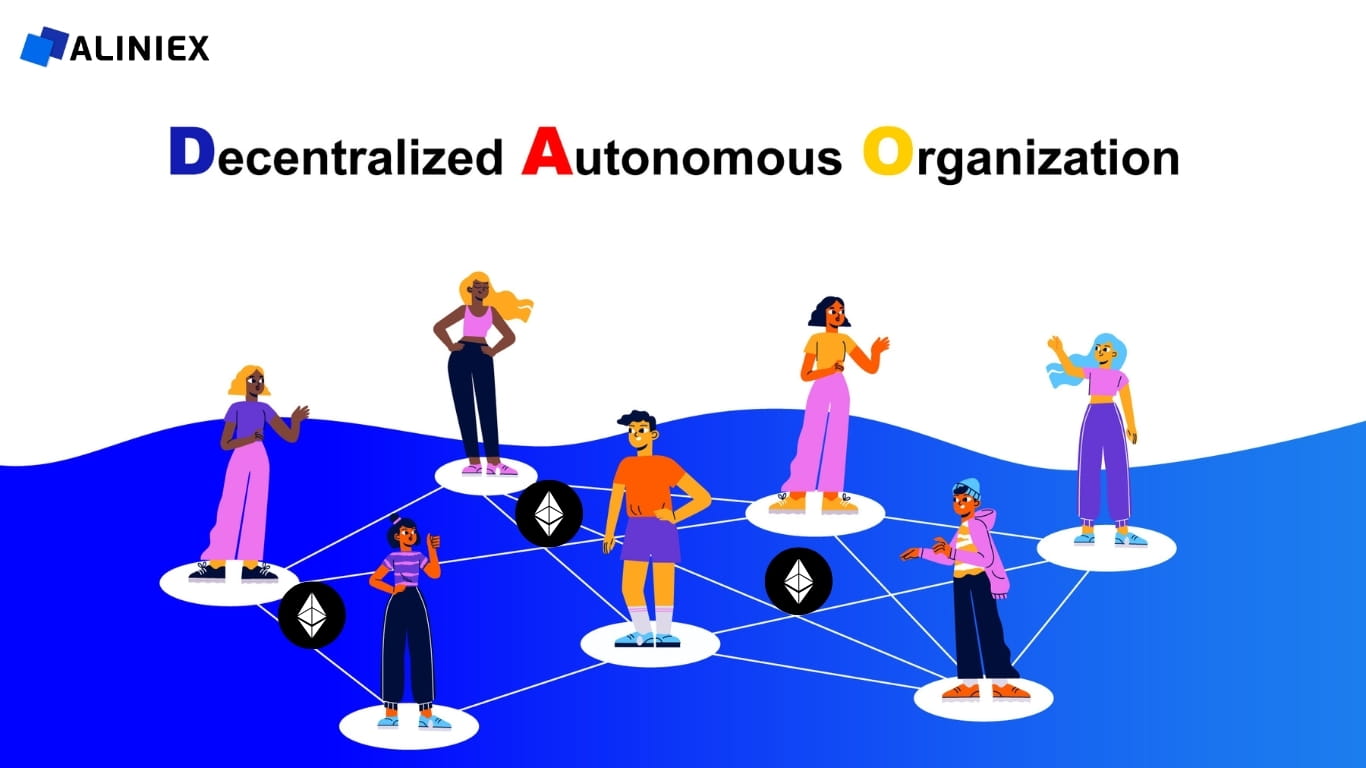
Decentralized autonomous organizations, or DAOs, have emerged as a promising new paradigm for decentralized decision-making and governance. DAOs are blockchain-based organizations that operate autonomously through a set of rules encoded on the blockchain. Unlike traditional organizations, DAOs are not controlled by a centralized authority but are run by their members in a transparent, democratic, and decentralized manner.
DAOs have the potential to revolutionize a wide range of industries and sectors, from finance and governance to supply chain management and social networks. By leveraging the power of blockchain technology, DAOs provide a new model of trust and collaboration that can enable more efficient, secure, and democratic decision-making processes.
In this article, we will provide a comprehensive overview of DAOs and explore how DAOs work, what makes them unique, and how they can be used to transform different industries. We will also examine the potential challenges and risks associated with DAOs, as well as discuss the future of DAOs and their potential impact on the global economy and society as a whole.
What is DAO?
A Decentralized Autonomous Organization (DAO) is an organization that operates through a set of rules encoded on the blockchain. Its rules are transparent, open source and agreed upon by members, who together make decisions about the future direction of the organization.
Unlike traditional organizations, DAOs have no centralized hierarchy or management structure. Instead, they are run by their members through a consensus mechanism that allows for decentralized decision-making. DAO members hold tokens that represent their shares and voting rights in the organization.
Brief history of DAOs
The concept of DAO originates from the early days of blockchain technology. In 2013, a group of developers created the first DAO called Mastercoin, which aimed to provide a platform for creating and managing other cryptocurrencies. However, the Mastercoin project failed to gain much traction and the DAO concept remained unknown.
It wasn't until 2016 that DAOs gained significant attention with the launch of The DAO, a decentralized investment fund that raised over $150 million through an ICO sale. DAO is built on Ethereum and allows investors to purchase tokens that will give them voting rights in the organization's investment decisions. However, the project was short-lived, as it suffered a major hack that resulted in the loss of about a third of its funds. The incident raised concerns about the security and governance of DAOs, and the Ethereum community decided to perform a hard fork to recover the stolen funds, leading to the creation of Ethereum and Ethereum Classic.
Despite the failure of The DAO, the DAO concept continued to grow, with many projects emerging in the following years. In 2017, the Aragon project launched, providing a platform for creating and managing DAOs in a user-friendly way. Other notable DAO projects include MakerDAO, which operates a decentralized stablecoin called DAI, and MolochDAO, which focuses on funding public goods in the Ethereum ecosystem.
Today, DAOs are gaining increasing attention and adoption, as more and more people realize the potential of decentralized decision-making and governance. With the emergence of new blockchain technologies and growing interest in decentralized finance (DeFi), DAOs are likely to play an important role in the future of finance, governance, and other other sectors.
Some popular DAOs
DAO investment
These DAOs pool funds from many investors to invest in cryptocurrencies or other assets. Investors receive a proportional share of profits based on their stake in the DAO.
Decentralized social network
These DAOs aim to provide an alternative to centralized social networks by allowing users to own and control their data. They use blockchain technology to ensure privacy, security, and decentralization.
Maketplace DAO
These DAOs enable peer-to-peer transactions without the need for intermediaries. They allow users to buy and sell goods and services directly, using cryptocurrencies or other digital assets.
Admin DAO
These DAOs aim to provide a decentralized decision-making process for the community or organization. They use blockchain technology to ensure transparency, accountability, and participation.
Decentralized autonomous charity
These DAOs use blockchain technology to facilitate philanthropy and social impact. They aim to increase transparency and accountability in the charity sector by allowing donors to track their contributions and impact.
Advantages of DAO
Decentralization
DAOs are not controlled by a single entity or authority, making them more resilient to external attacks or failures, as there is no single point of failure.
transparent
The DAO's rules and operations are transparent and open source, meaning anyone can access and inspect the information. This creates a high level of trust and accountability within the organization.
Effective
DAOs operate autonomously, without the need for a centralized management structure. This allows for more efficient decision-making and tasks, as there are no bureaucratic processes or delays.
Comprehensive
DAO is open to anyone with internet access, regardless of their location or background. This allows for a more diverse and inclusive community of members, which can lead to more innovative and creative solutions.
Flexibility
DAOs can be designed to suit a variety of use cases, from decentralized finance to social networks to governance. This flexibility allows for the creation of new and innovative organizational models that can better meet the needs of their members.
Ownership
DAOs are owned and controlled by their members, who hold tokens that represent their ownership stake and voting rights in the organization. This creates a feeling of ownership and commitment among members, which can lead to greater involvement and participation in the organization.
Potential challenges of DAOs
Lack of regulation
Since DAOs operate in a decentralized and autonomous manner, they are not subject to the same level of regulation as traditional organizations. This lack of regulation can make it difficult to hold members accountable for their actions and can create opportunities for fraud and other illegal activities.
High complexity
DAOs can be complex to set up and operate, requiring a high level of expertise and technical knowledge. This can make it difficult for non-technical users to participate in the governance and decision-making process.
Management challenge
Decentralized governance can be challenging, as members may have conflicting interests and priorities. Additionally, the decision-making process in DAOs can be slow and inefficient, as members must come to a consensus on all decisions.
Security risks
DAOs are vulnerable to a variety of security risks, including hacking, malware, and other cyber threats. If a DAO's smart contract is compromised, it can lead to significant financial loss for its members.
summary
DAOs are a promising innovation in the field of blockchain technology, offering many potential benefits to organizations and communities. As decentralized and autonomous entities, DAOs enable greater transparency, accountability, and community participation in decision-making processes. They also have the potential to transform industries ranging from finance and management to social media and gaming.
Although there are still some challenges and limitations to overcome, the future of DAOs looks bright. As blockchain technology continues to develop and more individuals and organizations become familiar with DAOs, we can expect to see more experimentation and innovation in this area.
Representing a new model for organizing and managing entities in a more democratic and decentralized way, DAOs have the potential to reshape power structures and create more equitable and inclusive communities . It will be interesting to see where this technology goes in the coming years and how it will continue to impact the world.
(Source: compiled by Aliniex)