


As blockchain and cryptocurrency become more and more mainstream, compliance activities such as KYC and anti-money laundering are becoming more and more taken for granted. However, such compliance alone seems not enough. Dow Jones Risk and Compliance Services Business experts pointed out that the compliance plan of virtual asset service providers should consider the compliance of "sanctions risk".
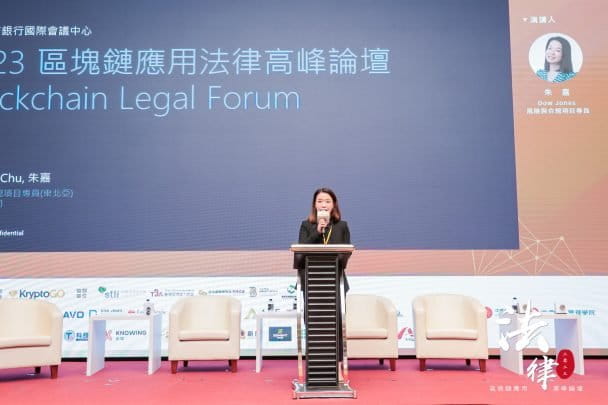
The third "Blockchain Application Law Summit Forum" was launched on the 7th. The organizer invited many experts from industry, government and academia to discuss the legality of the blockchain industry. Among them, the keynote speech hosted by Dow Jones Risk & Compliance discussed "compliance and compliance programs."
Dow Jones & Company is a world-renowned financial information and media company founded in 1882. The company provides a range of financial indexes, including the Dow Jones Industrial Average, as well as financial information services consisting of the Wall Street Journal, financial news, market analysis and data.
What is a compliance program?
Dow Jones Risk and Compliance Project Specialist Zhu Jia said in his speech that Dow Jones’ compliance program refers to cooperating with international financial institutions and global multinational enterprises to assist in anti-money laundering, anti-terrorist fund-raising, anti-corruption, and anti-bribery. network and, most importantly, sanctions list monitoring.
Why is sanctions list monitoring important?
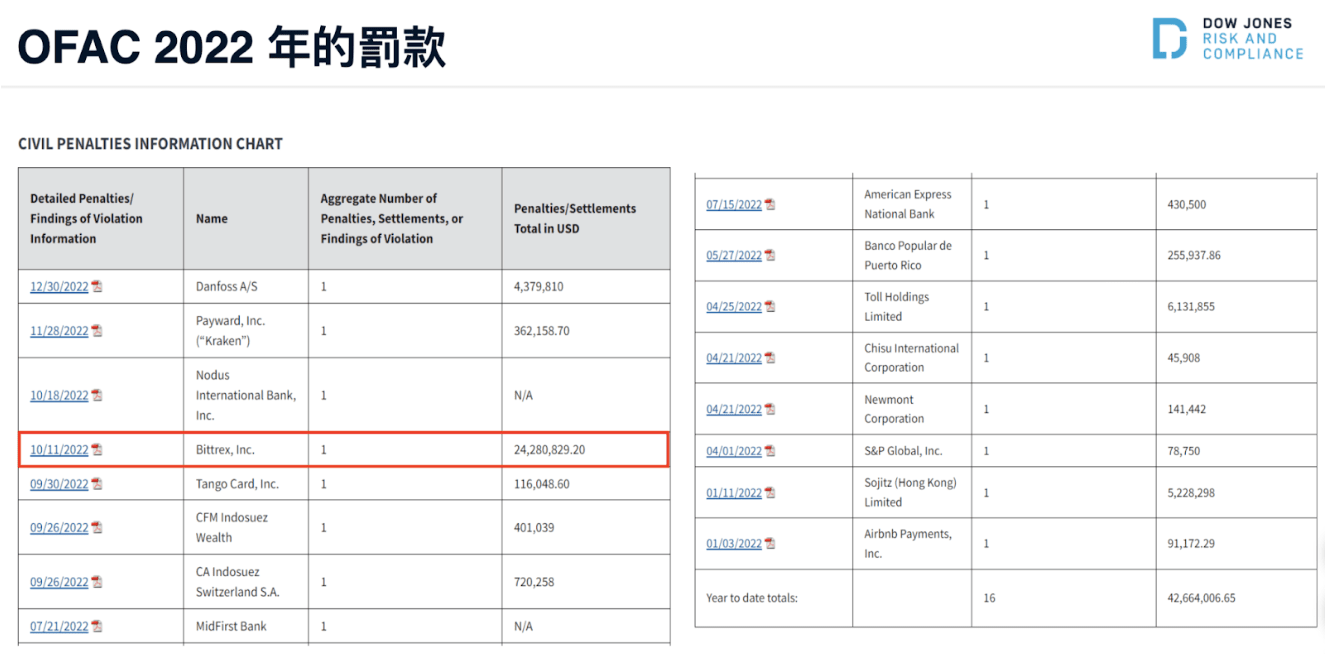
Zhu Jia said that according to OFAC (Office of Foreign Assets Control) data, the amount of fines imposed on financial technology companies exceeded US$42 million last year, of which the Bittrex exchange alone was fined more than US$24 million.
One of the reasons for being fined is: failure to complete sanctions list compliance. This means that Bittrex transacts with multiple sanctioned listed entities or individuals. Therefore, it is particularly important for virtual asset service providers, especially exchanges, to completely construct and monitor sanctions lists!
Zhu Jia pointed out that due to geopolitical risks, there are more and more OFAC sanctions lists, which are also divided into direct sanctions lists and indirect sanctions lists. Direct sanctions are easy to understand, that is, people or corporate entities on the sanctions list, while OFAC’s definition of indirect sanctions is that a company will be classified if more than 50% of its shares are held by one or more entities on the sanctions list. become an indirect sanctions list. The list of indirect sanctions currently exceeds 35,000 and continues to grow.
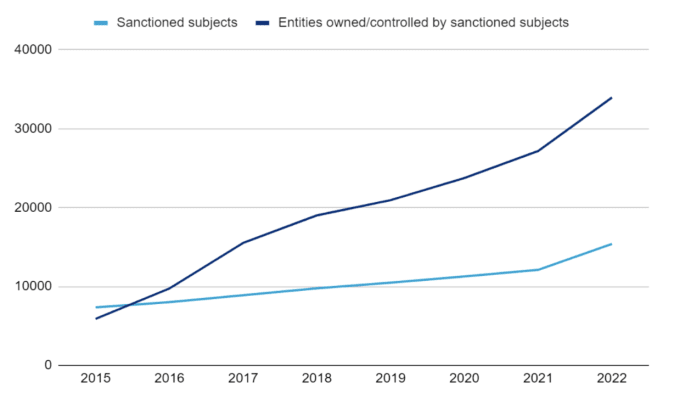
In fact, since Russia was included on the sanctions list in February 2022, the number of relevant sanctioned entities has increased by more than 5,700, and the number of items included in the investigation of indirect sanctions is 3,289, which is 4.5 times the annual average. Dow Jones found that for every sanctioned target related to the Russian program, there were 4.71 related indirect sanctions items.
Unlike direct sanctions, data and lists are not provided by regulatory agencies. Compliance units must research and compile these data. Data sources include various countries’ commercial registers, official gazettes, government web pages, company reports, company websites, and media publications. , and monitor the additions and modifications to the sanctions list on a daily basis. Depending on the sanctions, it will take several days to weeks to complete the study.
This workload is onerous for a crypto startup or a general compliance company, and setting up profiles can be time-consuming. Zhu Jia said that Dow Jones’s advantage lies in its research work on establishing an “indirect sanctions list” since Russia invaded the Crimean Peninsula in 2014. It now has more than 35,000 indirect sanctions files, which can help encryption companies quickly complete sanctions list monitoring. .
Zhu Jia concluded that because the sanctions list continues to increase, indirect sanctions become more complex, and the financial flow of new crypto companies flows globally, how to plan and complete a sanctions compliance plan will become increasingly important in the next few years. Only by establishing a complete compliance plan can we take the lead in business expansion.
This article Dow Jones launches compliance program, why is sanctions list monitoring increasingly important? First appeared in Block Guest.