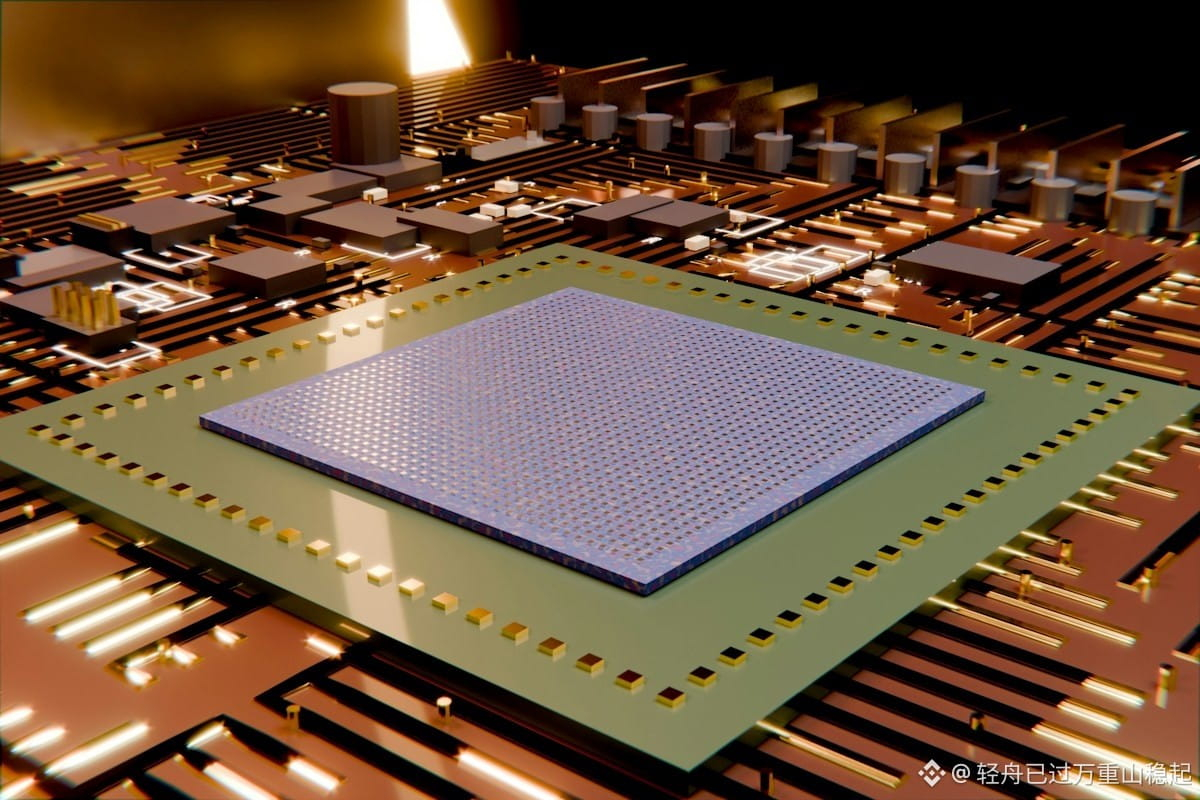
The Olympics of the chip industry, ISSCC 2027, has just dropped a bombshell: Huawei’s Shenzhen team unveiled a custom HBM design that uses five layers of wafer-to-wafer copper-copper hybrid bonding to eliminate traditional micro-bumps, expanding the interface to 64 channels and 4,096 bits wide—four times HBM3E and twice HBM4—and even embedding the memory controller in the stacked base.
The real bottleneck for AI computing has never been compute power; it’s the memory bandwidth wall. As memory stacks begin bypassing JEDEC standards in favor of customized 3D integration, the underlying cost structure of global AI inference is being rewritten. For Web3 and DePIN, once the bandwidth tax on hardware eases, the economics of high-frequency inference by on-chain AI agents and decentralized compute networks may finally add up.
From paper specs to mass production, do you think hybrid bonding can break the Korean memory giants’ absolute pricing power over HBM?
$BTC $BNB $ETH #BTC #Crypto #AI #Web3