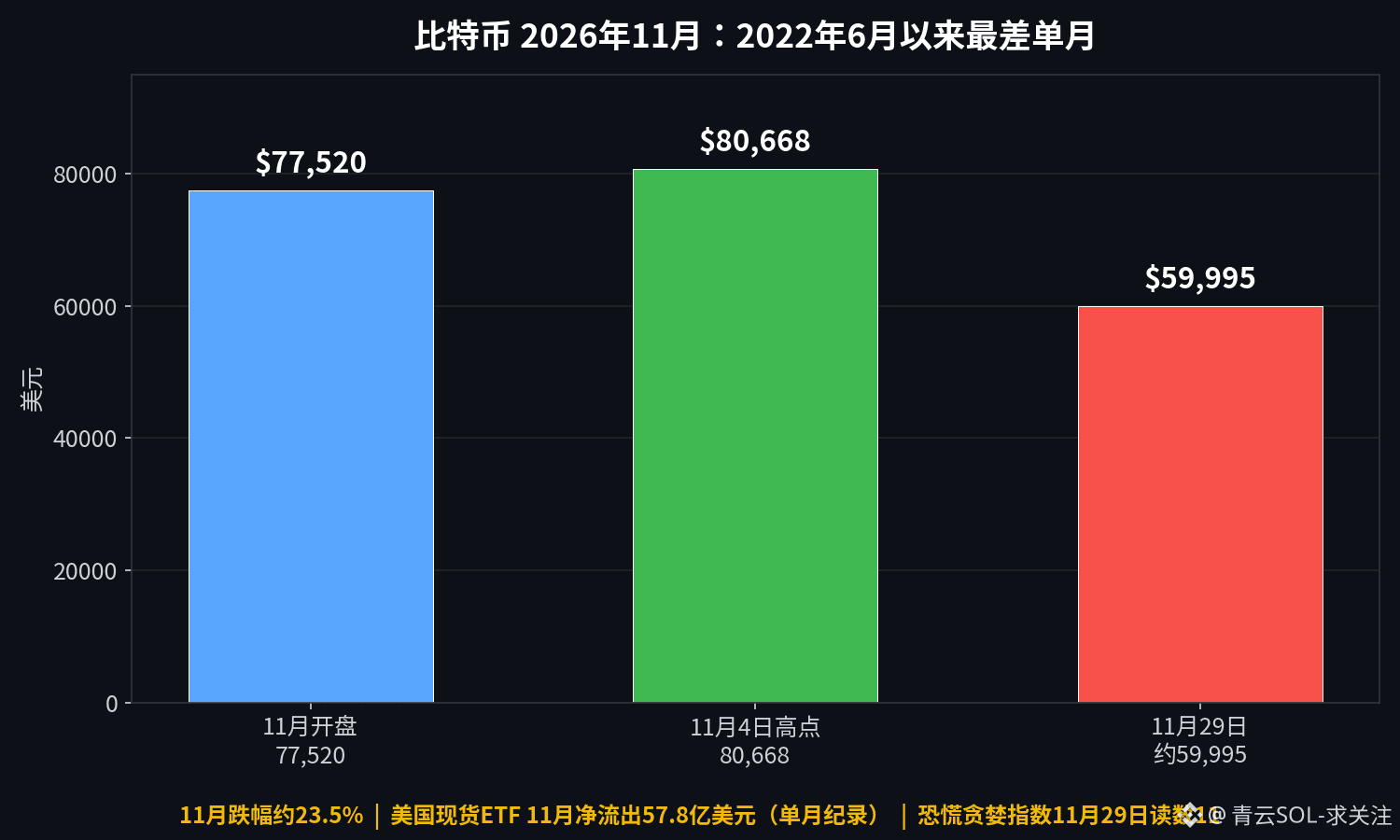
#比特币创2022年以来最差11月 🔥 Down 23% in a month, with $5.78 billion flowing out of ETFs—that’s November wrapped up
On November 29, $BTC briefly fell to $58,440 during the day, then bounced back to around $60,000 in the evening. November 30 is the last trading day of the month. Unless a miracle happens tonight, Bitcoin’s November decline will end up around 23%, making it the worst month since June 2022.
The month opened at $77,520, and Bitcoin even touched a high of $80,668 on November 4. After that, it plunged steadily, at one point hitting a monthly low around $55,000—nearly a 30% drop in half a month. From Monday’s high of around $64,500 to Sunday’s $58,500, it gave back $6,000 in just six days.
The money flowed out of ETFs. On November 27, U.S. spot Bitcoin ETFs saw net outflows of $389 million in a single day, marking their eighth consecutive trading day of outflows. One BlackRock fund alone accounted for $327 million. Total net outflows for November reached $5.78 billion, setting a new record for monthly outflows since the ETFs launched.
The Fear and Greed Index stood at 11 on November 29, signaling extreme fear. On prediction markets, the odds of Bitcoin touching $55,000 before the end of the year have already climbed to 57%.
My view: Don’t rush to buy the dip in the short term. If Bitcoin can’t reclaim $60,000, expect weak, choppy trading; if it can’t hold around $58,500, there may be further downside. Over the medium to long term, ETF money flows out easily but is harder to bring back. The key question is whether the Fed will raise rates in December—the ground lost this month may well become the entry ticket for the next rally.
There’s no shortage of chances to buy the dip in a bear market. What’s scarce is the capital that can afford to wait patiently.