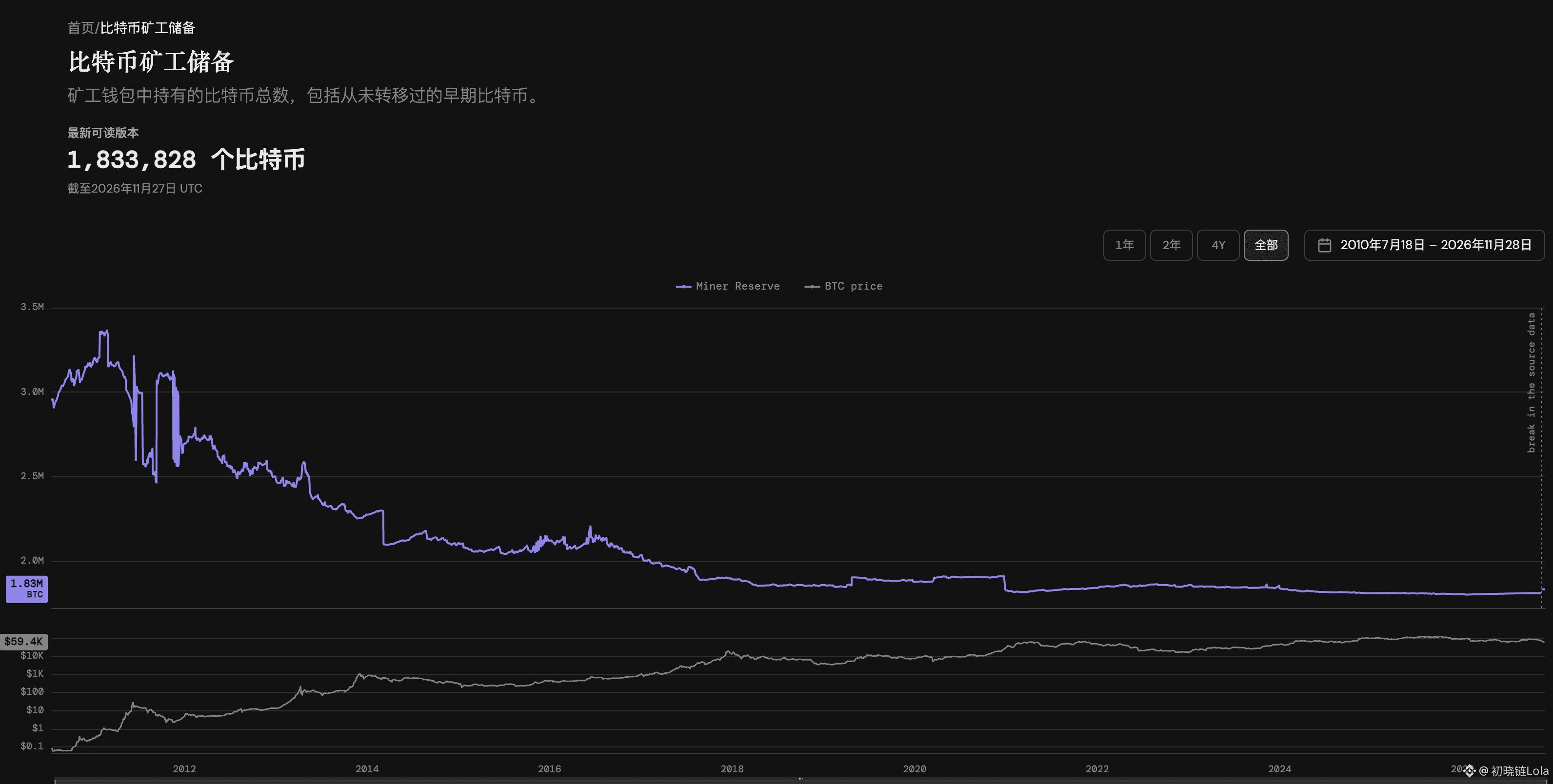
BTC miner holdings have fallen to a 17-year low. Are miners starting to buckle too?! 🙉
According to CryptoQuant data, as of November 28,
BTC miners held just over 1.1 million BTC, the lowest level since October 2009.
They decreased by about 180 $BTC more over the past 7 days.
Miners are an important source of supply in the market.
They mine new coins, but also have to sell some to cover electricity bills and operating costs.
With BTC falling steadily recently, some older mining machines have already dropped below their shutdown prices.
Based on an electricity cost of $0.06 per kWh:
The Antminer S19 XP shutdown price is about $66,000,
the S19 Pro about $90,000,
and the S19 about $105,000,
while BTC had already fallen to around $60,000.
Some miners may be unable to cover their electricity costs if they keep mining.
The continued decline in miner reserves could have three effects:
① Increased potential selling pressure
Miners sell coins for cash, increasing market supply and driving prices down.
② Some miners may be forced to exit
Less efficient mining operations shut down → hashrate falls → difficulty adjusts afterward.
③ More fragile supply and demand
If miners keep selling while demand from ETFs and spot buyers fails to keep up, downward pressure on prices will intensify.
Of course, transfers by miners ≠ coins already sold in full.
We also need to consider exchange inflows, MPI, and changes in hashrate.
Miners are both producers of BTC and potential sellers.
When prices fall close to the survival costs of some miners,
the market faces not only investor panic, but also operational pressure within the mining industry.
What a bear market truly tests is the resilience of the entire market.
#BTC矿工 #币圈