


South Korea is one of the busiest crypto markets in Asia, and on 24 November its financial regulator unveiled a major new bill. The Financial Services Commission's draft would let banks lead won-denominated stablecoins, legalise ICOs under disclosure rules and cap ownership of crypto exchanges.
Quick Facts
Bill unveiled by the FSC on 24 November 2026.
Won stablecoin issuers would need bank consortiums holding a majority stake.
Issuers would need FSC authorisation, at least KRW 5 billion in equity and 100% reserves.
Most individual shareholders in crypto exchanges would be capped at 20%.
01 Why Korea Needs This Bill
Korea has a huge retail crypto market but has banned ICOs since 2017 and has no rules for won stablecoins. Without clear rules, no bank or company can issue a regulated won stablecoin today. Banks and fintech firms have argued for a long time about who should issue a digital won. The bill tries to settle that debate and modernise the whole framework.
02 Won Stablecoins
Under the draft:
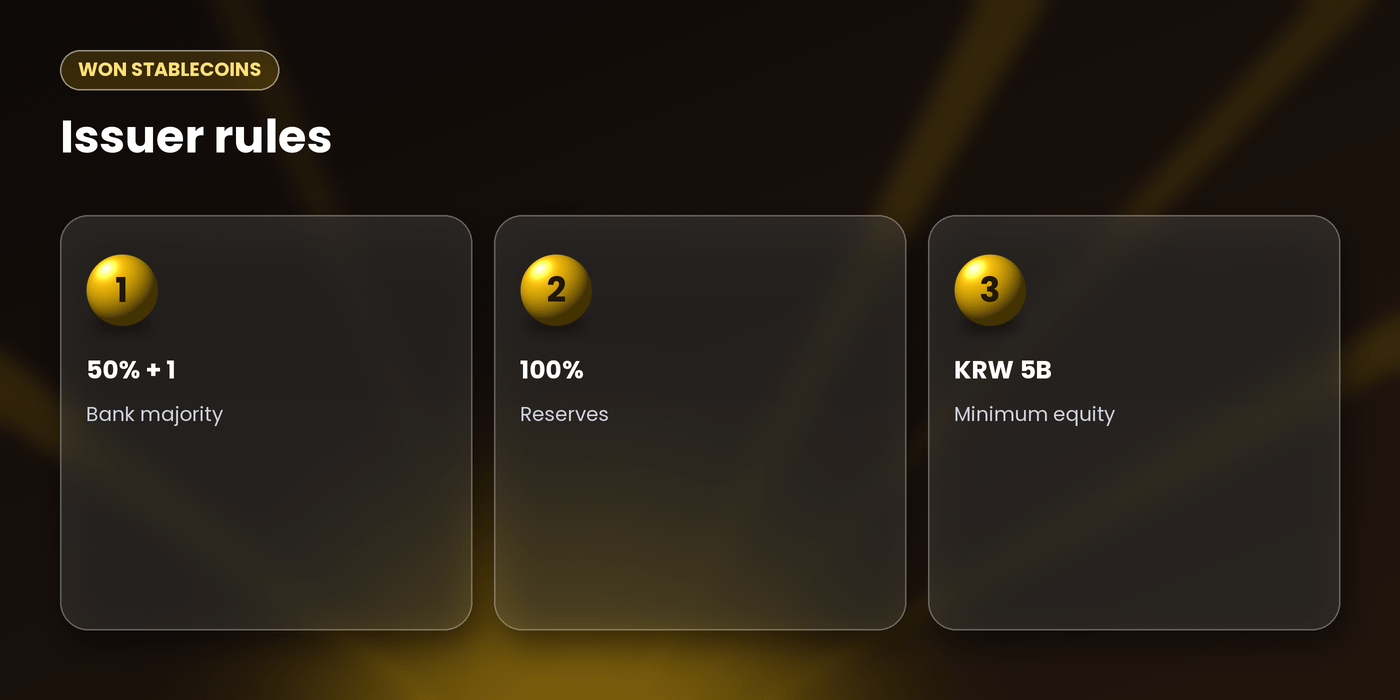
Won stablecoin issuance would initially be limited to consortiums where banks collectively hold a majority.
A technology or fintech firm could still be the largest single shareholder.
Issuers would need FSC authorisation, at least KRW 5 billion in equity and 100% reserves.
03 Why Banks Got the Lead
The Bank of Korea has pushed for bank-led issuance, citing risks to monetary policy and financial stability. The FSC had earlier favoured letting non-banks issue stablecoins. The compromise keeps banks in control while still letting a tech firm be the largest single shareholder.
04 Exchanges and ICOs
The bill goes further than stablecoins:
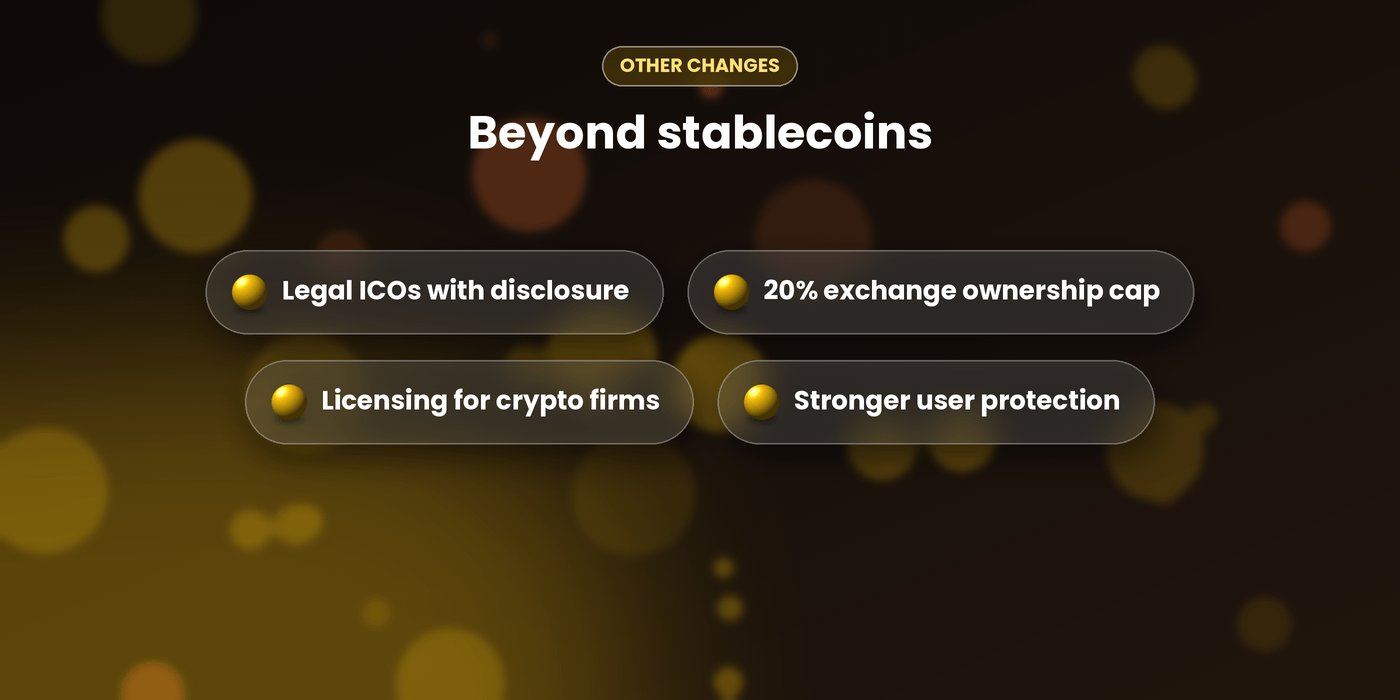
It would lift the long-standing ban on ICOs, with disclosure requirements.
It would generally cap individual shareholders in crypto exchanges at 20%.
It would create a licensing system for digital asset businesses and add user protection rules.
05 What Happens Next
The bill still has to pass the National Assembly. Details could change during debate, especially the ownership cap, which would affect the owners of major Korean exchanges.
Large exchange owners could be forced to sell part of their stakes if the 20% cap passes as drafted.
06 Why It Matters for Asia
Korea, Japan, Hong Kong and Thailand are all writing stablecoin rules at the same time, and Korea's draft gives banks a central role. For users across Asia, that means local-currency stablecoins are coming, but mostly through regulated, bank-linked issuers.
Users should wait for the final law before assuming any product will be available.
Bottom Line
South Korea's draft crypto bill would put banks in charge of won stablecoins, legalise ICOs and cap exchange ownership. It is one of the biggest regulatory changes in Asia this year.
This article is for information only and is not financial advice.