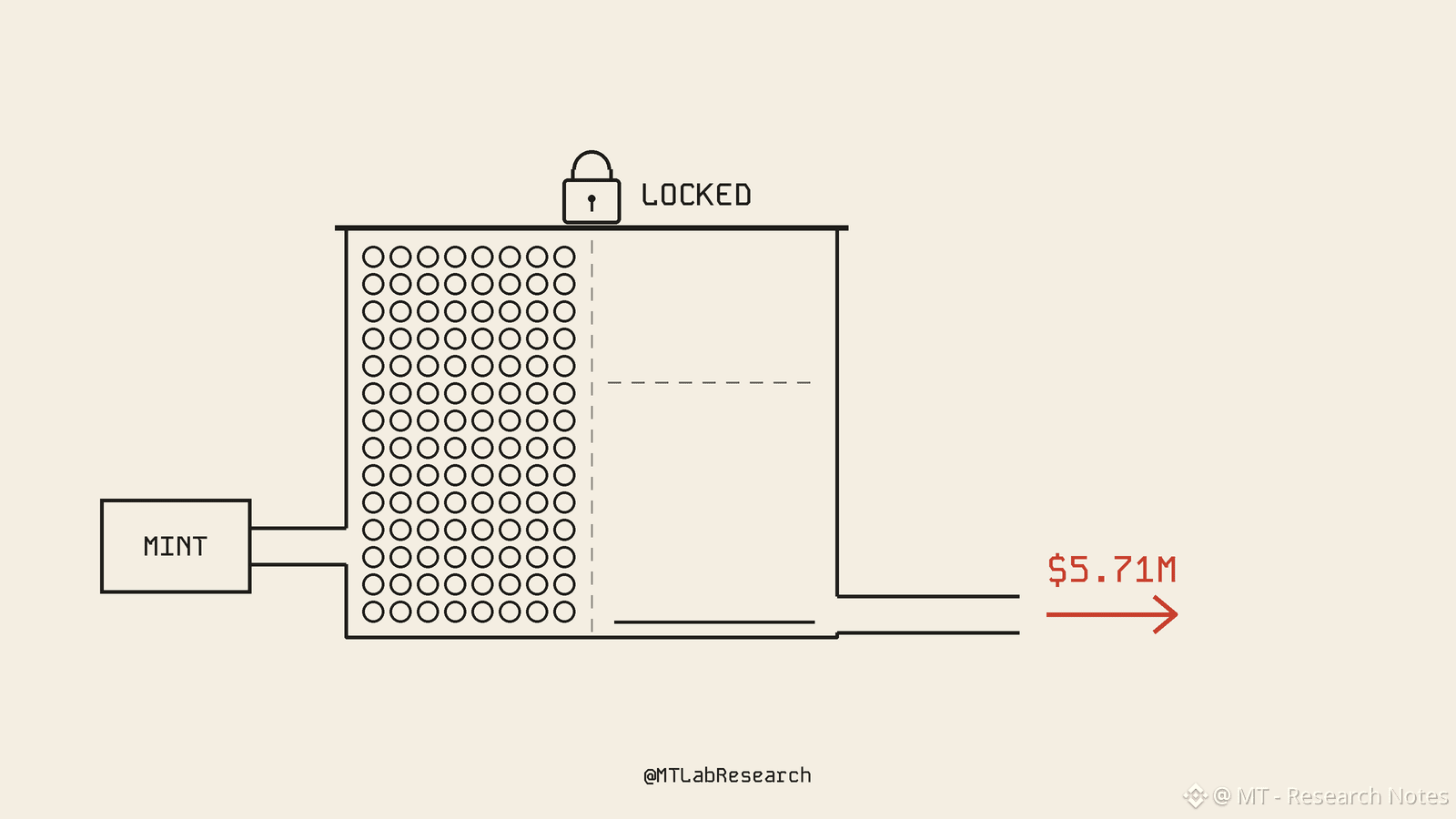
This token's pool was "permanently locked". $5.71M still walked out of it.
The token is IBS, from POTS Money on BNB Chain. It was built to stay above $1. Its trading pool was locked so the team couldn't pull the money. Its materials even point to audits (CertiK lists its own review as still in progress).
On Nov 29, at 04:59 UTC, security firm Blockaid flagged an attack in progress. One account created 1 billion new IBS and sold them into the pool for about $5.71M in USDT. IBS went from about $4 to near zero. The pool was left with almost nothing: about $1,100 USDT.
So how does $5.71M leave a locked pool?
Picture the pool as a jar with two sides: IBS on one, USDT on the other. The price is just the ratio between them. Anyone can drop IBS in and take USDT out. Locking the jar only stops the team from carrying it away. It doesn't stop trades.
Now give one account the power to print IBS for free. It pours fresh tokens in and takes USDT out until the jar is nearly dry. Per Blockaid, that account was a privileged governance account: an admin account allowed to create new IBS.
The $1 floor had a backup reserve meant to buy IBS when the price fell. Against a billion new tokens, it never stood a chance.
What nobody knows yet: was the key stolen, or used from inside? Blockaid hasn't said how the attacker got access. PeckShield says the funds sit in one identified wallet.
What does this teach?
- "Locked liquidity" protects you from the team pulling the pool, not from someone printing the token
- An audit checks code. It can't stop a key that's allowed to mint
- A price floor is only as strong as its reserve, and no reserve beats unlimited new supply
- Before you buy, ask who can mint, and how many keys it takes
Token scanners and the contract page will show if a token is mintable and who holds that power.
Locked doesn't mean safe. It means one door is shut.
Have you ever checked who can mint a token before you bought it?
Experience, not financial advice.
#IBSGovAccountMints1BTokensDrains5.71M