

Japan is thinking carefully about stablecoins. On 27 November, Bank of Japan executive director Kazushige Kamiyama spoke at an IMF seminar in Tokyo and proposed rules for how stablecoin issuers manage and disclose reserves. His key idea is something called the singleness of money.
Quick Facts
Speech at an IMF seminar in Tokyo on 27 November 2026.
Proposed reserve management and disclosure rules for stablecoin issuers.
Called for mechanisms linking tokens back to central bank money.
No new regulation was introduced.
01 What Singleness of Money Means
Singleness of money means that one yen is always worth one yen, whether it sits in a bank, in cash or in a digital token. Kamiyama said private yen tokens should stay exchangeable at face value with money held at the central bank.
It sounds obvious, but it only works if every issuer holds solid reserves and can always redeem at par.
02 What Kamiyama Proposed
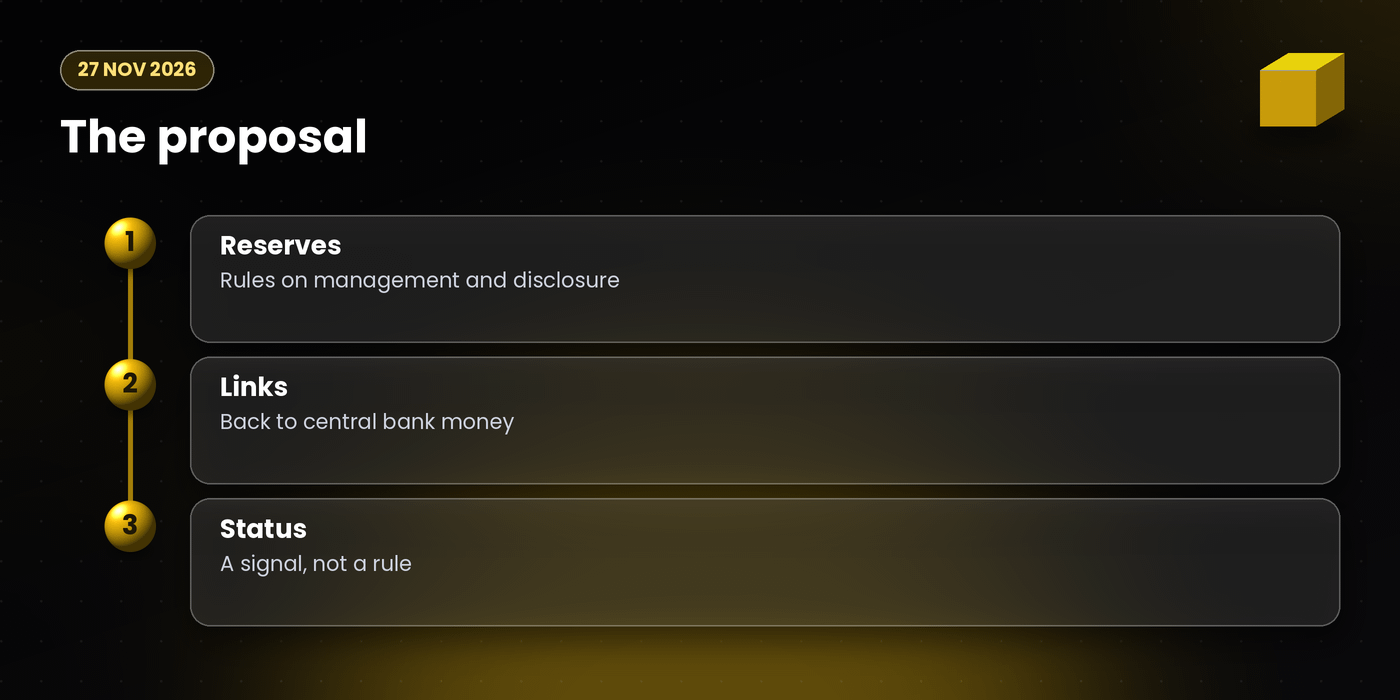
He suggested two safeguards:
Rules on how stablecoin issuers manage and disclose their reserves.
Built-in mechanisms linking their tokens back to central bank money.
He warned that the principle has to be actively maintained, not assumed.
03 Why the Warning Matters
As private tokens and tokenized bank deposits grow, people might start treating different yen tokens as slightly different money. If one issuer looks weaker, its token could trade below face value. Clear reserve rules are meant to stop that from happening.
This happened briefly to some stablecoins in past crises, when users rushed to redeem at the same time.
04 Two Possible Paths
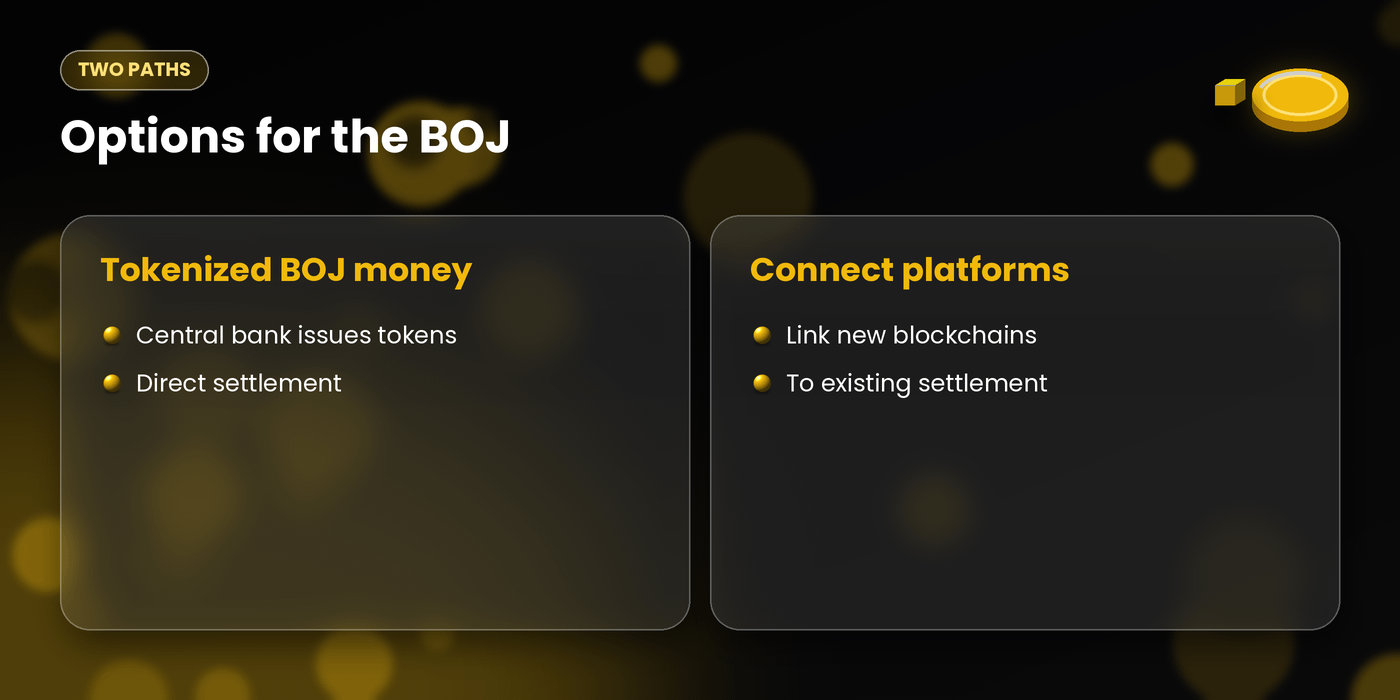
Kamiyama described two options: the BOJ could issue its own money in tokenized form, or connect new blockchain platforms to existing settlement systems. He said the choice would depend on feedback from banks, payment firms and other market participants.
Both paths aim for the same result: any yen token can be settled safely in central bank money.
05 Japan's Wider Work
The BOJ runs a DLT Sandbox for testing blockchain settlement and takes part in Project Agora, a Bank for International Settlements initiative. Japan is also working toward on-chain settlement of equities and government debt, and its three biggest banks said in June 2026 they are working on a joint stablecoin project.
06 Why It Matters for Asia
Japan's approach could influence how other Asian countries regulate stablecoins. For users, strong reserve rules mean more trust that a stablecoin is worth what it says. Stablecoins with clear, regular reserve disclosures are always the safer choice.
Bottom Line
The Bank of Japan is signalling that stablecoins must stay tied to central bank money through clear reserve rules. It is not law yet, but it shows where Asian regulation may be heading.
This article is for information only and is not financial advice.