#比特币挖矿成本超过币价 💥 Lose money on every coin mined: miners are making a losing bet for only the second time in history
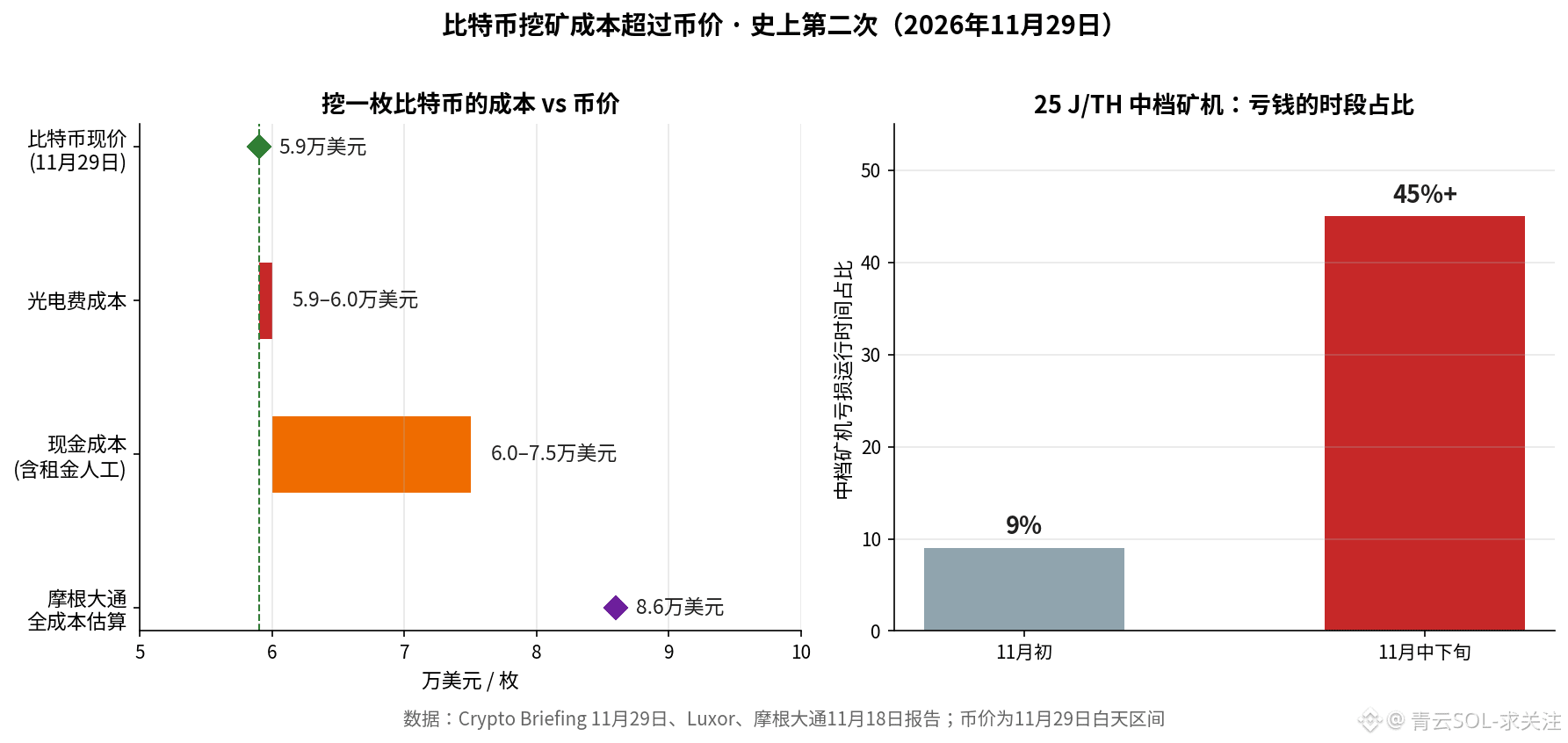
On November 29, Crypto Briefing dropped a number: the Bitcoin network’s electricity costs have climbed to $59,000–$60,000 per coin, while Bitcoin itself is hovering around $59,000. The electricity bill alone eats up the price of each coin mined—a situation that has occurred only once before in Bitcoin’s history.
High electricity prices are the immediate culprit. In November, wholesale electricity prices in West Texas swung between $64 and $122 per megawatt-hour, with the top end marking the month’s high. Electricity is only half the bill; once rent, labor, and loan payments are included, cash costs generally run from $60,000 to $75,000 per coin. Luxor’s data paints an even grimmer picture: in mid-to-late November, mid-range mining rigs using 25 joules per terahash were operating at a loss for more than 45% of the time, up from just 9% previously.
Miners’ response has been straightforward: shut down during unprofitable periods. The more rigs go offline, the more the network difficulty adjusts downward. Mining farms with low electricity prices in Paraguay and Canada can still make money; the ones struggling are older operations in Texas and the UAE. Some miners are simply changing course, leasing their sites’ power capacity to AI computing customers and earning money that doesn’t depend on coin prices.
The Fear & Greed Index is at 11 today: extreme fear. JPMorgan’s November 18 report is even more grim: the all-in cost to mine one coin is $86,000.
In my view, miners losing money while mining isn’t the bottom for the price, but it is a familiar signal from the bottoming zone. The last time was during the COVID crash in March 2020. After that, miners shut down, difficulty fell, and selling pressure gradually peaked. In the short term, I remain bearish: if Bitcoin can’t hold $59,000, the next step down is $55,000. In the medium to long term, miners being forced offline and coins shifting out of weak hands are exactly what you’d expect near the end of a bear market. $BTC
Miners are already losing money to mine Bitcoin. The price may be closer to a true floor than most people think.