$Is the U.S. stock market really about to start trading 23 hours a day?
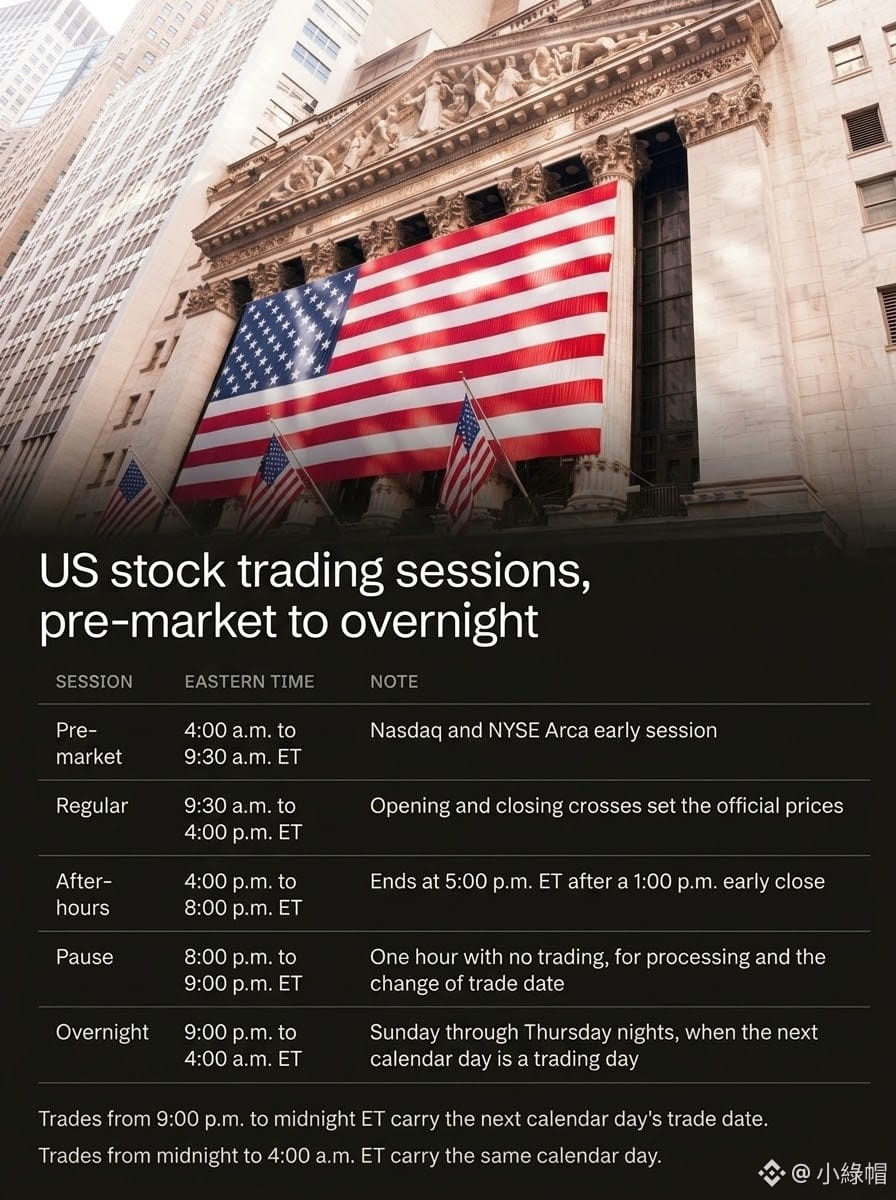
Nasdaq and the NYSE Arca market do plan to launch overnight trading on December 6, 2026, extending trading hours for stocks and ETFs to nearly around the clock. But there’s a key caveat: it still needs final SEC approval, and the Securities Information Processors (SIPs) must be ready. The official wording is that this date is “expected”—it’s not set in stone.
The schedule is basically as you described. The new overnight session will run from 9 p.m. to 4 a.m. Eastern Time. Combined with the existing pre-market and after-hours sessions, trading will run from 9 p.m. Sunday to 8 p.m. Friday, with an hour-long break each day from 8 p.m. to 9 p.m. for clearing and maintenance. The core trading session, from 9:30 a.m. to 4 p.m., will remain unchanged, and the opening and closing auctions will still serve as pricing benchmarks.
But there’s one detail most people haven’t mentioned: liquidity will be much thinner overnight. Nasdaq’s own data shows that although trading volume between 8 p.m. and 4 a.m. has grown for years, it has only recently managed to top 1% of average daily volume. Price bands will widen to ±20%, but most stocks actually move less than 2% during this session. And only brokers that are members of NYSE Arca can participate in overnight trading directly, so retail investors will have to go through a member firm.
So the idea that “traditional stocks are moving toward crypto’s 24-hour model” is right, but don’t expect the overnight session to have Bitcoin-like depth from day one. It’s a window for Asian and European investors, not extra hours for day traders to gamble.
$NVDAB
$SNDKB
$SKUUB
#Stocks #NYSE #Nasdaq #Crypto #BİNANCE