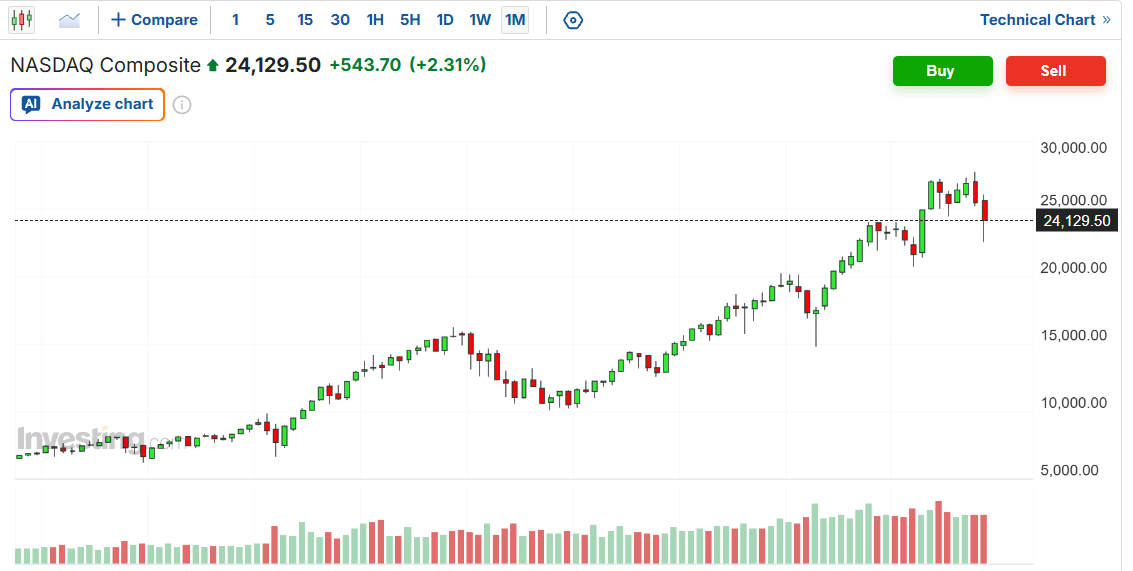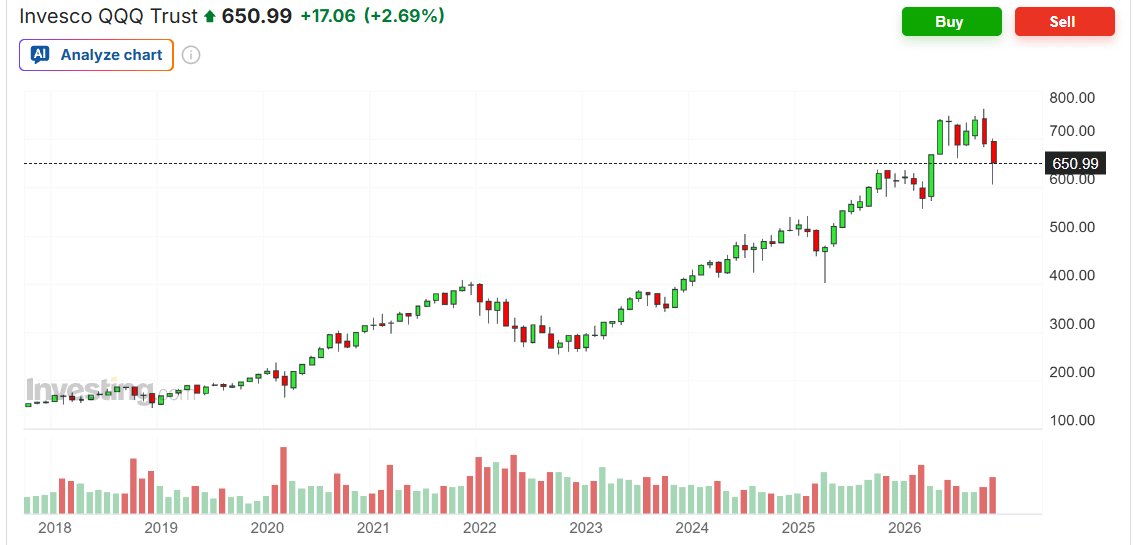
Why does the U.S. stock market look like a straight line upward over the long term, while other markets look like an EKG?
It’s not that U.S. stocks “always go up.” It’s that “only the strongest companies are allowed to stay in the game.”
A lot of people look at that line rising steadily to the right and draw the wrong conclusion: the U.S. economy is doing well.
The truth is a little more chilling: what you’re buying isn’t the U.S. economy at all. It’s a system that automatically replaces its members every year.
1. An index is an elimination tournament, not a buy-and-hold portfolio
The S&P 500 isn’t “buy and hold.” It’s “kick out the weak and bring in the strong.”
Of the 500 companies in 1957, only a few dozen remain today.
What you own isn’t a company; it’s a system that automatically cuts losses and replaces its holdings.
Individual stocks can be delisted. The index doesn’t disappear.
2. Profits are a nominal variable
Revenue rises with inflation, while costs adjust with a lag. That gap is profit.
Then there are buybacks: over the past decade, S&P constituents have bought back hundreds of billions of dollars’ worth of shares each year.
The same earnings spread across fewer shares, and EPS climbs on its own.
What’s rising in U.S. stocks isn’t the valuation; it’s the numerator.
3. Buying is built into the system
401(k) contributions are deducted automatically every month, while pension funds, insurers, and passive ETFs keep buying.
They buy when prices fall and when they rise.
It’s the world’s most reliable dollar-cost-averaging machine. In the short term, prices are a voting machine; in the long term, they reflect these cash flows.
4. The Federal Reserve’s reaction function
Since 1970, every crisis has brought rate cuts, QE, and a backstop.
The market has learned one thing: bad news will eventually be dealt with through liquidity.
This isn’t a conspiracy; it’s an incentive structure.
5. You’re being fooled by the axes
That so-called “straight line” is exponential growth plotted on a logarithmic scale.
On a linear scale, it’s a parabola.
And even in bull-market years, the average intra-year drawdown is 14%.
The conclusion isn’t “U.S. stocks can’t fall.” It’s this:
They’re designed to “make new highs after every fall.”
Historically, the odds of a positive return have been around 70% over a 1-year holding period and close to 100% over 20 years—
but only if you can stay invested.
The real risk isn’t volatility; it’s using short-term money to bet on a long-term thesis.
What’s the longest you’ve held a stock? How many years? Share in the comments.$QQQB